For a glimpse into the future of public education, visit Florida.
Nearly three years after landmark legislation gave Sunshine State families the flexibility to choose from an expanding number of learning options, 75% of its 67 school districts now offer a la carte services.

In a recent Johns Hopkins University Homeschool Research Lab podcast, Keith Jacobs, director of provider development at Step Up For Students, explained how putting parents in control of their children’s education dollars is changing the way Florida students learn.
“In every major service offered in human experience, the need for customer service is evident,” said Jacobs, a former public school teacher and administrator. “So, when you’re talking about education, we’ve gone from government-sponsored, government-funded within the public school sector to now families being empowered with the money and the opportunity and the knowledge to make a decision on which a la carte model they feel is most valuable for their child. It’s no longer, ‘I have to go to my neighborhood public school based on the ZIP code we live in.’ They want that level of customization.”
Last year, roughly 80,000 students were funded in the Personalized Education Program, which allows parents to design customized learning for their children who are not enrolled full time in public or private schools. Another scholarship, the Family Empowerment Scholarship for Students with Unique Abilities, allows parents the choice between full-time private school or customized homeschool plans. Last year, about half of the more than 150,000 students who participated in the
UA option chose homeschooling.
“There are many different ways for families to experience homeschool education in Florida,” Jacobs told host Christy Batts, a senior research data analyst at the Johns Hopkins University School of Education, Institute for Education Policy.
Jacobs has spent nearly two years helping school districts expand learning options for students who receive funding through education savings accounts. These accounts allow parents to use funds for tuition, curriculum, therapies, and other pre-approved educational expenses. That includes services by approved district and charter schools.
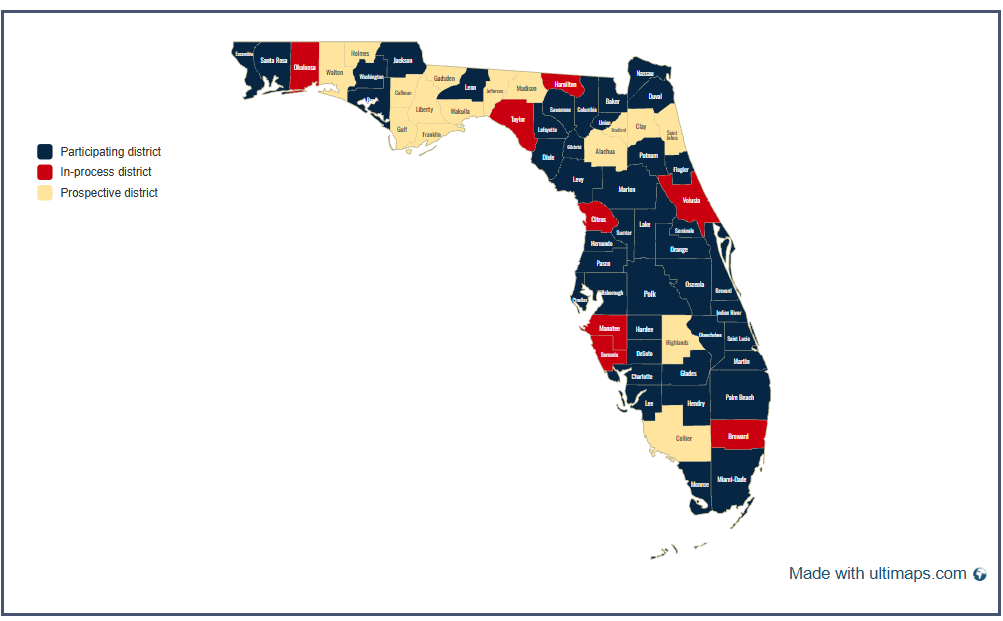
Jacobs said 51 of the state’s 67 public school districts have agreed to offer some form of unbundled services. Those can be in-person or virtual, core classes or extracurricular activities.
Jacobs sees the fact that more than 50% of families in Florida exercise some form of choice as a big motivator for school districts to innovate. When it comes to developing their own offerings, Jacobs said his team at Step Up lets district leaders take the lead.
“We try to meet them where they are,” he said.

