ORLANDO, Fla. — As public education has evolved from a one-size-fits-all system to one where families are empowered to choose the environment that best fits their child, everyone has been a winner: Students, parents, educators, entrepreneurs, and even public school districts.
That was the message of John F. Kirtley, founder and chairman of Step Up For Students, to the roughly 1,000 people who attended the non-profit’s Navigating New Horizons conference this week.
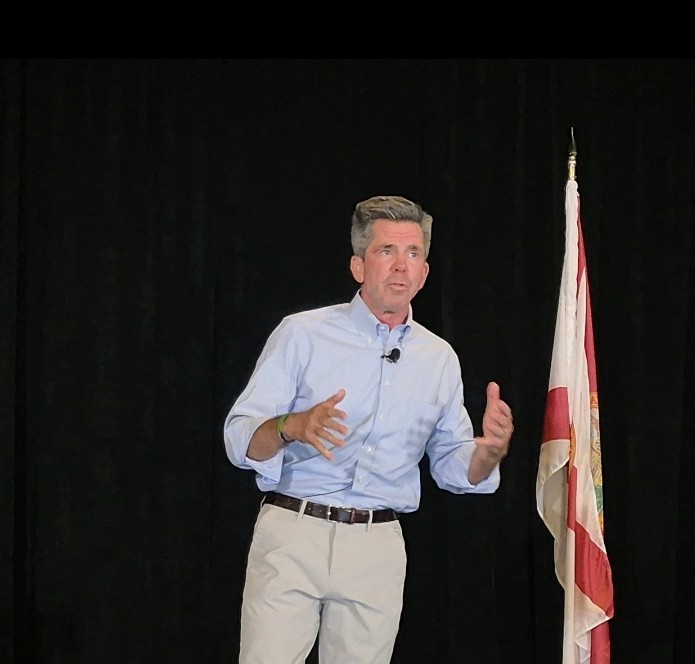
In a closing speech that at the end brought the audience to its feet, Kirtley began by describing the state of education before the 1990s. Everyone paid taxes, and students were assigned to schools by their ZIP codes.
“It was, it could be said, a definition that emphasized ‘uniformity,’” he said, referencing but not naming the state teachers union’s recent lawsuit to eliminate Florida’s robust education choice programs, including all scholarship programs and charter schools.
Kirtley said he didn’t realize it at the time, but since overall graduation rates in Florida were, until the mid-1990’s, around 60% overall and less than 40% for black males, it’s likely that many of his friends on the football team who crossed the stage did not get real diplomas. They likely received certificates of completion. The second group probably included a classmate who regularly got in trouble for dozing during early morning courses and was uninspired by classic literature. Yet he could take apart an entire car and rebuild it by himself, when Kirtley couldn’t change his car’s oil.
“But there was no specialized program for him…No, uniformity didn’t serve him well.”
Today, Kirtley said, his classmate could sleep in, take core classes online in his pajamas, then head over to the district automotive technology program in the afternoon, where he would be the star student.
“When he graduated, he’d be hired by the local Mercedes dealer and make over $100,000 two years out of school,” Kirtley said. “So, yeah, he’d be better off.”
Not only are students better off, but so are educators who can start their own schools, including microschools, and even school districts, including many that now offer specialized magnet schools and individual courses to education choice scholarship students who attend school part time.
“I close by saying don’t fear the New Definition. Embrace it. Thrive in it. You can thrive in it whether you are a microschool, an à la carte provider, or one of nation’s largest school districts,” he said. “And when you thrive in the New Definition, all students will thrive along with you. And shouldn’t that really be the ultimate goal?”
His remarks echoed the message given the day before by Gretchen Schoenhaar, Step Up’s chief executive officer, who gave the conference’s opening speech.
“Families today seek learning environments that reflect their children's unique strengths, needs and goals,” Schoenhaar said. “What's really inspiring is how this demand has sparked innovation across the education landscape.”
Schoenhaar said she hoped the two-day event would offer attendees a chance to be “inspired by the conversations you have, encouraged by the stories you hear, and energized by the collective passion in this room.”
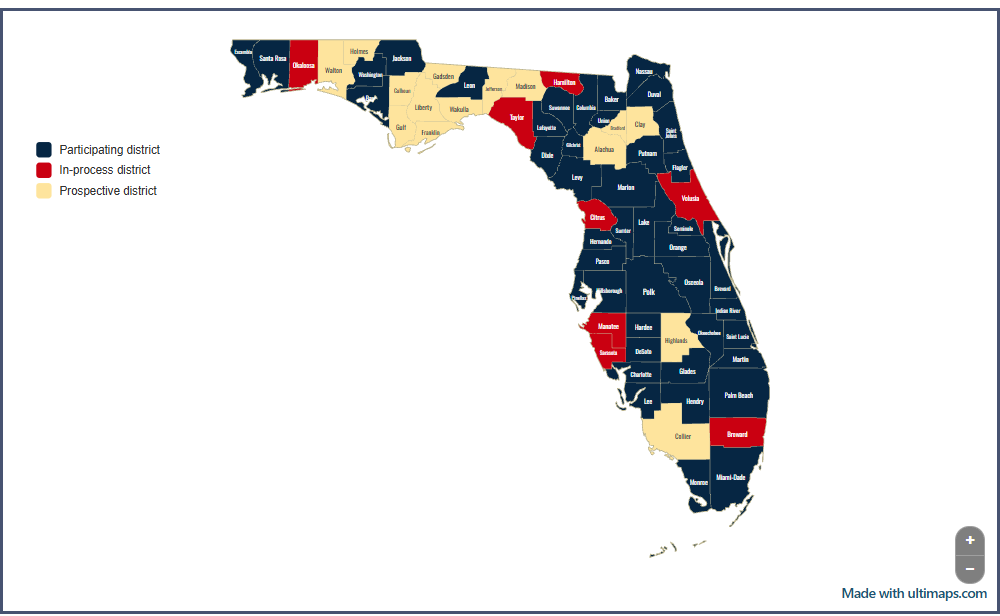
Schoenhaar said Florida is home to the nation's largest parent-directed education marketplace today, with more than half of all K-12 students participating in some form of education choice, including many district schools, private schools, charter schools, homeschools, online schooling, or some combination of those.
“The spirit of innovation and possibility is exactly what this conference is all about,” she said.
The event, whose theme is Facing the Future Together, featured nearly 100 session speakers and 100 exhibitors displaying everything from a la carte learning to transportation options, tutoring, and curriculum.
Organizers said this year’s goal was to provide educators with information and resources based on best practices that also reflect the bigger picture. That included information about the rise of microschools and how to use AI efficiently and responsibly.
“Over the next two days, we hope you'll be inspired by new ideas, meaningful connections and innovative strategies that will help shape the future of education,” Paula Nelson, Step Up’s vice president of school and provider services, told the audience during her welcome.
Breakout session topics included school safety, a la carte education, navigating AI, the future of public education, the benefits of applying for the Yass Prize, how public schools are offering individual courses to scholarship students and how to create and sustain microschools. Four sessions on the upcoming federal Education Freedom Tax Credit program drew standing-room-only crowds.
The federal program, which launches in January 2027, allows individual donors to divert up to $1,700 of federal tax liability to support scholarships for students in public and private schools. The federal government is expected to announce rules that cover program specifics soon. Florida Gov. Ron DeSantis is among the governors who have opted their states into the program.
At the end of the conference, Schoenhaar broke some news: The conference will return June 14 and 15 of 2027.

