Everything seemed perfect when Alison Rini prepared to open her dream school, one that would give kids an opportunity to learn at their own level and progress at their own pace.
The timing: The state had recently passed legislation that established universal eligibility for state K-12 scholarship programs. Rini could rely on a mix of scholarship and philanthropy dollars to keep tuition free for families.
The location: Her new microschool, Star Lab, would open in an unused clubhouse Rini had arranged to use at a government housing complex in Newtown, a community in Sarasota with a large population of low-income, minority students who struggled in reading. It had previously been a day care center and summer camp. It had classrooms and a playground.

Though it can be challenging for school founders to secure such locations before they are able to collect tuition, Rini said the community was supportive.
Until she walked into city hall.
“That triggered a 22-month, $130,000 approval process,” she said. “Once the building was designated as a school, an entirely new set of regulations applied.”
Rini, a former public school teacher and administrator, shared details of her ordeal with attendees at Harvard University’s fifth annual Emerging Schools Models Conference. This year’s theme was Broadening the Landscape for Choice and included sessions on universal eligibility, microschools, outdoor schools and the potential effects of the new federal Education Freedom Tax Credit Scholarship Program, which launches Jan. 1, 2027.
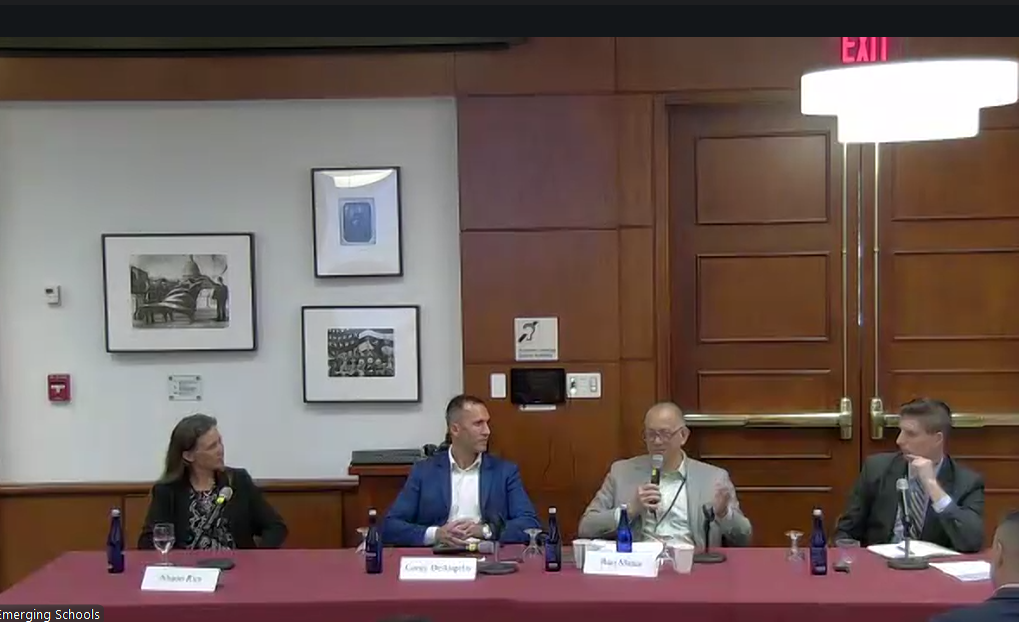
Rini participated in a panel whose topic was “Nowhere to Go: Addressing School Supply Shortages.” Other panelists included Corey DeAngelis, a research fellow at The Heritage Foundation, and Ron Matus, director of research and special projects at Step Up For Students, a nonprofit organization that manages K-12 scholarship programs in Florida.
DeAngelis gave an overview of problems in Arizona, where critics have called for more regulation of its education savings account programs.
“I think those changes will have unintended consequences,” he said. “If we concede to those who want to heavily regulate these programs, they'll continue demanding more restrictions. If parents become less satisfied, support for the programs will erode. In Arizona, more than 100,000 families are currently using the ESA program. If those families become frustrated, they may not fight to protect the program in the future. But if they value it, they will defend it.”
Matus focused on challenges involved in building up the supply of providers needed to meet the increasing demand for learning options in Florida, where more than half the state’s students use some form of education choice. Responses to a Step Up survey conducted during the 2024-25 school year of 41,000 parents who chose not to use their scholarships showed the chief reason was a lack of seats available at their desired schools. That was followed by concerns about scholarships not providing enough money to completely cover tuition. Others cited transportation issues, including the desired school’s distance from their home or work conflicts.
“All of those findings point to supply-side challenges,” Matus said.
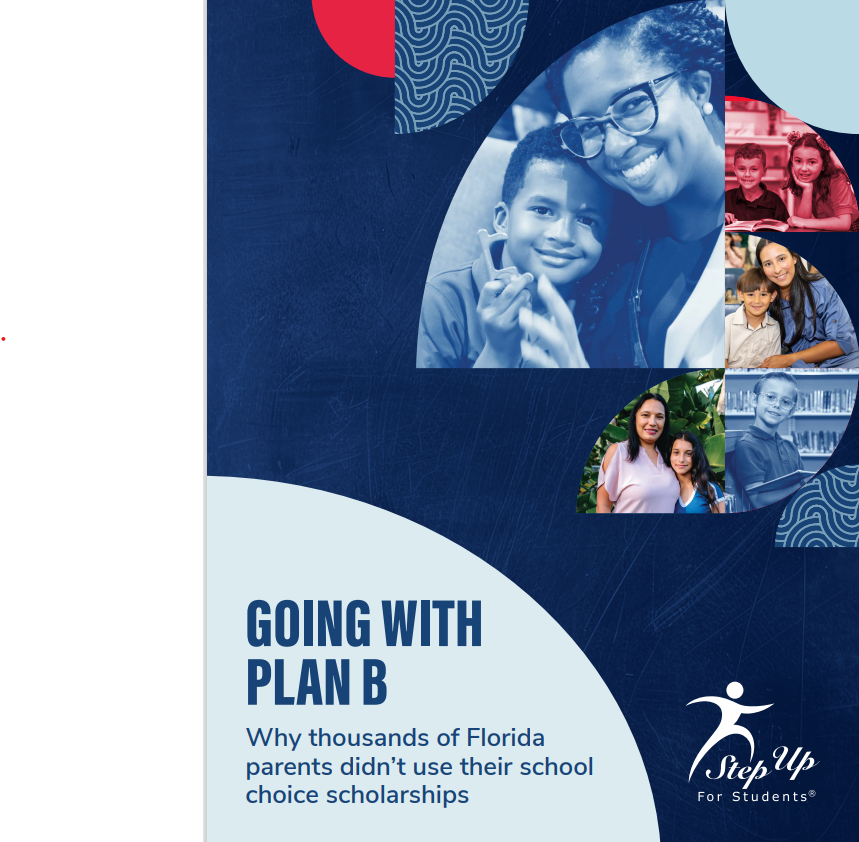
Matus said those findings were expected. However, there were also surprises.
About 63% of the parents who applied already had their children in a choice school. Even more surprising, Matus noted, was that most of those parents reported being satisfied. Overall, about two-thirds of the parents said they would apply again. The percentage was slightly higher among Black, Hispanic and lower-income parents.
“Now they see so many options emerging on the landscape. So, all the time, I think they’re realizing that it’s no longer a situation where they just have to find something better,” Matus said. “They’re realizing they can have exactly what they want, and I don’t know if I’m going too far out on a limb here by suggesting that, but it’s my takeaway.”
Increasing the number of providers would make it possible for more families to find that perfect fit. That means removing barriers, such as those Rini faced when she tried to open Star Lab.
For Rini to serve more than five students, the local fire marshal said she would have to pay for a costly sprinkler system for the 3,500 square-foot leased building, which already had five exterior exits that had been considered sufficiently safe for a day care center and summer camp.
An expert on regulatory reform told her about an alternative fire safety compliance process authorized under state law. However, local officials were reluctant to use it.
“I eventually spoke with the state fire marshal, who acknowledged that universal school choice had expanded rapidly and that many related regulations had not yet been updated,” Rini said. “What struck me most throughout the process was the inertia, the red tape. Regulations had simply not caught up with policy changes.”
So, Rini opened Star Lab with five students, the maximum number allowed before being classified as a school.
City officials, surprised to see the doors open, stopped by and said, “You don’t have permission.”
“Count ‘em,” Rini fired back.
A donor eventually paid for the required sprinkler system, allowing her to add students.
The Legislature also passed HB 1285, which allows libraries, community service organizations, museums, performing arts venues, theaters, cinemas or houses of worship to accommodate a private school without founders having to comply with local land-use and zoning restrictions. In 2026, the lawmakers approved SB 182, which gave additional flexibility to private schools enrolling 150 or fewer students in commercial or mixed-use zoning districts.
“We had 20 kids, and then we outgrew the building,” Rini said.
When she moved to open a second campus at the Boys & Girls Club, the experience was “completely different.”
A new city attorney reviewed her proposal and approved it in about 15 minutes with no additional costs.
As she walked out with the zoning consultant, Rini felt as if she were shaking.
“You know, I was like, ‘How did this happen?’ That was so amazing, you know, the local government is really catching up with the intention of state law. He said, ‘No, you just saw state law trump local government.’”