MIRAMAR, Fla. – Florida’s explosion in à la carte learning has created space for all kinds of new, state-supported educational experiences, including, improbably, a class in building with power tools that’s tucked inside an ashram, a kind of spiritual retreat, with a grove of mango trees and a colony of especially plump iguanas.
The class is run by Builder’s Workshop, an à la carte provider founded by Marvin and Christine Hernandez. The couple retrofitted an old horse stable on the property into a student workshop, humming with saws, drills, and sanders.
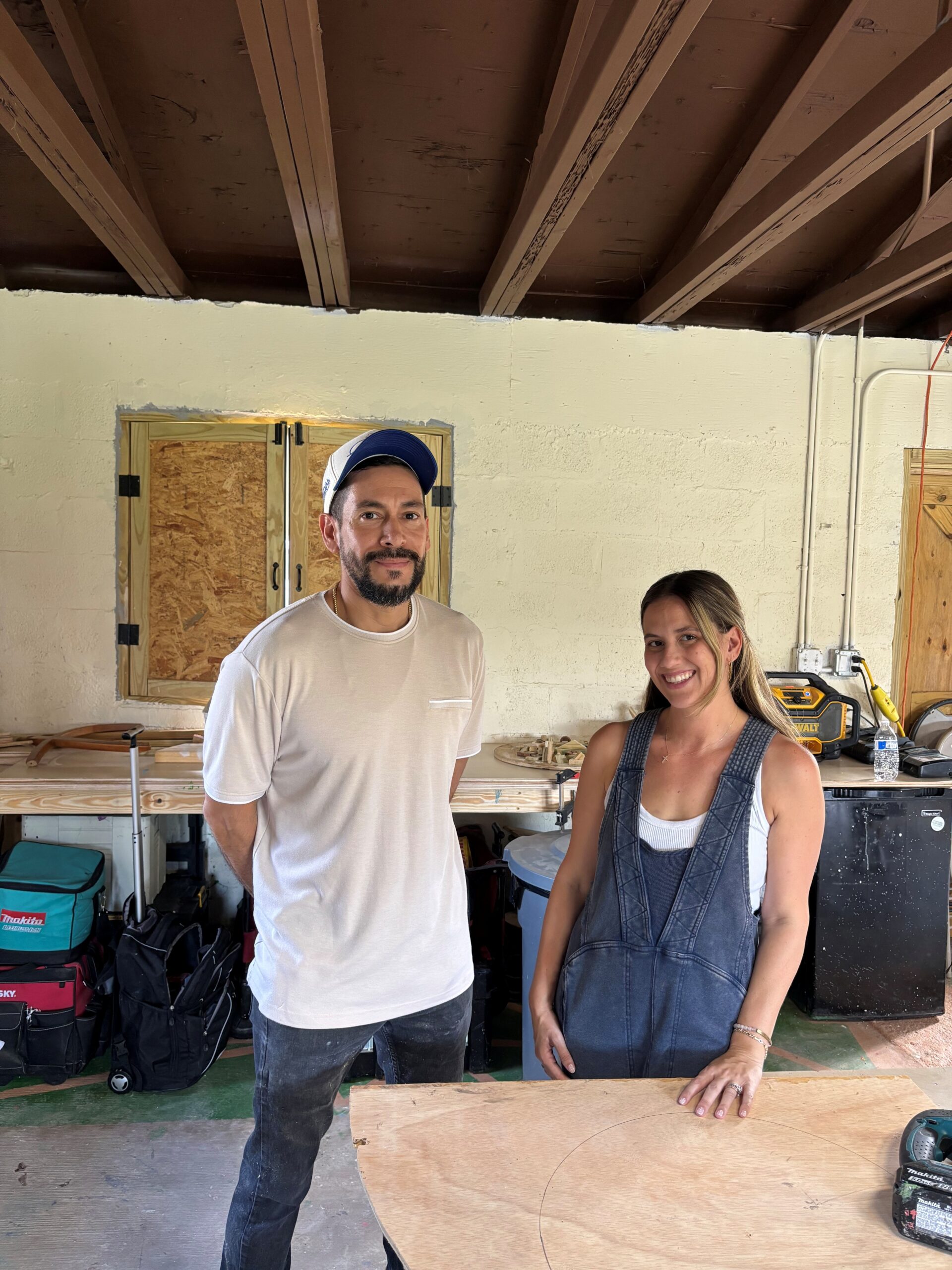
Now, just a few months in, they’re already serving 30 students a week, all in middle and high school. Nearly all of them use education savings accounts (ESAs), the flexible state scholarships that are fueling Florida’s fast-growing universe of à la carte learning.
“They say build it and they will come, and people are coming,” Christine said. “Families are hungry for it.”
The same could be said for à la carte learning in Florida.
Enabled by ESAs, à la carte learning is when families use state support to customize their child’s education completely outside of full-time schools, by picking and choosing from multiple providers. This school year, 140,000 students will do à la carte learning in Florida, up from about 8,000 five years ago, and their families will spend more than $1 billion in ESA funds. As we detail in a new data brief, nothing on this scale is happening anywhere else in America.
As the number of à la carte learners expands, so does the supply of places they can go.
Last year, 4,318 providers received ESA funding in Florida, more than double the year prior. Many of them are tutors and therapists. But a growing number are like Builder’s Workshop, specialized, micro-programs that would have been inconceivable as public education just a few years ago.
Inside Builder’s Workshop, students learn how to operate tools safely and confidently. They build birdhouses, step stools, shoe racks, and in one class I visited, “shields of faith.” Along the way, they pick up habits that rarely come from screens.
“Teaching kids to use tools and build things … builds confidence, responsibility, and real-world skills,” Marvin said. “It teaches them problem-solving, patience, and how to work safely. It also strengthens their math and creativity, gets them off screens, and helps them feel capable of making and fixing things.”
“Plus, from a Christian view,” Marvin continued, “it reflects God’s design for us to create and steward the world around us.”
(Builder’s Workshops offers both secular and Christian classes.)
Some Builder’s Workshop students are members of a Montessori co-op that also uses the property. Some are not. In the rapidly evolving world of à la carte learning, lines blur, and kids, families, and educators cross them freely.

“I just love building stuff,” said student Jasmin Hernandez (no relation to Marvin and Christine), a 16-year-old who wants to be a carpenter. Jasmin spoke briefly between noisy cuts with a band saw.
That DIY attitude is what Builders Workshop wants to cultivate.
“We want them to know they can fix a table if they need to fix a table,” Christine said. But “we also want them to know they can create their own products if they want to.”
Marvin and Christine are fixtures in South Florida’s fine arts scene. Marvin is a longtime artist; Christine has a background in project management. Among other services, their company designs and builds custom display cases, pedestals, and other structures for museums, galleries, and private homes.
So, they know their power tools. They also understand the broader potential.
To date, the expansion of ESAs hasn’t done much to enhance career and technical education. But student interest is growing for those skills and jobs, even as some quarters worry about a lack of qualified teachers. Florida, though, is full of highly trained professionals — builders, craftspeople, men and women skilled in the trades — who could be part of the solution.
Maybe ESAs are the bridge that connects them.
Maybe Builder’s Workshop is a glimpse of what that could look like.
Jasmin’s mom, Michelle Hernandez, said her daughter is already close to graduating because she took so many dual enrollment classes through her prior school. So, Michelle decided to homeschool Jasmin and let her explore more nontraditional classes.
Builder’s Workshop, she said, is “an outlet to be creative but with items that have a purpose. Building things also means not having to wait for others to do it, and she can see her own ideas come to life.”
Jasmin’s 13-year-old brother, Cristian, is also enrolled. Michelle said he looks forward to it because hands-on learning registers more deeply with him. Plus, she said, “He’s a boy. He needs to move.”
Kelly Jacobo said likewise about her son, Malakai, who’s also 13 and taking the class.

Jacobo said her grandfather and great-grandfather were accomplished carpenters, so Builder’s Workshop was perfect. “It kind of runs in the family,” she said. “I’ve been praying for forever that there’d be a woodworking class for kids.”
The backdrop for Builder’s Workshop couldn’t be more colorful. Even though it’s in super urbanized South Florida, it’s hidden down a graded road lined with banana trees. Around the corner is the mango grove, where the iguanas, clearly living their best lives, feast when the fruit is in season.
Alas, this setting is going to fade from the story. The owner recently sold the land, so Marvin and Christine will be looking for new digs soon. They don’t anticipate a problem with demand, however, and the families they serve are devoted.
“We don’t know where or when it will happen,” she said of finding a new place, but “we have an immense amount of faith that more families will join once we open our doors.”

By David Heroux and Ron Matus
In the blink of an eye, à la carte learning in Florida has become one of the fastest-growing education choice options in America.
This school year, 140,000 Florida students will participate in à la carte learning via state-supported education savings accounts, up from 8,465 five years ago. Their parents will spend more than $1 billion in ESA funds.
These families are at the forefront of epic change in public education. Completely outside of full-time schools, they’re assembling their own educational programming, mixing and matching from an ever-expanding menu of providers.
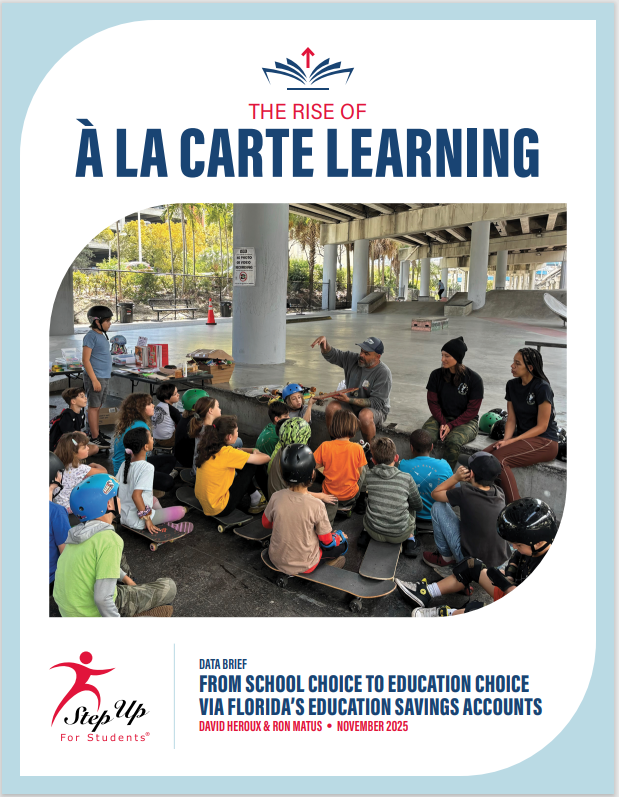
Nothing on this scale is happening anywhere else in America.
To give policymakers, philanthropists, and choice advocates a snapshot, we produced this new data brief. In broad strokes, it shows a more diverse and dynamic system where true customization is within reach for any family who wants it.
ESAs shift what’s possible from school choice to education choice. They give more families access not only to private schools, but tutors, therapists, curriculum, and other goods and services.
Adoption of these more flexible choice scholarships has been booming nationwide; 18 states now have them. But nowhere is their full potential more fully on display than in Florida.
Last year, 4,318 à la carte providers in Florida received ESA funding, more than double the year prior. Many of them are tutors and therapists, but a growing number offer more specialized and innovative services, as we highlighted in our first report on à la carte learning. Former public school teachers are also a driving force in creating them, just as they’ve been with microschools.
How far and fast à la carte learning will grow remains to be seen. For now, check out our brief to get a glimpse of what’s ahead.

Saltwater Studies in South Florida was founded by education entrepreneur Christa Jewett. It is among the growing number of a la carte providers in Florida made possible by the state's education savings account programs.
Every state’s public education system is a market with supply (i.e., instruction) and demand (i.e., students needing instruction). These markets function as the operating systems for public education. Unfortunately, since the mid-1800s, these markets have been poorly designed and managed. As a result, every state’s public education operating system is deeply flawed.
Just as digital applications fail when their underlying operating systems malfunction, public education programs fail when the market mechanisms beneath them are ineffective. This helps explain why nearly every major reform initiative since "A Nation at Risk" (1983), from site-based decision-making and outcome-based education to teacher empowerment and regulatory accountability, has failed to deliver sustained, systemic improvement.
Public education will not realize sustainable improvement until each state’s public education market becomes more effective and efficient.
Public education’s primary problem is that the supply side of each state’s market is dominated by a government monopoly that also controls most demand side funding. A necessary correction is giving families greater control over a significant portion of the public funds allocated for their student’s education. Thanks to decades of advocacy by the education choice movement, families in 18 states may now use public funds to purchase education services and products from government and nongovernment providers.
But family-controlled funding alone is not enough. Every aspect of the design and management of public education markets must be improved, not just their demand side.
In high-performing markets, supply and demand are in sync; transactions are easy, and transactional costs low; information to guide decision making is transparent and accessible; resource allocation is effective and efficient; risks are managed appropriately, and customer satisfaction is consistently high.
The education choice movement has historically focused on increasing the number of families who control a portion of their students’ education funding while putting less emphasis on ensuring the market’s supply side grows in tandem. This imbalance often causes demand to exceed supply, driving up costs without improving quality and leaving families unable to access the best educational environments for each child. A recent study in Florida found that 41,000 students were awarded education choice scholarships last year but never used them, in part because there was no space in their desired schools.
Policymakers can help by enacting policies that better align supply with demand, ensuring students have access to the options they need.
During the 2025-26 school year, families nationally will spend about $6.75 billion in public funds customizing their children’s education. Emerging Artificial Intelligence tools are already showing promise in streamlining compliance, verifying transactions in real time, and safeguarding public dollars. By adopting these technologies wisely, states can protect taxpayers while reducing bureaucratic burdens on families and providers.
Families shape public education markets through their purchasing decisions. When those decisions are well-informed, they drive higher quality and better prices. Yet in every state, families lack easy access to reliable information about provider performance and pricing. To support better choices, states should create user-friendly tools that provide transparent, trustworthy information. Without this transparency, families are navigating markets in the dark.
Every market decision carries risks and consumes resources. For example, when states implement policies that drive high demand without growing supply, costs rise, and families lose access to the best options for their children. Effective markets require careful regulation and risk management to balance innovation with accountability while ensuring resources are allocated efficiently.
States are responsible for the design, implementation, and ongoing management of public education markets. Their goal should be market optimization, with family satisfaction as the ultimate indicator of success. An optimized market is one where all components function well together, and widespread family satisfaction suggests that children’s needs are consistently being met.
Public education markets are interdependent ecosystems and must be managed as such. When states align supply and demand, reduce friction, expand transparency, and manage risk wisely, they create conditions where every family can access instruction tailored to their child’s needs.
Lasting improvement will not come from the next reform fad. It will come from building healthy markets that empower families and unlock the full potential of every student.
ORLANDO, Fla. — The whiplash of uncertainty has buffeted the nation’s charter school movement during the past five years. First, COVID-19 disrupted learning for millions of students . That was, followed by restrictions on federal grant money. Then came a lawsuit challenging the public status of charter schools.
The leader of the National Alliance of Public Charter Schools empathized as the movement’s annual conference kicked off on Monday.
“Starting, running and teaching at a charter school has never been easy,” the alliance’s CEO Starlee Coleman said during her keynote speech to more than 4,000 charter school representatives. She said plenty of changes lie ahead.
“Some of the changes you’re going to like, and some will be hard.”
But charter school supporters also had plenty to celebrate, including the sector’s growth alongside private school choice, students who outperformed district peers on national tests, and state laws that require charters to receive a share of capital funding. The U.S. Department of Education also infused an additional $60 million into the fund for charter schools, bringing the total to $500 million to support charter school expansion.
Leaders also hailed the opportunities created by the rise of private school education savings accounts, or ESAs, which have skyrocketed in popularity in states that have passed them.
“Choice is working. Choice is here to stay,” said Hanna Skandera, CEO of the Daniels Fund and a former secretary of education in New Mexico. Skandera was one of a four-member panel that discussed the future of charter schools.
Leaders in Texas and Florida discussed how to seize those opportunities by offering a la carte courses to students with ESAs. Florida, where in 2023 lawmakers made all K-12 scholarship programs into ESAs that are universally available and created the Personal Education Program for students not enrolled full-time in a public or private school, has already recruited school districts and charter schools to provide access to part-time classes. The latest to sign on is Charter Schools USA, which announced a collaboration with Step Up For Students earlier this week to expand options for students.
"This is the future, and it's great to see,” said Derrell Bradford, president of 50CAN and who serves on several charter school boards. “These sorts of collaborations are what happen when families are in the driver's seat, and they have real resources to direct the education of their children. I hope more states and providers follow them on the path to educational pluralism."
Texas won’t start offering its ESA program until 2026, but in preparation a coalition of charter school leaders has already started a pilot program for private-pay students at four schools. They offer a la carte classes online and in person, including some after school.
“We think this is an opportunity, not as a threat,” said Raphael Gang, K-12 education director at Stand Together Trust.
The panel advised those considering offering part-time services to capitalize on their strengths when deciding what to offer, start small and educate parents on how to access the programs.
In Florida, where education choice scholarship programs have been in place since 1999, representatives shared the history leading up to the state’s 2023 passage of House Bill 1, which converted all choice scholarships into ESAs and made them available to all K-12 students. That law also established a new ESA, the Personalized Education Program, for students who are not enrolled full-time in a public or private school. PEP allows parents to use $8,000 per student to create a customized education for their children.
“It has been a game-changer,” said Keith Jacobs, assistant director of provider development at Step Up For Students. Jacobs, a former charter school leader, works to recruit and onboard charter schools and school districts as providers of part-time services for ESA students.
Jacobs said school choice used to exist only for families who could afford private school tuition or buy a home in a certain ZIP code, but ESAs have taken choice to a new level.
“We have placed the funds in the hands of the parents,” he said.
What does that look like?
It might be a virtual class in the morning, band at a public school in the afternoon, and a session with a private tutor.
“Or it might be ‘My child needs an AP bio class and the charter school down the street has a good bio teacher,’” he said.
Charter Schools USA Florida Superintendent Dr. Eddie Ruiz said the decision to offer courses to part-time students was easy given the demand for flexibility.
“Charter Schools USA believes in innovation,” Ruiz said. “It’s given parents the flexibility to really design their student’s education.”
He said when he approached his principals about the idea, they wondered how it could be done. Ruiz compared it to Amazon.
“Parents can just pick and choose,” he said. “Whatever it may be, they design their educational experience.”
The implementation will look different for each state based on the laws, but in Florida, approved providers can list their offerings and prices on an online platform, where parents can purchase the services with their ESA funds.
Charter schools set their prices based on local costs, said Adam Emerson, executive director of the Office of School Choice for the Florida Department of Education. In calculating those, leaders should not overlook operational costs, such as putting the students in the school information system.
Emerson said serving ESA families is a financial win for charters, but also the chance to make a positive difference for students in their communities.
“Yes, it’s a revenue stream, but it’s also a calling,” he said.
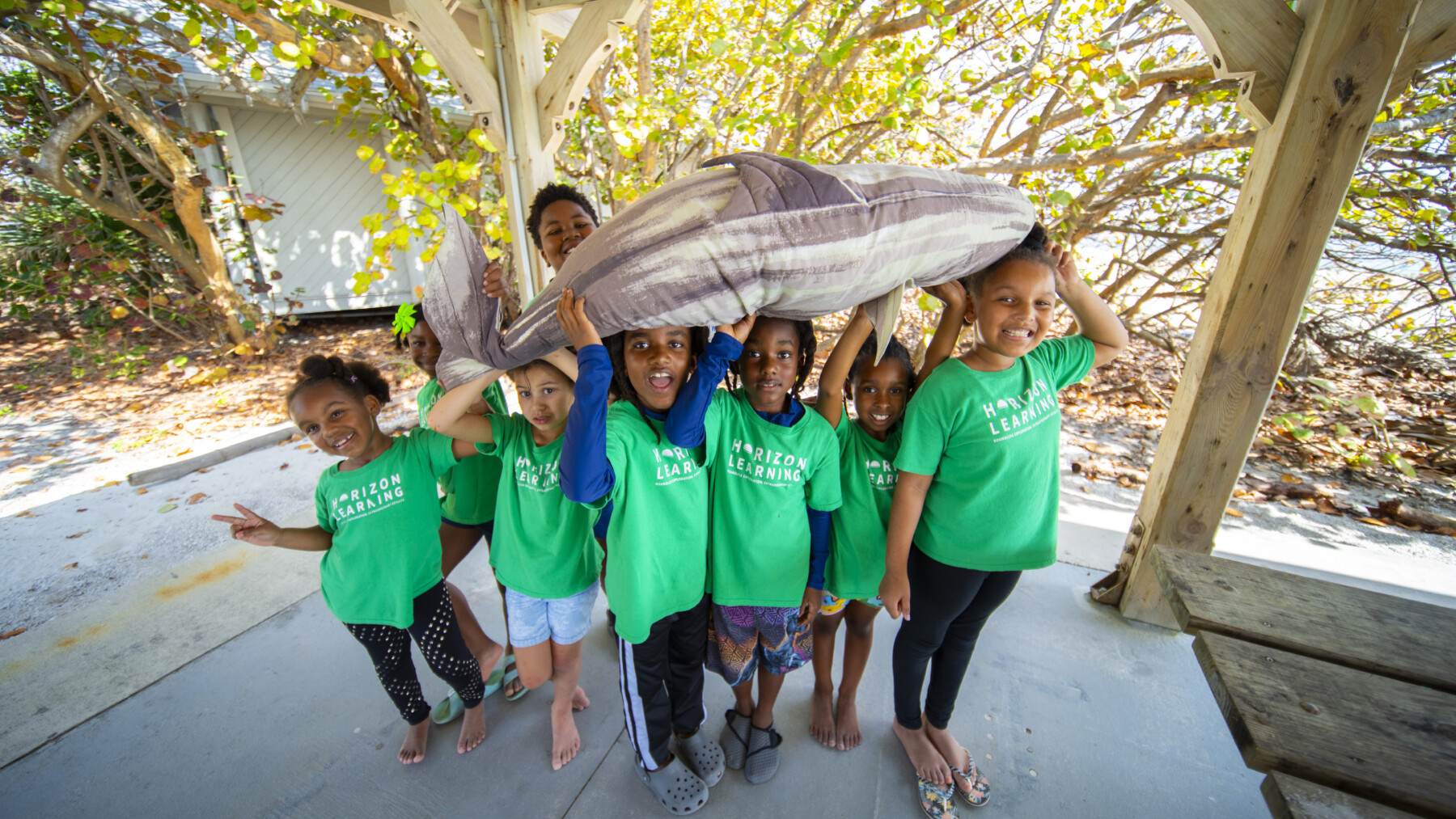
Three decades ago, dozens of Black families in the Liberty City neighborhood of Miami enrolled their children in Florida’s first charter school. They didn’t know it, but they were kickstarting the most dramatic, statewide, educational shift for Black students in America.
Today, 140,000+ Black students in Florida are being educated outside district schools. They’re either in charter schools, in private schools using state choice scholarships, or outside full-time schools entirely using education savings accounts.
More details on this overlooked migration can be found in a new brief co-authored by Black Minds Matter founder Denisha Allen and myself. It’s a quick update to our 2021 report, “Controlling the Narrative: Parental Choice, Black Empowerment & Lessons from Florida.”
Over the past decade, the number of Black students in Florida enrolled in non-district options grew 86%, to 142,384. That’s more than one in five Black students in the state. For context, 31 states have fewer Black students in their public schools than Florida has in these options.
The numbers are a strong rebuttal to those who claim choice is aimed at helping wealthy, white families.
They’re also a good indicator of what’s next.
As choice programs continue to expand across America, look for even more Black families, educators and communities to embrace them.
 At the annual Florida School Choice Conference and School Choice Summit, attendees got their customary sendoff from Jim Horne, a former state senator, state education commissioner and pioneer of the state’s charter school movement.
“We were charged to be laboratories of innovation,” he told the audience of school leaders in his keynote speech. “I challenge you to step out of the proverbial box. If you don’t innovate, you will stagnate.”
So far, charter schools have resisted the forces of stagnation. A report from the National Alliance for Public Charter Schools shows charter schools added 83,000 new students during the 2023-24 school year, as enrollment in other public schools shrank.
This school year, they added thousands more students in Florida. Recent figures from the state Department of Education show statewide charter school enrollment topped 400,000 during the 2024-25 school year.

Source: State Department of Education
That growth comes two years after state lawmakers passed House Bill 1, which allowed universal education choice scholarship eligibility and created the Personalized Education Program, a flexible scholarship for parents who fully customize their children’s education.
The legislation unlocked new opportunities for charters to heed Horne’s call to serve as laboratories of innovation by providing a la carte classes and services to scholarship students who did not attend public or private school full time. Need AP chemistry or calculus? No problem.
So far, five charter school organizations have partnered with Step Up For Students to offer individual courses to scholarship families, with more in the works.
“I think it’s a great idea and something that fits right into the charter school realm,” said Karen Seder, director of educational standards at Kid’s Community College, which operates three schools, including one that includes middle school, in Riverview, a southeastern suburb of Tampa.
The schools expect to begin offering courses soon after leaders decide what might work best. Seder said it might be easier to offer electives first and add core academics after seeing how things work out.
Though she sees the ability to help part-time students as a win for everyone, she sees the need to protect charter schools’ uniqueness, which comes from their ability to offer strong organizational cultures and coherent, specialized programs, for example, STEM, music or programs for students with learning differences. However, she called the push to maximize options for as many students as possible “the right mindset” for society.
“Ultimately, when you and I are no longer working and need somebody to take care of us, all these kids are going to be the ones responsible, so it shouldn’t matter to us if they’re homeschool or private school or public school or charter school or wilderness school, she said. “We need to make sure we’re raising kids that have the best education that we can, and our public dollars should be going to all of our kids.”
In its third era, public education aspires to expand equal opportunity by helping families and educators provide every student with an effective and efficient customized education through an effective and efficient public education market. We cannot achieve this aspiration without successfully implementing education savings accounts (ESAs).
ESAs are publicly funded flexible spending accounts that enable families to purchase the educational products and services they need to provide their child with a customized education. While ESAs are necessary to meet the unique educational needs of each student, we are still in the early stages of understanding how to best regulate and implement them.
Successful ESA implementations enable families to make purchases without unnecessary transactional friction. In this context, transactional friction refers to obstacles, complexities, conflicts, and inefficiencies that frustrate families and educational providers when they try to execute simple business transactions. These tensions come, in part, from needing to assure the public that every purchase is appropriate while not undermining customization by unduly limiting what families can purchase and/or overwhelming them with excessive bureaucracy.
Determining eligible ESA purchases
Determining the eligibility of families’ ESA purchases is a primary source of friction between families, providers, and ESA administrators. This school year in Florida over 500,000 families will spend about $3 billion making up to 2 million educational purchases for their students. Florida’s ESA administrators are responsible for ensuring each purchase is appropriate. Appropriate meaning consistent with state law and the unique needs of the student for whom a purchase is intended.
Determining if a purchase is appropriate for a specific student can be time consuming, which is problematic when an ESA administrator is reviewing millions of purchases annually. Families usually disagree when a purchase is denied and often initiate appeals through administrative, political, and media channels that can be time consuming and expensive to resolve. In Arizona, families are entitled to a formal administrative hearing when appealing a denied purchase. Often these hearings cost taxpayers more than the denied purchase.
When President Gerald Ford signed the Education for All Handicapped Children Act in 1975, school districts, schools, and classroom teachers were required to work with families to create customized learning plans called Individualized Education Plans (IEPs) for special needs students. This was the first instance of government requiring public education to provide students with a customized education, and the results have been mixed. For many families, the IEP process works well. Others feel schools and school districts erroneously deny students needed services, leading to contentious appeals that sometimes result in litigation.
Despite these tensions in the IEP process, I suspect most ESA administrators will eventually use certified educators and accredited public and private educational institutions, with the assistance of Artificial Intelligence (AI) and Machine Learning (ML), to help determine which ESA purchases are appropriate for each student. This approach should be less contentious than the IEP process since ESA families must use their students’ ESA funds, and not school district resources, to pay for services. This includes any services their students receive from school district staff.
Reimbursements and transactional friction
In some ESA states, families may purchase pre-approved educational products and services through an e-commerce site or use their personal funds and submit receipts to their state’s ESA administrator to get reimbursed. Reimbursements provide families with access to products and services not included on their state’s e-commerce site and allow for timely purchases. If a student needs materials to finish a science project that is due tomorrow, the family can make an out-of-pocket purchase and hope to get reimbursed.
While reimbursements provide families with purchasing flexibility, they come with complexities that generate transactional friction. Families must submit receipts showing each purchased item and its cost. These receipts are sometimes blurry and difficult to read, or the item descriptions are too vague for ESA administrators to determine whether they are eligible, requiring families to spend time getting new receipts.
Determining a service provider’s eligibility to receive ESA funds also often complicates reimbursements. A family may think a speech therapist is eligible to be compensated by ESA funds, but when they submit a receipt, the ESA administrator has no record of the therapist’s license. This causes delays while the therapist submits her current state license to the ESA administrator to establish or reestablish eligibility. Many families cannot afford waiting several weeks to get reimbursed or pay the additional credit card interest caused by these delays.
To reduce and eventually eliminate reimbursements, some ESA administrators are exploring creating standardized commodity codes that will enable families to buy pre-approved educational products and services using debit cards. This solution, which will probably take a few years to fully implement nationally, will be like Health Savings Account (HSA) cards. If enough states join this effort their collective market size should be sufficient to convince most vendors to participate.
In the interim some states are using or preparing to use technology such as Optical Character Recognition (OCR) and Artificial Intelligence (AI) to automate reimbursement processing. This automation will expedite the processing of reimbursements that do not require an educator to determine if a purchase is appropriate for a specific student.
Arizona is using risk-based auditing to accelerate its reimbursement processing. This involves automatically approving all ESA purchases under $2,000 and then auditing those purchases that have a significant probability of being ineligible. If an audit determines a purchase is ineligible the family must repay their ESA account. And in Florida, Step Up For Students is making excellent progress processing reimbursements more effectively and efficiently using technology and better workflow processes.
These interim solutions are an important bridge to a future in which debit cards and statewide networks of certified educators and accredited educational institutions enable public education to provide an effective and efficient customized education to millions of students with little unnecessary transactional friction.
Some transactional friction will always exist in public education, and it should. How well we manage this friction will help determine how successful we are.
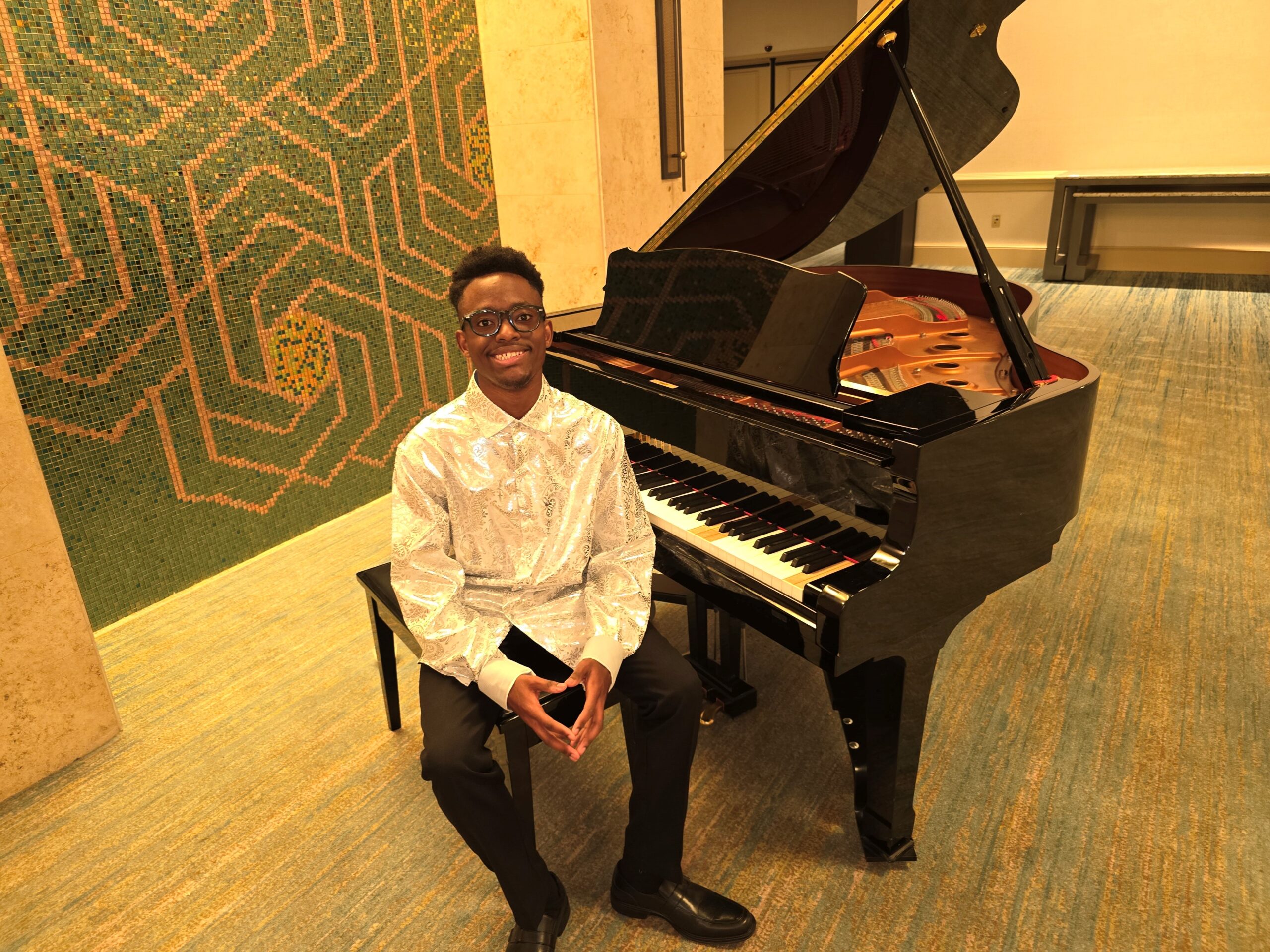
Gabriel is the first PEP alumnus to join the American Federation for Children.
Gabriel Lynch III is new to his role as an education choice advocate. Though in essence, he’s been doing it nearly all his life.
He’s a product of both private and homeschooled education. He’s attended brick-and-mortar schools and studied virtually.
Along the way, Gabriel, 19, has become an ordained minister, a motivational speaker, an accomplished pianist, and a published author.
Those wondering about the benefits of education choice need only listen to Gabriel.
“School choice changed my life to who I am today,” he said.
Today, Gabriel is a college freshman majoring in music at Seminole State College in Lake Mary. His education from kindergarten through high school was supported by scholarships managed by Step Up For Students, from the Florida Tax Credit Scholarship to the Family Empowerment Scholarship for Educational Options to the Personalized Education Program (PEP), which he used to homeschool in 2023-24, his senior year of high school.
“I want kids to have the same experiences I had,” he said.
That’s why Gabriel joined the American Federation for Children (AFC), an organization that strives to bring education choices to families nationwide. Gabriel was recently accepted into AFC’s Future Leader Fellowship, a year-long internship program that will prepare him to meet with lawmakers around the country to promote education choice.
Read about Gabriel's story here.
A number of Step Up For Students alumni advocate for AFC. One of them, Denisha Merriweather Allen, founded Black Minds Matter and serves on Step Up For Students' governance board. Gabriel is the first to have benefited from a PEP scholarship. The scholarship, which began during the 2023-24 school year, is an education savings account (ESA) for students who are not enrolled full-time in a public or private school. This allows parents to tailor their children’s education by allowing them to spend their scholarship funds on various approved, education-related expenses.
Gabriel’s mom, Krystle, used PEP to homeschool Gabriel and his two brothers, Kingston (eighth grade) and Zechariah (sixth grade).
A longtime advocate for education choice, Krystle and her husband, Gabriel Jr., who live in Apopka, want to take control of their children’s education. PEP allowed them to tailor the curriculum for each son.
“They have different learning paths,” she said.
Krystle is ecstatic that her oldest son is following in her advocacy footsteps.
“This has been something that has been on my heart for many years, and to see him carry on the message, that's exactly what I've always dreamed of,” she said.
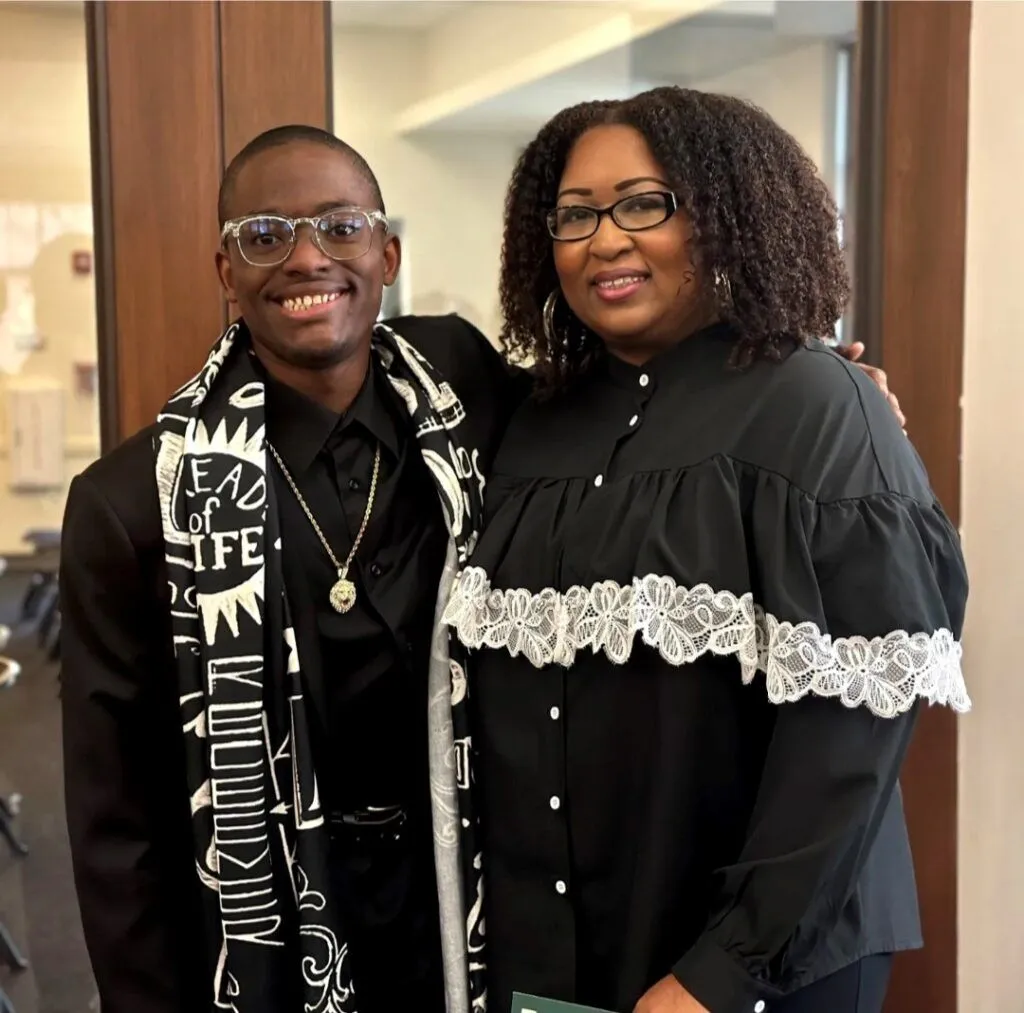
By joining the American Federation for Children, Gabriel is following in Krystle's footsteps as an advocate for education choice.
Gabriel said school choice helped mold him. Attending a faith-based school led him to become an ordained minister and a public speaker. Using the PEP scholarship for piano, guitar, and voice lessons fostered his love of music and helped shape what he hopes to be his career path. He wants to be a composer.
“There are so many things I am right now because of school choice,” Gabriel said. “I think it’s because my parents put me where I fit best because even when I was in private school, I could fit in. I found my group, I found my clique, and that's why I say it really changed my life.”
Gabriel is eager to share his story with lawmakers in states that don’t have education choice. Last year, advocates from the AFC Future Leaders program volunteered on the front lines of the fight to support education choice legislation in Nebraska.
“It’s giving parents options to choose where their kid fits best,” he said. “that’s what I will tell them. I think that would be amazing for those states that don't have school choice options.”
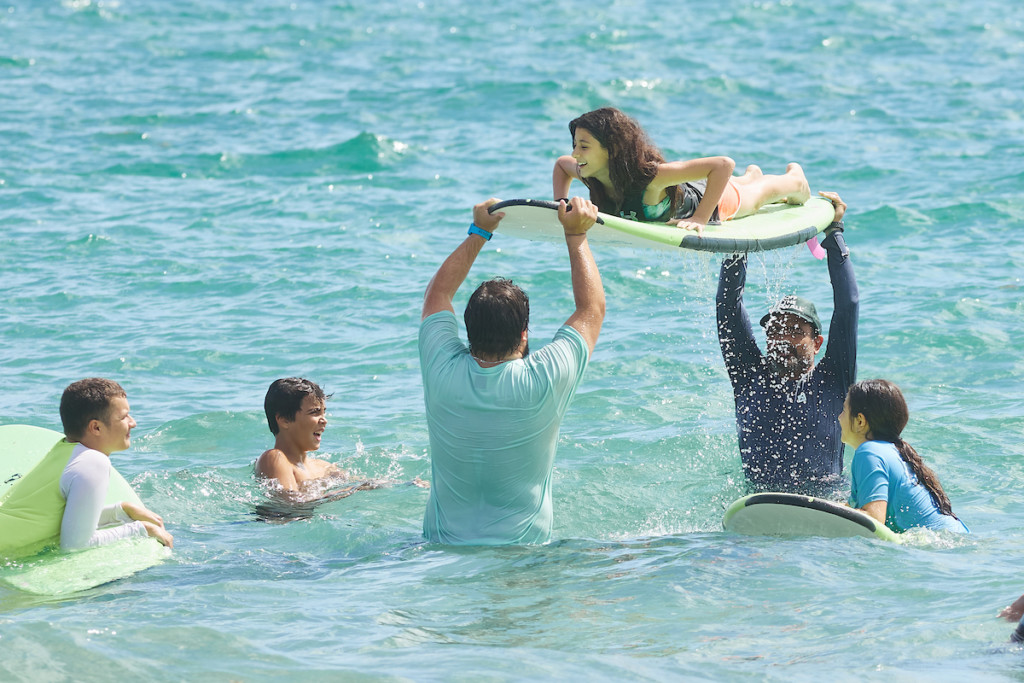
In 2018, Surf Skate Science had five students. Today, it has 500, with another 110 on a waitlist. Photography by Chris Aluka Berry/AlukaStorytellingPhotography.com
Florida’s scholarship program for K-12 students who don’t attend school full-time has turned on the “no vacancy” sign.
The Personalized Education Program operates as an education savings account that allocates an average of $8,000 per student for approved education-related expenses. It has reached its statutory capacity of 60,000 students for the school year.
Step Up For Students, which manages the bulk of the scholarships, said parents may continue to apply this year. Staff will review capacity regularly to see if more scholarships become available.
Since the state began offering PEP in 2023, demand immediately took off and has continued to skyrocket. Last year, the program was capped at 20,000 students. This year, the law allowed the cap to grow by 40,000 to a total of 60,000 students. Next year, the program can grow another 40,000, bringing the total to 100,000.
The program’s growth has supercharged education entrepreneurs who start a la carte programs that can operate independently or in partnership with traditional schools.
“People are seeing what’s possible with customized education solutions, and it seems that this approach is really popular,” said Eric Wearne, an associate professor in the Education Economics Center at Kennesaw State University and director of the National Hybrid Schools Project. He added that for years, parents have been interested in schedule flexibility, and “these new programs are making that kind of schedule more accessible.”
 A good example is Baker County Christian Co-op. Tucked away in the tiny Northeast Florida town of Glen St. Mary, the hybrid homeschool started in a house with a handful of families in 2017. It has since expanded to three buildings that serve 250 students, with 300 more on a waitlist.
Katie Wilford, one of three co-founders and a former public school educator, credits PEP with the rapid enrollment growth.
“I used to get an email once a day,” Wilford said. “Now, I get five or six emails a day. It has blown up.” She said 95% of the students at Baker County Christian Co-op receive PEP, while about 4% receive the state scholarship for students with unique abilities. Both programs operate as education savings accounts.
Jessie and John Pedraza, parents from Naples, Florida, began homeschooling their two daughters, Annaliyah and Gianna, since the COVID-19 pandemic first closed schools but continued full time. Jessie has used PEP for field trips and memberships to STEM programs near their home as well as physical education. Annaliyah, who is in fifth grade, is in martial arts. Gianna joined a gym with a program for kids ages 7-11.
“PEP has allowed us to level up our homeschool experience,” she said. “It gives us the opportunity to really create an A-plus homeschool experience versus an A or B-plus.”
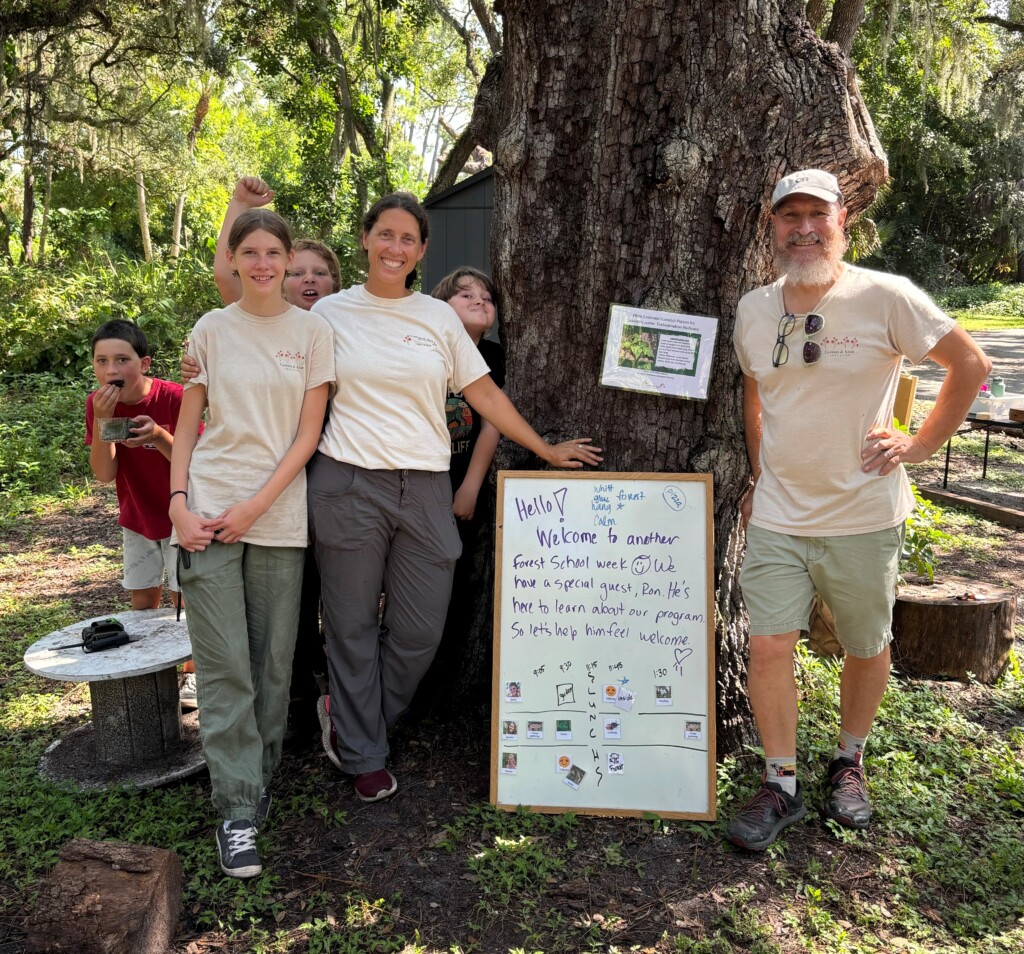
Justine Wilson, front row, center, and her husband, Chris Trammel, right, established Curious and Kind as a forest school for part-time, student-directed learning.
SARASOTA, Fla. – After 18 years as an educator in public and private schools, Justine Wilson decided to make a change. She was excellent at her job. In fact, she had just been offered a top administrative position at a top private school. But she didn’t believe mainstream approaches to teaching and learning were the best ones for many students, or for herself.
“I was saying things and doing things that weren’t who I actually was as an educator. I kept getting more and more away from my core beliefs,” Wilson said. “I just wanted to be authentic.”
Wilson wanted:
With the help of Florida’s education choice programs, Wilson did what more and more former traditional educators are doing: She created her own option: a nature-based, student-directed, hybrid homeschool called Curious and Kind Education.
“I love offering something that brings me the most joy,” Wilson said. “Which is being outside with the kids and partnering with their families.”
Curious and Kind offers different programs for different age groups, from toddlers to teenagers. Depending on the program, families can enroll their “explorers” one, two, or three days a week.
Plenty of families love this approach. Curious and Kind started last year with 25 students. This year, it has 90. Nearly all of them use choice scholarships, particularly the Personalized Education Program (PEP) scholarship, an education savings account (ESA) in its second year of existence.
Curious and Kind rents space from a church, but its heart is out back: a two-acre patch of unruly, urban forest, next to a creek that flows from a nature park across the street.
One day last month, 20 explorers ages 5 to 12 took seats on a set of cut logs, arranged in a circle beneath oaks, pines, and palms. Then they got down to business, discussing what they’d like to do over the next few hours. Crochet. Whittle. Make a pizza. Whatever the idea, Wilson and other “facilitators” gently offered suggestions on tools and timing and possible collaborations.
“Our philosophy is ‘Yes. And how do we make it happen?’ “Wilson said.
By early afternoon, most of the explorers had circled back to what they wanted to work on. (Because Curious and Kind didn’t have the ingredients on hand, the pizza had to wait until later in the week.) But first, it was time to play in the woods.
Within minutes, the explorers were building tree forts, making “tea” in a mud kitchen, and trying to identify a species of pseudo-scorpion they found on a slash pine.
At Curious and Kind, play routinely leads to projects.
When the creek was a bit too high for wading, somebody suggested the explorers build little boats instead. (It’s not clear if the idea came from an explorer or a facilitator. “It could have been anybody,” Wilson said. “It’s very democratic.”)
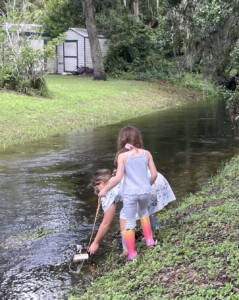
Students try out their homemade boats.
Ice pop sticks and masking tape were on hand. So were twigs and leaves and pine straw. The explorers gave it their best shot, and the initial results were … meh. They pulled their boats from the water to tweak their designs.
The next day, they tried again. This time, they incorporated wine corks that one of the facilitators brought in, plus sturdier and more water-resistant packing tape. This time, they found more success.
“This is what children do when they’re left to their own devices. Humans do this innately,” Wilson said. “They were failing forward, because it was fun.”
The project was also fun because it was theirs.
Agency matters. In one of the classrooms, explorers established their own mini mall. One of them set up a face-painting booth. Another created a line of glittery fingernails. Another manufactured mystery gift boxes, each with its own origami surprise. They even created their own bank, currency, and credit cards.
Wilson quickly suggested the students host a community fair, but “They were like, ‘Why would we want to do that?’ It wasn’t the right time.”
A few weeks later, Wilson pitched the idea again, this time because the Children’s Entrepreneur Market was coming to Sarasota. This time, the students were pumped.
In Florida, the state that’s leading the nation in reimagining public education, Curious and Kind is “school,” too.
It bills itself as a blend of the forest school and Agile Learning Center models. That may not be “traditional” education to some folks, but it has deep roots in thoughtful, alternative approaches.
“We believe in recognizing the innate curiosity of kids and fostering that,” said Chris Trammel, who is Justine’s husband, the director of operations at Curious and Kind, and likewise a longtime educator in public and private schools. “If you’re following your passions, you’re going to take ownership of your learning.”
Curious and Kind represents a number of other choice-driven trend lines.
The “hybrid” schedule is catching on. Florida’s homeschooling population has skyrocketed in recent years, as it has across the country, and more homeschooling families are opting for part-time schools.
Curious and Kind is on the cutting edge of “a la carte learning,” too. Thanks to the flexibility of ESAs, —which can be used for a range of educational expenses, not just private school tuition — more and more parents are choosing from multiple providers.
 In Florida, the primary vehicle for that, the PEP scholarship, can serve up to 60,000 students this year, up from 20,000 last year. Thousands of students are also using another Florida ESA, the Family Empowerment Scholarship for Students with Unique Abilities, in a similar fashion.
Carolina King’s daughters, Camila, 11, and Giuliana, 9, are among them. Both have special needs that would make it more challenging for them to thrive in traditional schools, said King, who writes a popular blog about parenting and child development.
King believes the student-directed approach is ideal for instilling a lifelong love for learning. Before the family moved to Florida in 2021, Camila and Giuliana attended a Montessori school. When a similar school didn’t pan out after the move, King turned to homeschooling and soon found Curious and Kind.
“They love it there. When the school year was over, they were so sad,” King said. “They said they never want to do summer again.”
King said features big and small make Curious and Kind special. The kids eat and use the restroom whenever they want. Different ages interact with each other. There’s no bullying. More than anything, King can see her daughters pursuing what excites them and learning deeply in the process.
Last year, Camila helped write a Halloween play that the kids performed for each other. She came up with the original idea. Other kids contributed to the script. Still more took on acting roles. Some were so engaged, they worked on the project at home.
“A lot of what happens is a snowball effect,” King said. “The kids feed off each other.”
Curious and Kind and similar alternatives might not be right for every family. But as choice in Florida has expanded, more and more have been flocking to them.
“People have a diversity of interests,” Wilson said. “We should have a diversity of options.”

