Few institutions in our society are as overregulated as public schools. The crushing weight of federal, state, and district regulations severely undermines these schools’ effectiveness.
Consumer choice and government regulation comprise the two components of educational accountability systems. In the areas of home-schooling and private schools, Florida has struck a good balance between regulations and choice, but the public district and charter schools are overregulated. To achieve a more appropriate balance, public schools need less regulation and more consumer choice.
The accountability system for homeschools is instructive for private and public schools. Parents must notify their school district in writing when they intend to create a home school program. They must keep a portfolio for two years of all the instructional activities and materials used in their program, and they must provide an annual evaluation of their child’s academic progress. If their district decides their child is not making adequate progress, then parents have one year to address this insufficient progress. If, after this year, the child is still not making adequate progress, the district may terminate this home school program.
Teachers in home school programs are not required to be certified or have college degrees. This is true for parents who teach, or teachers that parents hire. Home school programs are not assigned school grades nor are they required to be accredited. In fact, state law does not require public or private schools to be accredited either. (more…)
War on Poverty liberals who supported private school vouchers saw school choice as a means to create more accountability for a public education system that they saw as unresponsive to the needs of low-income parents. (Image from Wikimedia Commons.)
Editor’s note: redefinED continues its journey through the archives, reviving on Saturdays interesting posts on various topics that deserve a second look. In March, we’ll feature pieces on school accountability, beginning with this one that shines a light on War on Poverty liberals who supported private school vouchers in the 1960s and ‘70s.
This is the latest post in our ongoing series on the center-left roots of school choice.
The Great Society liberals who pushed for private school vouchers in the 1960s and ‘70s were all about social justice. They saw a tool for empowering low-income parents. For promoting equity. For honoring diversity.
They also saw a means to redefine accountability.
In 1971, the U.S. Office of Economic Opportunity – the office created to lead the War on Poverty – put out this brochure explaining the “voucher experiment” that would eventually be sorta kinda conducted in California’s Alum Rock school district. (You can read the full proposal here.) The brochure notes the pathetic academic outcomes for low-income students across America, then pivots to a theory for progress through “greater accountability”:
One reason for this disparity could well be that poor parents have little opportunity to affect the type or quality of education received by their children. The poor have no means by which to make the education system more responsive to their needs and desires. More affluent parents usually can obtain a good education for their children because they can choose schools for their children to attend – either by deciding where to live or by sending the children to private schools. Poverty and residential segregation deny this choice to low-income and minority parents.
The Office of Economic Opportunity therefore has begun to seek a means to introduce greater accountability and parental control into schools in such a way that the poor would have a wider range of choices, that the schools would be encouraged to become more accountable to parents, and that the public schools would remain attractive to the more affluent. This has led to consideration of an experiment in which public education would be given directly to parents in the form of vouchers, or certificates, which the parents could then take to the school of their choice, public or nonpublic, as payment for their children’s education.
Now is a good a time to re-surface this blast from the past. Plenty of smart folks have been trying to help people understand a definition of accountability through school choice (see here, here, here and here). But truth be told, opponents of choice – and I’d put many of my media friends in that category – still haven’t heard that definition, or still don’t appreciate it, or still characterize it exclusively as an extension of free-market “ideology.” Perhaps hearing it from the left will cause some healthy cognitive dissonance. 🙂
A better grasp of accountability is especially important to us in Florida. We’ve been barraged by negative stories ever since President Trump visited an Orlando Catholic school in March 2017 and praised Florida’s scholarship programs. Many of these stories suggested, if not outright claimed, that the Florida programs lack accountability. The name of the Trump-spurred series in the Orlando Sentinel says it all: “Schools Without Rules.” (Our response here.)
But this notion of unaccountable private schools is only true if you believe in a narrow, warped view of accountability that includes regulations alone. If “accountability” means holding a state-supported program to account for results, then parental choice exercises that pressure, too.
The liberal academics behind the OEO voucher proposal clearly believed that. (more…)
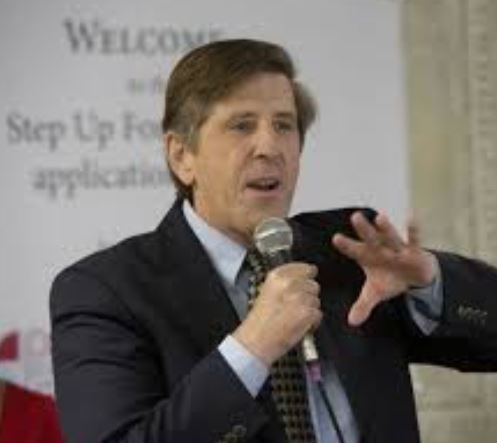
Doug Tuthill is president of Step Up For Students, which helps administer the nation's largest private school choice program (and hosts this blog).
Here are some education choice stocking stuffers that would please me this holiday season.
Over the years, we have tried and failed to systematize educating the whole child. Our latest attempt includes focusing on social and emotional learning (SEL). While everyone seems to agree that integrating SEL into public education is essential, we’re making little progress in how to assess SEL skills. We need developmentally appropriate, reliable and valid measures of SEL skills. These assessments should generate formative data that are continuously available to educators, parents, and students.
The accountability systems in public education need to improve. We need less regulatory accountability and more accountability via consumer choice. The balance we have between regulatory and consumer choice accountability in Florida’s private school choice programs provides a good model for our district and charter schools. Florida doesn’t require its public schools to be accredited, which is a good first step, but public school principals should be empowered to hire whomever they want, provided the employees pass a criminal background check. Requiring principals to hire state-certified teachers often forces them to hire a less effective teacher. In Florida, we also need to return control of class sizes to schools. That we’ve put class size limits in our state constitution is crazy. A key to improving public education’s accountability system is ensuring families have the funds and information they need to access the best learning options for each child.
We need to get serious about lifelong learning. The days of graduating from high school, vocational training, or college with the knowledge and skills needed for lifelong employment are over. Public education needs to become the vehicle through which we operationalize lifelong learning. Everyone should have a permanent, publicly-funded Education Scholarship Account (ESA) to help fund their continuous learning. Even old guys like me.

As our new redefinED editor, Matt Ladner, continually reminds us, there is a demographic tsunami heading toward Florida. The combination of aging baby boomers needing more medical care and young children flooding into our schools is going to crush Florida financially. We need to start preparing now. Our new governor needs to get with legislative leaders and set up a bipartisan process to begin planning for how we’re going address this challenge. One solution is embracing public education delivery models such as virtual education and community/private schools that require less government-funded capital investment. Removing the class size amendment from the Florida Constitution would help here also.
I miss the days when Florida Democrats were engaged in innovative efforts to improve public education. I was fortunate to work on education reform initiatives with Democratic leaders such as Bob Graham, Betty Castor, Buddy McKay, Lawton Chiles, and my friend and neighbor Doug Jamerson. We didn’t always agree, but I appreciated their willingness to challenge the status quo and put the needs of children — particularly disadvantaged children — first. Being out of power often causes a party’s governing instincts to diminish. They become the party of no instead of the party of solutions. Public education desperately needs bipartisan solutions to its vexing problems. It’s common knowledge that opposing education choice contributed to the Democrats losing the recent governor’s race in Florida. It’s in the party’s best interest, but more importantly it’s in public education’s best interest, for Democrats to rediscover their drive to create a public education system that works for everyone.
Civil Rights and education choice legend, Dr. Howard Fuller, made a powerful case at Jeb Bush’s recent ExcelinEd education reform conference in Washington, D.C., for the need to connect education reform with improvements in health care and housing. I’d like to add criminal justice reform to Dr. Fuller’s list. Congress just passed some timid improvements to our country’s highly dysfunctional criminal justice system. Much more needs to be done. I don’t know of any institution in our country that does more to perpetuate generational poverty than our criminal justice system. From cash bail, to the stacking of charges to strengthen prosecutors’ leverage in plea bargaining, to sentencing biases, to extended probations that almost guarantee returning to prison, to the confirmation bias that pervades the system and assumes a defendant is guilty until proved innocent — which almost never happens because most cases end in a plea bargain -- the system is stacked against low-income people. Criminal justice reform must occur in parallel with education reform if we’re going to succeed in reducing the disparities in quality of life that are explained by race and class. The podcast Serial recently did a deep dive into Cleveland’s criminal justice system. Prepare to be appalled by what you hear, but these stories are typical of what’s happening every day in communities across America.
Finally, let’s respect the importance of linguistic precision and start using “education choice” instead of “school choice.” I understand that school choice is a term most people are familiar with, which is why many still use it. But it’s imprecise and often inaccurate. Choice in public education occurs between schools, within schools and classrooms, and outside of schools. Families using ESAs, for instance, often spend their funds on education products and services beyond schools. We mislead and disrespect our readers/listeners when we ignore this reality and pretend all education choice is school choice.
I hope our redefinED readers/listeners have a safe and joyful holiday season. Thank you for joining us on our quest to help public education fulfill the promise of equal opportunity.
Editor's Note: This is the fourth in a series of posts where various members of the education choice world share an #edchoice wish. For Monday's post, CLICK HERE.
COMING TOMORROW: Step Up For Students' Geoff Fox explains why one-size-fits-all didn't fit him, and why he would have benefited from education choice.
Few institutions in our society are as overregulated as public schools. The crushing weight of federal, state, and district regulations severely undermines these schools’ effectiveness.
Consumer choice and government regulation comprise the two components of educational accountability systems. In the areas of home-schooling and private schools, Florida has struck a good balance between regulations and choice, but the public district and charter schools are overregulated. To achieve a more appropriate balance, public schools need less regulation and more consumer choice.
The accountability system for homeschools is instructive for private and public schools. Parents must notify their school district in writing when they intend to create a home school program. They must keep a portfolio for two years of all the instructional activities and materials used in their program, and they must provide an annual evaluation of their child’s academic progress. If their district decides their child is not making adequate progress, then parents have one year to address this insufficient progress. If, after this year, the child is still not making adequate progress, the district may terminate this home school program.
Teachers in home school programs are not required to be certified or have college degrees. This is true for parents who teach, or teachers that parents hire. Home school programs are not assigned school grades nor are they required to be accredited. In fact, state law does not require public or private schools to be accredited either.
Enrollment in home school programs is growing in Florida and nationally. Neither parents, nor school districts, nor the public is asking the Florida Legislature to increase or decrease the amount of regulatory accountability in these programs, suggesting all sides seem satisfied with the status quo. Giving home-schooling parents access to better information about how their children are performing would strengthen the program. When I home-schooled my youngest son, the feedback I got from the district about the evaluation information I submitted was minimal.
If home-schooling parents collectively decide to create a private school, they must register their school with the state, complete an annual school survey, pass health and safety inspections, and maintain attendance records to document student compliance with Florida’s compulsory attendance law. Like the home school program, private school teachers are not required to be certified or have college degrees, although the school owner is required to pass a background check. Private schools do not receive state grades.
Florida’s private school students are the only students not required by the state to be evaluated annually, unless they are using a Florida Tax Credit (FTC) Scholarship. FTC students in grades 3-10 are required to be tested yearly. Their test results must be shared with parents and sent to external evaluators who publish an annual report on student achievement in the FTC program. Any private school with 30 or more testable FTC students must report these students’ gain scores publicly.
While there is little disagreement around the balance between regulations and consumer choice in home schooling, the balance in private schools is more contentious. Some argue that because FTC students are using publicly-authorized funds, private schools serving FTC students should be required to hire teachers with college degrees.
I disagree. All parents are eligible to receive taxpayer subsidies for their education expenses via the federal tax code, regardless if their child is in a public, home, or private school. If taxpayer support is the rationale for requiring college-degreed teachers, then all private schools and home school programs should be required to hire degreed teachers. But no one is suggesting that home-schooling parents be required to have college degrees.
In addition, I’ve seen no scientific or anecdotal evidence showing that all college degreed teachers are better than all non-college degreed teachers. Bill Gates does not have a college degree but I’m confident he’s more capable of teaching coding and business management than many degreed teachers. Private schools serving scholarship students should have the same freedom as homeschools and other private schools to hire the most competent teachers available, regardless of whether they have a college degree.
Giving parents access to better information about how their child is performing would also improve private school education. About 400 private schools serving FTC students are using an online adaptive assessment system called Measures of Academic Progress (MAP) to generate real-time formative and summative achievement data for parents, teachers, and students. The MAP assessment includes comparability information to let parents know if their fifth-grader is on pace to meet the entrance requirements of a particular college or university. This is a good start. Eventually, valid and reliable data should be continually available to all private and home school parents, students, and teachers.
Making private schools more affordable for more students is another needed improvement. Wealthy families can afford private school tuition and low-income families are increasingly paying private school tuition via FTC scholarships, but many middle-class families are priced out of Florida’s private school market. This lack of middle-class access reduces the number of available private schools, which undermines accountability through consumer choice.
Few institutions in our society are as overregulated as public schools. The crushing weight of federal, state, and district regulations severely undermines these schools’ effectiveness. Public school funding comes with numerous mandates and restrictions that reduce a school’s ability to be flexible and innovative. Florida’s constitution dictates public school class sizes, which limits principals’ ability to effectively and efficiently allocate their schools’ most valued asset—their teachers. Employee salaries are controlled by the school district, which hinders principals’ ability to recruit and retain those teachers who best fit their schools. Principals can hire some teachers who lack college degrees, but most of their hires must be degreed and state certified, even if there are far more competent teachers available. A public school principal cannot hire Mark Zuckerberg to teach software programming until he completes his college degree.
Public charter schools are less regulated than public district schools, but not by much. The primary advantage most charter schools have is that they don’t operate under restrictive, one-size-fits-all union contracts.
State testing mandates also undermine the effectiveness of public schools. Unlike FTC scholarship students who may choose from several state-approved, nationally-normed tests, all public school students must take the same state test. Since Florida’s state test is not nationally normed, public school parents are not able to compare their student’s progress with students nationally.
Given all the federal, state, and district obstacles they must overcome, Florida’s public schools are performing surprisingly well. To further improve our public schools, we need to decrease regulatory accountability and increase accountability via consumer choice. Public school leaders need many of the same decision-making powers as home and private school leaders, such as freedom to hire and fire staff, control over employee job duties and compensation, and the power to determine the number of students assigned to each teacher.
No organization outperforms its leadership. If public school principals are not competent to make these basic management decisions, then all future efforts to improve our public schools will likely fail.
Florida needs a better system for determining quality and imposing regulatory accountability. School grades are a one-size-fits-all solution. We can do better.
The state of Florida’s latest annual report on the performance of students receiving tax credit scholarships contained these facts: 22.9 percent of scholarship students came from public schools rated “D” or “F” in the prior school year, while 30.3 percent of came from public schools rated “A” or “B.”
School grades are intended to inform parents about the effectiveness of district and charter schools, but tax credit scholarship parents aren’t impressed. Apparently, most of these low-income and working-class parents are using other means to determine which schools will work best for their children.
I was skeptical when Florida first started grading schools.
Schools are not a monolith. As any teacher will attest, there at least five or six distinct mini-schools within a typical district high school. Even smaller elementary schools have several diverse subcultures. Yet schools are assigned a single grade that is supposed to signify a school’s effectiveness for all children.
I was also skeptical because of the strong positive correlation between standardized test scores and family income. Higher-income children, on average, have higher standardized test scores than lower-income students. Since Florida’s school grades are based on standardized test scores, I knew schools serving higher-income students would have the highest test scores and, therefore, the highest grades.
Sure enough, when Florida’s school grades first appeared, schools in affluent communities received As and Bs, while schools in low-income communities received Ds and Fs. To address this issue, the state quickly modified its grading formula to include annual test score gains so schools serving low-income students could increase their grades through gains, even if their absolute scores were still much lower than their peers in the affluent schools. (more…)
A few months ago, the latest results from the National Assessment of Educational Progress – the gold standard of standardized tests – showed Florida, again, made a national splash. This time, it notched the biggest gains in America.
Florida now ranks No. 1, No. 1, No. 3 and No. 8 on the four core tests on The Nation's Report Card, after adjusting for demographics.
You’d think the biggest gains in America would prompt applause from school boards, superintendents, teacher unions, and allied lawmakers. But no. In Florida, good news about public schools is increasingly ignored by public school groups; media coverage is mostly crickets (recent exception here); and alternative facts seed conspiracy theories.
No wonder, then, that plenty of candidates for political office are again vying to see who can flog the system the most. One gubernatorial candidate says “we are experiencing a true state of education emergency,” citing a single, obscure (at least in education circles) ranking, based on an especially crude set of indicators. Another says “Florida’s education reform has been a failure” while citing no evidence at all.
Deny and distort. Refuse to acknowledge progress. Demonize anybody who does. This is what “debate” over Florida education has come to.
Measures like NAEP scores continue to show the system is not only better than ever, but, in some ways, among the best in America. Yet to many, it’s still Flori-duh.
The tragic result is Florida teachers don’t get credit they deserve. And every day Floridians have no idea their public schools are on the rise.
Consider:
War on Poverty liberals who supported private school vouchers saw school choice as a means to create more accountability for a public education system that they saw as unresponsive to the needs of low-income parents. (Image from Wikimedia Commons.)
This is the latest post in our ongoing series on the center-left roots of school choice.
The Great Society liberals who pushed for private school vouchers in the 1960s and ‘70s were all about social justice. They saw a tool for empowering low-income parents. For promoting equity. For honoring diversity.
They also saw a means to redefine accountability.
In 1971, the U.S. Office of Economic Opportunity – the office created to lead the War on Poverty – put out this brochure explaining the “voucher experiment” that would eventually be sorta kinda conducted in California’s Alum Rock school district. (You can read the full proposal here.) The brochure notes the pathetic academic outcomes for low-income students across America, then pivots to a theory for progress through “greater accountability”:
One reason for this disparity could well be that poor parents have little opportunity to affect the type or quality of education received by their children. The poor have no means by which to make the education system more responsive to their needs and desires. More affluent parents usually can obtain a good education for their children because they can choose schools for their children to attend – either by deciding where to live or by sending the children to private schools. Poverty and residential segregation deny this choice to low-income and minority parents.
The Office of Economic Opportunity therefore has begun to seek a means to introduce greater accountability and parental control into schools in such a way that the poor would have a wider range of choices, that the schools would be encouraged to become more accountable to parents, and that the public schools would remain attractive to the more affluent. This has led to consideration of an experiment in which public education would be given directly to parents in the form of vouchers, or certificates, which the parents could then take to the school of their choice, public or nonpublic, as payment for their children’s education.
Now is a good a time to re-surface this blast from the past. Plenty of smart folks have been trying to help people understand a definition of accountability through school choice (see here, here, here and here). But truth be told, opponents of choice – and I’d put many of my media friends in that category – still haven’t heard that definition, or still don’t appreciate it, or still characterize it exclusively as an extension of free-market “ideology.” Perhaps hearing it from the left will cause some healthy cognitive dissonance. 🙂
A better grasp of accountability is especially important to us in Florida. We’ve been barraged by negative stories ever since President Trump visited an Orlando Catholic school in March 2017 and praised Florida’s scholarship programs. Many of these stories suggested, if not outright claimed, that the Florida programs lack accountability. The name of the Trump-spurred series in the Orlando Sentinel says it all: “Schools Without Rules.” (Our response here.)
But this notion of unaccountable private schools is only true if you believe in a narrow, warped view of accountability that includes regulations alone. If “accountability” means holding a state-supported program to account for results, then parental choice exercises that pressure, too.
The liberal academics behind the OEO voucher proposal clearly believed that. (more…)
In a new ruling, the Pulitzer-Prize winning PolitiFact concludes a Florida teachers union ad attacking a proposed school choice scholarship for bullied students is “Half True,” with its bottom line reflected in the headline, “Attack on House Speaker Richard Corcoran, HB 7055 need more context.” But neither union claim – that the proposal would “divert” more money from public schools, and to “unaccountable” private schools – is remotely true.
In this case, PolitiFact itself needs more context. And a few more facts.
First, the diversion myth.
When contacted by PolitiFact, the union attempted to tar the proposed new “Hope Scholarship” by pointing to the 17-year-old Florida Tax Credit Scholarship, which this year serves 107,000 economically disadvantaged students (and is administered by nonprofits such as Step Up For Students, which publishes this blog). That’s not a surprise. What is a surprise, though, is PolitiFact then ignoring the stack of evidence about the latter’s fiscal impact – evidence it cited just a few years ago when it ruled on a remarkably similar statement.
It’s a fact that eight separate analyses, from a wide range of independent groups and agencies, have all found the tax credit scholarship saves taxpayer money that can be reinvested in public schools. In a 2008 report, for example, the Florida Legislature’s research arm concluded taxpayers save $1.49 in general revenue for every $1 that corporations contribute in return for tax credits. In 2012, the Florida Revenue Estimating Conference projected the program would save $57.9 million the following year. Both entities have well-deserved reputations as straight shooters.
It’s also a fact that not a single study has found a negative fiscal impact. How can that be, given all the broken-record claims of diversions and drainings? Because even today, after a series of increases in individual scholarship amounts, the full value of the scholarship is still two-thirds of the average per-pupil expenditure in district-run schools.
Need more proof? The evidence for a positive fiscal impact is so overwhelming, it played a role in the dismissal of the highly publicized, union-led lawsuit, filed in 2014, to try and kill the scholarship program. Both the circuit court and appellate court in McCall v. Scott denied standing in part because the plaintiffs could not provide evidence the program was financially harming public schools. That’s a fact. It’s also a fact that in 2014, PolitiFact found a similar statement by then state Sen. Nan Rich -- she said $3 billion would be diverted from public schools and spent on the scholarship program over five years – was “Mostly False.”
The 2014 ruling was based on the same fundamental points I’m making here. To quote the 2014 PolitiFact: “There’s no guarantee that money would otherwise have gone to public schools. And, private school vouchers tend to cost less than what it costs to educate a child in public schools, which complicates how much money taxpayers would pay if the children in private schools instead went to public schools.”
As for accountability …
Critics of educational choice programs hold to a narrow definition of accountability – a definition that sees accountability driven by regulations alone. That’s not how accountability works in many sectors of our lives, including public education. School accountability runs on a continuum between regulatory force and parental choice. Both force and choice can drive quality and effectiveness, and the work in progress – for all education sectors – is finding the right balance between the two.
PolitiFact doesn’t seem to have considered any definition other than the one offered by Kevin Welner, a University of Colorado professor who has devoted his career to criticizing choice programs in general and tax credit scholarships in particular. Welner is quoted extensively and allowed to assert that the Florida scholarship regulations are “weak and ineffective” without providing proof.
It’s true accountability with scholarship programs rests on a different point on the continuum than accountability with traditional district-run public schools. It’s true that by design, scholarship programs offer a fair bit of power and discretion to parents to exercise accountability. But the evidence suggests those parents are exercising that power and discretion wisely. I don’t know how a determination can be made about accountability, by PolitiFact or anybody else, without considering those outcomes.
So, for example: We know from a decade’s worth of standardized test results (testing is mandated as part of the state’s regulatory regimen for private schools participating in scholarship programs) that scholarship students are, on average 1) the lowest-performing students in district-run schools and 2) making solid progress in the private schools their parents chose for them. We also know, thanks to fresh research from the Urban Institute, that scholarship students enroll in college and earn degrees at higher rates than like students in district schools. That college-going rate is 15 percent higher for scholarship students overall, and 40 percent higher for those on scholarship four or more years.
By what standard, then, are Welner and PolitiFact judging accountability to be “weak and ineffective”?
Students who leave traditional public schools for alternative charter schools or private providers would still count against their original school's graduation rate under legislation prepared for a Florida House committee.
The draft legislation emerged Friday, days after state education officials said they were investigating whether districts inflated their graduation rates by shifting students into alternative education programs.
Earlier this year, ProPublica reported a Central Florida school district encouraged students to enroll in alternative charter schools, which target academically struggling students and may have helped the district take potential dropouts off its books.
Last year, the Tallahassee Democrat reported a North Florida school district contracted with private online education companies. It counseled struggling high school students to enroll into those programs, where they counted as private school transfers rather than dropouts.
Under Florida's school accountability system, when students leave traditional public schools for district-run alternative schools, their performance is typically factored into the letter grade of the school they left. (more…)
Low-income students in Florida continue to outpace their peers in most other states, with particularly strong, relative outcomes in some of Florida’s biggest urban districts, according to national test results released this morning.
The overall results on the National Assessment of Educational Progress were not flattering for Florida or the nation. Often called “the nation’s report card,” the NAEP math and reading tests are given every other year to representative samples of fourth- and eighth-graders in all 50 states.
The 2015 results showed national averages falling in three of four tested areas and stalling in one. In Florida, they stalled in three and fell sharply in one: eighth-grade math.
But on the bright side, low-income students in Florida, which has among the highest rates of low-income students in the nation, now rank in the Top 10 in three of the four tested areas, including No. 1 in fourth-grade reading.
Next to their peers in 18 other urban districts, low-income students from the Duval, Hillsborough and Miami-Dade districts in Florida also shined. The latter were particularly impressive, finishing No. 1 in three of four categories and showing statistically significant gains in fourth-grade math and eighth-grade reading.
The latest NAEP results come as high-stakes testing and other regulatory accountability policies continue to draw fire around the country, and as many states begin phasing in academic standards spurred by Common Core. Florida fully implemented new standards in the 2014-15 school year.
The Sunshine State’s NAEP scores rose rapidly between 1998 and 2007, but have been mostly flat in three of four testing cycles since. This year, its eighth-grade math scores tumbled, with 64 percent of eighth-graders scoring at basic or above, down from 70 percent in 2013.
At the same time, the overall numbers tend to mask the performance of Florida's low-income students, who are now a solid majority of the state's K-12 enrollment. According to the most recent federal figures, 57.6 percent of Florida students are eligible for free- or reduced-price lunch, putting the state at No. 44 nationally (from least to most).
In the late 1990s, Florida's low-income students were in NAEP’s bottom tier when compared to low-income students elsewhere. But now they’re tied for No. 1 in fourth-grade reading, tied for No. 5 in fourth-grade math, and tied for No. 9 in eighth-grade reading.
After this year’s big drop, though, they’re also tied for No. 34 in eighth-grade math, falling from No. 21 two years ago. (more…)

