Recently I attended the American Federation for Children’s policy summit in Washington, D.C. This event was an exciting, informative, two-day conference filled with panel discussions, keynote speakers such as Lisa Leslie and Mike McCurry, and networking opportunities with education reformers from all over the country. I left D.C. feeling similar to when I left the Foundation for Excellence in Education conference this past November. Invigorated. Energized. Hopeful.
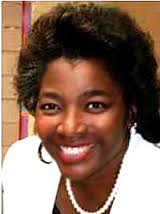
Alberta Wilson: "Parents should be involved. They are the stewards of their children. If we continue to do things as we are doing them, we won’t be successful."
But I also kept thinking these events should be experienced and enhanced, a thousand times over, by one very important, and missing, demographic.
Parents.
My background is important, but not necessarily the reason, why I want to see more parents at education conferences throughout the country. I have been a Democratic activist and community organizer for the last 25 years. I now organize parents for Step Up For Students. Perhaps that does influence my thoughts and opinions.
However, I remember suggesting more parental involvement after attending education conferences as a teacher. I simply expect more now. I expect parents to be included in every substantive event, conference, policy discussion, roundtable, and town hall meeting, and I’m routinely disappointed when they aren’t anywhere to be found.
Of course, many of the participants are parents as well as education reformers. We bring that passion for school choice from personal experiences. I can talk about years spent driving my children out of county to put them in a public school that worked for them and then utilizing scholarships a few years later when a private school better fit their needs.
But we should hear more stories from a diverse population of moms and dads.
At the AFC Conference, Dr. Alberta Wilson, president and CEO of Faith First Educational Assistance Corp. and consultant for Capstone Legacy Foundation, shared my concerns. At several sessions, she spoke from the audience to implore that more parents be included – at every level.
I caught up with her recently and asked her to elaborate. (more…)
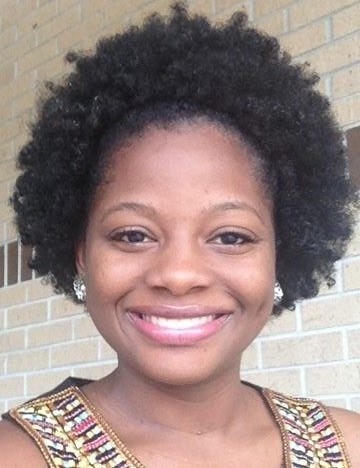
Denisha Merriweather
Former Step Up For Students scholarship student Denisha Merriweather, now attending the University of West Florida, received a standing ovation last night after speaking at the American Federation for Children school choice summit in Washington D.C. Here is the text of her prepared remarks. (Full disclosure: Step Up co-hosts this blog.)
Good evening! Thank you, Mr. Chavous, for your kind introduction.
My name is Denisha Merriweather, and I just finished my junior year at the University of West Florida in Pensacola right near the tip of Florida’s Panhandle. I am so proud to stand here before you today knowing that this time next year, I will be graduating college.
The truth is, when I was growing up, college was a dream that I didn’t even know I had. And if it weren’t for an educational option Florida gave me nine years ago, I wouldn’t be here today.
If you were to rewind my life back to my childhood, you would see someone very different. You would see someone who got in fights with her classmates. Someone destined to drop out before she made it through high school. Someone who didn’t even know what college was.
But thankfully, I did not become a statistic. Because of some help I received when I was 12 years old, my life has changed tremendously. (more…)

Fuentes
Politicians eager to gain or retain the trust of Hispanic voters should focus on education and put particular emphasis on expanding school choice, suggests Julio Fuentes, president of the Hispanic Council for Reform and Educational Options, in an op-ed in today's South Florida Sun Sentinel. Here's a snippet:
We know that education reform and school choice are top issues for Latinos, second only to jobs and the economy, based on the HCREO/AFC poll released this past summer of voters in five key battleground states including Florida. The poll found that education is a top-tier issue for battleground voters and Latinos – even more important than immigration, in some cases. The poll found that Latino voters in Florida, Arizona, New Mexico, Nevada, and New Jersey are more likely than voters overall to cite improving education and increasing education options as core priorities.
Both presidential candidates stressed on election night that those in office must now work jointly and in a non-partisan way to address the great civil justice issues of our time. These issues include immigration, reducing the gap in quality educational opportunities for minorities, expanding school choice options so that all students regardless of zip code or socioeconomic background have a chance to excel. According to national data from the Pew Hispanic Center, only about 13 percent of Hispanic 25- to 29-year-olds complete at least a bachelor's degree, compared with 39 percent for whites in the same age group and 53 percent for Asians. This gap cannot persist.
(Full disclosure: Fuentes is a member of the board of directors for Step Up For Students, which co-hosts this blog.)
While the U.S. Supreme Court's decision in Citizens United v. Federal Election Commission will no doubt continue to reshape the campaign finance landscape, a Wall Street Journal report today is a reminder that teacher unions remain very active players. Using information from both U.S. Labor Department and Federal Election Commission reports, the Journal identified $377 million in total political spending by the nation's two top teacher organizations from 2005 to 2011. That's roughly four times the amount previously reported just from FEC records.
Of note to those of us in Florida, the Journal also reported that the Florida Education Association spent $14.7 million over the same period, ranking it behind only teachers unions in California, New York and four other northern states.
The Florida number brings to mind a Florida Times-Union story published last year on the campaign influence of a separate education organization, the American Federation For Children. That story, which is still actively linked by various progressive blogs, made the legitimate point that AFC, a national organization that supports private school options, has been spending money for candidates who feel the same way. The reporter identified $313,757 in Florida campaign contributions since 2007, and singled out Democrats who, as it turns out, had received roughly three-fourths of that total.
What the story and the blog posts have missed is that the AFC money pales in comparison to what FEA spends to influence the process. This is not intended as a criticism of FEA or its investment in the political process, because its members indeed have a profound interest in education policy. But the story carried with it the implication that the Democrats who support private learning options for low-income students are selling out for campaign money. It said as much through how it reported the response of the Democrats: "They say their vote is about bringing choice to districts with poor public schools, not campaign cash." Pointedly, it did not ask the same question of Democrats who oppose private learning options and receive FEA contributions. That question is more than little relevant, given that unions still forcefully oppose any voucher for any child for any reason.
A South Florida progressive blog recently branded any Democrat who votes to give poor children a private learning option a "sellout to the school voucher lobby." Given the striking difference in the financial stakes between the voucher lobby and the FEA lobby, this accusation assumes such a Democrat not only lacks the moral conviction to help poor school children but the political acumen to sell out to the highest bidder.

