 Within an hour of Fifth Third Bank's announcement via a press release that it will continue to fund scholarships for Florida's most disadvantaged students, state lawmakers took to social media to thank the bank for reconsidering its decision to fund the Florida Tax Credit Scholarship program.
Those lawmakers included Rep. James Bush III, D-Miami, who posted: "The return of Fifth Third as a donor to the Florida Tax Credit Scholarship program is a victory for the more than 100,000 low-income students who need options in their education."
Rep. Kimberly Daniels, D-Jacksonville, referenced the pressure exerted upon Fifth Third by activists who came out in force this week to support the scholarship program and urged others to tweet @Fifththird to thank the bank for continuing its support.
Several other lawmakers, including Rep. Chris Sprowls, R-Palm Harbor, applauded Fifth Third for "coming back to the table" and listening to all voices. "This decision means that thousands of underprivileged, minority children will not have to give up their dream of a better future," Sprowls tweeted.
Rep. Patricia Williams, D-Pompano Beach, tweeted: "I celebrate the announcement by Fifth Third Bank, which will bolster education opportunities for those who need it most -- low-income, minority students."
Rep. Chris Latvala, R-Clearwater, and Rep. Byron Daniels, R-Naples, also weighed in, with the latter thanking Fifth Third for "doing the right thing" in resuming its corporate donations.
Meanwhile, Rep. Al Lawson, D-Tallahassee, commended the bank for supporting equal education opportunities for all children. "Our great state will be the better for it," Lawson tweeted.
Adding their voices to the praise chorus were two national figures.
Former Florida Gov. Jeb Bush, who signed the Florida Tax Credit Scholarship program into law in 2001, thanked Fifth Third and tweeted, "Great to see @FifthThird continuing to support Florida's families seeking a better education for their children."
And U.S. Sen. Marco Rubio commended the bank, tweeting "Great job by the bipartisan coalition that made this possible."
Rubio made headlines earlier this week when he called Fifth Third's decision to cease donations, along with Wells Fargo's, a "publicity stunt aimed at earning 'wokeness' points with the radical left."
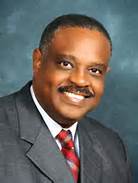
Al Lawson
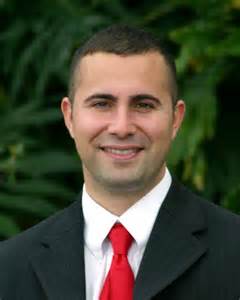
Darren Soto
by Sara Clements
Florida’s school choice movement won major victories in last night’s elections for legislative and congressional races.
In a development that could have national implications, the state will soon be sending two newly elected, pro-school choice Democrats to Congress.
Al Lawson of Tallahassee and Darren Soto of Central Florida both prevailed easily in their respective congressional races. And both supported educational choice programs during their time as state lawmakers, including the expansion of Florida’s tax credit scholarships
Their potential addition to the congressional “School Choice Caucus” is significant. While support for educational choice has grown in D.C., it remains largely a partisan issue, especially in the House.
In addition to his lengthy career as a legislator,Lawson is a member of the governing board of Step Up For Students, a nonprofit which administers the tax credit and Gardiner scholarship programs. Step Up publishes this blog and pays my salary.
Congress wasn’t the only place that saw movement on the education reform front last night. Florida educational choice proponents virtually swept state legislative races.
Rep. Manny Diaz, R-Hialeah, has pushed to expand educational choice, give public school principals more autonomy and increase access to virtual courses in his four years in office. A former public school teacher and high school administrator, Diaz is expected to be a leader on education issues under incoming Speaker Richard Corcoran. His opponent, Yvette Gonzalez Petkovich, was endorsed by the state’s teachers union and made opposing school choice a key part of her platform. Rather than backing down from his support for these programs, however, Diaz embraced it, and prevailed in a hard-fought bid for re-election.
Similarly, Rep. Michael Bileca, R-Miami, who is expected to be another key player on education in the upcoming term, faced a tough opponent in Jeffrey Solomon but pulled it out with a lead of more than 6 percentage points.
Another parental choice supporter, incumbent Sen. Anitere Flores, R-Doral, also won her seat against opponent Debbie Mucarsel-Powell.
Perhaps the biggest upset in South Florida, however, was a South Miami senate seat, which Rep. Frank Artiles won over incumbent Dwight Bullard, D-Miami, a public-school teacher and passionate school choice opponent. The Florida Education Association (FEA) spent $825,000 on his campaign alone, and he lost by 10 percentage points.
In total, FEA reportedly spent about $2.7 million on state legislative races in Florida. School choice was at the heart of many of them.
Rep. Keith Perry, R-Gainesville, faced former legislator and ardent public education supporter, Rod Smith, in a bid for state Senate, while Rep. Dana Young, R-Tampa, ran against FEA-endorsed Bob Buesing in Tampa. Both won by safe margins. In a slightly less competitive race, Rep. Kelli Stargel, a long-time parent empowerment champion, also kept her seat against the union’s pick, former school board member, Debra Wright, in Polk County.
Meanwhile, on the other side of the aisle, Reps. Darryl Rouson, D-St. Petersburg, and Daphne Campbell, D-Miami, comfortably sealed their bids to join the ranks of Democratic school choice supporters in the state Senate.
While it’s difficult to pinpoint support by choice backers as the single cause of all these significant wins, there is no denying that education has and will continue to play a major role in Florida’s state races.
Editor's note: This post originally ran as an op-ed today in Florida Today, in response to a column by former state Sen. Paula Dockery, R-Lakeland. It's authored by former state Sen. Al Lawson, D-Tallahassee, who is a member of the Step Up For Students board of directors. The state's tax credit scholarship program is administered by Step Up For Students, which co-hosts this blog.
Sen. Lawson
The most significant expansion of Florida's scholarships for low-income children came in 2010, and the bipartisan spirit was so strong I was allowed as Democratic leader to make the closing argument in a Senate controlled by Republicans.
We found common ground because the Tax Credit Scholarship Program is focused on economically disadvantaged students in a way that strengthens public education.
So it is with considerable disappointment to see the partisan fractures this year, as the Legislature considers more modest improvements. And it is hard to miss the extent to which the Florida Education Association is driving the wedge.
But it is wrong to cast a $4,880 scholarship for 60,000 underprivileged children as an attack on public education. It is, to quote public educator and former House Education Policy Council ranking Democrat Bill Heller, "in the greatest tradition of our collective commitment to equal educational opportunity."
With 12 years under our belt, we know a great deal about how this scholarship works.
The program serves children whose household income is only 9 percent above poverty. More than two-thirds of them are black or Hispanic. These children struggled academically in the public schools they left. Most importantly, their annual standardized test scores have shown they are consistently achieving the same gains in reading and math as students of all income levels nationally.
Whether these students should take the state, rather than national, test is a fair question. But let's not pretend as though we have no measure for how well they are performing. We know how scholarship kids are doing at individual private schools, as the schools must report their learning gains if they have a minimum number of scholarship recipients.
Let's also call an end to the deceit that this program hurts public schools financially, and that "money used for vouchers is taken away from basic public school needs," as syndicated columnist Paula Dockery stated in her recent column in FLORIDA TODAY. (more…)
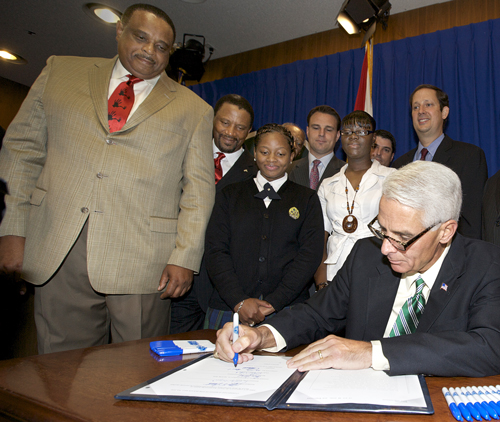
In his term as governor, Crist not only signed a major expansion of tax credit scholarships in 2010 but was a persistent voice for the students – poor and mostly of color – who take advantage of it. This photo shows him at the bill signing. That's former Democratic state Sen. Al Lawson on the left.
If parental choice is to be an educational litmus test for Charlie Crist, the Republican-turned-Democrat, then he might surprise the politicos who are tracking the 2014 gubernatorial race. There are legitimate reasons to believe Crist, who formally entered the race on Monday, will support at least some forms of private school choice. The way he has embraced scholarships for low-income students is the best clue.
In his term as governor, Crist not only signed a major expansion of tax credit scholarships in 2010 but was a persistent advocate for the nearly 60,000 students – poor and mostly of color – who now take advantage of it. As such, the public record is replete with enthusiastic endorsements. At the 2010 bill signing ceremony, which included Republican and Democratic legislators, Crist called the scholarship “extraordinary” and said the bill “gives families the power to do the most important thing they do – make sure they find a school that fits their child’s needs.” At a rally in 2008 at Potter’s House Christian Academy in Jacksonville, he said the scholarships “are helping us diversify our education system to achieve greater results and provide our children and future workforce with a world-class education.” At an event in Fort Lauderdale in 2009, he told supporters “I am confident we will continue to provide more educational opportunities and options.”
Perhaps most notable, though, was his speech to more than 5,500 students, families, educators and advocates who rallied March 24, 2010 at the State Capitol in support of tax credit scholarships. As a matter of disclosure, Step Up For Students, which publishes this blog, organized that rally. It also produced this three-minute video about the event that provides context. The governor was clearly energized by the crowd, and his full remarks can be viewed in this clip.
“I’m so proud of the progress that we have made in education in Florida,” Crist said for openers, “And it’s all because of you and because of great teachers and great principals and choice. The power of choice in education is unstoppable. God bless you for pushing it.”
He continued. “We must make sure that every student gets an excellent education in the Sunshine State, and that’s exactly what you’re here about,” he said. “It is never a one-size-fits-all approach. Florida’s greatest strength is our great diversity, and every student should have an education that suits you. And your parents should have the power of choice no matter what the economics might be.”
In perhaps his most prescient comment, Crist spoke to bipartisan support: “Ladies and gentlemen, I’m so proud to tell you that regardless of party Florida stands for you. There is no partisan politics about kids. It’s all about doing what’s right first and foremost. There it is – school choice is nonpartisan. You’re not kidding. It really is. As long as we put the children first, we cannot get it wrong. We’re going to continue to do that, continue to fight for you to make sure that you have the power of choice.” (more…)
 Editor's note: This piece ran in Monday's Gainesville Sun.
Parents with financial means long have chosen their children's schools by where they live or which private tuition they pay, but Florida is approaching a remarkable threshold in school choice. Last year, 1.5 million students — or 43 percent — attended something other than their neighborhood school. Of special note, 51,023 of the poorest among them are attending a private school at public expense.
This move toward customizing public education is owed to a simple proposition — that different children learn in different ways — and it represents an extraordinary commitment to equal opportunity. In Alachua County last year, 5,800 students chose magnet or choice programs or used open enrollment, and another 2,200 went to charter schools. This year, 335 low-income students are also attending private schools through state-backed scholarships.
That last learning option, called Florida Tax Credit Scholarships, gives pause to the Alachua League of Women Voters. Its respected president, Kathy Kidder, recently questioned the program's constitutionality and accountability. She cited a state Supreme Court case, the 2006 dismissal of a voucher given to students in schools judged to be failing, without noting two prominent U.S. Supreme Court precedents that affirm the scholarship's constitutionality.
The first, a 2002 case from Cleveland, rules that religious schools cannot be excluded from private voucher programs as long as the primary goal is education and parents aren't coerced into choosing. The second, a 2011 case from Arizona, finds tax credit scholarships to be in a separate constitutional arena altogether. In Arizona, the court ruled that tax-credited contributions are not government expenditures.
The more important measure, though, is educational progress. The $4,335 scholarship is available only to children in K-12 whose household income qualifies them for free or reduced-price lunch, and this year the average income is just 6 percent above the poverty line. Two-thirds of the students are black or Hispanic, and more than half live in households with only one parent. More striking, the students who choose the scholarship are the lowest academic achievers from the public schools they leave behind.
The encouraging news is that these same students, according to the latest annual standardized test scores, are achieving the same gains in reading and math as students of all income levels nationally. (more…)
Al Lawson, an iconic Democratic lawmaker who served in the Florida Legislature for nearly three decades, has joined a nonprofit board that oversees state-supported scholarships for low-income schoolchildren.
Lawson was selected last week to serve on the corporate board of Step Up For Students, which is a state-approved “scholarship funding organization” that provides Tax Credit Scholarships this year to 51,000 students whose household income meets the threshold for free or reduced-price lunch. (Step Up For Students also oversees this blog.) The program is fueled by $229 million in corporate contributions that receive a dollar-for-dollar tax credit from the state.
“Throughout my legislative career, I was always concerned about students, especially minority students, who had no option when the regular school wasn’t working for them,” Lawson said. “The most important thing is to give these kids an opportunity to succeed, and this scholarship is one of those opportunities.”
Lawson was praised by Step Up board chairman John Kirtley, a Tampa businessman who helped persuade lawmakers to adopt the law in 2001. “Senator Lawson has been a smart, compassionate leader in Florida for years,” Kirtley said. “We’re thrilled Step Up and our families will benefit from his judgment and experience.”
Two-thirds of the students on the scholarship are black or Hispanic, the majority live in homes with only one parent, and their average household income is only 6 percent above poverty. State research shows they are the lowest academic performers in the public schools they left behind and, on their latest standardized test scores, they achieved the same gains in reading and math as students of all incomes nationally.
Lawson, who initially voted against the creation of the scholarship in 2001, told a newspaper reporter in 2007 that he could no longer oppose a learning option aimed at economically disadvantaged students with desperate needs: “When you have a lot of poor kids in your area that need help, and you have people saying, ‘We’re willing to work with these kids,’ ... it’s hard to say no.” By 2010, he was co-sponsor of a bill that expanded the program and made the closing argument on the Senate floor. (more…)

