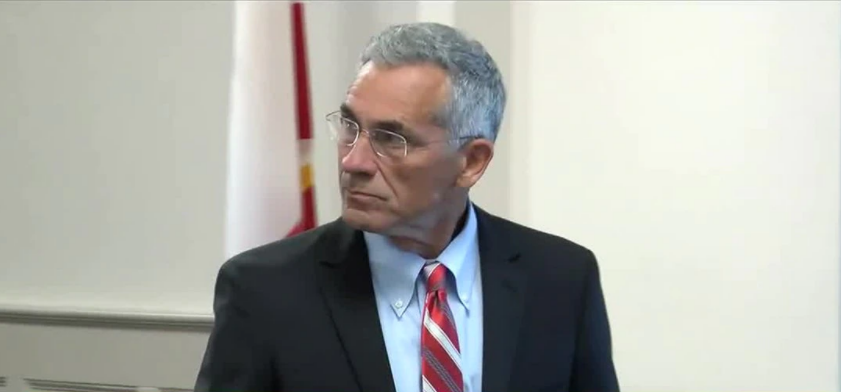
The substitute bill would apply only to students entering kindergarten next year and would exclude homeschool students.
Editor’s note: This news story appeared Tuesday on aldailynews.com. To read a story noting Alabama Lt. Gov. Will Ainsworth’s support of school choice legislation, click here.
Sponsors of a major school choice bill in the Alabama Legislature are scaling it back significantly in an effort to secure passage in the Senate and House.
As approved in a Senate committee last week, Sen. Del Marsh’s bill would have allowed more than $5,000 per year in state support to any student attending private or homeschools. A fiscal note on the bill said that when fully implemented in the 2024-25 school year, it could send as much as $537 million from the Education Trust Fund to education savings accounts that parents could use to send their children to non-public schools.
Now, Marsh, R-Anniston, said he’s working on a substitute bill that would only apply to students entering kindergarten next year, phasing in a new class of students each year for 13 years. Marsh estimates that could be about 5,000 students a year.
“It follows the student as they go through their school life,” Marsh told Alabama Daily News on Monday.
To continue reading, click here.

Alabama Sen. Del Marsh has filed what he calls the “ultimate” school choice bill, which would allow families to access money the state would have used to pay for their child’s public school education.
Editor’s note: This article appeared Wednesday on al.com.
A bill to give Alabama state funding to an individual family’s public, private or homeschool option of choice advanced from the Senate Education Policy committee Wednesday on a voice vote recorded as five yeses, three no’s and two abstentions.
The act would create Education Savings Accounts, or ESAs, that would give parents access to an amount equal to 100% of the state’s share of educating a public school student. ESAs could be used toward an alternative education, including private school or homeschool.
Sen. Del Marsh said he filed the bill because Alabama’s education system is ranked so poorly on the National Assessment of Education Progress, also called the Nation’s Report Card, in comparison to other states and he is concerned about the state’s future.
“I cannot sit back and do nothing,” he said. “If we’re not perceived by those outside of the state of Alabama that we’re trying to solve this problem, and that Alabama assumes that 50th is good enough, what are we doing for our children?”
Multiple education officials spoke against the bill during the public hearing, sharing concerns about initial $420 million estimates of the cost to fund ESAs at $5,500 each for an estimated 70,000 private and homeschool students.
To continue reading, click here.
 Alabama: A state judge struck down the tax credit scholarship program on procedural grounds while ignoring the teacher union claims that the program violated separation of church and state (Montgomery Advertiser, Education Week, AL.com, WAFF, Watchdog). Lawyers for the state and parents file a motion to lift the injunction against the program (AL.com). Parents and teachers react to the judge's ruling (WSFA 12). Judge Reese, who declared the tax credit scholarship program unconstitutional, is a Democrat and has thwarted Republicans on education issues in the past (AL.com). Katherine Green Robertson, a senior policy counsel for the Alabama Policy Institute, says the court decision was a political attack on students and school choice (AL.com).
California: Campbell Brown spotlights Vergara v. California, where nine students are suing the state over education policies they argue worsen quality (The Daily Beast).
Colorado: A group opposing education vouchers takes their case to the state Supreme Court (Chalkbeat).
D.C.: A proposed bill will make it easier for children of charter school teachers to enroll where their parents work (Washington Post).
Florida: The first proposed charter school conversion in Broward County awaits approval (Miami Herald). A group amends a 2009 adequacy lawsuit to include McKay Scholarships, tax-credit scholarships and charter schools as culprits for the alleged under-funding of public schools (Orlando Sentinel, redefinED). The Florida League of Women Voters release a report critical of charter schools (Jacksonville Free Press, Orlando Sentinel, Tampa Bay Times). Charter school advocates call the report "flawed" (Palm Beach Post). Henry Fortier, the superintendent of Catholic schools for the Orlando Diocese, says school choice doesn't pit private schools against public schools (Orlando Sentinel). Leaders in Pinellas County react to changes in the law including the expansion of school choice in the state (Tampa Tribune). School choice critics ask the governor to veto the new laws expanding school choice in the state (WJHG).
Illinois: The Chicago Tribune hosts a debate between school choice supporters and opponents (Huffington Post). The senate votes to require charter schools to accept special needs and English language learners (Sun Times).
Indiana: A group opposing vouchers and charter schools previews a documentary to teachers, union members and school administrators (Muncie Free Press). Enrollment at Indiana Cyber School doubles but the school is still in debt (Trib Town).
Kentucky: Jim Waters, president of the Bluegrass Institute, says charter school critics shouldn't focus on administrator salaries when some school districts have more employees making over $100,000 a year than the state capitol (Times-Tribune).
Louisiana: The last five traditional public schools in New Orleans close their doors for good (Washington Post, Joannejacobs.com). Gov. Bobby Jindal roasts President Obama over many issues including parental choice (Times-Picayune). The House votes 73-15 to allow students to transfer out of lower-performing schools (New Orleans Business Journal). Test scores for voucher students improve (Times-Picayune). (more…)
 Alabama: The Institute for Justice, a national civil rights law firm, says vouchers are constitutional in the state (Al.com).
Alaska: School choice opponents voice their concerns at a public hearing over a constitutional amendment to allow public funding of private schools (Anchorage Daily News, Nonprofit Quarterly). The proposed constitutional change passes the House Education Committee but the amendment faces a tough road ahead (Anchorage Daily News). There are 27 charter schools in the state with no cap on how many schools may operate (Alaska Dispatch).
Arizona: The state has many school choice programs (Camp Verde Bugle). A state court rules the Department of Education cannot recoup $5.9 million in over-payments to charter schools due to a change in teacher performance pay because it didn't notify the schools of the rule change (Arizona Republic). Charter school operators plan to open 25 new charter schools in Phoenix (Arizona Republic).
California: Parent trigger elicits emotions from parents on both sides (Hechinger Report). The superintendent of LA Unified says every "student has the right to a choice of a highly effective school" (Reason Magazine). San Diego school board members are attempting to exclude some charter schools from receiving bond money approved by city voters (Fox 5 San Diego).
D.C.: A new study reveals area charter schools are being shortchanged on student funding compared with district schools (Washington Post).
Florida: School choice is growing by leaps and bounds (Sunshine State News). The Palm Beach Post editorial board says giving students public school choice could reduce the disadvantages faced by low-income students. After 17 years as president and CEO of Florida Virtual School, Julie Young announces her retirement (redefinED, Orlando Business Journal). Gov. Rick Scott proposes allowing charter schools access to construction funds if they serve students within attendance zones of low-performing public schools (Tallahassee Democrat).
Georgia: A lawmaker wishes to expand the tax credit scholarship program with a $100 million cap (GPB News).
Illinois: Nobel charter schools name thee schools after donors who give $1 million or more, but the donors do not decide curriculum or which teachers to hire (Chicago Sun Times).
Indiana: The Lafayette Journal & Courier editorial board argues that private schools should continue to take the state test in order to create a fair comparison with public schools. Since vouchers can be worth no more than 90 percent of per-pupil state funding to local school districts, vouchers save the state money (Indianapolis Daily Star). Five voucher schools in the state say they teach intelligent design or creationism (Journal-Gazette). The Star Press editorial board worries that allowing students to use vouchers without ever attending public school creates two classes of education. (more…)

