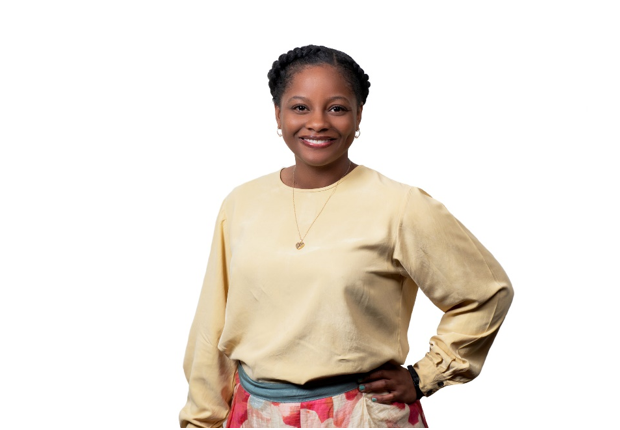
 Denisha Merriweather, director of public relations and content marketing at the American Federation for Children and founder of Black Minds Matter, made another guest appearance this week on the Ricochet Audio Network.
On this episode, Merriweather, a former Florida Tax Credit Scholarship recipient, shares with Ricochet hosts Andrew Gutmann and Beth Feeley the life-changing impact a quality education had on her life.
The former political appointee at the U.S. Department of Education also discusses the recent Old Parkland Conference, self-described as a gathering to discuss alternative proven approaches to tackling the challenges facing Black Americans today, which featured Clarence Thomas, Glenn Loury, Jason Riley, Ian Rowe and Shelby Steele.
You can listen to the podcast here.
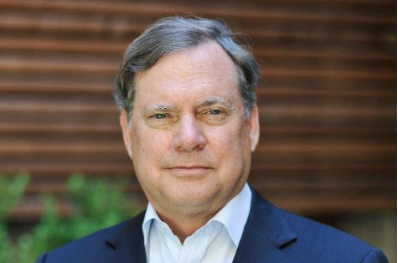
Bill Oberndorf has committed his resources to expanding opportunities for children from disadvantaged backgrounds. He chairs the American Federation for Children, which funds scholarships for low-income students to attend private schools, and supports pro-school-choice political candidates at the state level. In 2021, the Philanthropy Roundtable, a national association of philanthropists, named him the Simon-DeVos Philanthropist of the Year.
Editor’s note: This article, an edited excerpt from an Education Next podcast, features Education Next senior editor Paul Peterson interviewing philanthropist of the year Bill Oberndorf. The full piece, in which Oberndorf explains a state-based strategy for advancing school choice, appears in the Spring 2002 issue of Education Next.
Paul Peterson: Why did you decide to focus much of your philanthropy on helping disadvantaged children attend private school?
Bill Oberndorf: I felt extremely fortunate that I was able to attend a wonderful private school in Cleveland, and only because my grandparents set aside and saved money for the education of my brothers and me. I felt that every kid who wants to work hard in school, whose parents want something better for them, should have access to the kind of education that best fits the needs of that child. I feel that this is the civil-rights issue of our time.
The idea of private-school choice through government-funded vouchers was proposed by Milton Friedman in the 1950s. Seventy years later, we have only a few such programs in this country. Why has it been so difficult to build public support for this idea?
I remember talking to Milton Friedman about this shortly before he died. He said, “Well, we’re just about right on schedule. It takes decades for ideas to take root before they really can flourish.” So Milton was not deterred. The opposition has come from the teachers unions, which are such a powerful force and funding source for the Democratic Party that this has created major obstacles along the way.
But the good news is that now there are private-school choice programs in 22 states. And 45 states plus D.C. have charter-school programs.
Yes, but in recent years it seemed like progress was stalling out. In 2016 in Massachusetts, for example, a ballot initiative to expand charter schools was defeated, even though charter schools in Massachusetts seemed to be doing very well. There were also divisions within the school-choice movement, and the energy seemed to be disappearing. How were you assessing the state of school choice at that time?
The charter-school movement had scaled up to around 3 million students enrolled, and suddenly, for the first time, that sector was feeling the kind of union opposition that the private-school choice movement had felt all along. This did create a lull, but since then, some important things have happened that have helped change the overall trajectory of the advocacy and implementation of private-school and charter-school choice.
To continue reading, click here.
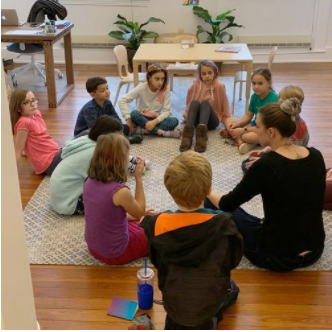
Acton Academy of Washington, D.C., is a Montessori preschool and student-centered elementary and middle school and one of 72 private schools serving close to 15,000 students in the District of Columbia.
Sixty-six percent of voters support reauthorization of one of the founding programs of the school choice movement according to a new poll released by a Maryland-based custom research firm.
Beck Research reports that when respondents were asked Feb. 23-27 via wireless or landline phones or text-to-web, “Based on what you know, would you say that you favor or oppose the D.C. Opportunity Scholarship Program,” only 22% said they opposed the program, while 12% were undecided.
When asked the broader question, “Generally speaking, would you favor or oppose school vouchers that allow lower-income families to send their child to any school they deem best?” 65% of respondents said they supported vouchers and 31% said they were opposed.
Tommy Schultz, CEO of the American Federation for Children, said the organization was not surprised at the poll results.
“Despite what detractors may suggest, there is strong bipartisan support for school choice and the Opportunity Scholarship Program in D.C. and Congress should listen and support this program with increased funding to meet demand and a permanent authorization,” Schultz said.
The DC Opportunity Scholarship Program, launched with bipartisan support in 2003, allows lower-income families to receive funding for their children to attend a participating District of Columbia private school. The only federally funded voucher program in the country, the program was enacted by Congress as part of a three-sector approach to improve educational outcomes in the District of Columbia.
According to the DC Opportunity Scholarship-Serving Our Children website, which provides information about the scholarship, nearly 40,000 District of Columbia children have applied for the Opportunity Scholarship since 2004-05 and more than 10,000 students have been awarded.
Currently, 95% of participating children are African American and Hispanic from families with an average annual income of less than $27,000.

Support for school choice has increased since April 2020 by 8 percentage points, from 64% to 72%, according to a new poll from RealClear Opinion Research.
The largest increase in support for school choice came from Democrats (up 9 percentage points) followed by Republicans (7 percentage points) and registered Independents (7 percentage points). Overall Democratic support also was higher than registered Independents (68% compared to 67%) but lower than Republicans (82%).
Hispanic Americans were the most likely to support school choice (77%) compared to white Americans (72%) and Black Americans (70%). Asian Americans showed the least support (66%) and were more likely to oppose school choice (26%).
Tommy Schultz, CEO of the American Federation for Children, called the poll numbers “stunning.”
“The past two years have exposed to the world what many in the parental choice movement have known for decades: no single educational environment is right for every child,” Schultz said. “As the battle over educational freedom continues, party affiliation is secondary to ensuring all families are empowered to choose the best educational setting for their children.”
Schultz warned policymakers:
“As these poll numbers show, there will be consequences if you go against the staggering majority of parents who support this issue.”
RealClear Opinion Research polled more than 2,000 registered voters Feb. 5-9 for the survey.
Other demographic research shows that in Florida, 48% of K-12 students utilize some form of school choice, up 45% from the previous year.
Public options, such as charter schools and district open enrollment, are among the most popular choices, but private school scholarships have been among the fastest growing. This year, 188,774 students received scholarships from Step Up For Students.
The scholarship administration nonprofit, which hosts this blog, manages four scholarship programs that allow students to attend private schools, including the Florida Tax Credit Scholarship, the Family Empowerment Scholarship for Educational Opportunities, the Family Empowerment Scholarship for Students with Unique Abilities, and the Hope Scholarship for victims of bullying, harassment and sexual assault.
Step Up also administers transportation scholarships allowing students to attend other public schools, as well as a Reading Scholarship to help public school students who struggle with reading and reading comprehension.
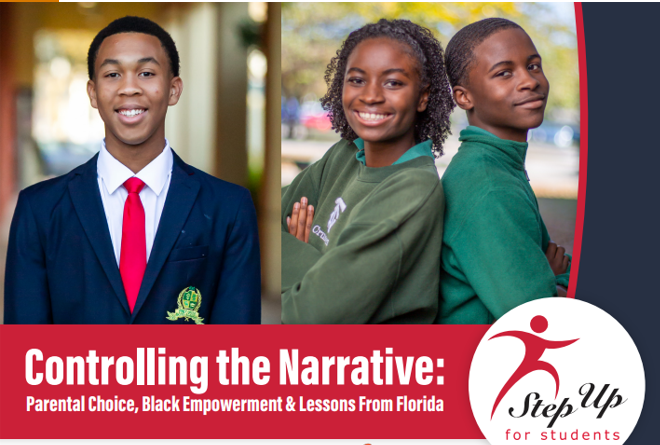 On this episode, Tuthill speaks with Denisha Merriweather, founder of Black Minds Matter and director of public relations and content marketing at the American Federation for Children, and Ron Matus, director of policy and public affairs at Step Up For Students, about their new report, Controlling the Narrative: Parental Choice, Black Empowerment, and Lessons from Florida.
(Dava Hankerson, director of enterprise data and research at Step Up For Students, and Nathaniel Cunneen, a communications associate at the American Federation for Children, also contributed to the report.)
The three discuss how Florida has become a boom for Black families seeking alternative education options through choice. More than 100,000 Black students – one in six – participate in some type of non-district choice program, such as a charter school or a private school through state sponsored scholarships.
Tuthill, Merriweather and Matus also discuss the degree of empowerment that education choice provides Black educators through autonomy and small business opportunities, such as microschools, as flexible spending programs like education savings accounts take hold nationally.
"It's a story that's been unfolding in front of us, which I don't think people realize the extent of – the degree to which Black families have embraced education choice in all its forms ... This was an opportunity to put a strong spotlight on something that's been going on for 20 or 25 years."
EPISODE DETAILS:
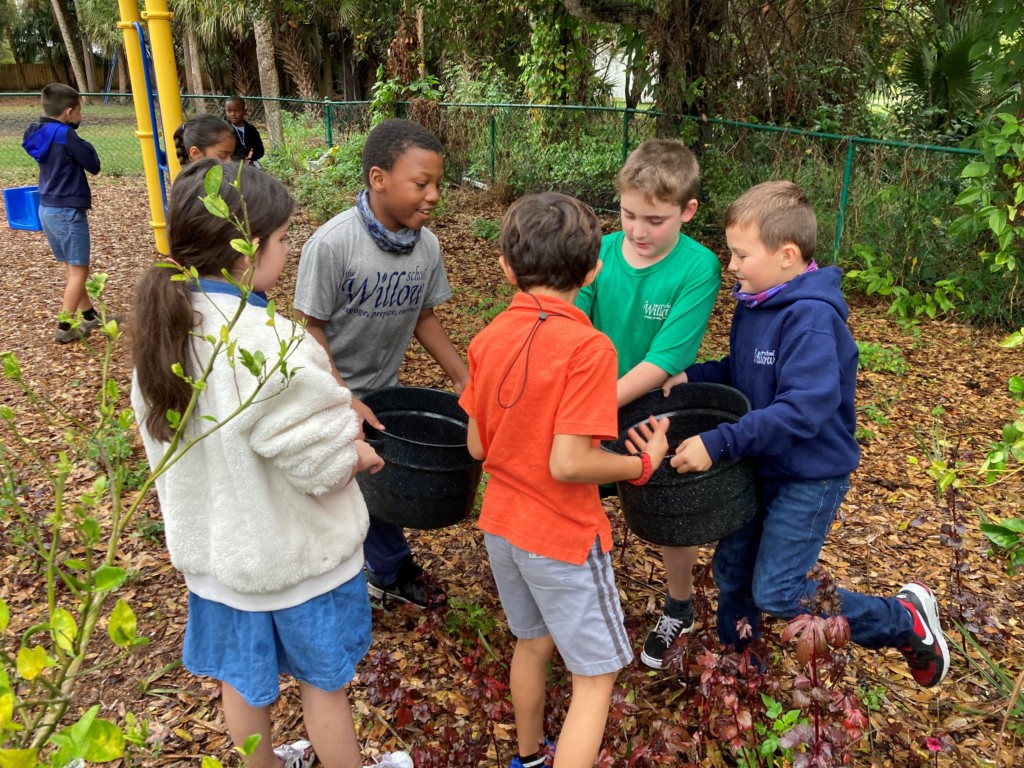
Florida is among those states where where families can participate in private school choice programs at schools such as The Willow School in Vero Beach, where 75% of the students use some form of state-supported school choice scholarship. The result is more diversity than most schools in the region, public or private.
Editor’s note: In this commentary, American Federation for Children chairman Bill Oberndorf explains a state-based strategy for advancing school choice in an interview with Education Next senior editor Paul Peterson. The interview first appeared on the Education Next website.
Paul Peterson: Why did you decide to focus much of your philanthropy on helping disadvantaged children attend private school?
Bill Oberndorf: I felt extremely fortunate that I was able to attend a wonderful private school in Cleveland, and only because my grandparents set aside and saved money for the education of my brothers and me. I felt that every kid who wants to work hard in school, whose parents want something better for them, should have access to the kind of education that best fits the needs of that child. I feel that this is the civil-rights issue of our time.
Peterson: The idea of private-school choice through government-funded vouchers was proposed by Milton Friedman in the 1950s. Seventy years later, we have only a few such programs in this country. Why has it been so difficult to build public support for this idea?
Oberndorf: I remember talking to Milton Friedman about this shortly before he died. He said, “Well, we’re just about right on schedule. It takes decades for ideas to take root before they really can flourish.” So Milton was not deterred. The opposition has come from the teachers unions, which are such a powerful force and funding source for the Democratic Party that this has created major obstacles along the way. But the good news is that now there are private-school choice programs in 22 states. And 45 states plus D.C. have charter-school programs.
Peterson: Yes, but in recent years it seemed like progress was stalling out. In 2016 in Massachusetts, for example, a ballot initiative to expand charter schools was defeated, even though charter schools in Massachusetts seemed to be doing very well. There were also divisions within the school-choice movement, and the energy seemed to be disappearing. How were you assessing the state of school choice at that time?
Oberndorf: The charter-school movement had scaled up to around 3 million students enrolled, and suddenly, for the first time, that sector was feeling the kind of union opposition that the private-school choice movement had felt all along. This did create a lull, but since then, some important things have happened that have helped change the overall trajectory of the advocacy and implementation of private-school and charter-school choice.
To continue reading, click here.
 Longtime education choice advocate Corey DeAngelis, national director of research at the American Federation for Children and executive director at the Educational Freedom Institute, continued to champion the rights of families to make education choices for their children recently, speaking on behalf of the American Federation for Children at America Fest in Phoenix.
Here are some excerpts from DeAngelis’ pitch for school choice:
“It’s a great time to be an American. And it’s also a great time to be a school choice advocate. The teachers’ unions have finally overplayed their hand, showed their true colors, and in a way, inadvertently done more to advance the concept of homeschooling, parental rights and educational freedom than anyone could have ever imagined.”
“This year has been the year of school choice, and we’re just getting started. Nineteen states have already expanded or enacted programs to fund students as opposed to systems. Parents have woken up. A way that I would put it is that COVID didn’t break the government school system, it was already broken. And families are never going to forget how powerless they felt in 2020 and they’re going to fight to make sure that they never feel powerless ever again.”
“We already fund students directly when it comes to Pell grants and the GI bill for veterans. The money doesn’t go straight to the community college regardless of your choice. Instead, the money goes to the student, and you can pick the community college if you want, but you can also take that money to a private, religious, or non-religious university. We do the same thing for pre-K programs.”
“Imagine if we forced low-income families to take their food stamp dollars to a government-run provider of groceries. That wouldn’t make any sense. Instead, the money rightfully goes to the families, and they can choose Walmart if they want. We can also take that money to Safeway or Trader Joe’s. The money follows the decision of the family. We do the same thing with Medicaid; we do the same thing with Section 8 housing vouchers. All I’m arguing is that we apply the same logic to K-12 education and fund people, not buildings.”
“Choice is the norm with higher education, pre-K and thankfully, for now, just about everything else in the United States. Choice threatens an entrenched special interest only when it comes to the in-between years of K-12 education. So, they fight as hard as possible against any change to the status quo, and they make up stuff and repeat the same arguments over and over again.”
“School choice doesn’t defund government schools; government schools defund families. School choice initiatives just return the money to the hands of the rightful owners — or at least the intended beneficiaries.”
 Editor’s note: This post about Denisha Merriweather, director of public relations and content marketing for the American Federation for Children, founder of Black Minds Matter and a former recipient of the Florida Tax Credit Scholarship, appeared this week on forbes.com.
Growing up on the east side of Jacksonville, Florida, the daughter of a teenage mother, Denisha Merriweather was failing. The effects of her poor, drug-laden, crime-ridden neighborhood spilled over into the local district elementary schools she attended, and by third grade she was not reading at grade level, was far behind in math and was collecting Fs on her report cards.
Merriweather’s future looked bleak. “Teachers would sigh when I walked through the door,” she said of the district schools she attended. “Another Merriweather,” they would judge. “My family name was not that bright,” she explained. The young child was on a familiar path of academic deficiency, hopelessness and missed opportunities that plagues many urban, low-income youths who are floundering in government-run schools. “Another Merriweather” was set to be a statistic.
But that’s not what happened. Merriweather went to live with her godmother who heard through her church community about a nearby private school. It was too expensive for her guardian to afford, but the family learned of Florida’s pioneering tax-credit scholarship program that expands education choice for income-eligible students looking to exit district schools.
That scholarship access, incubated by Florida’s nation-leading school choice policies, changed the trajectory of Merriweather’s life.
“All the teachers were smiling and hugging me,” recalled Merriweather. “I thought for sure that would end after my first week at the school, but it continued. The teachers were always so happy to see us, so joyous.”
To continue reading, click here.
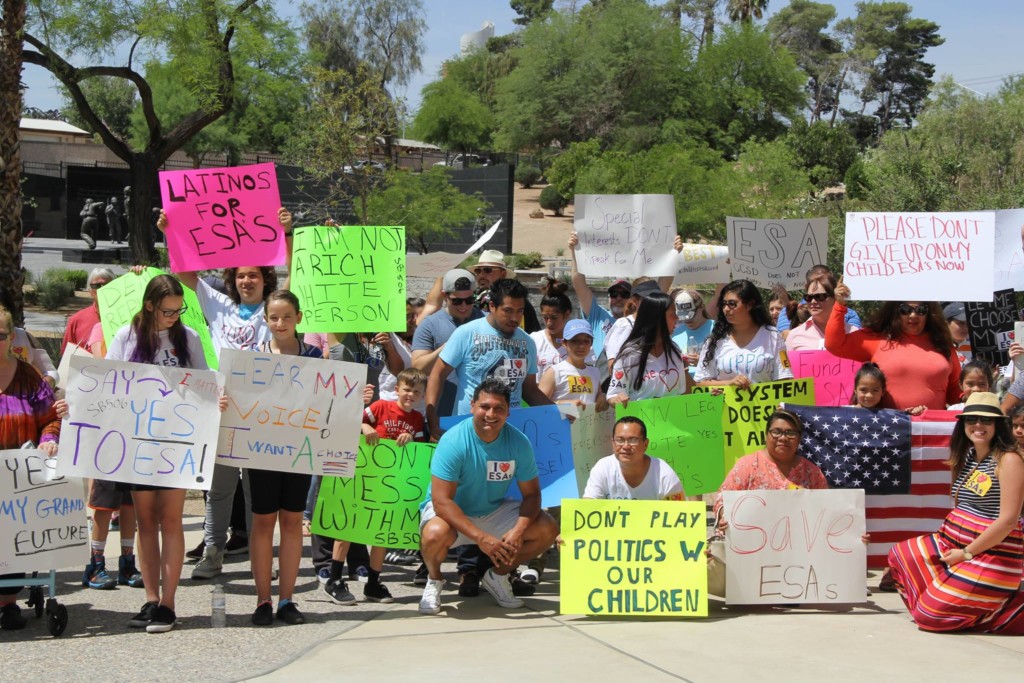
Nevada families rally in support of the state's Education Savings Program, which encountered legal challenges and was never funded.
Editor’s note: Florida lawmakers who have signed the American Federation for Children’s Education Freedom Pledge include Sen. Manny Diaz Jr., Sen. Joe Gruters, Rep. Anthony Sabatini, Rep. John Snyder and Rep. Alex Andrade.
You might be asking yourself why, in a state like Nevada that remains among the lowest ranked in the country when it comes to quality education year after year, legislators do not want to give parents access to different educational avenues.
Or to even dare to think about doing things differently.
In 2015, Nevada enacted its Education Savings Account Program. The intent was to offer students approximately $5,100 per year (plus an extra $600 for low-income or special-needs students) that could be used for a wide range of eligible educational expenses, such as private school tuition, tutoring, textbooks, online courses and homeschool curriculum.
The program immediately encountered two separate legal challenges and was never funded.
Then, at the end of the state’s legislative session in June 2019, the Nevada Legislature approved a bill to eliminate the voucher program that had been unable to operate since the state supreme court had declared it unconstitutional. It was the first time in U.S. history that an ESA program was repealed after being enacted.
Despite the thousands of parents who once applied to the program and the hundreds who showed up during rallies and testimonies to fight against the repeal, school choice in Nevada still remains a hotly debated issue today among legislators.
Most Republicans in Nevada continue to show support for school choice. This is evidenced by the recent display of the entire Republican Assembly Caucus signing the American Federation for Children’s Education Freedom Pledge, becoming the second state in the country to do so.
Unfortunately, there continues to be less support from Democrats for school choice, or perhaps I should say, there is support among Democrats, but they get threatened by the teacher’s union every time they dare to speak up in support of families.
Throughout the country, school choice has become a popular winning issue during the pandemic. Major media outlets called this the year of school choice. For the first time, parents became aware of the importance of having school options. Virtual instruction also brought education to families’ living rooms and forced parents and guardians to become cognizant of how their children were doing in school.
Yet, in Nevada, school options for parents have remained limited. The only private choice program, the Opportunity Scholarship, helps less than half of 1% of the entire population of students in Nevada. Parents also often complain about not making the long waiting list of charter schools.
The pandemic only made things worse for students in Nevada. As the Review Journal reported, just 10.2% of African American students tested proficient in English. In math, the number was a “jaw-dropping” 3.9%. For Hispanic students, the number, 15.7% were proficient.
But if the recent Virginia election is any reflection of what could happen nationwide, there could be hope for a state like Nevada, where the unions strongly oppose giving parents any sort of choice; voters could decide to elect legislators that support school choice – especially now that they have a place where they can become informed about who supports them with the Education Freedom Pledge.
If parents are victorious in the next round of elections, incoming legislators could finally enact a program that will help a larger percentage of students. Despite the programs chosen – education savings accounts, tax credit scholarships or public choice – students in Nevada finally will be able to enjoy the opportunities they need to succeed.
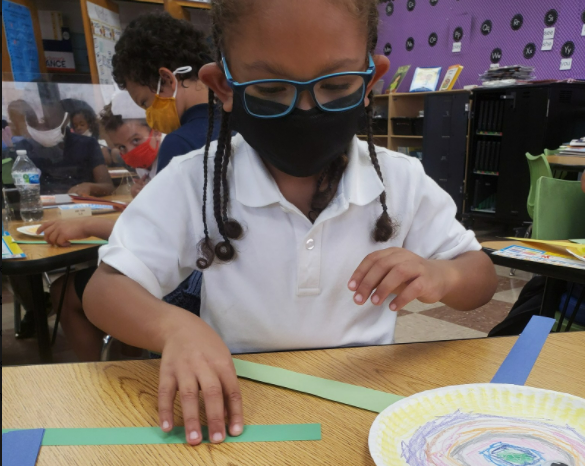
Penn Hills Charter School for Entrepreneurship in Pittsburgh offers a unique educational choice option for families: the national MicroSociety model.
Editor’s note: reimaginED guest bloggers Walter Blanks Jr. and Nathan Cunneen, who serve as press secretary and communications associate, respectively, for the American Federation for Children, recently had the chance to see the inner workings of several charter, private and virtual schools in Pennsylvania. Their visits came courtesy of an AFC partnership with the Pennsylvania Coalition of Public Charter Schools, the Commonwealth Foundation, and Harrisburg Families United. In this post, Cunneen reports on what he saw at one of those schools during the “Stronger Together Tour.”
The first stop on our tour was a visit to Penn Hills Charter School for Entrepreneurship. Penn Hills serves more than 400 students from more than 10 school districts in the Pittsburgh area.
A key component of Penn Hills is its Advancing Youth Initiative, which supports students’ health, welfare and education, and serves as the school’s philanthropic arm, seeking and accepting donations and resources to help each student reach his or her full potential.
Penn Hills pledges to educate its students using an innovative, hands-on, engaging curriculum grounded in entrepreneurship and aligned to Pennsylvania Common Core standards. The curriculum is designed to bring entrepreneurial and economic concepts alive for students; basic economic and entrepreneurial concepts are embedded in lessons connected to science, math, social studies, and English language arts.
To learn more about what this means in practice, Walter and I attended a discussion panel with Penn Hills CEO Wayne Jones and board president Tricia Shelton, who explained that their vision is to educate the future leaders of their community and the country. They do this by investing in students and focusing on CARE – Character, Academics, Relationships and Entrepreneurship – so those young people will be prepared to successfully go out into the world.
Penn Hills creates an environment where all students are learning real-world skills that will serve them for the rest of their lives, Jones and Shelton said. While students aren’t forced to become entrepreneurs, they are required to learn skills that will prepare them for whatever career path they choose.
Kindergarteners at Penn Hills, for example, are introduced to resume writing. You might wonder what kind of a resume a kindergartener could have. What Walter and I learned from Jones and Shelton is that it’s not about what the student puts on paper so much as that he or she is being exposed to the concept at such a young age.
We also learned from these innovative leaders that Penn Hills Charter School of Entrepreneurship follows the national MicroSociety model, created in 1967, that introduced the idea of creating a functioning miniature society into classrooms to bring relevance to learning and to teach individual responsibility.
Penn Hills holds the distinction of being the first MicroSociety school to open with only a kindergarten to second grade student cohort. Since then, the school has grown to serve kindergarteners through eighth-graders, challenging students more as they age.
By the time students graduate, each has fulfilled the requirement to produce a concrete business plan.
You can learn more about Penn Hills by reading its strategic plan here.

