From the News Service of Florida a few minutes ago:
The president of the state's main teacher's union met Wednesday with Gov. Rick Scott, but said afterward he and the governor are taking it slow in terms of making up for years of ill will between the GOP and the union. "This is like dating – it's a second date," said Andy Ford, president of the Florida Education Association. "Not much has happened yet." Ford didn't discuss specifics in terms of where the union and the governor might find some common ground, but said the issues of money for education – Scott has said he doesn't want lawmakers to cut the schools budget – teacher evaluations, and what to do about the state's lowest performing schools all came up. It's the second meeting between Scott, who has said he wants to make education a priority, and Ford, who said he probably won't know until the legislative session whether the governor and the union may be able to agree on how to improve the education system. " We're always willing to sit down and have some conversation," Ford said. "The test will be during the session, on whether we have some success or not."
 It does sound nefarious: The people who back accountability for Florida public schools, the argument goes, are really out to mine huge sums of money from their degradation and demise. In a weekend op-ed for the Orlando Sentinel, Florida teachers union president Andy Ford (pictured here) mashed the privatization button hard in panning the state’s “flawed and punitive” ed reforms. The accountability system, he wrote, has been “endlessly promoted by legislators who favor for-profit schools, and the Florida Chamber of Commerce.” The state’s standardized test has been “abused by politicians and those wanting to make a profit off public schools and students.” The job of state education commissioner has “devolved into one solely focused on implementing the marching orders of Jeb Bush and the corporate community.”
Yikes! But if all of those folks really were out to make public schools look awful (so profiteers could swoop to the rescue with charter schools and vouchers) they’ve done a miserable job. As we’ve noted before, one key indicator after another and one credible, independent report after another has found Florida’s public school students – especially its poor and minority students – have, over the past 10 to 15 years, improved as fast as students in just about any other state. Matthew Ladner, a researcher at the Foundation for Excellence in Education, has more on this point today at Jay P. Greene’s Blog:
Notice that the “good ole days” in Florida (pre-reform) were a disaster for low-income children. A whopping 37% of Florida’s low-income 4th graders had learned to read according to NAEP’s standards in 1998. A lack of transparency and accountability may have suited the FEA fine, but it was nothing less than catastrophic for Florida’s low-income children. Thirteen years into the “flawed” system, that figure was up to 62 percent. The goal of Florida policymakers should clearly be to accelerate this impressive progress rather than to go back to the failed practices of the past.
Put another way, if Mr. Ford considers this system “flawed” then Florida lawmakers should quickly implement something that he would judge to be “catastrophically flawed.”
 Editor's note: This op-ed appeared in today's Tampa Bay Times.
Few public issues are as absorbing as the balance between religion and government, so a ballot initiative that aims to change the boundary is worthy of rigorous debate. Instead, Florida's Amendment 8 is being treated to a proxy campaign on school vouchers.
A new radio ad by the Florida Education Association: "Amendment 8 allows the government to give our tax dollars to any group claiming to be a religious organization, so any religious group or sect can use our money to fund their own religious schools."
FEA president Andy Ford: "This is designed to open the state treasury to voucher schools."
Alachua School Board member Eileen Roy: "It's the very death of public schools. That's not overstating it, in my opinion."
These are provocative arguments, to be sure, but they are basically irrelevant. The amendment was placed on the ballot by two legislators — Sen. Thad Altman, R-Viera, and Rep. Scott Plakon, R-Longwood — who have said repeatedly they want to protect religiously based social services. Their interest was piqued by a lawsuit, Council for Secular Humanism vs. McNeil, that challenges a prison ministries program, and by the fact that the New York-based council has called it "a springboard to mounting other challenges."
In turn, the pro-Amendment 8 campaign is being led by a coalition of community-service providers and religious leaders who have raised less than $100,000 to date. They believe that if the secular humanists will sue over prison ministries, they might one day challenge the Catholic Charities or Catholic hospitals or the YMCA. After all, the current constitutional language is explicit: "No revenue of the state or any political subdivision or agency thereof shall ever be taken from the public treasury directly or indirectly in aid of any church, sect, or religious denomination or in aid of any sectarian institution."
Now it is certainly true that voucher advocates have previously pushed to alter the no-aid clause. But it is just as clear that they played no role in getting this amendment on the ballot and, most telling, have raised not a penny for the campaign. Their reasons are pragmatic, not philosophical: Federal and state court decisions in recent years have rendered the no-aid clause all but moot as it relates to school choice. Read full editorial here.
 Capping his week-long education "listening tour," Florida Gov. Rick Scott had dinner last night with Florida Education Association President Andy Ford and other teachers union officials. Tucked into this Palm Beach Post blog post about the first-ever get-together was this quote from Scott:
“I believe parents ought to have choice, I believe that’s good for them,” Scott said. “I believe in the public school system. I grew up in the public school system. It was good for me. The teachers had a dramatic, positive impact on the my life….Is choice good? Yeah. But let’s make sure we do it the right way. Is competition good? Sure, but let’s make sure we do it the right way.”
Without further details, it's hard to know what Scott was suggesting, if anything (but who could disagree with being thoughtful about school choice?). For what it's worth, it joins other interesting word choices from Scott in recent weeks, including one about "teaching to the test" and another about working with teachers.
After the dinner, Scott issued a statement saying he wanted to maintain if not increase state funding for education: (more…)
 Andy Ford, president of the Florida teachers union, has done his darnedest to kick out many of the Republicans who continue to run both the executive and legislative branches in this state, and they don’t usually take a shine to his approach. Just the other day, Ford bought a two-page ad in Florida Trend, a leading business magazine, to proclaim: “IT’S MIDNIGHT IN FLORIDA. Do You Know Where Your Public Education Dollars Are Going?” He added: “The foundation of public education in the Sunshine State is devious, unreliable and crumbling before our very eyes.”
Given all that, you’d think Ford would be in a better mood at the Democratic National Convention in Charlotte. And you’d think he’d especially appreciate the speech from U.S. Education Secretary Arne Duncan, who spent much of his time criticizing Mitt Romney for gutting education spending “to cut taxes for millionaires and billionaires.” Even American Federation of Teachers President Randi Weingarten found some reason for cheer, tweeting, “Duncan: "teachers matter" and "no teachers should have to teach to the test"-very different from Romney/Ryan/Rhee agenda.”
Was Ford moved, too? Not so much. As the secretary wrapped up, he tweeted six words: “Glad Duncan is off the stage!”
 No matter how many times critics of parental choice say it, it’s still not true: Tax credit scholarships in Florida (aka vouchers) do not drain money from public schools.
The latest example: An op-ed in Sunday’s Ocala Star Banner by Andy Ford, president of the state teachers union. Ford (pictured below) focuses on the state of education funding in Florida, and much of what he argues is undeniable. These are tough times for schools. The money that Gov. Rick Scott and the Legislature scraped together for education this year is still billions short of where the state was five years ago. I have one child in public school. In a few months, I’ll have two. I sympathize.
But then Ford redirects his financial argument toward tax-credit scholarships, suggesting they’re part of the reason why public schools are in dire straits. “There’s also money in the budget for expanding charter schools and increasing money for corporate voucher schools,” he writes. “Here’s another example of political leaders favoring unproven and less-accountable schools over our traditional neighborhood schools.”
He concludes: “At a time when the governor and lawmakers doled out more tax giveaways for corporations, more money for unaccountable voucher schools and more support and freedom for for-profit charter schools, our public schools are given a budget far from adequate and far from a true investment in our children.”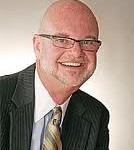
We'll save the issue of accountability for another day, because it’s the pervasive myth of financial loss that resonates most with parents and voters. Despite what Ford says, one credible, independent report after another has found tax credit scholarships save taxpayer money. The Collins Center for Public Policy came to that conclusion, as did Florida Tax Watch, the Office of Program Policy Analysis & Government Accountability and, just last month, an impact report from Florida’s Revenue Estimating Conference. The latter found the tax credit program will save taxpayers $57.9 million next year alone. (more…)
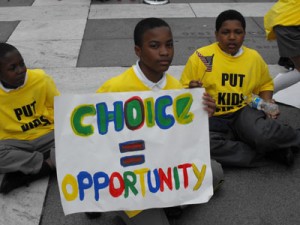 For whatever reason, Duval County is a hotspot in Florida for criticism about school choice options for low-income students, including, most recently, a biting newspaper column about charter schools. The distinction is odd and disappointing because, for whatever reason, low-income students do particularly poorly there.
Low-income students in the Duval school district, which corresponds with the city of Jacksonville, trail more affluent classmates by double-digit percentage points when it comes to passing the state’s standardized math and reading tests. That’s not unusual. But they also trail other low-income students. When the results for low-income students in Florida’s 12 biggest school districts are compared, Duval ranks last in both subjects. (The 2010 figures showed 47 percent of Duval’s low-income kids reading at grade level or above, while 52 percent were doing math at grade level or above.)
This is not meant to disparage the hard work and dedication of public school leaders in Duval. But it does call into question the certitude with which they reject learning options that could help. Andy Ford, the president of the state teachers union, is a former union president in Duval – and definitely not a fan of vouchers or tax credit scholarships for low-income kids. Neither is influential Duval school board member W.C. Gentry or Save Duval Schools, one of the state’s most organized and media-savvy parent groups. From public hearings to the state Capitol to letters to the editor, they’ve relentlessly stayed on message: School choice is bad, a fraud, a conservative plot to enrich greedy corporations.
Expanded school choice “really takes us back to the haves and have-nots,” Gentry said in a Dec. 2010 radio interview. “The wealthy, the rich, the people in the know – they will figure it out. The poor, the disenfranchised, those who do not have that kind of support system – they will fall into the cracks and we will further enhance the disparity we now have in this city and this state between the haves and have-nots.” (more…)

