
Anti-education choice group Save Our Schools Arizona gathered enough signatures to put a 2018 effort of state lawmakers seeking to expand education savings account eligibility up for referendum.
Editor’s note: This article appeared Friday on azmirror.com.
Teachers and public school advocates on Friday submitted nearly 142,000 petition signatures to block the new universal school voucher program that was set to go into effect Friday and let voters decide its fate in 2024.
Save Our Schools Arizona PAC said it gathered 141,714 signatures to give voters the chance to weigh in on the expansion of the Empowerment Scholarship Account program, the formal name of the voucher system.
Whether voters will get that chance remains to be seen. The signatures represent almost 23,000 more than needed to refer the matter to the ballot, but state and county elections officials will inevitably whittle that number down when they verify the petitions comply with legal requirements and that the signers are registered voters.
And then there will be a legal challenge from school-choice backers. Arizona law allows opponents of citizen initiatives or referendums, like this one, to challenge the signatures in court. In the past decade, GOP lawmakers — with backing from big corporate interests upset that voters have approved minimum wage hikes and tax increases — have made it easier for challengers to disqualify large swaths of petition signatures.
If, after all that, the referendum has at least 118,823 valid signatures, the ESA expansion will be blocked and voters will have their say in November 2024. If the effort has too few signatures, the expansion will immediately go into effect.
Until all that happens, the law will remain blocked.
To continue reading, click here.
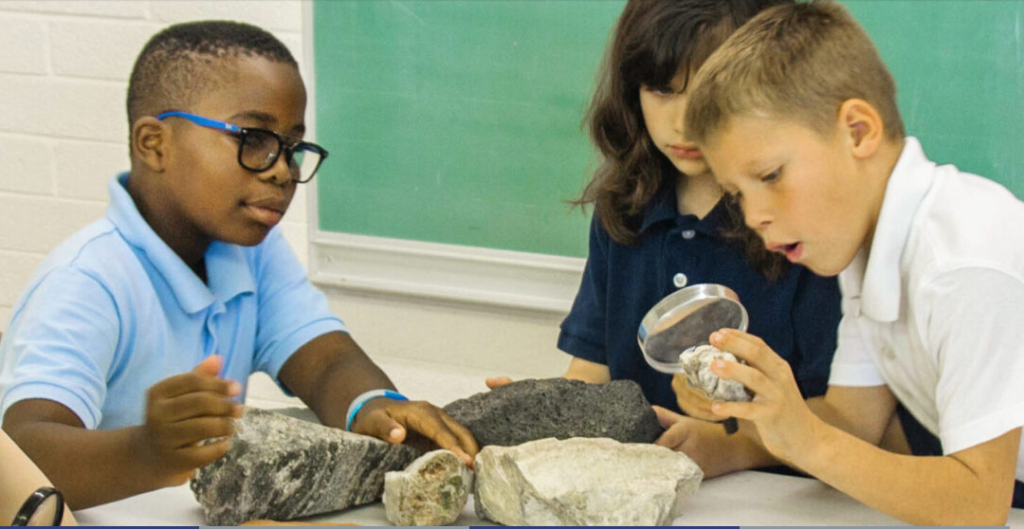
Redeemer Christian School in Mesa, Arizona, is one of 451 private schools serving more than 66,000 Arizona students. Research shows that programs such as the classical learning approach Redeemer employs tend to accrue benefits to participating students, families, public schools, and communities.
Editor’s note: Martin F. Leuken, director of the Fiscal Research and Education Center at EdChoice, wrote this commentary for the Ripon Society, a public policy organization that promotes the ideas and principles that have contributed to the Republican Party’s success.
In the aftermath of the COVID-19 pandemic, 2021 was widely hailed as the “Year of Educational Choice.” That year, 18 states created or expanded educational choice programs. Today, most states have educational choice programs, with 32 states operating 76 programs.
This shouldn’t surprise us. Support for private school choice is high, with more than 70% of school parents supporting education savings account programs, vouchers, and charter schools.
Research backs up parents’ assessment. Overall, the large body of rigorous research on choice programs indicate that these programs tend to accrue benefits to not only students who participate in them, but also for families, public schools, and communities.
Researchers conducted a meta-analysis of voucher programs based on all available random assignment research. They estimated an overall positive effect on test scores for students who participated in these programs. Moreover, students performed better the longer they remained in their program.
Participating parents are also overwhelmingly satisfied with their choices. Parents often indicate school safety as one of the top reasons for choosing, and empirical research provides evidence that choice improves school climate and safety.
Benefits also accrue to communities by making schools more integrated and improving civic outcomes for students. Researchers attribute greater tolerance for the rights for others, increased civic knowledge, reduced criminal activity, and increased volunteerism, social capital, and voter participation to choice programs.
State policymakers looking to improve their education system through educational choice should look to Arizona for inspiration. Arizona is home to some of the largest and oldest choice programs in the nation, and it continues to pursue ways to expand educational opportunities for families.
In fact, Arizona recently passed the most expansive education choice program in the country, though opponents are working to refer the expansion to the 2024 ballot for voter approval.
Arizona expanded its Empowerment Scholarship Accounts, or ESA, program to all K-12 students in the state. Every child in Arizona, regardless of race, gender, or income, would be eligible to receive a scholarship account worth about $7,000 per year to use at the school of his or her family’s choice. Students with special needs would receive an even higher amount that corresponds with their needs.
States shouldn’t shy away from choice programs such as Arizona’s. After all, among the different kinds of choice programs, ESA programs like Arizona’s offer the greatest flexibility for families and enjoy the highest support.
ESA programs allow families to access part or all of their child’s public school funding and use those funds for a variety of education-related services. Families can use ESA funds not only to pay for private schools, micro schools, or home schools, but they can access other services such as tutoring, therapies, and online courses.
Fundamentally, a universal ESA program realigns incentives in states so that education dollars are used more effectively compared to current institutional arrangements. The flexibility from ESAs increases competition among education service providers and incentivizes providers to control costs. Such incentives are absent in the traditional public school system, which has long been the dominant provider of K-12 education and costs for public school systems have inexorably risen for decades.
Nobel laureate economist Milton Friedman’s perceptive insight explains this dynamic: when bureaucrats spend other people’s money on someone else’s children, they don’t care as much about cost or value. Staffing surges and rising pension costs present examples of consequences from this arrangement.
With an ESA program like Arizona’s, the state empowers parents to spend their own publicly funded ESA dollars on their own children. We can expect parents will seek the highest value in education services they can purchase for their children, which will benefit both families and the state alike. In fact, research is quite clear that the state experiences fiscal benefits from these types of programs.
Despite having choice programs for decades, however, choice opponents routinely voice concerns that these programs harm public schools. They don’t. In fact, public school students on average experience gains in test scores when states implement private school choice programs.
A meta-analysis studying these competitive effects wrote, “In general, competition resulting from school-choice policies does have a small positive effect on student achievement. The lack of an overall negative impact on student outcomes might ease critics’ concerns that competition will hurt those students ‘left behind’ due to school-choice policies.”
Educational choice is a commonsense policy to fix the adverse incentives underlying the public system by placing parents where they belong: in the driver’s seat of their own children’s education.
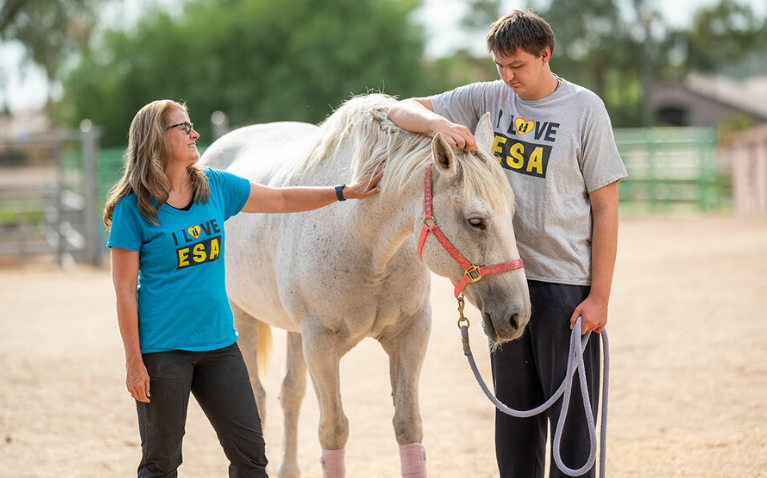
Kathy Visser of Arizona, a former public school teacher, has embraced her state’s education savings account legislation as a perfect fit for her son Jordan. Arizona’s Empowerment Scholarship Account makes it possible for Jordan to attend The H.E.A.R.T. Center, a microschool that offers individualized pathways for students based on their needs.
Editor’s note: This article appeared last week on csmonitor.com.
For a long time, Kathy Visser struggled to find the right school for her son Jordan.
There had always been options in Arizona’s public school system. The state has long had a policy of open enrollment, allowing any family to apply to any of the state’s public schools, and it still has a nation-leading percentage of students attending charter schools.
She remembers vividly the public school teachers who worked tirelessly to teach Jordan when he was younger, marveling at the talent and commitment they displayed. But when the family had to move, or when his teachers moved on, her experience navigating the system and finding the right fit for a son who’s struggled with developmental and emotional challenges felt like being in a frustrating bureaucratic maze, she says.
“Sometimes they fight the parents, and when they’re fighting the parents, the freedom to find an appropriate education for your child is a luxury only for the rich,” Ms. Visser says.
On a desert-hot day in August, however, she’s standing with Jordan in a modest stable of horses at the private school where she was able to send her son, using funds from an education savings account that Arizona calls “empowerment scholarships.” The school, The H.E.A.R.T. Center in Glendale, is a 16-student “microschool” that combines equine therapy and personalized instruction, and her son, now 18, has flourished here, both of them say.
“Arizona is a lot more free when it comes to parent-directed education,” says Ms. Visser, who taught public school herself in the mid-1990s, when she lived in Colorado and worked with lower-income students in some of the state’s outlying rural districts.
Her experiences have made her a vocal advocate for a nationwide movement its supporters now hail as “education freedom,” a relatively new label in conservative education circles for a movement of controversial ideas and education policies that have mostly been known as “school choice.”
Ms. Visser was among the first to participate in Arizona’s Empowerment Scholarship Account program nearly a decade ago, when it was limited to families with kids with certain challenges or those enrolled in public schools the state deemed failing.
But in July, Republican Gov. Doug Ducey signed a major, universal expansion of this scholarship program, which he and supporters around the country are calling “the gold standard for educational freedom.”
To continue reading, click here.
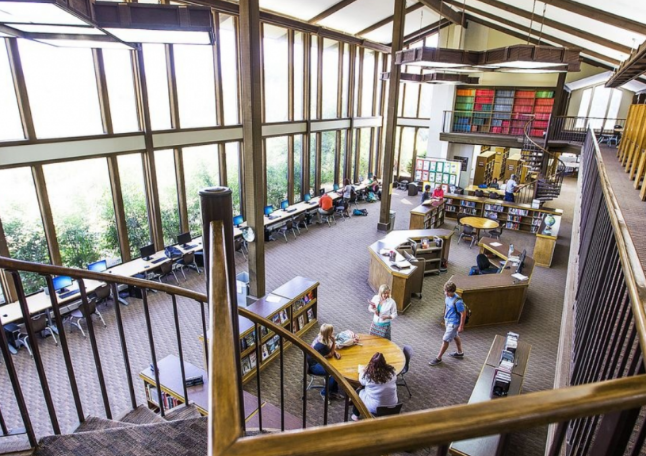
The Orme Private School in Mesa, Arizona, one of 451 private schools in the state serving more than 66,000 students, was founded by Charles Orme Sr. in 1929. Orme’s dream was to create a friendly, strong children’s collective that would allow students to reach academic and personal heights, developing emotionally and spiritually.
Editor’s note: Jessica Dobrinsky, a policy analyst for the Cardinal Institute for West Virginia Policy, contributed this update on the Hope Scholarship for townhall.com, a website that features news, commentary, and analysis from more than 100 national columnists and opinion leaders involved in America’s political debates.
As the war for education choice rages across the nation, all eyes turn towards West Virginia.
Parents who were left without schooling options one month before the start of the school year await the Supreme Court’s decision on the Hope Scholarship injunction, set to be released Oct. 21. By ruling in favor of choice, the Supreme Court would protect the greatest equalizer to educational disparities.
The case moved to the Supreme Court after the state’s Intermediate Court of Appeals denied motions to stay a ruling by the Kanawha County Circuit Court which handed down a preliminary and permanent injunction on the Hope Scholarship in July. This injunction effectively nixed the first education saving account in West Virginia, leaving families in the Mountain State scrambling to figure out how to educate their children.
Now the West Virginia Supreme Court must decide whether to nullify that injunction and uphold educational equality across the Mountain State. Parents are holding their breath.
The quality of public education in West Virginia has seen a rapid decline in the past two years. Just this week, 21 public schools in West Virginia, spanning 16 counties, were identified as needing additional state resources after standardized test scores returned with abysmal results.
Statewide, however, schools that met or exceeded expectations only did so in elementary language arts, elementary and middle behavior, and high school graduation rates. All other areas of review failed to fully meet standards.
Families need another option.
The Hope Scholarship was supposed to be that other option, and soon after Hope’s passage, 3,000 students were approved to receive scholarship funds from the state’s first ESA for the 2022-23 school year. Just two months prior to the applications becoming available to the public, wealthy teacher unions filed a case against the funding.
Rather than file after the law was passed in March 2021, unions hoped the court—and, maybe, the public—would be sympathetic to maintain the present state of affairs in education.
West Virginia is not the only state facing opposition to ESA proposals. In spite of the fact that 2021 was widely hailed as the “Year of Educational Choice” after 19 states enacted 32 new or expanded choice policies, several states are facing litigation against educational choice programs.
In Tennessee, thousands of families looked for a decision from the Court on whether parents in Shelby and Davidson counties would be permitted to use an ESA accessible to families in the state's two worst performing school districts. Once again, in the early stages of implementation, unions sued the state.
However, Tennessee’s Supreme Court ruled that education savings accounts did not violate the state’s home rule law. Now, more than 2,000 families have access to $8,000 in educational funding of their choice.
Despite a favorable opinion from the court, more Tennessee groups have claimed they may continue to challenge the validity of educational choice.
In Arizona, Save Our Schools, a group with a misleading title led by unions and their predatory allies, declared their intention to refer expansion of their existing ESA program, which currently serves 12,000 students, to the ballot. If SOS receives 119,000 signatures by Sept. 25, expansion of ESAs will be faulted for two years, awaiting referendum results in 2024.
However, there is still hope for education choice across the nation.
In June, North Carolina Gov. Ray Cooper provided financial backfill to the state’s Opportunity Scholarship program enacted in 2013, increasing monies from $4,200 to $5,900 annually per student. The program provides assistance to parents in low- and middle-income households who may use funds for tuition, tutoring, and other approved educational expenses.
In 2021, the same year as the Hope Scholarship’s passage, Kentucky, Missouri, Indiana, and New Hampshire adopted similar ESA programs. Now, Texas Gov. Greg Abbott and Iowa Gov. Kim Reynolds have said they hope to see state lawmakers expand school choice.
Meanwhile, in the Mountain State, we await a decision that will dictate the futures of thousands of students. Families who depend on scholarship money have been left to make harrowing decisions about their child’s unique education needs.
Rather than provide an education that will allow each child to thrive, this year, opponents have protected failed status quos. West Virginia’s children deserve better.
 Editor’s note: This commentary from Jason Bedrick, a research fellow at The Heritage Foundation, appeared Wednesday on newsweek.com.
It is now clear that two years of unnecessarily long public school shutdowns have produced a massive learning loss. Equally clear is that students are better off when their families have lots of education options.
"It just wasn't working out while our school was closed," said Vanessa Ramirez, a single mom from Phoenix, Arizona. "Parents had to take our kids' education into our own hands."
Fortunately for Vanessa, this year her state made it much easier for parents to do just that.
Vanessa was able to use Arizona's Empowerment Scholarship Account to enroll her daughter in a private school that offered in-person instruction while her assigned public school remained closed. She thrived in her new school, so Vanessa kept her there even after her previous school reopened.
In July, Arizona Gov. Doug Ducey signed legislation expanding access to ESAs to all students, making Arizona the gold standard for education choice. Now every family can get about $7,000 to spend on private school tuition, tutoring, textbooks, curricular materials, online courses, educational therapy, and more.
The law has already proved popular among parents. Since the expansion, the Arizona Department of Education has received at least 7,800 new ESA applications due to the new universal eligibility. As of last fall, a total of 11,775 students were enrolled in the program.
The surge in ESA enrollment is even more remarkable considering that the application period opened just before school started—long after most families had made their enrollment decisions for the 2022-23 school year. A Morning Consult poll released last month found that 66 percent of Arizonans and 75 percent of parents of school-aged children support ESAs.
To continue reading, click here.

St. Theresa's Catholic School in Phoenix, launched in 1957, strives to provide a sense of community by inviting parents to on-campus events such as a parent lecture series.
Editor’s note: This first-person essay from Arizona mother Lorraine Petrie was adapted from the American Federation for Children’s Voices for Choice website.
Lorraine Petrie
Our family moved to Arizona from California almost four years ago. One of our primary concerns at the time was finding the best learning environment for our two young children.
That’s why we were so grateful to find St. Theresa’s Catholic School in Phoenix. The school had earned four stars out of five on the greatschools.org website and we were pleased to see so many glowing comments from families.
We were especially heartened by parents who commented on the family-like setting of St. Theresa’s. Having no family in Arizona, this “school as community” was particularly important to us. We felt loved and supported right away at St. Theresa’s, and our children began to thrive.
Then COVID-19 hit. Our family, like many, were negatively impacted in a financial sense by the pandemic. When my husband lost his job, we had to face the hard truth that we could no longer afford to send our children to St. Theresa’s even as we were anxious about disrupting our children’s lives at an already difficult time.
Before giving up, we reached out to school administrators and were so happy to learn about Arizona’s Empowerment Scholarship Account program. This education savings account program expands educational opportunities for eligible students outside of the public school system, providing funding that can be used for a wide variety of educational expenses, including private school tuition.
The ESA, administered by the Arizona Department of Education, is funded by tax dollars. Each account consists of 90% of the state funding that would have otherwise been allocated to the school district or charter school for the qualified student. Applying for the program was easy and communication was friendly and consistent.
The education savings accounts we received changed our lives at a time when we felt hopeless, beaten down, and uncertain of the future. We felt a wave of relief that a lifeline had been thrown to us after feeling like we were drowning. All the reasons we chose St. Theresa’s in the first place – the family-like atmosphere, the nurturing teachers and administrators, the focus on academics and well as spiritual development – became even more important to us.
As my children continue their education at St. Theresa’s thanks to the Empowerment Scholarship Account program, they are surrounded by caring and kind students, educators, staff, and families who make them feel loved, supported, nurtured, and cared for. The values of St. Theresa are fully in line with our values, and our children have thrived socially, emotionally, mentally, and in their faith.
It is our firm belief that all families should have the ability to choose the right school for their children regardless of their income level. As parents, we are our children’s primary educators in the home, but finding a school that underscores our commitment is just as vital to a child’s success and is so important in helping our children become successful adults.
My husband and I could not be happier that we have found a school and community that has welcomed us and made us feel at home – and a state scholarship program that has continued to make their attendance possible.

Anti-education choice group Save Our Schools Arizona gathered enough signatures to put a 2018 effort of state lawmakers seeking to expand education savings account eligibility up for referendum.
Editor’s note: This commentary from Jason Bedrick, a research fellow at the Heritage Foundation’s Center for Education Policy, first appeared on The Federalist.
Supporters of education freedom and choice have rightly praised the Arizona state Legislature and Gov. Doug Ducey for expanding eligibility for the state’s K-12 education savings accounts to all students. Now all Arizona families will be empowered to choose the learning environments that align with their values and work best for their children.
That is, unless opponents of education choice block the expansion from taking effect.
They’ve done it before. When state lawmakers sought to expand ESA eligibility in 2018, the anti-choice group Save Our Schools Arizona gathered enough signatures to put the would-be expansion up for referendum. Voters rejected the measure by a nearly two-to-one margin.
Ever since, SOS has claimed that the vote proved that Arizona voters don’t want school choice. They have condemned all subsequent attempts to expand the ESA as being “against the will of the voters.”
That narrative is politically useful for SOS as they gather signatures to refer the latest expansion to the ballot, but the reality is much more complicated. In fact, many voters opposed the 2018 measure because they supported education choice.
Though technically it expanded ESA-eligibility to all students, practically speaking only a few could benefit. The measure included a cap of about 30,000 students — less than 3 % of the state’s 1.1-plus million K-12 students.
To continue reading, click here.
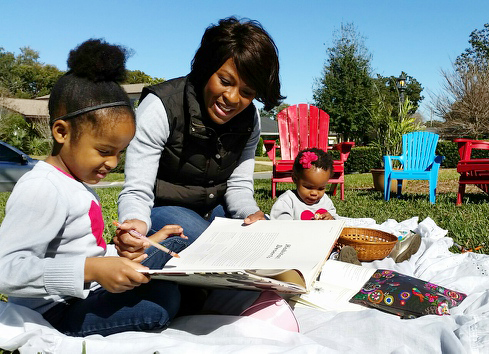
Education savings accounts, which can be used for private school tuition, online education, education therapies, and tutoring services in accordance with each student's individual learning needs, allow education providers to build specialized education offerings that fully meet the needs of children in their communities.
Editor’s note: This commentary from Tommy Schultz, CEO of the American Federation for Children, first appeared on washingtonexaminer.com.
In July, the Arizona Legislature passed the largest school choice expansion in United States history.
As a result, every single student in Arizona, even those currently attending private schools or being homeschooled, will have access to education savings accounts, or ESAs, worth close to $7,000.
These accounts can be used for private school tuition, online education, education therapies, or tutoring services in accordance with each student's individual learning needs.
This program is available to each of Arizona’s 1.1 million students without a funding or enrollment cap, which means that, for the first time in history, every lower and middle-income family in Arizona will have access to school choice and education freedom. That opportunity will be life-changing for families looking for something different in their education.
The American Federation for Children anticipated this victory when we began working in Arizona around a decade ago and has, to date, invested more than $7 million to advance school choice in the state. Ultimately, this expansion presents a massive opportunity to build a flourishing education system based on freedom, choice, and the needs of individual students. AFC stands ready to fight for families and foster educational innovation.
In true form, the education establishment promises just that — a fight. The same people who fought to keep children out of classrooms during the COVID pandemic are fighting to prevent ESAs from ever reaching families.
This could play out in two distinctive ways. The first is one of unprecedented opportunities.
Every high-quality school operator, micro-school, homeschool "pod" parent, enterprising educator, and scholarship organization should take advantage of the opportunity in Arizona, which is now the most entrepreneurial education marketplace in the country. Education savings accounts allow providers to build specialized education offerings to meet the needs of children in their communities fully.
Mission-oriented private schools serving lower-income or underserved communities can expand rather than close. Historically, this has been a tremendously difficult model to implement, but school choice programs give them more than a fighting chance.
Charter school leaders should look to start private schools in Arizona with their existing school philosophy and esprit de corps. This is an opportunity to jettison the onerous state-by-state authorizer process, the politically targeted regulations, and the constant unionization threat. The innovative learning models currently used in charter schools should progress unencumbered.
Great teachers may be incentivized to build micro-schools for 10-20 students in their neighborhood. Many teachers are searching for flexibility and freedom not often found inside the public school system. They can now untangle their careers and dreams from bureaucratic red tape and union intimidation while meeting the needs of the many families searching for smaller learning environments filled with one-on-one instruction.
Lastly, the approximately 38,000 students in Arizona currently educated at home can access more robust options across their networks or at the family level. Empowered with close to $7,000 for each child’s learning, families can access what they need and amenities they would otherwise receive only in a traditional school setting.
Simply put, this expansion will make it possible to build an education marketplace based not on an antiquated, one-size-fits-all system but on students' individual learning needs and parents' values. But there's another way this story could go.
School choice disrupts the education monopoly, and the monopoly won't go down without a fight.
Spearheaded by the teachers unions who have spent the last two years fighting to keep students out of school, an effort is afoot to rip away this opportunity before it ever reaches families. The unions all but promised to mislead voters to stop school choice and have plentiful special interest money to do so.
They are trying to kill this bill, despite overwhelming support from every political demographic: 68% of Democrats, 82% of Republicans, and 67% of independents have said they support school choice .
If they succeed, the status quo will be maintained at the expense of children and families. Thankfully, Arizona families are fighting back at every opportunity. They believe, like we do, that equal opportunity and education freedom are worth fighting for.
The establishment won’t go down without a fight, but neither will parents.
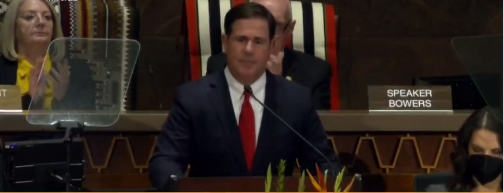
The program signed into law by Arizona Gov. Doug Ducey, the largest school voucher program in the country, is changing how families in Arizona can spend public education dollars by opening up the option for all families to spend at private schools a portion of tax funding initially allocated to public education.
Editor’s note: This commentary from Janine Yass, co-founder of the Yass Prize to Transform Education to support parental choice, appeared Tuesday on azcentral.com.
When Arizona leaders stepped up to invest in the development of future generations, it was a wake-up call for policymakers across the country to put education – and America’s students – back on the agenda.
For the citizens of Arizona, the educational futures of their students improved dramatically when Gov. Doug Ducey signed into law the expansion of the Empower Scholarship Accounts (ESA), making it possible for every parent – not just the affluent – to invest in their child’s education.
This is exactly how it should be across the country, not just in progressive states like Arizona. Instead of the government starting and funding its own schools, it should create accounts for kids that parents can use to pay for the best educational fit for their child.
While Arizona’s annual per pupil expenditure is low compared to most other states, averaging at $8,770, the national average funding per pupil for K-12 education, according to the Education Data Initiative, is just over $15,000. Where educational outcomes are the worst – America’s urban core – the average per pupil expenditure often exceeds $20,000 per student!
Long before parents plan their children’s schooling, the education system is already planning how it will spend dollars when young students enter the classroom. Regardless of their background or circumstances, children are zoned into a particular public school.
To continue reading, click here.
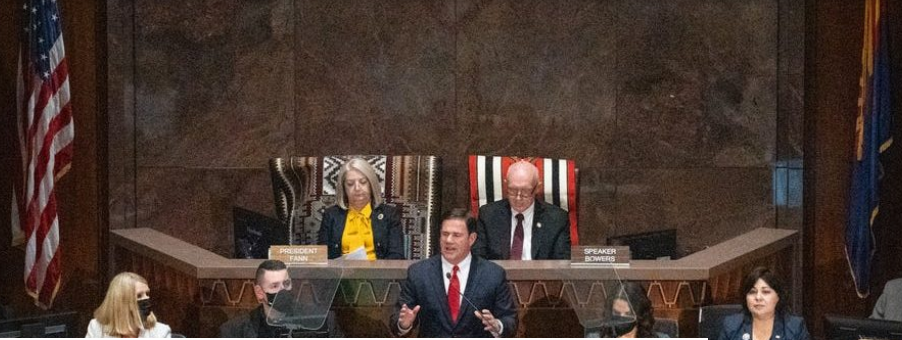
Education choice advocates nationwide are lauding Arizona’s recent expansion of school choice under the leadership of Gov. Doug Ducey via education savings accounts as the gold standard for the education choice movement and a model for other states to follow.
Editor’s note: This commentary on why Florida should follow Arizona’s lead on education savings accounts for all students appeared Tuesday on Tallahassee.com.
After elections and with our next legislative session, we should reclaim our opportunity to expand educational freedom to all young students in the state of Florida.
Florida’s well-deserved A+ position began over 20 years ago, when then-Gov. Jeb Bush lead educational reforms that established a strong foundation for success. Now, to continue building on that achievement, we must become more competitive in guaranteeing educational freedom. That means adopting universal Education Savings Accounts (ESAs).
ESAs are savings accounts managed by parents and used exclusively for the educational benefit of their child. The accounts give families the autonomy to direct their child’s funding to the schools, courses, programs, and services they choose.
This personalized approach to education maximizes each child’s natural learning abilities. Every child in Florida should have the flexibility to pursue the kind of education most tailored to their individual needs, and one that sets them up for lifelong learning and success.
Florida could learn a lesson from some other states. For example, West Virginia adopted a nearly universal ESA program that is open to all public-school aged kids or kids who are about to enter kindergarten, ensuring that more parents can access the kind of education that works best for their children.
Even better, Arizona is the first state in the nation to adopt an ESA program that provides true universal eligibility, allowing all families to decide what learning environment works best for their children. Gov. Doug Ducey signed the legislation last week and has voiced his excitement that Arizona is leading the way in expanding school choice, and this new law makes them the most educationally free state in the nation.
To continue reading, click here.

