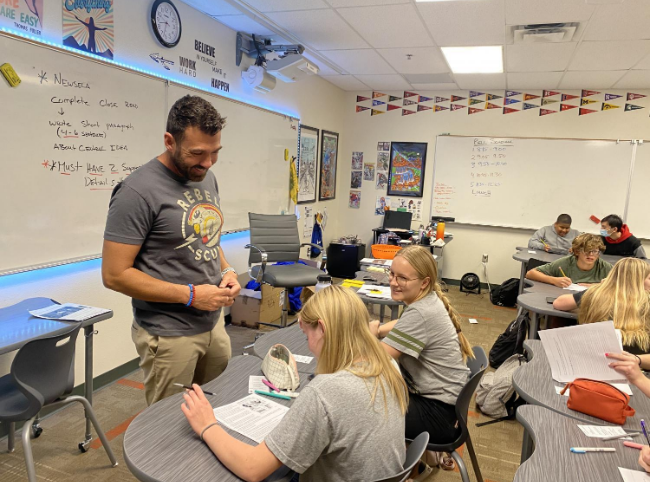
Shaun Reedy, a member of a teaching team at Westwood High School in Mesa, Arizona, says the Next Education Workforce program allows him to collaborate with other teachers, learning from their teaching styles. The model, born at Mary Lou Fulton Teachers College at Arizona State University, aims to better prepare teachers for the classroom and boost teacher retention.
Editor’s note: Today, reimaginED brings you the first in a three-part series on how the nation’s most innovative teaching colleges are preparing education majors to enter, and more important, stay in the field. We begin with the Mary Lou Fulton Teachers College at Arizona State University, ranked as the nation’s 12th overall best teachers’ college in U.S. News & World Report’s 2023 survey. The university has 4,833 students, the largest among all universities ranked, and reported $73.5 million in funded education research.
Teachers are expected to assume many roles. In a single day, a teacher must be an expert on content as well as pedagogy – also known as the practice of teaching – a social worker, a bus loop monitor, a role model, a data analyst, a trauma interventionist, and the sole classroom manager for 30 students.
In other words, all things to all students, all the time.
It’s no wonder teachers are retiring early or transitioning to other professions. According to the U.S. Department of Education, 35% fewer college students chose to major in education between 2011 and 2016. A Center for American Progress analysis of data collected by the Department discerned a 28% decline in students completing teacher preparation programs from 2010 through 2018.
Carole Brasile, dean of the Mary Lou Fulton Teachers College at Arizona State University and co-author of an article about the mounting teacher crisis published in the newsletter of the American Association of School Administrators, has a specific concern.
“More disturbingly,” Brasile wrote, “for some time we have seen that most new teachers leave the profession within three years.”
At the same time, schools continue to produce the same, often disappointing outcomes.
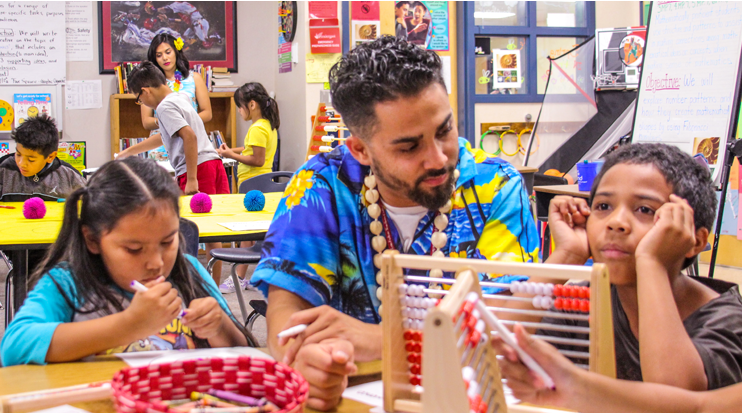
The Next Education Workforce initiative, developed by Arizona State University’s Mary Lou Fulton Teachers College, addresses the challenge of teacher retention by transforming a one-teacher, one-classroom environment into a collaborative and more creative team-based model at locations such as Stevenson Elementary School in Mesa, Arizona.
Leaders of teacher preparation programs at Arizona State believe those two situations are linked. Recruiting more teachers and training them better will not solve the problem, they say. Only a redesign of the profession, the workplace, and how education majors are prepared for both will improve outcomes for students and teachers.
That’s the purpose behind Next Education Workforce, an ASU initiative launched five years ago that aims to craft a better future for educators, many of whom are graduates of ASU, and more personalized learning for students. The models are now in place at 27 of the state’s schools.
“Education, in general, is broken,” said Randy Mahlwein, assistant superintendent for secondary education at Mesa Public Schools and the district’s liaison to Next Generation Workforce, which involves 19 of the district’s schools, many of which are Title 1 eligible based on high numbers of low-income students. “The archaic way we designed education and implemented it over the last hundred years was designed and created for a different workforce than exists today.”
Mahlwein added that putting unrealistic expectations on a teacher and then measuring progress by annual high-stakes testing, where scores are driven by economics, is inherently unfair.
“If they had put a time frame on Thomas Edison to invent the light bulb, and then measured all his failures and discredited him to a point where he would have been washed out of the industry, he would have never invented the light bulb,” he said.
Arizona State’s Next Education Workforce program has replaced the traditional “one-teacher-one-classroom” model in Mesa schools with a teams-based model. While team teaching isn’t new, Mahlwein said, the ASU program’s models are different.
“Those (earlier) teams were working in isolation from students,” he said. “This is more wrapping teams that distribute expertise around teams of students without the limitation of time.”
At Westwood High School, for example, about 900 ninth graders are distributed across six teams. Each team shares about 150 students and is comprised of at least three certified teachers and a lead teacher, who both instructs and manages the classroom.
Other educators join the core depending on students’ needs. Their roles include special educators, teachers of English language learners, teacher candidates who are completing residencies, and paraeducators.
The models, which vary from school to school, entail “collaborative and interdisciplinary work during instructional time, as well as before and after it,” according to Basile and Brent Maddin, the program’s executive director. Planning periods are also collaborative, with daily common planning time that allows teachers to create cross-curricular lessons, discuss student work and design personalized experiences for each learner.
Instruction incorporates project- and inquiry-based learning to allow students to learn more deeply. Teachers are joined by community partners who also serve as team members. Gone is the traditional bell schedule.
Sometimes, large groups of students meet with all four core teachers for instruction, and other times they break out into small project-based groups based on student interest and teacher expertise.
In a project on the United Nations, for example, teachers work with students as they survey the globe brainstorming for ways to improve challenges.
Those challenges could touch on food or clean water, Mahlwein said. The teachers weave the standards of science, history and English into the lessons and present a bell-free three hours of instruction.
“Kids can be seen moving through the doors from classroom to classroom,” he said. “The learning is very much student-based, and everyone’s working at their own pace, with a little bit of voice and choice.”
Yet it’s no free-for-all, Mahlwein said. Teachers work within boundaries, and their students do, too.
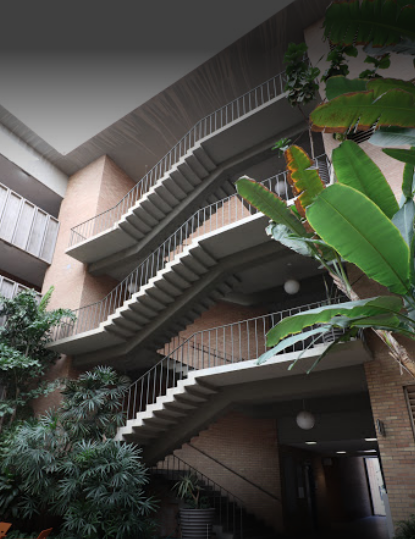
Mary Lou Futon Teachers College, headquartered on Arizona State University’s Tempe campus, offers programs on all four of ASU’s campuses, online and in school districts throughout the state. Named for ASU education alumna and businesswoman Mary Lou Fulton, the college has two divisions: teacher preparation and educational leadership and innovation.
While teachers at participating Mesa schools are at various stages of introducing the Next Generation Workforce program, they all are honing their skills in specific areas as determined by leaders at Mary Lou Fulton Teachers College. Those areas, as studied in order, are:
So, how is this transformational way of training teachers working?
Arizona State leaders say early results from the pilots are showing fewer student referrals, suspensions and failed classes in secondary schools and better reading and math scores and attendance rates at elementary schools. Parents are asking for the new models to be schoolwide, and teachers are asking to be assigned to teams.
Meanwhile, the university is working with its school partners to develop a research agenda to generate evidence-based knowledge about the relationships between the models and outcomes for teachers and students. Leaders have contracted with Johns Hopkins University to serve as an external evaluator and research early implementation and impact of Next Education Workforce models.
“Ultimately, we need to prove we’re right about this,” said Maddin, the program’s executive director. “Are the models we’re building better for learners and teachers? If so, in what ways? How can we make them work better? We think that is a research agenda worth investing in.”
But Mahlwein of Mesa Public Schools already sees evidence of positive outcomes in the smiles on students’ and teachers’ faces and in workforce surveys. A team of teachers at a school in Tempe recently gave the program high marks in a promotional video.
"A job that once felt really isolating to me just does not have that feeling any more," said Mary Brown, a teacher at SPARK School at Kyrene de las Manitas. "When the day is trying, difficult, you have five other people to lean into and bounce ideas off of, and we’re always talking about students; we're always talking about achievement, and we’re always giving each other ideas and feedback on how we can do better."
Zoe Glover, a teacher candidate at Arizona State University who is on Brown's team, said the program benefits teachers and students.
"It's very enjoyable to come to work every day," she said. "And it's such a positive experience to be in the classroom. Not every student is going to connect with every single teacher, but when there're six teachers, there's no students getting lost in the cracks."
Mahlwein said their comments echo what he has observed at the participating schools in district.
“What we’re seeing at the schools that have done this at a pretty good clip are some statistically significant positive results coming from teachers working on teams,” he said. “They are across the board reporting more job satisfaction and more happiness in the workplace.”
Mahlwein added: “For so long in education, we’ve been stuck in a system of trying to do things better. It hasn’t worked for 20 to 50 years. Why would it work now? So, we’ve got to do better things.”
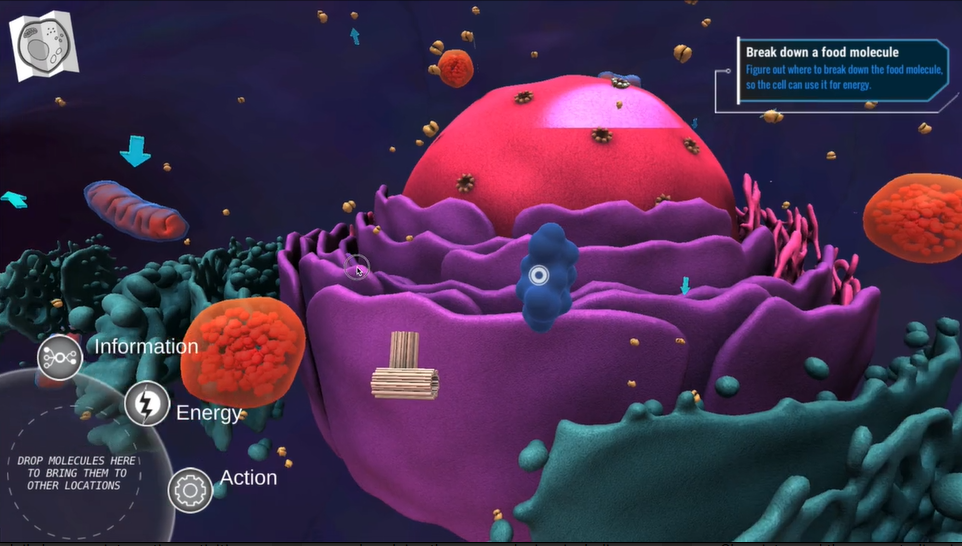
BioBeyond offers students a 3-dimensional, immersive experience where learning happens by doing and every action provides feedback.
Apparently, Bill and Ted were onto something.
The two teenage slackers facing academic failure in the 1989 sci-fi film “Bill & Ted’s Excellent Adventure” turned from apathetic to excited about their world history project when given the chance to meet the likes of Socrates, Napoleon and Abraham Lincoln by traveling back through time in a phone booth.
Fast forward three decades, and the concept of experiencing lessons firsthand not only is possible, but eventually will play a key role in the next generation of education.
While students connected with their teachers via videoconferencing and online collaboration tools from home during the coronavirus pandemic, they didn’t get the direct, continual instruction they were familiar with in a traditional classroom. Integrating immersive technology and virtual learning experiences offers teachers the potential of providing the best of both worlds, sparking student curiosity and creativity even if teacher and student aren’t in the same physical space.
One example: BioBeyond, a course that allows high school students to have 3-dimensional, immersive experiences and master concepts while on an adventure that prompts them to answer the age old question, “Are we alone in the universe?”
“We know from research that we learn best by doing, by exploring, by engaging the material,” said Ariel Anbar, a professor at the School of Earth & Space Exploration at Arizona State University.
Anbar’s team developed the course, which originally was designed for college students. A geologist and chemist, Anbar narrates the course introduction.
The high school version of BioBeyond, which debuted at the start of the 2019-20 school year, is the flagship course at Arizona State University’s Prep Digital, an accredited online high school that allows students to take a single course or enroll in a full-time, diploma-granting program. Students also get the opportunity to earn concurrent college credit at ASU.
The $1 million course was funded through a grant from the Gates Foundation and NASA and is available for licensing by schools around the world.
“The university designed BioBeyond to capitalize on the natural curiosity that human beings have,” said Julie Young, vice president of education outreach at the university and managing director of ASU Prep Digital and ASU Prep Academy, a charter school network. “It’s beautifully done in terms of the look and feel of the course. We’re getting very good feedback. Students are excited about the content, and teachers are excited about teaching the content, and parents like how much they are learning from the content.”
(For more on Young and the future of education, listen to her podcast with Doug Tuthill, president of Step Up For Students, the nonprofit K-12 scholarship administration organization that hosts this blog.)
Instead of lectures and tests, BioBeyond brings lessons to life by taking students on a journey that feels like a video game. The adventure begins with virtual visits to five diverse locations around the world, including the ocean floor, to examine and classify species. Then students go on a virtual field trip to the Galapagos Islands to find out how species change over time. The course teaches cellular biology through a simulation that includes the inside of volleyball player’s nerve cell and asks students to make the cell fire so the player can hit the ball.
The reason behind all the earthbound travel? In order to effectively contemplate the possibility of extraterrestrial life, the course creators reason, we must first gain a firm grasp of life on our own planet.
In addition to being interactive, BioBeyond is also adaptive, meaning it interacts with students to offer lessons based on particular interests and progress. If a student is struggling in an area, extra time is offered for problem solving or material mastery. If a student is making rapid progress in an area, he or she will have additional opportunities to dig deeper.
“The course acts like Google Maps,” said Amy McGrath, chief operations officer for ASU Digital Prep and an associate vice president for educational outreach and student services at the university.
For example, drivers, like students, are heading toward the same destination, but they may be starting their trip from different locations. Those who make a wrong turn or need to take a detour are simply rerouted to the same end point. The course also generates analytics that teachers can use to see each student’s strengths and interests and where extra help is needed.
“It’s high tech, but it’s also high touch,” McGrath said. “It allows for meaningful conversations.”
Grades are formative, meaning they reflect the student’s mastery at their own pace. Classroom teachers, however, are free to add summative assessments, evaluating student learning at the end of an instructional unit by comparing it against some standard or benchmark.
ASU offers other courses that employ scenario-based learning, though none are as sophisticated as BioBeyond. In an online course, for example, students help treat a patient named Hero who has been diagnosed with cancer.
“As Hero goes through the journey and works through the treatments, the students are learning chemistry through that relevance,” Young said, adding: “This is who we want to be and how we want to design learning.”
Besides making lessons more engaging, the experiential content also creates equity. Students who can’t afford to travel can now “see” the world and get exposed to concepts and careers they might never have been able to consider.
“They can be under water with the sea lions, see coral and understand what a marine scientist does for a living,” said Young, a former Florida third-grade teacher who noted that many of her students had never visited the beach, despite living minutes away.
Though BioBeyond is currently the only course of its kind at ASU, Young reports that a U.S. history course is on the horizon and will be a reality in the next six to 12 months.
“We would like to see the kids have the opportunity to interact with Abraham Lincoln or George Washington or be on the battlefield in the Civil War,” she said. “It takes the student into the moment by utilizing the technology we have available.”
Bill and Ted undoubtedly would rate such a course “excellent.”
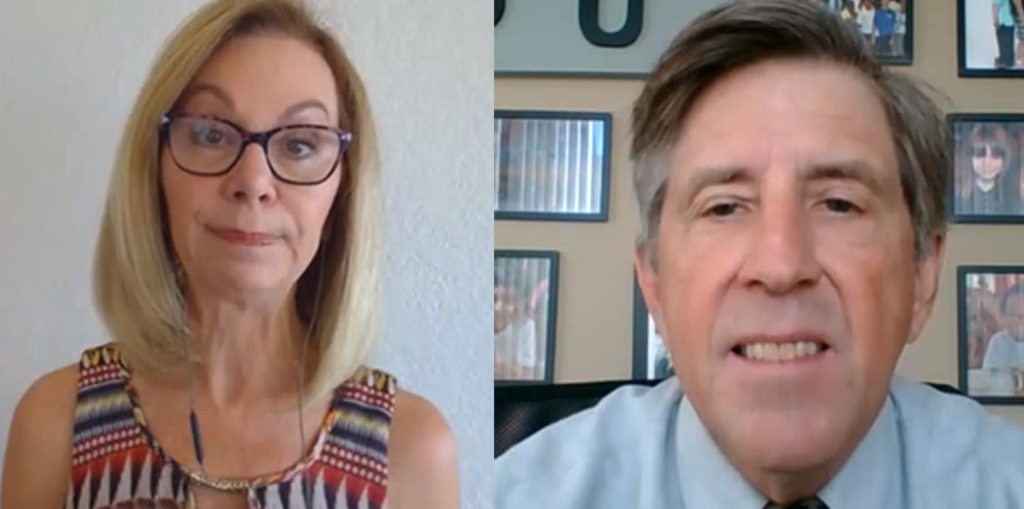 In this episode, Step Up For Students President Doug Tuthill talks with Julie Young, vice president of education outreach and student services at Arizona State University and managing director of Arizona State University’s Prep Academy and ASU Prep Digital. Young, who has been celebrated as an education disruptor for nearly three decades, was founding CEO and president of Florida Virtual School, the world’s first statewide virtual school and one of the nation’s largest K-12 online educator providers.
The longtime friends share a fascinating discussion about the future of public education in the wake of a global pandemic. Both believe the shifts that have occurred have accelerated change, making competency-based education the “new normal” by default. They also discuss the crucial role of virtual reality technology as it relates to the competency-based model. Both Young and Tuthill remember teaching in classrooms 15 minutes from the beach populated by students who had never been there and discuss how virtual reality can end such inequities.
Young: “We’re not going back to the old normal, and we’re creating our new normal. And our new normal will be to offer families choices.”
EPISODE DETAILS:
· What we can learn from the sudden shift to digital learning and how parents took control in structuring their learning and working days
· The empowerment that occurs when parents plan curriculum and how COVID-19 has allowed them to watch how their kids learn
· How virtual reality can level the equity playing field, giving more children greater and personalized access to understanding what the world is like
· How assessments will change and combine, creating an experience based on the needs of each learner
· How the role of teachers will shift in this new environment
LINKS MENTIONED:
ASU Prep Digital – Two-minute Course Tours
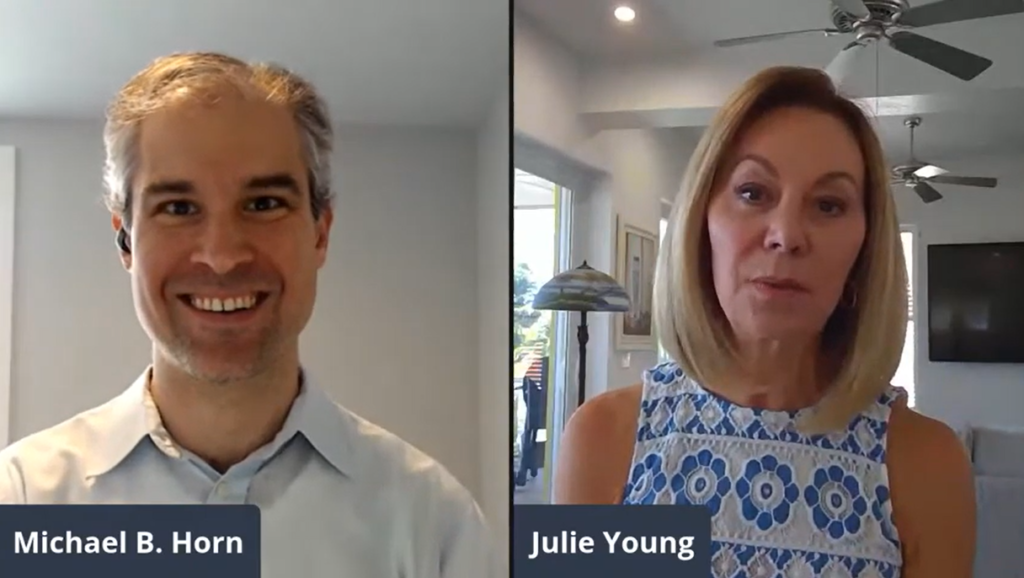 In this video special to redefinED, author and education reformer Michael Horn talks with education pioneer Julie Young, the founder of Florida Virtual School, a student-centered online-learning provider that focuses on competency based education rather than traditional seat time. Julie is now the CEO of Arizona State University Prep Digital, an online high school that offers an accelerated path toward college admission and the chance to earn concurrent high school and university credit.
Horn and Young discuss the ways in which COVID-19 is a moment for teachers and families to transform learning. They also discuss a new online learning case study Young co-authored that has been published by the Pioneer Institute.
“Right now, it's about the fundamentals. Anything that is remotely filler needs to go away. What are the standards we need to meet to feel as if we have accomplished what we need for this school year? Let's look closely at that and focus our plans around it."
EPISODE DETAILS:
· How Arizona State University moved to full remote learning within 48 hours and the active role the university has taken in lending support to other schools
· What states and school districts should be doing to move from the crisis of shifting to distance learning toward a more stable, sustained distance learning future
· Preparing for a variety of fall schooling scenarios based on the virus’ effect, including continuing full-time remote learning for those who want it
· The benefits of mastery-based education models for students with unique abilities
· Incorporating social and emotional learning into the distance-learning model
LINKS MENTIONED:
ASU for You: Resources for every learner, at any age
Pioneer Institute – Case Study for Transition to Online Learning

