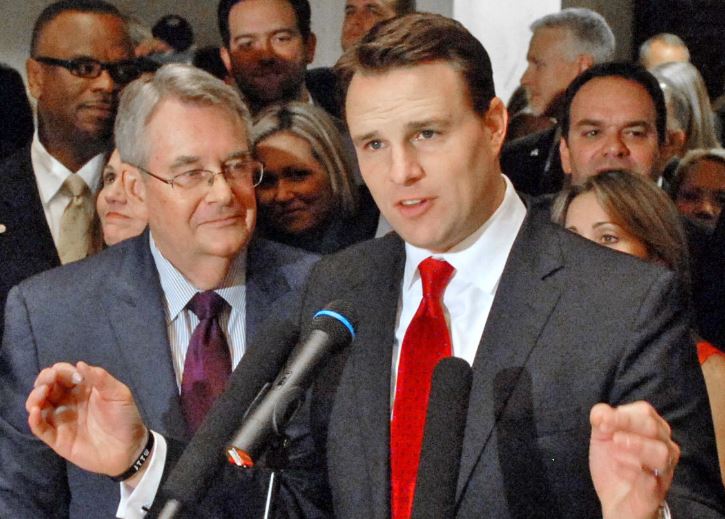
President Gaetz (left) and Speaker Weatherford
One called for more expansion. The other, for more accountability.
This spring, intentionally or not, Florida legislative leaders highlighted twin themes for the state's parental school choice programs that not only marked the session that ended last week, but will define many more to come.
It was House Speaker Will Weatherford who stressed the former. He touched off one of the most rancorous debates of Florida's 2014 legislative session when, more than a month before it began, he called for a "massive expansion" of education options for parents.
And it was Senate President Don Gaetz, halfway through the session, who offered the yin to Weatherford’s yang, explaining the Senate's push for new accountability measures for the tax credit scholarship program.
“The program has grown to a place where it is no longer an experiment,” he told the Associated Press. “It is no longer a pilot. It is an accepted way for families to exercise choice in education.”
Whether they're talking about charter schools or private-school scholarships, that's been the reality for the past two legislative sessions under Gaetz and Weatherford: School choice is no longer an experiment. It’s now mainstream. It will continue to grow. But as it does, questions have shifted from whether parental choice programs should be allowed to expand to how best to regulate them, how to create more attractive options in the traditional public school system, and what the next phase of experimentation should look like.
These are questions that will increasingly emerge in other states, but Florida is ahead of the curve. It ranks at or near the top in enrollment for charter schools, virtual schools and private schools via vouchers and tax credit scholarships, and there are no signs of slowing.
The shifting focus cuts across all sectors. Take charter schools.
This year, the Senate opted not to pass a major charter school bill. Sen. John Legg, R-Trinity, the chairman of the Senate Education Committee, said that was in part because lawmakers were waiting to see the effects of changes they passed last year, including a bill requiring the Department of Education to create a model charter contract for school districts.
Last year's law also brought charters under more financial scrutiny. The effort was supported by some charter school advocates who wanted to prevent cases, like a handful of high-profile ones from Central Florida, from damaging a movement that is getting more attention as it takes on a larger share of Florida's school enrollment.
"I think the growth of charter schools is going to bring more scrutiny to the charter schools themselves," Wayne Blanton, executive director of the Florida School Boards Association, said in an interview. "They're going to come eventually under the same microscope that we are."
The push to create individual accounts for students with disabilities picked up bipartisan support in its first Senate committee hearing Tuesday.
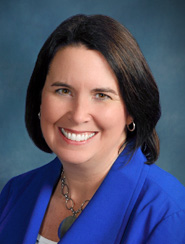
Sen. Stargel
But the bill to create "personalized accounts for learning" that parents could use to pay for tutoring and therapy for their children also attracted opposition from groups like the Florida PTA and the statewide teachers union.
Sen. Kelli Stargel, R-Lakeland, said the proposal would be confined to "a very small population of our students" with conditions like spina bifida and cerebral palsy, which would qualify them for a high level of accommodations in the public school system.
"It's just very difficult for our system to meet all their needs," she said during the Senate Education Committee hearing. "This gives them another option for their parents to decide the best approach to get their child the best education."
Several public school teachers spoke against the bill. Joy Jackson, a teacher at Robert Renick Educational Center in Miami-Dade County, said the program could compete for scarce resources with the accommodations made by school districts.
"This is currently a very small population, but if history with these programs has shown us anything, it is that as soon as these programs are made available, they become quite large, quite fast," said Lynda Russell of the Florida Education Association.
The bill received support in previous hearings from parents who educate their special-needs children at home. They were joined Tuesday by Elias Seife, a Miami-Dade parent who said his daughter has received "excellent support" in the public school system.
(more…)
From the News Service of Florida:
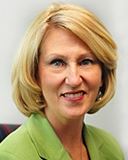
Commissioner Stewart
Education Commissioner Pam Stewart faced tough questions from senators Wednesday as she outlined how the state would move forward on tweaks to its current schools standards and select a new test for students.
Speaking to the Senate Education Committee, Stewart tried to tamp down concerns that a quick timeline for having a new test in place for next school year could cause problems.
"We've put every precaution in place to ensure that we will have an assessment that is appropriate for Florida's students in the '14-'15 school year," Stewart said.
Gov. Rick Scott issued an executive order in September requiring the state to end its role in helping handle the financial affairs of the Partnership for the Assessment of Readiness for College and Careers, or PARCC. The state is currently reviewing five applications by testing companies hoping to develop a new test for Florida.
Stewart is scheduled to select the winner in March.
Despite talk that the state might ultimately end up using PARCC, Stewart said the multi-state consortium did not participate in the state's "invitation to negotiate" for the new test.
"PARCC did not apply," she said in response to a question from Sen. Bill Montford, D-Tallahassee, about whether the test might still be used. "I would suggest to you ... it will depend on the five applications. It cannot be considered as part of the ITN."
Pressed by Montford again about whether Florida could ultimately end up using PARCC, Stewart cited legal restrictions on what she could and couldn't say.
"You have probably stepped into the arena of questions I could not answer," she responded.
Senate President Don Gaetz, R-Niceville, was more blunt while talking to reporters after the meeting, which Gaetz attended. (more…)
Parent power. Florida gets high marks from the Center for Education Reform. Jacksonville Business Journal.
 Common Core. Andy Ford's take on Common Core. StateImpact Florida.
Teacher evaluations. Don't shield the data from public scrutiny. Florida Times Union.
Rick Scott. Talks with superintendents about teacher pay, teacher evals, Common Core - and gets kind words from Sen. Bill Montford, D-Tallahassee. Coverage from The Buzz, News Service of Florida, Tallahassee Democrat.
School reform. Pinellas Superintendent Mike Grego is taking a more thoughtful approach to struggling schools than the state has, writes Tampa Bay Times columnist John Romano.
Career education. It's good the Legislature is expanding opportunities here, writes Tampa Tribune columnist Joe Henderson. (more…)
It’s an idea gaining momentum in Florida this legislative session: letting a few district schools choose curriculum, lease buildings and enjoy wiggle room when it comes to class size.
Sound familiar?
The concept, coined “district innovation schools,’’ would allow high-performing public schools to operate with some of the same freedom that has helped many charter schools succeed.
Assuming the legislation passes – and its odds look good at this point - it remains to be seen whether the innovation schools can carve out flexible terms during collective bargaining with teachers unions – like, say, having more power over hiring and firing. But even if that doesn’t happen, some observers said, the added leeway still could make a difference.
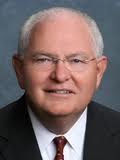
Sen. Bill Montford
“We’ve learned a lot from charter schools,’’ Sen. Bill Montford, a Tallahassee Democrat and the bill sponsor, told redefinED. “They have been able to think outside the box.’’
Montford is a former Leon County superintendent and CEO of the Florida Association of District School Superintendents.
Charters are funded by taxpayer dollars, but have their own governing boards and power over personnel decisions. They also can meet the state’s stringent class-size mandate for core classes on a schoolwide average instead of class by class – something districts must do or pay hefty fines.
The result, some say, is charters can be more innovative, creative – and academically successful. (more…)
Parent trigger. The parent trigger bill is amended in the Senate so school boards have the final say. Coverage from redefinED, Associated Press, SchoolZone, The Buzz. StateImpact Florida talks to Sen. Bill Montford, D-Tallahassee, about why he's opposed to parent trigger. The Orlando Sentinel highlights the amendment sponsor, Sen. David Simmons. Palm Beach Post columnist Frank Cerabino sees the specter of mass privatization: "The parental trigger bill is designed to lead to the widespread conversion of traditional public schools in Florida to charter schools."
Online education. The bills being considered by this year's Legislature, including Sen. Jeff Brandes' course choice bill, are about profits and privatization, not choice and competition, editorializes the Tampa Bay Times.
Data. Lawmakers are dealing with data issues related to teacher evaluations and access to researchers, the latter being complicated by critics raising fears of privatization, reports the Tampa Bay Times. A group called Liberty in Action protests the access bill outside the office of bill sponsor Sen. Bill Galvano, reports the Bradenton Herald.
Remediation. The Senate approves a bill that would end a requirement that college students take remedial courses for no credit. StateImpact Florida.
School spending. The Seminole school is scrambling to explain why it decided to spend $100,000 to send 176 teachers and school administrators to a teacher training program when a cheaper alternative was available. Orlando Sentinel.
Employee conduct. Three staffers at a Collier County school are under investigation for some kind of impropriety with FCAT testing. Naples Daily News.
Florida lawmakers made a big change to the parent trigger bill Thursday, passing it on another party-line vote but only after diluting the initial proposal to give parents more power to improve struggling schools.
The Senate Appropriations Subcommittee on Education approved an amendment that gives school boards – not the state - the final say on a school turnaround plan.
The original wording in Senate Bill 862 made the state Board of Education the final arbiter if parents and school boards didn’t agree on the best way to improve a school.
Among a list of options is converting the district school into a charter school, a plan that might have more support from parents and the state board than district leaders.
The amendment comes at the request of Education Commissioner Tony Bennett, who asked sponsors of the House and Senate parent empowerment bills to hold elected school board members accountable.
“School boards should not have the ability to push the decision to the state,’’ Bennett wrote in a recent letter. “They owe it to parents to consider what they have to say without being able to avoid the tough decisions.’’
Bennett also suggested the turnaround process was “overly burdensome’’ with formal notices, votes and petitions required to kick-start a plan. He said the school board should have to explain at a public hearing why it didn’t think the parents’ approach was best.
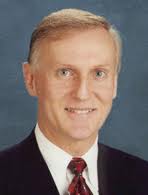
Sen. Simmons
The amendment, introduced by Sen. David Simmons, R-Altamonte Springs, made that a requirement.The final outcome should be determined locally, not in Tallahassee, Simmons said. He also said parents are as culpable as school boards when it comes to so-called failing schools.
Sen. Bill Montford, a Tallahassee Democrat and head of the state superintendents association, said he supported the amendment and might be able to support the bill if “we continue to move the way we are now.’’ For now, he joined three other Democrats on the subcommittee in voting against it.
The eight Republican senators present at the meeting voted in favor. The next stop for SB 862 is the Senate Appropriations Committee, which is expected to consider the bill on April 18.
The House version of the parent trigger bill, which passed earlier this month, still gives the Board of Education the final word.
If you think the school choice debate in Florida is all us vs. them, maybe you’re not listening carefully enough. Here are three examples just from the past few days.
Sen. Montford: "We know that the vast majority of charter schools in the state have done a good job."
At Monday’s Senate Education Committee meeting, Sen. Bill Montford, a Democrat who heads the state superintendents association, introduced a bill that would give school districts the freedom and flexibility to create charter-school-like “innovation schools.” Along the way, he said this:
“We know that the vast majority of our charter schools in the state have done a good job. Usually what you hear of is those who don’t. But that’s like any – in public school, you hear about the bad stories. But we’ve learned a lot over 15 years. The charter schools have set the pace, if you will, for a lot of innovations and creative efforts. And they’ve been able to do that because they’ve been allowed to be creative. They haven’t been burdened quite frankly with some of the state rules and statutes.”
The only member of the public to comment at the hearing was Jim Horne, a former education commissioner under Jeb Bush who now heads the Florida Charter School Alliance. Both the alliance and Associated Industries of Florida, for whom he lobbies, support the bill, he told the committee. Then he said this:
“This is sort of a great partnership where we can benefit from what we’ve learned. We know charters started 15 years ago to be innovative, free from some of the bureaucracy. And we think districts ought to have that same opportunity, to be able to innovate and be able to be creative outside of the bureaucracy and some of the regulations that we hear choke innovation.”
The bill passed unanimously. But neither Montford nor Horne’s comments made the papers, which is too bad. Their positions not only made sense, but cut against the stereotypes that dog both the “education establishment” and the “school choice crowd.” Beyond the political theater, there’s a lot of that going on.
Here’s another example. The Ledger reported Tuesday that the Polk County School District may convert an elementary school and a middle school in Lake Wales into a K-12 arts magnet. The two schools are the only ones in Lake Wales that are not part of that community’s charter school system. So how did the charter system respond? (more…)
 Halfway through this year's Florida legislative session, here's a brief look at the school choice related bills that are still moving. To compare to the bills at the beginning of the session, click here. Things are changing fast. Several bills, for instance, are up for a House vote today.
Career Academies:
CS/CS/SB 1076 by Sen. John Legg, R-Lutz. On Senate floor, on Special Order Calendar
April 4. Creates funding incentives to increase innovation in public school programs to better prepare students for future careers; provides for the development of industry certifications at the middle school level; requires financial literacy to be included in high school graduation requirements; revises the funding for industry certifications earned in high school and at postsecondary institutions; and requires the development of multiple pathways to meet high school graduation requirements.
Charter Schools:
The Senate Education Committee conducted a workshop March 18 to discuss the charter bills that were filed. The committee took input from the workshop and proposed a substitute for SB 1282, related to charter schools, during their next meeting April 1.
CS/SB 1282 by Sen. Kelli Stargel, R-Lakeland. Committee Substitute favorable by Education Committee on April 1. Includes financial and accountability requirements for charter schools; prohibits a governing board under deteriorating financial condition, financial recovery plan, or corrective action plan from applying for a new charter school; requires a charter agreement to immediately terminate when the charter school closes; requires the use of standard charter and charter renewal contracts; clarifies that members of a charter school board may not be an employee of the charter school; prohibits a charter school that closes from spending more than $35,000 unless the sponsor approves in writing or previously approved.
CS/SB 1390 by Sen. Bill Montford, D-Tallahassee. Committee Substitute favorable by Education Committee on April 1. Includes a mechanism through which a school district may establish one innovation school within its district to enhance high academic achievement and accountability in exchange for flexibility and exemptions from specific statutes; exempts facilities leased by the district from ad valorem taxes; and provides that the class size calculation be changed to the school level for district schools or schools of choice.
CS/CS/HB 7009 by Choice and Innovation Subcommittee. On House floor, on 3rd reading. Provides for increased charter school accountability by prohibiting a charter school, upon termination of the charter, from expending more than $10,000 without prior written permission from the sponsor; requires the DOE to develop a proposed statewide standard charter contract by consulting with school districts and charter schools; and requires that a district board-owned facility that has previously been used for K-12 educational purposes be made available for a charter school’s use, with the charter school responsible for the costs to bring the facility into compliance with the Florida Building Code. (more…)
Charter schools. The Senate Education Committee moves closer to agreement on additional charter schools accountability measures, but a divide lingers over facilities funding, reports The Buzz, which includes this quote from Sen. Bill Montford, D-Tallahassee: "The time for finger pointing between charter schools and regular public schools is over. We have to have the maturity to sit down and go over the data and discuss it." A legal timeline is set to determine the fate of an Imagine charter school in Sarasota County that seeks to sever its relationship with the parent company, reports the Sarasota Herald Tribune.
State colleges. They have a $26.6 billion annual economic impact, according to a new study. Coverage from Gradebook, StateImpact Florida, TCPalm.com, Lakeland Ledger, The Florida Current.
Parents. Angry parents keep the pressure on the Broward school district over the firing of a popular principal. South Florida Sun Sentinel.
Principals. A pending reshuffling in Broward is getting tense. Miami Herald.
School boards. Former Osceola County School Board Chair Cindy Hartig applied for unemployment benefits after her loss at the polls last August. Orlando Sentinel. (more…)

