Charter schools. The Pinellas school board will again consider whether to sell a vacant middle school building to a proposed charter school, reports Gradebook. A new charter school in Immokalee that will use blended learning is now enrolling students , reports the Naples Daily News.
 Data. The Bradenton Herald editorial board: The data access bill by Sen. Bill Galvano, R-Bradenton, won't compromise student privacy.
School choice. Jewish educators and leaders lobby for expanded school choice in the Capitol. Lubavitch.com.
Teacher evals. State Impact Florida: "A new study says error rates for teacher evaluations based on student test scores is “quite high,” but that the evaluations may still be more accurate than traditional measures."
Gays and lesbians. U.S. Rep. Ileana Ros-Lehtinen files legislation to better protect gay and lesbian students from bullying, reports the Miami Herald. In support of the bill, a Leesburg eighth-grader tells reporters about being harassed, reports the Orlando Sentinel. (more…)
 Editor's note: Another year, another legislative session, another stack of school-choice bills in Florida. Here's a roundup of choice legislation that lawmakers will consider in the annual session that begins today.
Career Academies:
SB 1076 by Sen. John Legg, R-Lutz. Expands the "Career and Professional Education Act (CAPE)," revising requirements for high school graduation and accelerated high school graduation, and allowing students to earn and substitute certain industry certifications for certain course credits. Also requires districts to make digital materials available to students and to use the Postsecondary Industry Certification Funding List in determining annual performance funding distributions to school districts and Florida College System institutions, etc.
Charter Schools:
HB 373 by Rep. Joe Saunders, D-Orlando. Provides that a contract for a charter school employee or service provider may not extend beyond the school’s charter contract, and that the employee or service provider is not entitled to compensation after the school’s closure. (Identical to SB 780 by Sen. Geraldine Thompson, D-Orlando.)
HB 453 by Rep. Victor Torres, D-Orlando. Requires the compensation and salary schedules for charter school employees to be based on school district schedules. (Identical to SB 784- Charter Schools by Sen. Geraldine Thompson, D-Orlando.)
SB 744 by Sen. David Simmons, R-Altamonte Springs. Requires charter school applications to demonstrate the applicant is financially qualified to open and maintain a high-quality charter school, requires the charter to set forth detailed reporting of the financial operations of the school to ensure employees are not paid unreasonable compensation, and requires that the term of the charter must provide for cancellation of the charter if the school becomes insolvent, fails to provide a quality education, or does not comply with applicable law. The bill also clarifies that a charter school system shall be designated a LEA solely for the purpose of receiving federal funds if certain criteria are met.
SB 828 by Sen. Rene Garcia, R-Hialeah. Grants school districts the ad valorem tax exemption given to charter schools, and restricts the use of capital outlay funds for property improvements if the property is exempt from ad valorem taxes. It restricts charter schools or technical career centers having financial problems from certain activities, and grants flexibility to high-performing school choice districts.
HB 1001 by Rep. Karen Castor Dentel, D-Maitland. Prohibits charter schools from requiring, soliciting, or accepting certain student information before student's enrollment or attendance. Also requires charter schools to submit attendance plans to the school district for students enrolled in school; provide funding to the school district in event of student transfers; and report to the school district certain student enrollment and wait-list information.
SB 1092 by Sen. Geraldine Thompson, D-Orlando. Requires charter school to submit attendance information for each student to the school district, and requires the charter school to provide a prorated portion of per-student funding to the school district if a student transfers to another public school in the school district before the last day of the school year.
SB 1164 by Sen. Kelli Stargel, R-Lakeland. Revises the eligibility criteria for extracurricular activities to include students in charter schools, and revises the criteria for bylaws, policies, or guidelines adopted by the Florida High School Athletic Association. (Compare to HB 1279 by Rep. Larry Metz, R-Groveland.) (more…)
Students would get greater access to online instruction through blended learning opportunities and potentially new providers under a Florida House bill that sailed through a subcommittee Wednesday.

Rep. Manny Diaz Jr.
“This bill is going to be about innovation, access and technology,’’ said Rep. Manny Diaz, Jr., R-Hialeah, a school district assistant principal who introduced the legislation in the Choice & Innovation Subcommittee. “We know that every child doesn’t learn the same.’’
The digital learning bill would create a district “innovation school’’ pilot program that encourages traditional schools to offer students more blended-learning opportunities with a mix of online and classroom instruction.
Districts could use their virtual programs, or courses offered by Florida Virtual School or another online provider. In addition, students could take online courses from another school district.
In return, school districts would be given more freedom in the digital realm in a fashion similar to charters. For instance, class sizes for courses within the innovation schools would be calculated at a schoolwide average instead of class by class.
Florida mandates that district schools limit the number of students allowed in core classes depending on grade level. Violations result in hefty fines, but meeting the law has resulted in students having to wait to take some classes.
The bill would allow districts to offer part-time, online courses to K-12 students in all subjects. Currently, they can only do that for courses that require statewide assessments.
It also would make it easier for online providers to operate in Florida. One provision allows a company without “prior, successful experience” to set up shop. (more…)
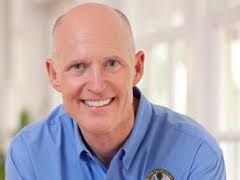 Rick Scott’s ed plans. Charter school expansion is a plank in Gov. Scott’s education plan for the next legislative session, but this exclusive Tampa Bay Times story on it doesn’t offer much detail. Here’s the main part that touches on school choice: The plan includes “lifting enrollment caps on charter schools, removing barriers to choice options in low-performing areas and letting school districts operate their own "charter innovation schools. ‘Our local school districts are going to keep getting better if we give them the authority to do it,’ Scott said.”
School grades work. In this op-ed for The Oklahoman, former Florida education commissioner Eric J. Smith gives Oklahoma kudos for adopting a school grading system. It worked in the Sunshine State, he said, particularly for the kids who needed the most help: “The biggest winners in Florida have been low-income, minority students. Schools that had long failed these students were exposed. Parents were given options to move their children to other schools. And when that happened, poorly performing schools could no longer be ignored or tolerated.”
Op-ed got it wrong on vouchers. Lincoln Tamayo, who heads the highly regarded Academy Prep private schools in Tampa and St. Petersburg, writes in response to a recent op-ed in the Tampa Bay Times that suggested vouchers don’t come with enough accountability.
Florida Virtual School in Education Week. In a story about blended learning. You’ll need a subscription to see the whole thing, but here’s a taste: “Forty-four districts in Florida have now put in place FLVS hybrid or blended learning models, called Virtual Learning Labs, said Tania Clow, a spokeswoman for the FLVS. The virtual school launched the blended programs during the 2010-11 school year, with 152 Virtual Learning Labs across the state. The number has grown this school year to 314, Ms. Clow said. Face-to-face interaction includes the weekly teacher visits, the facilitator, and frequent visits from an FLVS specialist in blended learning who troubleshoots school issues.”
 Editor’s note: This is the third installment of “A Choice Conversation,” an ongoing dialogue between Doug Tuthill, president of Step Up for Students and a redefinED host, and John Wilson, a former NEA leader who writes the Unleashed blog at Education Week.
Doug Tuthill: John, it’s fascinating to see the new opportunities customization is providing teachers. In Florida, it’s increasingly common for teachers to teach at a district school in the morning, at a private school in the afternoon, and for an online school in the evening. The opportunities provided by technology are particularly intriguing. Three years ago my son’s Florida Virtual School teacher lived in Portland, Oregon, where she was a stay-at-home mom. Many online teachers are at home raising young children while teaching full time.
Recently, I’ve been wondering how customization will impact the services teacher unions provide their members. Given teachers will increasingly have multiple employers in the future, perhaps a key union service could be helping teachers manage the complexity that comes with multiple employers. For example, maybe teachers would prefer to be employed by their union and contracted out to various providers. That would reduce employment hassles for teachers and strengthen their relationship with the union. Unions could also provide financial and administrative support for teachers wanting to open their own schools, and form collaborative networks of teacher-owned schools. You’ve been much closer to internal union discussions in recent years than I have. How do union leaders think customization will affect the services they provide teachers?
John Wilson: Doug: You raise some very interesting points. Every teacher that is treated in a collective manner needs a union to leverage the unity of the group for fair wages and benefits, excellent learning and teaching conditions, and job security for being a good teacher. Customization can be bargained to accommodate those uniquenesses. I have heard some horror stories from virtual teachers as it relates to their employee status. They need a union. Those that are employees of a district have a union to represent them. Unions need to do a better job with those that are in a different configuration. Some of our state affiliates like Pennsylvania are reaching out to virtual teachers.
The challenge is not that teachers in virtual schools need a union. That is evident. The challenge is building the trust in unions to advocate policies that sustain their job. NEA supports a blended approach as the best method for virtual education. That may not be possible in every situation. There is a "chicken and egg" challenge here. If virtual educators joined the union and became activists, they would influence the policies. I have seen charter school educators do that in some state affiliates. It makes a difference, but virtual educators must join first and work from within.
Doug Tuthill: John: In this age of customization, teacher unions should use their collective power to ensure every teacher is treated as an individual. One-size-fits-all is as ineffective for teachers as it is for students. (more…)

Horn
by Michael B. Horn
With the rapid growth of online learning - both in full-time virtual learning environments and even more often in blended learning in schools - there is an opportunity to transform the nation’s education system from its factory-model roots to a student-centric one that can customize affordably for different learning needs and thereby bolster every student’s learning and America’s competitiveness.
One of the main reasons the country’s education system fails so many students is because it was never built to help each child realize her fullest potential. Because students have different learning needs at different times - students learn at different paces, have different aptitudes, and have different levels of knowledge when they enter a classroom - harnessing the power of technology to do the positive things it has done in so many other sectors of society is vital.
Although this is an important national opportunity, it does not mean the best way to drive this innovation is from the federal government. That is one reason Digital Learning Now!, an effort led by former Governors Jeb Bush and Bob Wise to seize this transformational opportunity, focuses on the things states should do to create a student-centric education system.
That said, it is important that the federal government support the conditions for transformation - and eliminate onerous requirements for educators on the ground. To further this end, there are several steps it can and should take.
Implement backpack funding: Title I and Title II dollars should follow students down to the educational, not just school, experience of their choice. With the growth in online learning courses, it is important to allow students to access great teachers and the right learning experience for their needs regardless of their zip code.
Promote individual student growth as the measure of performance: Move away from No Child Left Behind’s AYP school site accountability model. Create transparency by having states focus on the growth in learning for each individual student. Given that a student-centric system will recognize that each student has different learning needs at different times, it only makes sense to move to a system that leverages technology and captures how each child is doing in near real time, not just on an annual basis, and can give credit to educators that help a student make meaningful progress regardless of where she started. To the end of creating transparency in the education system around student learning, as well as creating a bigger market to spur private investment in digital learning, supporting the Common Core state standards is also an appropriate role for the federal government - whereas acting as the nation’s education venture capitalist is not. (more…)

