Jim Saunders / News Service of Florida
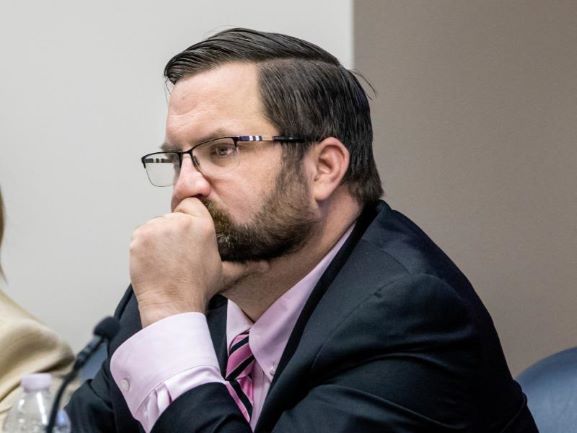
PreK-12 Appropriations Subcommittee Chair Chris Latvala (R-Clearwater)
TALLAHASSEE --- Florida House and Senate leaders will go into budget negotiations hundreds of millions of dollars apart on spending for the state’s public schools.
House Republicans on Wednesday released an initial proposal that calls for a $579.3 million increase next year in the key part of the budget for public schools, a 2.75 percent bump per student. That came a day after Senate leaders proposed a $1.1 billion increase, or 4.71 percent per student.
Funding for what is known as the Florida Education Finance Program, or FEFP, is always one of the most closely watched issues during budget negotiations. After the full House and Senate pass their budget proposals in the coming weeks, negotiations will begin on a final spending plan for the fiscal year that starts July 1.
While the bottom-line numbers are far apart, the House, Senate and Gov. Ron DeSantis are moving in the same direction on some issues that play into the education budget. For example, all three want to revamp the “Best and Brightest” teacher-bonus program. That includes doing away with a controversial part of the program that has factored in teachers’ scores on SAT and ACT college-entrance exams in determining whether they will get extra money.
Nevertheless, public-school teachers are lobbying lawmakers to move away from using bonuses and to shift more money into salary increases.
Carol Cleaver, a science teacher from Escambia County, told the House PreK-12 Appropriations Subcommittee on Wednesday that her school started this year with 10 teacher vacancies and lost two teachers last week. She said “teachers are leaving left and right” and salary increases are needed.
“These new teachers have no room for hope,” Cleaver said. “There’s nothing for us to count on when the new education funding that’s coming is tied strictly to a one-time bonus.”
The House proposal would make available Best and Brightest bonuses of $2,000 for each classroom teacher rated “highly effective” and up to $1,100 for each teacher rated “effective.” PreK-12 Appropriations Chairman Chris Latvala, R-Clearwater, said he has heard estimates that 92 percent or 93 percent of teachers are rated highly effective or effective.
“In a perfect world, we would be able to give teachers raises. It’s something that I absolutely would love to do,” said Latvala, whose mother is a retired public-school teacher. “This is the just the starting point not only with our conforming bill (a bill linked to the budget) but also with the budget. As you know, we are going to be conferencing with our Senate partners who have a different budget and philosophy than we do, so a lot of things can change.”
Along with needing to agree on issues such as the overall budget numbers, House and Senate negotiators also will have to resolve a difference about an arcane --- but sometimes controversial --- issue about a price-level index used in divvying up money to school districts.
The issue generally is known as the “district cost differential,” which is part of the overall school-funding formula. Tweaking the district cost differential can mean some districts will get more money, while others will get less.
The House is proposing to move from a price-level index to an index that compares wages in different areas of the state. The Senate, meanwhile, does not favor such a change.
Florida's virtual education system could see more funding changes under one of the competing spending plans proposed by lawmakers.

Sen. Bill Galvano
The House and Senate last week released rival budget proposals that would increase funding for K-12 public schools.
The Senate plan would alter the way Florida funds its virtual education programs, including Florida Virtual School, FLVS's local school district-run franchises, and the state's virtual charter schools.
The plan released this week by Sen. Bill Galvano, R-Bradenton, would do away with the virtual education contribution, a $27 million slice of the education budget that pads funding for virtual schools.
Instead, it would allow virtual schools to receive portions of state funding that have not been available to them in the past.
Galvano said the proposed revamp of the funding formula is intended to push virtual schools to offer more courses that lead to college credit or industry certifications.
The virtual education contribution supplants some of the funding streams that flow to brick-and-mortar schools, including the extra funding that gets attached to students in Advanced Placement and career education courses. It is intended to keep virtual school funding at about $5,200 per full-time student.
Without the virtual education contribution, per-student funding for many courses could fall below that amount. But funding could increase for courses that carry extra weight in the state's funding formula - such as AP and career education courses - which Galvano said is part of his goal. (more…)

