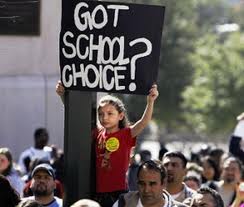
About 1,000 people are expected for the rally in Tally.
"Where are the parents who support school choice?"
"Where are the parents who support parental empowerment?"
"Where are the parents whose children benefit from education reform?"
These are typical questions from traditional parenting groups, groups that sometimes say they represent Florida parents in all educational matters. They have to ask the whereabouts of moms and dads of more than 1.5 million schoolchildren of choice, because such parents don’t tend to be in their membership files.
To the extent these choice parents are low-income and single moms who choose options such as the tax credit scholarship, they do indeed tend to be less visible in the political sphere.
Get ready, because that’s changing.
Early Wednesday morning, families from all over Florida, from Miami’s inner city neighborhoods to rural Pasco County, will board buses with their children and teachers and travel five to 10 hours to get to Tallahassee for School Choice Day. Organizers expect more than a thousand participants to gather and show lawmakers, traditional parenting groups, and everyone else the real face of parental school choice.
They won’t look like right-wing corporations. There’s a good bet they will be racially and economically diverse. In other words, they will probably look like you and me. (more…)
Charter schools. Education Week writes up the state report that compares the test scores of Florida charter schools and district schools. Diane Ravitch sees a stunt. The Bay school board postpones a decision on whether to deny a charter school's renewal due to financial concerns, reports the Panama City News Herald. A news STEM-oriented charter is coming to Collier County, reports the Naples Daily News.
 School choice. The waiting for thousands of parents begins as the Palm Beach County school district finishes up the lottery for magnet schools and career academies. Palm Beach Post.
Career education. A major bill to boost it clears the Senate Education Committee. StateImpact Florida.
Teacher pay. Pinellas teachers will get their regular rate of pay for a summer learning program that Superintendent Mike Grego initially recommended would be at a reduced rate. Gradebook.
Superintendents. Miami-Dade's Alberto Carvalho gets a contract extension, a raise and lots of praise, reports the Miami Herald: "Don’t test him out on free agency,” said Delio Diaz, executive director of the Dade Association of School Administrators, comparing Carvalho to a Super Bowl-winning quarterback. The Hernando school board interviews four candidates, reports the Tampa Bay Times.
School zoning. The latest changes in Seminole means a total of 3,000 students will be reassigned. Orlando Sentinel.
 Editor's note: Another year, another legislative session, another stack of school-choice bills in Florida. Here's a roundup of choice legislation that lawmakers will consider in the annual session that begins today.
Career Academies:
SB 1076 by Sen. John Legg, R-Lutz. Expands the "Career and Professional Education Act (CAPE)," revising requirements for high school graduation and accelerated high school graduation, and allowing students to earn and substitute certain industry certifications for certain course credits. Also requires districts to make digital materials available to students and to use the Postsecondary Industry Certification Funding List in determining annual performance funding distributions to school districts and Florida College System institutions, etc.
Charter Schools:
HB 373 by Rep. Joe Saunders, D-Orlando. Provides that a contract for a charter school employee or service provider may not extend beyond the school’s charter contract, and that the employee or service provider is not entitled to compensation after the school’s closure. (Identical to SB 780 by Sen. Geraldine Thompson, D-Orlando.)
HB 453 by Rep. Victor Torres, D-Orlando. Requires the compensation and salary schedules for charter school employees to be based on school district schedules. (Identical to SB 784- Charter Schools by Sen. Geraldine Thompson, D-Orlando.)
SB 744 by Sen. David Simmons, R-Altamonte Springs. Requires charter school applications to demonstrate the applicant is financially qualified to open and maintain a high-quality charter school, requires the charter to set forth detailed reporting of the financial operations of the school to ensure employees are not paid unreasonable compensation, and requires that the term of the charter must provide for cancellation of the charter if the school becomes insolvent, fails to provide a quality education, or does not comply with applicable law. The bill also clarifies that a charter school system shall be designated a LEA solely for the purpose of receiving federal funds if certain criteria are met.
SB 828 by Sen. Rene Garcia, R-Hialeah. Grants school districts the ad valorem tax exemption given to charter schools, and restricts the use of capital outlay funds for property improvements if the property is exempt from ad valorem taxes. It restricts charter schools or technical career centers having financial problems from certain activities, and grants flexibility to high-performing school choice districts.
HB 1001 by Rep. Karen Castor Dentel, D-Maitland. Prohibits charter schools from requiring, soliciting, or accepting certain student information before student's enrollment or attendance. Also requires charter schools to submit attendance plans to the school district for students enrolled in school; provide funding to the school district in event of student transfers; and report to the school district certain student enrollment and wait-list information.
SB 1092 by Sen. Geraldine Thompson, D-Orlando. Requires charter school to submit attendance information for each student to the school district, and requires the charter school to provide a prorated portion of per-student funding to the school district if a student transfers to another public school in the school district before the last day of the school year.
SB 1164 by Sen. Kelli Stargel, R-Lakeland. Revises the eligibility criteria for extracurricular activities to include students in charter schools, and revises the criteria for bylaws, policies, or guidelines adopted by the Florida High School Athletic Association. (Compare to HB 1279 by Rep. Larry Metz, R-Groveland.) (more…)

Manatee County middle school students participated in the annual Technology Student Association competition last month, showing off skills that included engineering and design. Photo provided by Manatee schools.
Career and technical education is attracting a lot of attention from Florida lawmakers this year, and an effort to expand it in the upcoming session appears to have bipartisan support.
CTE is the centerpiece of proposed legislation that builds on the state’s Career and Professional Education Act, which created industry-certification programs at the high school level.
Senate Bill 1076, filed last week by Sen. John Legg, R-Lutz, would add more partnerships with business and community leaders to develop similar initiatives in middle and elementary schools. It also would elevate industry certifications to a level that can satisfy certain high school requirements.
Senate President Don Gaetz, a Republican from Destin, told redefinED this week that passage of the legislation would result in historic changes that, ultimately, would make education in the Sunshine State more relevant. He said lawmakers should be able to back it no matter their party affiliations.
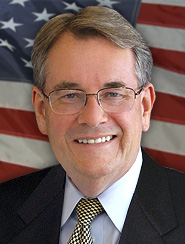
Sen. Don Gaetz
“All of us … want our graduates to walk across the stage and get a degree in their hands that results in a job,’’ Gaetz said. “It’s a sea change in educational delivery.''
Sen. Bill Montford, a ranking Democrat from Tallahassee, said he endorses the bill and the sentiment behind it.
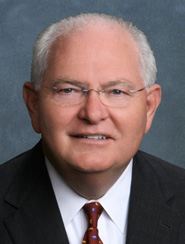
Sen. Bill Montford
“We need a different pathway for a lot of our students,” said the former Leon County schools superintendent, who heads the state superintendents association. “This is not a dumbing down of our curriculum. It’s not a retreat. This is what is best for our children in these schools.’’
Freshman lawmaker Shevrin Jones agreed. The Democratic representative from West Park has co-sponsored a bill that calls for more focus on career education.
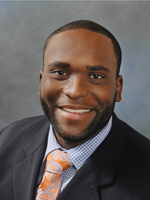
Rep. Shevrin Jones
“Not everyone is going to college,’’ said the former high school educator, who taught Advanced Placement Biology until his election to the House last year. “What this will do is allow us to make sure that our students are prepared to go into the workforce.’’
But expanding career education doesn’t shut the door on a college degree, Montford said. “Most college students work,” he said. “This is a good fit.’’
Legg’s bill is at the forefront of this overhaul, serving as the cornerstone of another bill the lawmaker filed last month that ties education to economic development.
The so-call STEM zone bill would create hubs that invite colleges and universities - as well as K-12 district schools, private schools and charters - to help develop a pipeline of highly-skilled workers for careers in science, technology, engineering and math fields.
Florida industry leaders like what they’re hearing.
“It’s very difficult to connect skilled workers to jobs,’’ Ron Avery, chairman of the St. Augustine-based Ronco Group, which includes industrial, engineering and manufacturing businesses, told lawmakers at a committee hearing last month. “There are 4,000 manufacturing jobs open in Florida. We need to figure out today how to fill these.’’ (more…)
 Charter schools. An Orange County charter that served dyslexic students is closing after seven months because of financial problems, reports the Orlando Sentinel. The parents of a charter in Miami-Dade are in limbo after a church decides unexpectedly to end the school's lease, reports the Miami Herald.
Virtual charter schools. In a repeat of last year, the charter school appeals commission sides with the Orange and Seminole school boards in their rejection of applications for Florida Virtual Academy schools. The state Board of Education will make the final call. SchoolZone.
Parent trigger. Two civil rights groups in Florida, LULAC and the NAACP, are opposed. StateImpact Florida.
Magnet schools. Parents plead with the St. Lucie County School Board to not close an arts magnet because of budget cuts, reports TCPalm.com. A new elementary school arts academy is in the works in Okaloosa, reports the Northwest Florida Daily News.
Career and technical. A bill filed by Sen. John Legg, R-Port Richey, would allow students to substitute industry certifications for other graduation requirements, reports Gradebook. More from the Orlando Sentinel. The Pinellas school district plans to create several new career academies for middle schools and put STEM labs in every elementary school in an effort to boost career education, reports the Tampa Bay Times. River Ridge Middle School in Pasco is realigning its curriculum to better reflect career education, the Times also reports. (more…)
I am grateful to Rebecca Sibilia and Sean Gill for their thoughtful response to my blog post encouraging Michelle Rhee to replace her failing schools model of school choice with an approach based on equal opportunity.
Rebecca and Sean defended StudentsFirst’s support of the failing schools model on pragmatic grounds. They wrote: “When state resources are limited or the existing supply of desirable private schools is limited, it also makes sense to prioritize vouchers or scholarships for those low-income children attending a low-performing school or living in low-performing school districts.”
Every community suffers from an insufficient supply of effective schools for low-income students. But in Florida we’ve learned that increasing demand - not limiting demand - is the best way to increase supply.
Access to Florida’s tax credit scholarship program for low-income students, which I help administer, is limited by a state-imposed cap. But our demand is not limited, so it often exceeds supply. This excess demand has not had a negative effect on students or the program. Instead, it has generated political pressure on the state Legislature to allow our cap to rise to meet this additional demand.
In 2010, as a result of excessive demand, the Florida Legislature voted to allow our program to grow 25 percent every year the demand hits or exceeds 90 percent of supply. The result has been extraordinary growth of supply and demand. While we have been awarding scholarships since 2002, 34 percent of our growth has occurred in just the last two years. This school year we added 10,000 more students to the program and had more than 12,000 students add their names to our waiting list after we hit our cap.
We’ve also been adding about 100 new private schools per year to the program, and some have started to expand their physical capacity to serve more students. Had we adopted the StudentsFirst approach of limiting demand when faced with limited supply, this extraordinary growth would not have occurred.
Today, more than 43 percent of Florida’s preK-12 students attend a school other than their assigned district school. Charter schools, magnet schools, virtual schools, career academies, dual enrollment and homeschooling are all growing dramatically. Private schools are already struggling to maintain their market share given all these choices. If we were to limit our scholarships to low-income students in state-designated failing schools, then many private schools serving low-income students might be forced to close - to everyone’s detriment. (more…)
Charter schools. The Tampa Tribune writes up the latest report on charter laws from the National Association of Public Charter Schools and quotes Robert Haag, president and CEO of the Florida Consortium of Public Charter Schools: "You want choices for your child's education, just like anything else in life. You don't want to be stuck just going to Publix. You want to be able to go to Winn-Dixie or Whole Foods or any of those places."
The Pembroke Pines charter school system is battling the Broward school district for funding, reports the South Florida Sun Sentinel. An F-rated charter middle school in Orlando plans to ask the Orange County school district for designation as an alternative school, which wouldn't be graded, reports SchoolZone. The Orlando Sentinel editorial board doesn't like the idea of more construction money for charter schools - or the possibility of a parent trigger.
School spending. The Manatee school district's Fitch bond rating is downgraded from stable to negative, reports the Bradenton Herald. The district posts thousands of documents from the forensic audit into a $3.4 million deficit, the Herald also reports. The documents show a school board member forced former superintendent Tim McGonegal to resign after he learned of the deficit, reports the Sarasota Herald Tribune.
Following Florida: Nevada should adopt Florida's ed reforms, particularly its expansion of school choice options, says this op-ed in Nevada Business Magazine.
Rick Scott. As the governor woos teachers, the Tea Party scratches its head. Tampa Bay Times.
Exposed, again! Another news outlet gives space to the Jeb Bush corporate-connections-conspiracy story.
Teacher evaluations. The Tampa Bay Times offers an update on the Gates-funded effort in Hillsborough. A Flagler teacher will focus on teacher evaluations as a fellow with the Hope Street Group, a national public policy outfit, reports the Daytona Beach News Journal. (more…)
Florida’s new education commissioner is known for his zealous support of charter schools and vouchers and other learning options that some critics see as anti-public school.
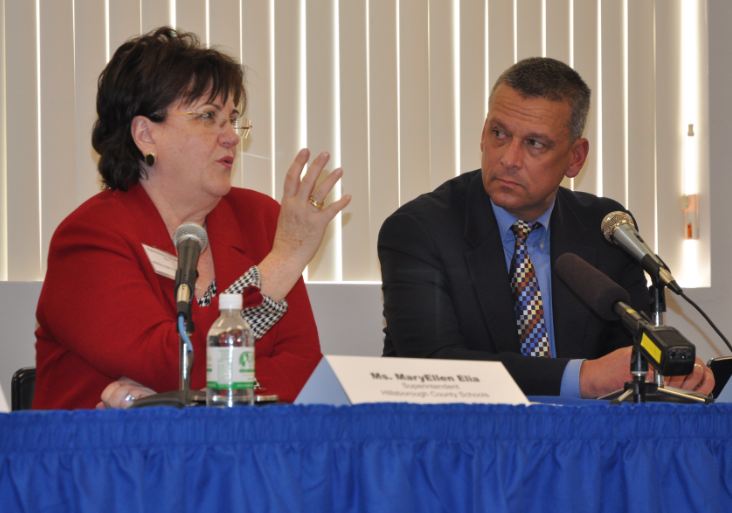
Florida Education Commissioner Tony Bennett and Hillsborough Superintendent MaryEllen Elia were among the panelists at a National School Choice Week event in Tampa. (Photo by Lisa A. Davis/Step Up For Students)
But on Tuesday afternoon, Tony Bennett sat next to Hillsborough County Public Schools Superintendent MaryEllen Elia inside a Tampa magnet school for boys, and praised the growth of choice in district schools across the state.
Florida is transcending the first round of conversations on choice that pit private and charter schools against public schools and virtual schools against “brick and mortar’’ ones, Bennett said during an event marking National School Choice Week. The new conversation, he suggested, isn’t either-or; it’s whatever works to ensure all kids have access to quality choices.
“So we’re now talking about choice – not just private schools and charter schools and virtual schools – we’re talking about public school choice,” he told an audience of about 100 people gathered at the Boys Preparatory Academy. “We’re talking about creative leaders like MaryEllen, like the team here, creating educational opportunities for children within the district - and really going to what we all heard was the purpose of choice to begin with, to provide incubation for innovation for our public schools.”
Tuesday’s event was sponsored by the Florida Alliance for Choices in Education, a coalition that includes a wide swath of school choice groups. Bennett and Elia sat on a panel with representatives from home-schooling, virtual education, magnet schools, career academies, Florida tax credit scholarships and McKay scholarships.
Most were parents who had lived and breathed school choice, starting with their own children. As they shared stories of searching for schools that practiced their faith or fit their child’s academic needs, they offered numbers that shed light on the choice movement’s impact. (more…)
 In 2010, Doug Tuthill took a look around and realized he was living in a new era.
“Florida had this rapidly expanding portfolio of school choice options,” said Tuthill, the president of Step Up For Students, which administers the state’s tax credit scholarship program. “Yet there was little dialogue among the groups representing those choices. We weren’t talking to each other about what was working, what wasn’t, and why.”
Several important players in this bourgeoning movement recognized the need for more collaboration. Florida Virtual School and Step Up For Students, among others, wanted to see the school choice movement united, so they could learn from each other and talk through any differences.
Thus, FACE was born.
Florida Alliance for Choices in Education, or FACE, is comprised of more than 50 members, representing a diverse coalition of organizations dedicated to providing Florida school children with more educational options. Such organizations include National Coalition of Public School Options, Florida Charter School Alliance, Foundation for Florida’s Future, and StudentsFirst - all coming together with the belief that, as the FACE website says, “State policy should enable all parents to be fully engaged in their children’s education and to access those learning options that best meet their children’s needs.”
Step Up For Students (which co-hosts this blog) staffed the initial effort. Three individuals - Wendy Howard, a parent advocate from Tampa; Jim Horne, a former legislator and state education commissioner; and Julie Young, president and CEO of Florida Virtual School - spent a year facilitating outreach and diplomacy, eventually bringing all components of choice together in one organization.
Florida is the first state to do this. (more…)
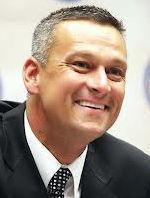
Bennett begins work today as Florida's new ed commissioner
Tony Bennett. The Orlando Sentinel hopes the new commissioner, who begins work today, “treads with discretion.” The Associated Press recalls his tenure in Indiana and ties to Jeb Bush.
Expand school choice now! Sort of. The Tampa Bay Times means options under district control: “The broader answer to improving public education in Pinellas is not a massive expansion of fundamental schools. It's raising the quality of all schools. But increasing the seats for fundamental schools and popular magnet programs to more closely match demand is a discussion district leaders should begin. Otherwise, they risk losing more families to charter schools and private schools — and further undermining broad support for public education.”
Slow down on charter schools. The Palm Beach Post says in one editorial that the Legislature should prioritize traditional public schools over charters. It says in another that the Palm Beach County district’s decision to transfer a troubled principal into administration will give lawmakers an excuse to continue favoring charters.
Checking out choice. In Alachua County, 600 middle school students turn out to see career academy options, reports the Gainesville Sun. In Duval, magnet students spread the word about their programs to prospective students, reports the Florida Times Union. In Miami-Dade, tens of thousands of parents are expected to apply for hundreds of magnet programs, reports the Miami-Herald. In Manatee, the Rock Your Robot Fair lets parents know about STEM options in public and private schools, reports the Bradenton Herald. (In Collier County, businesses urge students to explore STEM, reports the Naples Daily News.) The Tampa Bay Times annual school search section for Pinellas includes information about public and private options, including tax credit scholarships.
Amendment 8. The ACLU saw the proposed amendment, which despite perception had little to do with private school vouchers, as part of a "wide-ranging assault" on Floridians' rights last year by Gov. Rick Scott and the Republican-led Legislature, reports the Florida Current.
“Sagging schools.” Tampa Bay Times business columnist Robert Trigaux: “Beneath the top tier of students, our schools at all levels are struggling to educate our kids. Businesses need to help more. And the state needs to spend less time bragging about the educational system and admit it needs assistance.” (more…)

