After reading story after story about Catholic schools closing, it was heartening this morning to instead read about an aggressive local effort to help them rebound. The Diocese of St. Petersburg, in the Tampa Bay region of Florida, has launched an ambitious plan to reverse declining enrollment and ensure that Catholic schools remain a solid part of the community bedrock that they have been for generations.
As detailed in today’s Tampa Bay Times, the effort aims to make school operations more efficient and academic offerings more rigorous. It includes a key partnership with Notre Dame University’s Ace Academies, which will help with the quality piece. And it involves increased use of Florida’s tax credit scholarship program, which gives low-income families more learning options for their kids. “It’s a reimagining of how our schools would look like in five to 10 years from now, to make them viable,” Alberto Vazquez-Matos, the diocese’s superintendent, told the Times.
In this podcast interview with redefinED in March, Christian Dallavis, director of the ACE Academies, put the Tampa Bay partnership in context. He noted Hispanics in the U.S. make up two thirds of practicing Catholics under the age of 35, and that the high school graduation rate for Hispanics is about 50 percent. “We see the future of the church is on pace to be kind of radically undereducated,” he said. But “we also have a solution in that we know Catholic schools often put kids on a path to college in ways that they don’t have other opportunities to do so.”
The success of Hispanic students is especially important in Florida, where Hispanics could be a majority in a few decades. Boosting Catholic schools with innovative partnerships and school choice programs is a bold response that offers hope for the future.
Editor's note: School choice supporters see expansion of choice as especially promising for at-risk students. In this guest post, Alan Bonsteel, president of California Parents for Educational Choice, suggests they turn their attention to an under-the-radar, public-school sector that doesn't have much success with the students who struggle the most.
by Alan Bonsteel
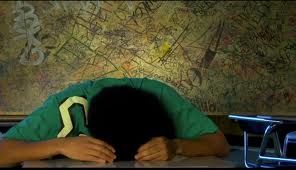 The nation's continuation schools are probably the most dysfunctional of our public schools, and yet the large majority of parents, taxpayers and voters - and even many education researchers - are unaware of their existence.
As a 30-year veteran of the school choice wars in California, I am familiar with how we handle this issue in our state. But data on the rest of the nation is extremely hard to find.
In California, 56 of our 58 counties run what we call county offices of education. The two exceptions occur in counties in which there is only a single city.
These county offices run "continuation" schools for students who are floundering in traditional public schools, often because they have behavioral problems. They run a different brand of continuation schools for students incarcerated in the juvenile justice system (and who initially arrive at the schools in the backs of police cars). They operate schools for kids with learning disabilities. They also teach adult high school dropouts who are returning to complete their high school education.
Surveys done by our organization, California Parents for Educational Choice, show only about 25 percent of adults in California are aware of the existence of the county offices. With such weak oversight by voters, it is hardly surprising that the quality here is abysmal. (more…)
One of the big, untold stories in Florida education over the past decade has been the rising academic achievement of Hispanic students. As researcher Matt Ladner has pointed out, on the fourth grade NAEP reading test, Hispanic students in Florida now tie or outscore the statewide average for ALL students in a majority of states. Meanwhile, in high schools, Hispanic students - who made up 25 percent of all Florida graduates last year - made up more than 25 percent of all graduates who passed at least one Advanced Placement exam.
Why doesn't this make a bigger splash in Florida, where some demographers say Hispanics could be the majority in a few decades? I’ll save my conspiracy theories for another day. The bottom line is, this trend is not only a hopeful sign for the state's future, it's more evidence that public schools here are rising to huge challenges.
Now, that being said, it's also true that the overall numbers still aren't where anybody wants them to be, and that some school districts are making bigger gains than others. Among those with flatter trend lines: the Pinellas and Hillsborough districts right here in Tampa Bay.
I bring this up because Pinellas and Hillsborough counties also happen to be the next stop for an innovative program aimed at improving Catholic schools, particularly for low-income Hispanic students. (more…)
Catholic schools used to be neighborhood schools. Many of them served immigrant familes. But since 2000 alone, more than 1,700 have closed in the United States, leaving voids in communities and diminishing school choice options for families who could use them now more than ever. In an effort to change that, the University of Notre Dame is leading a partnership that aims to improve the quality of Catholic schools, particularly for low-income, Hispanic families.
 The university's ACE Academies program began two years ago in Tucson, Arizona and is now rolling out at two schools in Tampa Bay (St. Joseph in Tampa and Sacred Heart in Pinellas Park). In this redefinED podcast, program director Christian Dallavis notes two important statistics: 1) two thirds of practicing Catholics in the U.S. who are under the age of 35 are Hispanic, and 2) only about 50 percent of Hispanic students graduate from high school in four years.
"We see the future of the church is on pace to be kind of radically undereducated," Dallavis said. But "we also have a solution in that we know Catholic schools often put kids on a path to college in ways that they don't have other opportunities to do so."
It's no coincidence the program came to Arizona and Florida. Both states have large Hispanic populations. Both offer tax credit scholarships to low income students.
"They provide a mechanism that allows Catholic schools and other faith-based schools to sustain their legacy of providing extraordinary educational opportunities to low-income families, immgrant communities, minority children, the people on the margins," Dallavis said. "We see the tax credit as really providing the opportunity to allow the schools to thrive going into the future."
But make no mistake. This effort isn't about quantity. The Notre Dame folks know in this day and age, school quality, whether public or private, is essential - and they're looking to beef up everything from curriculum to leadership to professional development. Their goal for the kids: College and Heaven. Enjoy the podcast.

