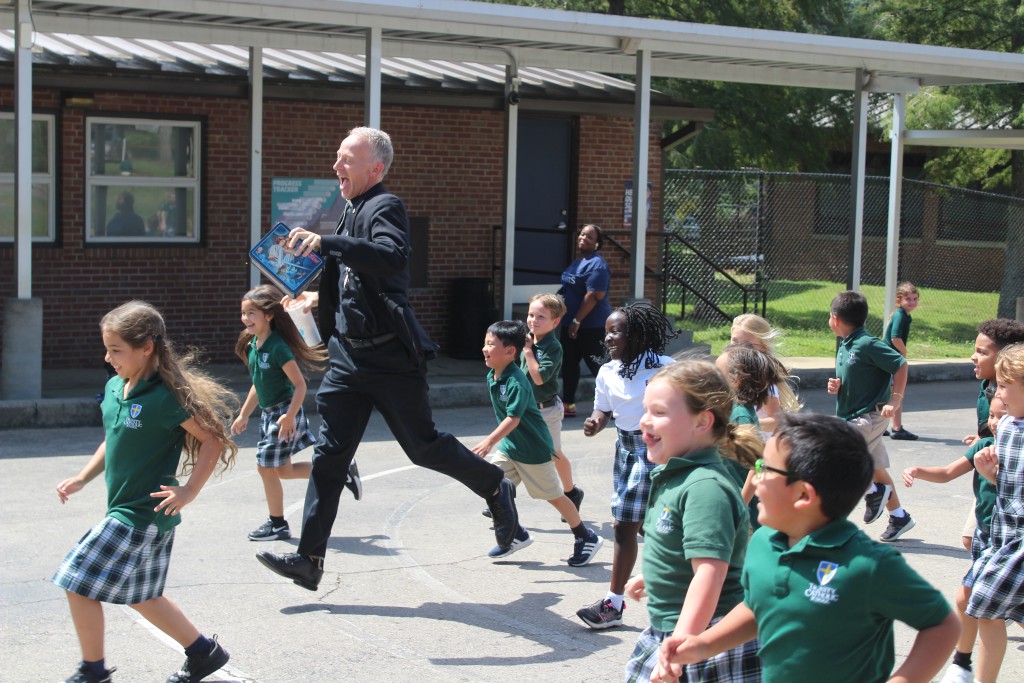
This paper was authored by the Step Up For Students team of Lauren May, director of advocacy and a former Catholic school teacher and principal; Patrick Gibbons, senior manager for public affairs; and Ron Matus, director of research and special projects.
The good news: In the wake of the COVID-19 pandemic, America’s Catholic schools re-opened sooner than the vast majority of public schools and yielded considerably better academic outcomes, particularly for Black and Hispanic students.
The bad news: And yet, in most of the country, Catholic schools continue to fade away. Over the past decade, only 10 states showed growth in Catholic school enrollment. Only one of them – Florida – has significant numbers of students in Catholic schools.
The hopeful news: There’s no reason it has to stay that way.
Our white paper, “Why Catholic Schools in Florida Are Growing: 5 Things to Know,” aims to amplify the success of Florida’s Catholic schools and offer lessons for Catholic education elsewhere. With the recent, remarkable expansion of universal choice in multiple states, the time couldn’t be more right.
Florida’s Catholic schools operate in the nation’s most competitive education market. That they’re growing speaks volumes about the power of choice and the quality of the Catholic school brand.
It also speaks to change. Florida’s Catholic schools grow more diverse by the day, both with the students they serve and the programming they offer.
As choice expands, the future of Catholic schools will hinge on how well they adapt to ever more dynamic environments with ever more options. The experience in Florida suggests they are more than capable.
Editor's note: Some of the figures in Figure 1 and Appendix A in the original report were incorrect. The correct version here was put in its place on June 4, 2024.
On this episode, senior writer Lisa Buie talks with Nina Rees, president and chief executive officer of the National Alliance for Public Charter Schools. Founded in 2005, the alliance’s stated mission is to ensure all children have access to a high-quality public education regardless of their ZIP code.
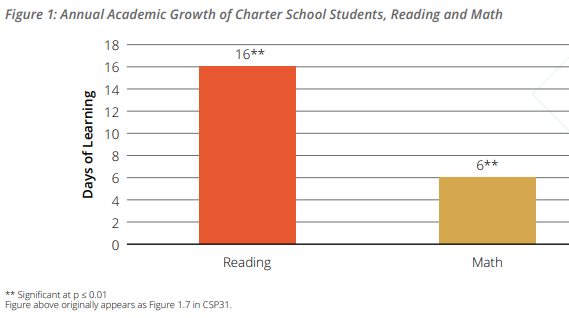
Rees discusses the recent study by the Center for Research on Education Outcomes, also known as CREDO, that showed over time, charter schools outperformed district-run schools in their communities and narrowed the achievement gap.
“If there was ever a doubt as to the effectiveness of charter schools, in their ability to close the achievement gap, this study definitely proves that gap can be closed and it's just a matter of doubling down and investing more in building these great schools in more places.”
Rees also discussed Oklahoma’s recent approval of St. Isidore of Seville Catholic Virtual Charter School, which, if it survives
Nina Rees
a court challenge, would be the nation’s first religious charter school.
Rees’ organization issued a statement disagreeing with the decision, arguing that the law has established that charter schools are public schools therefore required to operate as secular institutions. A coalition that includes Americans United for Separation of Church and State, the American Civil Liberties Union and the Education Law Center filed a lawsuit challenging the virtual charter school, which is set to open in 2024.
Episode details:
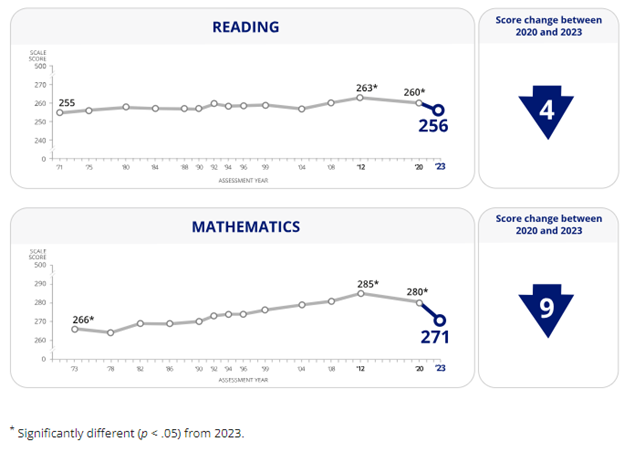
The National Assessment of Educational Progress released Long Term Trend data for 13-year-old students last week. On these exams, 10 points approximately equals a grade level worth of average academic progress. Mathematics achievement has dropped 14 points and reading seven points since 2012. The COVID-19 pandemic accelerated a pre-existing decline. Real spending per student was 160% higher in 2019-20 than in 1969-70, but reading scores are statistically identical (255 in 1970, 256 in 2023). Since 2019, spending has gone to record highs while achievement to near record lows.
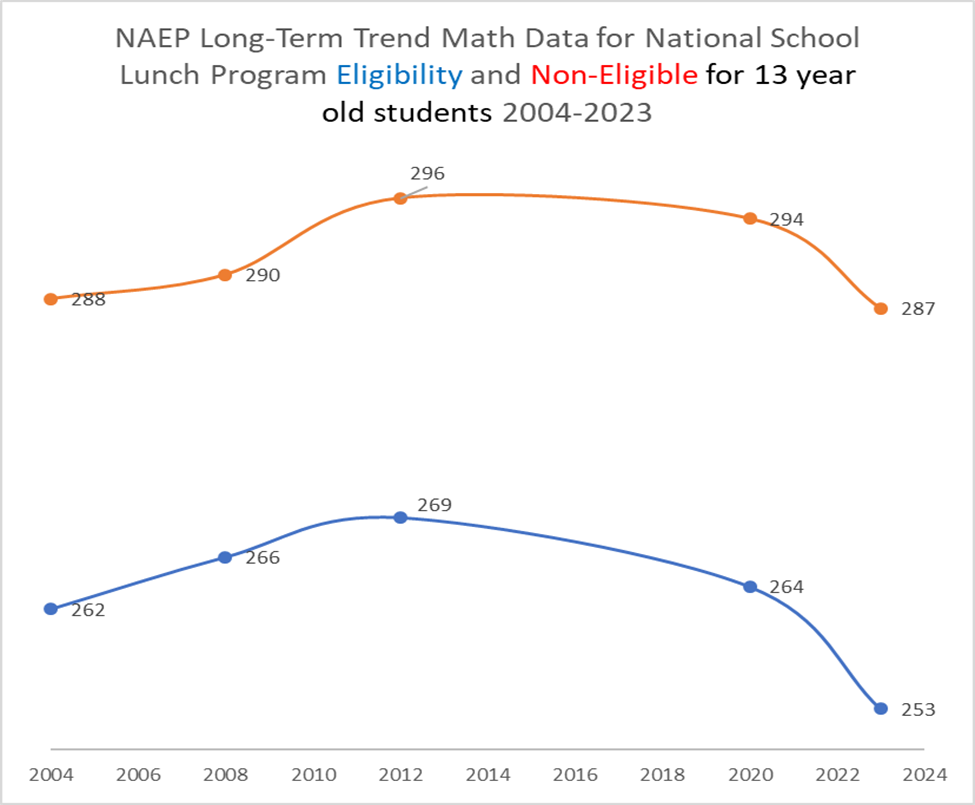
The news gets worse when you examine achievement gaps. The chart below shows the mathematics trend by free or reduced lunch eligibility status. The smallest gap stood at a still appalling 24 points in 2008. In 2023 the gap stood at 34 points, the largest on record.
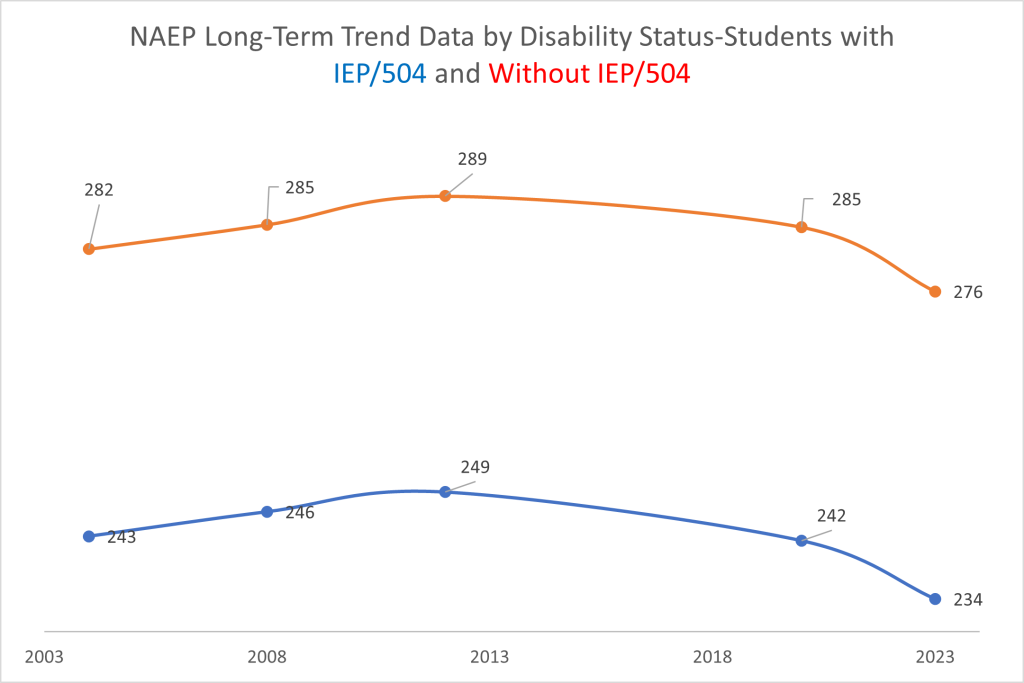
Similar story by disability status- bad for both, worst for IEP/504 plan students.
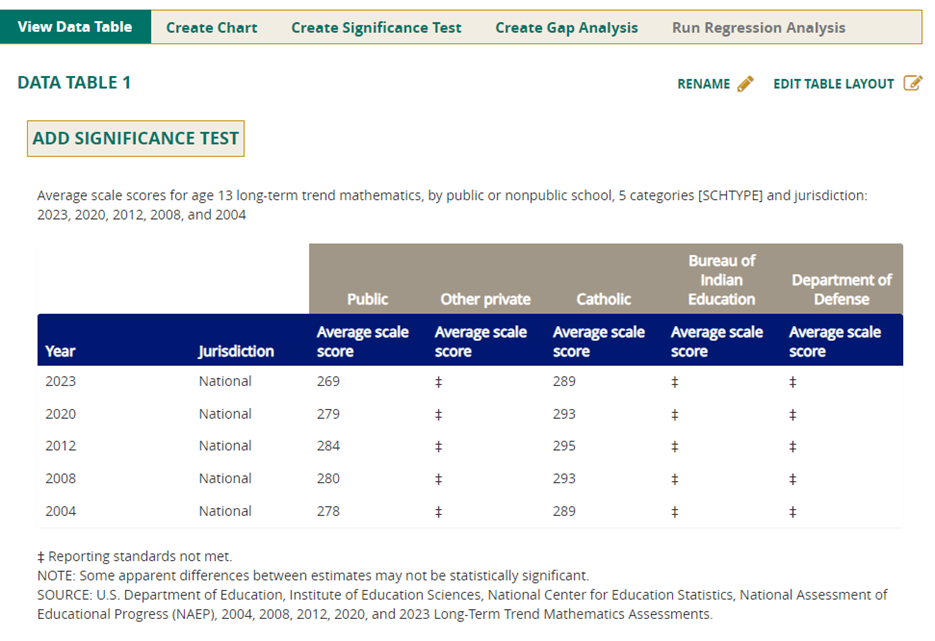
The gap between public school and Catholic school students increased from 11 points in favor of Catholic school students in 2004 to a 20-point advantage in 2023. The advantage for Hispanic students in Catholic schools stood at 23 points higher than their public-school peers.
Now it could be that you are not overly concerned about your child or grandchild learning civics, mathematics or reading. If so the union captured district system has growing numbers of empty seats just for you! As an added bonus, your special little ones can indirectly serve as funding units for some of the most reactionary special interests in American politics today!
Not your particular cup of tea? Well then consider making alternate plans. Millions before you have already done so, and the flight to freedom is just getting warmed up.
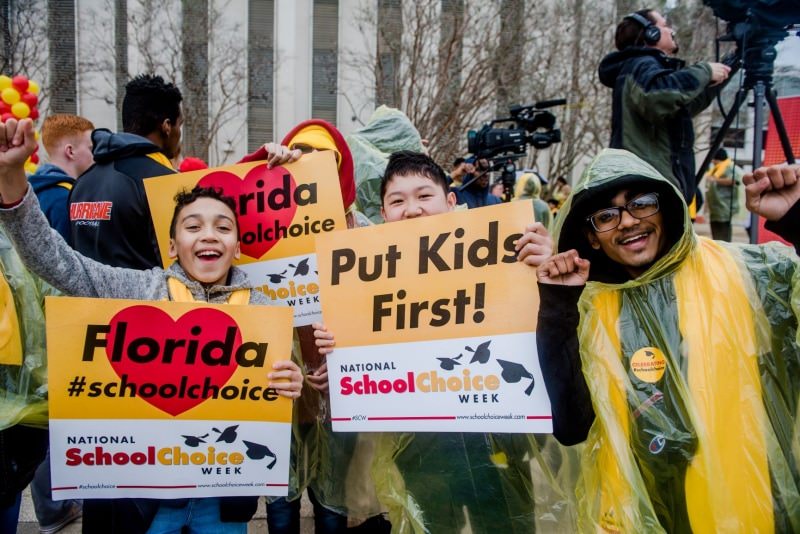
Nearly half of all parents are seeking new schools for their children in the 2023-24 school year. The data comes from a new survey by National School Choice Week, which found that 45.9 percent of parents want to enroll their child in a different learning environment this fall.
Of those parents, about 17 percent are still considering their options; 13 percent enrolled their student in a new school; 8.4 percent applied, and 7.5 percent chose homeschooling. That leaves 54 percent of parents keeping their child in their current school.
Though just under half of all respondents wanted to enroll their student in a new school, minority parents were far more likely to seek options than white ones. Black parents (60 percent) were far more likely to search for new school options than white parents (39 percent). Most Hispanic parents (53 percent) also sought new options.
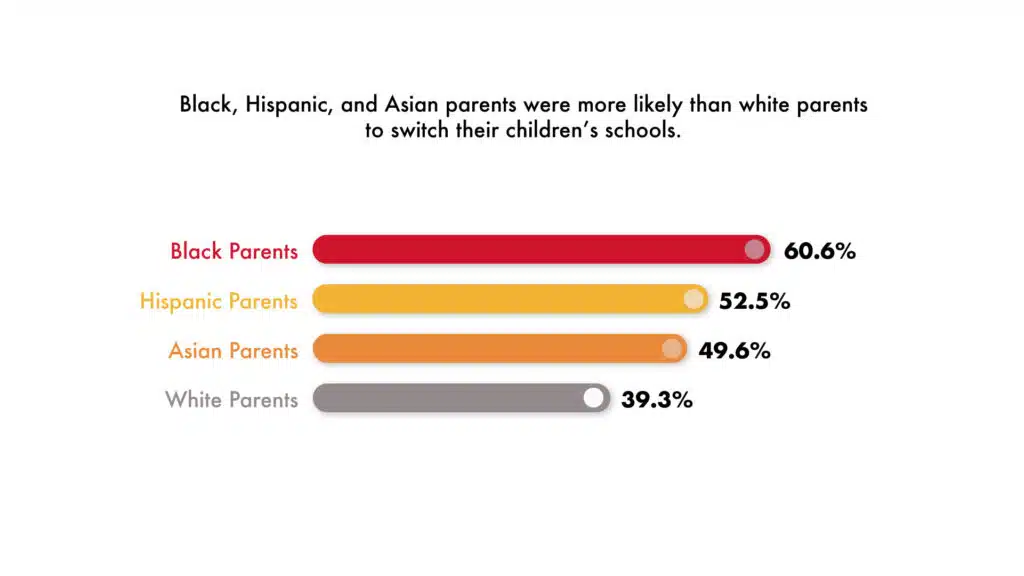 Despite the large number of parents who are seeking to change schools, many thought schools were as good as or better than last year. About 45 percent of parents thought their student’s education was better than last year; 34.4 percent thought it was about the same and just 20.5 percent thought it was worse.
Wealthier parents, not surprisingly, were more satisfied with their educational choices than lower income parents.
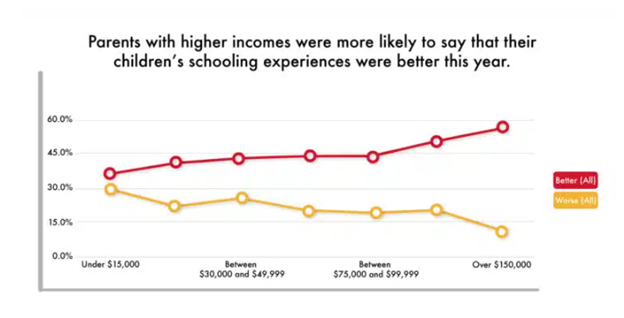
The survey, by National School Choice Week, was conducted in May 2023 with more than 2,400 parents responding. Check out the full survey here.
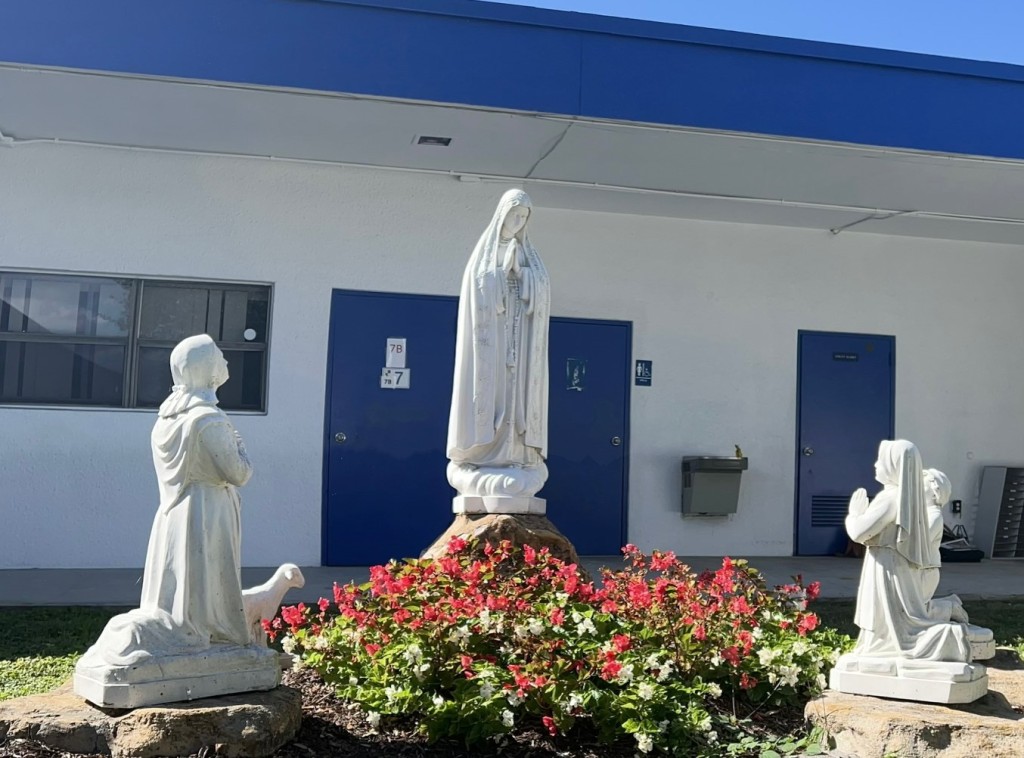
This replica statute of Our Lady of Fatima stands in the courtyard of St. Malachy Catholic School in Tamarac, Florida. Even after the school closed in 2009, the two charter schools that leased the campus never removed it. As the school reopens as a parish school in August, the statue has inspired those working to prepare the school for reopening. Photo courtesy of the Archdiocese of Miami
Since it closed in 2009, a victim of the Great Recession that wrecked family finances across the United States, the campus on the grounds of St. Malachy Catholic Church in Tamarac, Florida, has housed secular charter schools.
However, despite the focus those learning institutions placed solely on academics, one sacred element remained: the statue of the Virgin Mary. She stands in a courtyard atop a stone pedestal, in front of three children who kneel in reverence. The statue is a replica of Our Lady of Fatima, which, according to the Catholic church, the Virgin Mary appeared six times to three Portuguese shepherd children starting in 1917 and shared visions and messages. The church declared the visions of Fatima as “worthy of belief” in 1930.
As St. Malachy Catholic Church prepares to reopen its parish school after a 14-year hiatus, the statue is a powerful symbol of what a community’s faith and teamwork can accomplish.
“They never removed the statue of Our Lady,” said Zoraida Perez, the school’s registrar and first employee hired for the reopening. She said the fact that the statue remained feels like a miracle to her. “I did work in another parish where a charter school took over, and the first thing they did was remove all the images.”
Perez, who was not working for St. Malachy in 2008 but who lived in the area, recalled the strong emotions people felt when the economy forced the school, along with seven other area Catholic schools, to close due to low enrollment.
“Many of those families were so sad, and they had to decide between providing a home and food for their children or a private, parochial education,” said Perez, whose three children attended Catholic schools. Many of them had to make the decision to school and go to public school.”
Those who were able to continue in Catholic schools were offered seats at other area schools.
The transition to new schools was tough for some families, who missed the sense of community that a smaller school like St. Malachy, which first opened in 1984, provided. The school and the church are named for St. Malachy, an Irish Saint who lived during the 1100s.
The church leased the campus to a charter school, which closed in 2018. Another followed but closed in 2021 amid the coronavirus pandemic.
When leaders announced in March that the parish would reopen the school, a woman whose two children had to transfer to another Catholic school when St. Malachy closed showed up immediately with donations of backpacks and school supplies.
“She said her kids felt lonely because they were the new people at the school,” Perez said. “She said what they had at Saint Malachy was a family.”
Parish and school leaders said they based the decision to reopen on a population boom that included many young families moving to the area. Tamarac boasted a population of nearly 72,000 in 2020, according to the latest U.S. Census figures. That’s an increase of more than 10,000 from 2010, when the census showed a population of 60,427.
“The decision to reopen St. Malachy followed a feasibility study in which we looked at local demographic trends, educational options and other factors. Through this study, we determined that a viable Catholic school could reopen at St. Malachy without operating to the detriment of nearby Catholic schools,” said Jim Rigg, superintendent of schools for the Archdiocese of Miami.
Rigg, who as superintendent oversees 63 Catholic schools, doesn’t need statistics to show him what he has observed.
“People are moving here from all over the world, from the United States and Latin America and the Caribbean,” Rigg said. “We’re in growth mode.”
Figures from the 20222-23 school year confirm Rigg’s statement.
Total enrollment came in at 33,577, the highest in more than five years.
In Key West, the Basilica School of St. Mary Star of the Sea is expanding to offer high school in August. It will be the first time since 1986, when Mary Immaculate High School closed, that the county has had a Catholic high school. Also, Cristo Rey Miami High School, an independent Catholic school, opened in 2022.
Across the Sunshine State, Catholic school enrollment rose 6.3 percent in 2021-22, the biggest jump of any of the 10 states with the biggest Catholic enrollments and outpacing the 3.8 percent hike nationally, according to state-by-state figures from the National Catholic Educational Association.
Leaders attribute Florida’s trend-defying figures over the past several years to its robust education choice laws, which offer families access to scholarships to attend private schools.
“Catholic schools in states that have school-choice programs…had greater enrollment stability over the past two years than Catholic schools in states with no private-school choice,” according to a study by the Manhattan Institute. “That is, Catholic schools in states with multiple choice programs (two or more) lost far fewer students in the first year of the pandemic (–4.9%) than states with no private-school-choice programs (–7.6%), but both the robust choice and the nonchoice states rebounded in 2021–22 by the same percentage (+4%).
The six states with education savings accounts, which give families the ability to use funds to customize their students’ education, also saw enrollment increases that were twice as large as states that had no ESAs. This year, the Florida Legislature expanded education choice by granting automatic eligibility to all students regardless of income.
Even so, Archdiocese of Miami leaders are starting small at St. Malachy, with seats only for 4-year-old kindergarten and voluntary pre-kindergarten students as well as kindergarten. They expect to have about 45 students the first year. The next year, they plan to begin adding other grades, eventually capping out at eighth grade. (To learn about registration and careers, go here.)
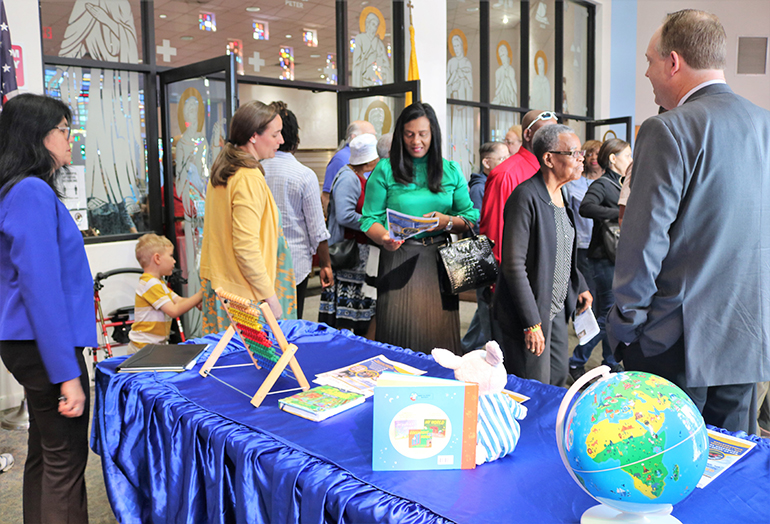
Jim Rigg, superintendent of schools for the Archdiocese of Miami, answers questions and hands out information about the soon-to-reopen St. Malachy School after church services at St. Malachy Church. Photo by Linda Reeves of Archdiocese of Miami
Perez said the community response has been overwhelming since word got out about the reopening plans. The Knights of Columbus St. Malachy Council 13355 have been doing handywork to help get the school ready to open in August. Nearby St. Bonaventure School reached out with guidance and local companies have donated and installed technology as well as offered free uniforms in the school’s blue and gold colors for incoming students.
In the areas of the school that will be occupied this fall, community members have installed new flooring, provided new furniture, moved the administrative offices to the front of the building and built a new canopy for the playground to provide shade. A parliament of owls found living in one part of the building provided inspiration for the school mascot: the owl.
“It takes a village to raise a child,” Perez said, quoting the African proverb. “This is where you find it.”
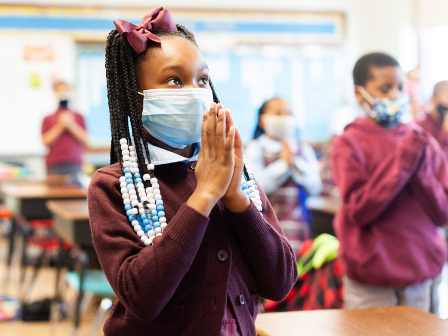
St. Raymond of Penafort Catholic School in Philadelphia is one of 2,417 private schools in Pennsylvania serving more than 284,000 students. Its vision is that students will leave eighth grade emotionally and spiritually formed by Catholic example, performing at or above grade level, and enrolled in an academically rigorous high school program.
Editor’s note: This article appeared last week on the philadelphiacitizen.org.
When Tammie Tilson was growing up in Mt. Airy, her father insisted she attend a private Catholic school through eighth grade. After that, she could choose if she wanted to go to a public or private high school.
She chose public. More than a decade later, she still questions that decision. In some classes, books were in short supply, requiring students to share. A college-prep math course began with concepts she’d learned years earlier. Her new classmates seemed more likely to disrespect teachers and fight in class than her old schoolmates.
Now a parent, Tilson said that experience, combined with her strong faith, are the primary reasons she wanted her three children to attend Catholic schools. She and her husband wouldn’t be able to afford that without yearly financial support from the non-profit Children’s Scholarship Fund Philadelphia.
“A lot of people say, ‘I can’t afford Catholic school,’” says Tilson, whose three children attend St. Raymond of Penafort Catholic School. “I say, ‘Me either. But I am here. Let me tell you how. ‘”
CSFP is about school choice, but not the type of school choice that’s in the news again after Florida Gov. Ron DeSantis last week signed a universal school choice law. CSFP exists to help families who want to send their kids to private schools but won’t be able to do so without financial assistance. It’s funded by two state tax credit programs.
“We try to stay in the lane of helping families who raise their hand and say, ‘I want something different.’ Right now, I don’t see my neighborhood school as an option for my child,” CSFP President/CEO Keisha Jordan says. “We support families who, without us, would have no other option.”
To continue reading, click here.
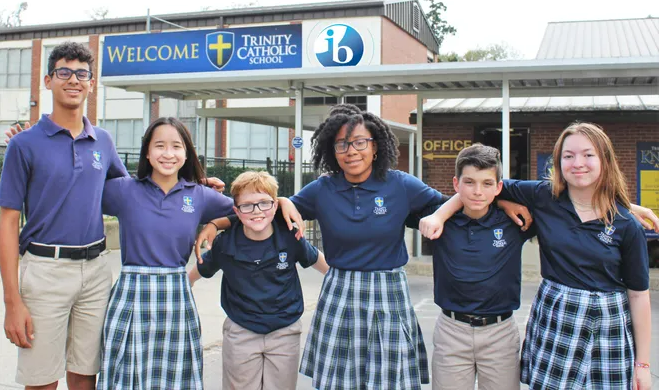
As Catholic school enrollment grows, many schools, such as Trinity Catholic School in Tallahassee, Florida, are adding new programs. Trinity announced in March 2022 that it had received authorization as an International Baccalaureate School following an intense, two-year candidacy phase.
Editor’s note: This question-and-answer interview with Lincoln Snyder, president and CEO of the National Catholic Educational Association, appeared Sunday on catholicworldreport.com.
Catholic schools in the United States have grown in enrollment for two straight years, reaching record levels in some dioceses. Nationwide, Catholic enrollment jumped from 1.63 million to 1.69 million students, an increase of more than 3.5%, according to data released in February by the National Catholic Educational Association.
Though the statistics show that enrollment has not yet reached pre-pandemic levels — 1.74 million students enrolled in 2019 — the reversal is notable, as before the pandemic enrollment was trending down by 2% to 3% annually.
Lincoln Snyder, president and CEO of the NCEA, which works with Catholic educators to support ongoing faith formation and the teaching mission of the Catholic Church, spoke with CNA about the new numbers and the state of U.S. Catholic education today.
Can you break down for me how the enrollment numbers at Catholic schools (in the U.S. overall) have changed since the start of the pandemic?
We did see an initial drop in those first months of the pandemic. There was a lot of disruption for a lot of families in a lot of places. And so, the following May of 2020, we did see a drop in enrollment. We saw a number of schools close. A lot of difficult decisions were made at that point, but since then, Catholic schools have been on a consistent two-year upswing, so it’s very encouraging news for us.
We saw a 3.8% gain overall in the 2021-22 school year [an increase of 62,126 students]. And now in the 2022-23 school year, we’ve seen it go up another three-tenths of a percent [an increase of 5,076]. So just by way of numbers, our biggest single archdiocese in terms of enrollment is Los Angeles, and we’ve added more than another L.A. to our overall Catholic school enrollment. So for Catholic schools, this has been a really significant gain just in terms of the number of kids in our schools.
Do you know how many of the Catholic and public school families who moved to home schooling at the start of the pandemic have remained in that arrangement?
It’s very hard for us to track exactly what happened to individual families. And part of the reason I say that is we’ve also seen a lot of movement of people within the United States, and within regions. So the gains have been stronger in the South, Southeast, and Southwest. Obviously, in the Northeast, we’ve seen some places lose overall numbers of kids in big numbers. Home school is definitely one of those places where a lot of families ended up — we know that as a national trend.
I really couldn’t say with any confidence how many kids that had been at Catholic schools pre-pandemic would have ended up in home schools today. We just don’t have data. But I will say that we have more new families in our schools now than we did. So people have either changed schools within their area, or they’ve moved to a new area in really big numbers. And we know that in both those cases, it appears that families were much more likely to consider a Catholic education than they have been before.
To continue reading, click here.
Cristo Rey Tampa Salesian High School, included in a national network of 38 Catholic high schools serving more than 12,000 students, offers a Corporate Work Study Program that allows students to earn 60% of their tuition through employment.
A vacant 75,000-square-foot office complex in Orlando, Florida, built as a school for interior design, will reopen in two years with a different kind of interior design as its mission – one that seeks to sharpen teenagers’ minds and instill the Catholic faith in their hearts.
Leaders of a group formed to open a Cristo Rey High School in the central Florida area recently announced the purchase of the complex, made possible by Hanover Capital Partners, a local development company led by the Orosz family.
According to a news release, the Oroszes’ paid $7 million for the property that sits near a lake at 6039 S Rio Grande. The family donated the property to the Cristo Rey Network, which has 38 schools in 24 states.
In Florida, Cristo Rey has a campus in Tampa and last year opened one in Miami, which is led by an alumnus of the original school founded in Chicago in 1996. Translated in English as Christ the King, Cristo Rey is a network of private Catholic schools with a work-study model that makes a Catholic education accessible to students from low-income families.
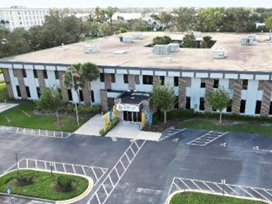
The Orlando property, most recently used as a training center for the Army Reserves, will require about $5.4 million in renovations before it welcomes its inaugural freshman class of 125 students in 2025.
The Orlando property, most recently used as a training center for the Army Reserves, will require about $5.4 million in renovations before it welcomes its inaugural freshman class of 125 students in 2025. The school will add a grade each year after that to ultimately serve 500 students in grades 9 through 12.
“The bones of the school are very good, as it was originally planned as a school for design,” said Russ Allinson, the project’s feasibility study chairman. “However, we have extensive plans to renovate it and prepare it to be a thoroughly modern high school.”
Those plans started to evolve when several community members began independently reaching out to the Cristo Rey Network. School leaders then helped them connect and the group began a feasibility study.
Allinson said school supporters were surprised to learn that Orlando, which has 400,000 registered Catholics in its nine-county diocese, had only one Catholic high school in the city, Bishop Moore. Chesterton Academy, a classical school, describes itself as “grounded in the Catholic faith” but is an independent school and not listed on the diocese website. The closest Catholic high school after Bishop Moore is Santa Fe Catholic High School, 52 miles west in Lakeland.
“For a city the size of Orlando, it is unusual to have only one Catholic high school, and we understand there is more demand than there are places for students,” Allinson said. “Many families that want their children to attend a Catholic high school are unable to afford or gain admission to Catholic high schools in central Florida.”
Soon after the group formed, a member reached out to Bill Orosz, who engaged immediately in the process. With the research complete and the need established, the next step was to find a building. The sale of the Rio Grande property closed on Feb. 9.
“It’s really just an Orosz family philanthropic endeavor,” Andrew Orosz, vice president and general counsel with Hanover Capital Partners, told GrowthSpotter following the sale. Hanover is led by Bill Orosz and his three sons, Andrew, Matthew and Steve.
Cristo Rey is best known for its unique model of pairing academics with work experience offered by community partners that allow students to work five days a month for all four years of high school. The work-study, along with state K-12 education choice scholarship programs, makes it possible for student whose families could not afford tuition to attend a private school. The work underwrites about 60% of the tuition.
It also gives students valuable experience as they pursue college or a career, said Amanda Livermore, a Cristo Rey employee and director of the feasibility study.
“When they finish their four years in high school, they have a resume of experience that is unique to students their age,” she said. “Furthermore, Cristo Rey has a track record of advancing students who may be behind in their schoolwork and preparing them for college.”
(For a list of partnering organizations, click here.)
The school will offer sports, initially through partnerships with other area schools and organizations. Leaders plan to add a gym to the campus in a few years. The first class will help select the school mascot.
For now, Cristo Rey Orlando is conducting a national search for its president. The Cristo Rey leadership model has a president at the top, with a principal and a community work study director.
Once the school is up and running, it will employ about 70 administrators, teachers and staff members.
 Editor’s note: Shawn Peterson, president of Catholic Education Partners, a nonprofit organization based in the Minnesota Twin Cities area, wrote this column for reimaginED in honor of National Catholic Schools Week. Peterson is a former staff member of the Minnesota Legislature who also worked for two Minnesota governors. You can listen to reimaginED senior writer Lisa Buie interviewing Peterson here.
 If you’re interested in education choice, and you’ve spent any time on social media in the past few weeks, you know that the rhetoric of those who oppose parental choice in education is at a fever pitch.
Scroll through, and it’s not hard to find outlandish posts that claim choice legislation will lead to the demise of rural America, that choice programs actually hurt kids, that private schools only serve the rich and that religious schools are all discriminatory, and that it will be the end of “public” education as we know it.
In other words, the same old false and desperate arguments we always hear from people who ideologically oppose parents having control over their child’s education, unless of course they have means. This seems especially evident in those lawmakers, and others in positions of power, whose families enjoyed these very opportunities themselves, but who would now deny them to others.
And people aren’t just commenting, they’re yelling, in ALL CAPS, and when people yell, they are generally afraid. What are they afraid of? They are afraid that given a real choice, some parents will exercise other options.
They got a taste of this during the height of the coronavirus pandemic when families with financial means walked away from shuttered district schools and sought in-person education for their kids. As a result, parents want choices, and these programs provide those for the rest of us.
Most important, parents not only want choices, but they also have a right to those options for their children. The Catholic Church and many others of faith, and indeed of no faith, understand this fundamental right of parents.
This is why the social teaching of the Catholic Church supports universal empowerment of parents in their role as the primary educators of their children and at the same time calls for a preference toward aiding those most in need.
Pope Saint John Paul II linked education to social justice when he stated that “it will never be possible to free the needy from their poverty unless they are first freed from the impoverishment arising from the lack of adequate education.”
Fortunately, parental choice programs provide invaluable assistance to those who struggle economically or in other ways in American society. For example, most education savings account programs, also known as ESAs, prioritize students with a variety of unique needs—those who most benefit from the flexibility and tailoring inherent in these accounts. Traditional school choice scholarships tend to be geared toward children from low- and middle-income families.
True social justice demands that all parents, not only those with economic means, should have options for the education of their children. Parental choice programs level the playing field by providing the means for all parents to choose the educational options that are best for their child, and a good education is one of the best ways to ensure that a person will have a good start in life and be able to contribute to society and the common good.
Why do millions of us support a parents right to educational freedom? Because parents, at a fundamentally more profound and intimate level than the state, have been given the responsibility of providing for the well-being of their children. They name their children, feed, clothe, and shelter them, play with them, care for them when sick, and raise them to adulthood.
And at an even more fundamental level, parents love their children unconditionally, shaping their identity and their sense of self in an irreplaceable way. We would be appropriately aghast if the government tried to intervene and, for instance, name children or set itself up as a primary source of their existence and care.
If we do not see that education with the direct control and determination of parents is required, it may be an indication that we do not value education or parenthood enough.
A family’s limited economic means, for instance, might provide a practical challenge to providing their students with the education they desire, but their right to access this kind of education still remains, and the state should help them overcome these difficulties as a matter of justice. That’s precisely the point of education choice, to place the parent, not the state, in control.
During Catholic Schools Week, and just a few days after we have wrapped up our celebration of National School Choice Week, we need to stop viewing choice as something to fear, but as an opportunity to focus on every child’s need to be well educated in whatever setting suits them best: district, private, charter, home, or something yet to be imagined. We also shouldn’t be afraid to redefine the terms of American education.
Public education should be about the education of the public, not preserving the monopoly of some schools to the detriment of the individual child, the family, and ultimately our society.
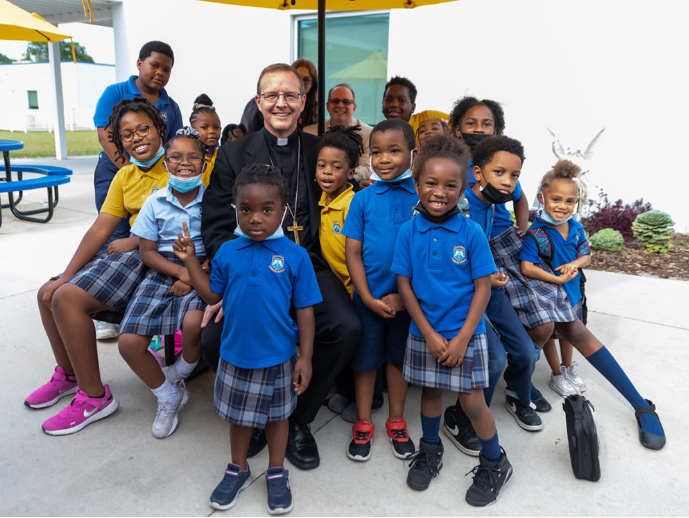
Bishop Erik Pohlmeier visits with students at Guardian Catholic Schools in Jacksonville. PHOTO: Fran Ruchalski
Editor’s note: Deacon Scott Conway, Cabinet Secretary of Education and Formation and Superintendent of the Schools for the Diocese of St. Augustine, wrote this commentary in recognition of Catholic Schools Week.
As we prepared for Catholic Schools Week, which is Jan. 29 – Feb. 4, 2023, I could not help but think of the many great people who have sacrificed and developed the second largest educational system in the country, Catholic education.
Some of those great people include St. John Neumann, St. Elizabeth Ann Seton, St. Catherine Drexel, members of many religious communities, and lay educators. This is not to say that the success of Catholic schools over the centuries has been without challenges. One of the great challenges has been long-term sustainability with the rising cost to educate students and the rising cost of tuition for parents.
We are so proud of our Catholic schools and the work that we do to support families throughout the country. We were founded on serving the indigenous people, the poor, and the immigrants. Our theme for Catholic Schools Week throughout the nation is “Catholic Schools: Faith, Excellence, and Service.” It is our desire to serve everyone, regardless of religion, so that all people may experience the gospel message and have a conversion of heart to Christ Jesus.
Faith
We pride ourselves as Catholic schools on our Catholic identity, as this is what makes us unique. We are the evangelizing arm of the church that continues to this day to be the largest ministry of the Catholic Church in the United States. Our educators are highly qualified and share their faith each day with the children regardless of the subject matter they are teaching.
Excellence
The second most important characteristic of Catholic schools is academic excellence. We see this year after year as our schools help students to be the best they can be.
Each year Catholic schools throughout the nation join other schools in taking the National Assessment of Education Progress that leads to the national report card. Each year our schools outperform other models of education throughout the country. We are so proud of the work of our educators and the students who work so hard every day in our Catholic schools.
Service
It is service that many people think of when they think of the Catholic Church and Catholic schools. The reason for this is that we do it so well and help so many people. From helping those in the community with cleaning up their property, to helping in food pantries, to collecting the food to serve those less fortunate, we continue to work together in service of our neighbor as Christ taught us.
Let us continue to pray for one another and allow this Catholic Schools Week to be one of an encounter with the risen Lord in the classroom.

