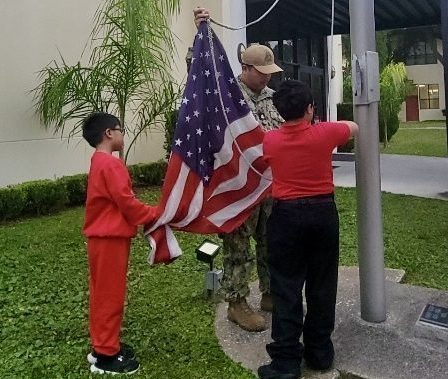
A local veteran helps students at Sacred Heart Catholic School raise the American flag before the school's annual Veterans Day ceremony. The Jacksonville school was one of two Florida Catholic schools that recently earned the state's Purple Star School of Distinction designation for supporting military students and families. Photo courtesy of Sacred Heart Catholic School
It’s tough being the new kid in school. It’s even tougher being the new kid every two to three years.
That’s the norm for 1.2 million United States children born into military families. According to the Military Child Education Coalition, military-connected children move six to nine times between kindergarten and high school graduation.
Florida lawmakers recognized the stress such transitions can create and in 2021 passed HB 439 with bipartisan support to establish a Purple Star Schools of Distinction program in the Sunshine State.
The law grants schools that meet certain criteria to be military-friendly the designation of Purple Star Schools of Distinction. The program is open to public schools as well as private schools that accept state K-12 education choice scholarships. (Step Up For Students, which hosts this blog, is the state’s largest administrator of state education choice scholarships, which allow automatic eligibility for dependents of active-duty military members.) So far, 121 schools across the state have earned the designation, including two private schools: Sacred Heart Catholic School in Jacksonville and St. John the Evangelist Catholic School in Pensacola.
Both schools are located close to military bases; Jacksonville boasts the third-largest military presence in the United States.
“We’ve always had a long history or supporting military families and the students who have been enrolled,” said Sacred Heart Principal Archie Yumul, who earned a medical degree before deciding in 2005 to trade the world of genetic research for a career in teaching, and later, school administration. His school is about three miles from the Naval Air Station in Jacksonville, so “it seemed like a good fit that we would apply for the Purple Star School designation because of our relationship with the military.”
The Purple Star Schools program has been around since 2016 thanks to Pete LuPiba, a Navy veteran and Ohio’s commissioner for Military Children Interstate Compact Commission. He wanted to create another way for schools in the Buckeye State to support military-connected children in addition to following the guidelines of the compact, which were created to replace widely varying policies all 50 states that affect transitioning military students.
However, it wasn’t until the past few years that grassroots efforts really gained momentum. So far, 34 states have passed legislation establishing the programs, while two states, Michigan and Oregon, have introduced bills.
In Florida, the state Department of Education recently established an application process for earning the designation. The requirements include the following:
At Sacred Heart, which enrolls 417 students in 3-year-old kindergarten through eighth grade this year, the school established a chapter of Anchored 4 Life, a peer-to-peer group that helps students through transitions, including those common among military families. The group works to welcome and acclimate new students, as well as provide ongoing support. Members also coordinate recognition events for military members, veterans and first responders and prepare care packages for patients in VA hospitals and nursing homes.
“As a military child, I had to relocate several times and know how challenging that can be for little ones,” said Barbara Ramos, the daughter of an Army veteran and wife of a Marine Corps veteran who now serves as the military liaison and adviser to Anchored 4 Life. Ramos also serves in the Air Force Air National Guard and so brings a parent’s perspective to her role.
“I strive to make Sacred Heart a safe and comforting environment for both the students and the parents,” she said. “I have had to deploy, and knowing my children had a true extended family with the staff and students at Sacred Heart was extremely comforting.”
Yumul said the biggest challenge the school now faces is getting the word out to the community about these military-friendly designations.
To do this, the school is circulating flyers and meeting with military contacts on the bases. They also have a display wall of their credentials and programs, hope to put up outdoor signs, and seek to engage military members as school volunteers at events such as the annual spring carnival.
Yumul said military student enrollment has grown from between 5% and 10% to between 10% and 20%.
“Our office staff, teachers, and students have taken this challenge by the horns, and we’ve just been excited to be part of the process,” he said. “We feel fortunate that we are one of two Catholic schools in the state of Florida to have this honor and distinction.”

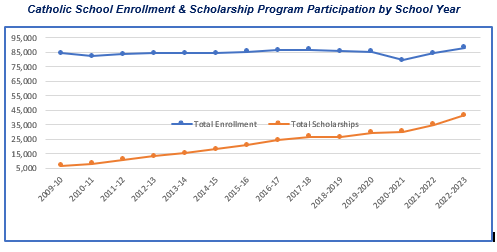
Enrollment in Florida’s Catholic schools, which rebounded slightly last year after a pandemic dip in 2020-21, is now the highest it’s been in more than a decade. Figures released this week by the Florida Conference of Catholic Bishops show total enrollment at 88,031, an increase of 4.5% from last year and 3.1% from pre-pandemic numbers.
The total enrollment is now higher than it was in the 2008-09 school year, though less than its peak of 95,000 in 2005-06.
The rise in Catholic school enrollment also paralleled the Legislature’s $200 million expansion of state education choice scholarships. HB 7045 granted scholarship access to tens of thousands more students.
Billed as the largest expansion of education choice in Florida history, the law merged the state’s two scholarship programs for students with unique abilities and combined them with the Family Empowerment Scholarship program approved in 2019. The law also made it easier for families to qualify by removing the requirement that students must spend the prior year in a district school and expanded eligibility to dependents of active-duty members of the U.S. Armed Forces. Lawmakers followed up in 2022 with laws that granted automatic eligibility to dependents of law enforcement officers regardless of income.
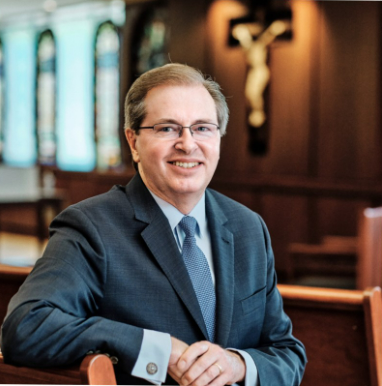
Thomas W. Carroll is a staunch promoter and defender of school choice in general and of Catholic education in particular.
Editor’s note: Daniel P. Schmidt, former vice president for program of The Lynde and Harry Bradley Foundation in Milwaukee, and Michael E. Hartmann, senior fellow and director of the Center for Strategic Giving at the Capital Research Center, recently spoke with Thomas W. Carroll about Catholic education and identity, creating a community of learners and believers, and the challenge of raising money for its mission in the current culture. Here are the results of their interview, which appear today on the Capital Research Center’s website. (You can listen to the interview here.
Thomas W. Carroll joined the Catholic Archdiocese of Boston’s Catholic Schools Office as superintendent in 2019, before which he held several positions at several various education-related nonprofits, including ones that ran schools and others that engaged in public-policy research and advocacy.
Carroll also was New York Gov. George Pataki’s deputy director for regulatory reform and played a leading role in the adoption of New York’s charter-school law.
The engaging Carroll is a principled and effective promoter and defender of school choice in general, and in his role as Boston Catholic schools’ superintendent, of Catholic education in particular. He believes the mission, properly understood and implemented, helps create community and academic outcomes, also helping students achieve eternal salvation, about which he is even more passionate.
“I think I bring to the job kind of a fresh set of eyes that’s different than if they hired a typical educator and see everything clearly, including all of its warts,” Carroll tells us. “We have an independent group called the Catholic Schools Foundation that raises roughly about, every year, $10 to $12 million in scholarships that gets spread across the Archdiocese, but with a concentration on school-lunch eligible, low-income kids,” according to Carroll.
For all students and their families, “community is really the right word to use in a Catholic sense” to describe the aim, “because we aren’t just educating children, we’re creating a community of learners, we’re creating a community of believers,” Carroll says. “We’re trying to create a community among parents as well—both within and around the school and the parish, but also across the Archdiocese.”
“In the current moment, it’s easier to raise money for charter schools than it is to raise money for Catholic schools,” he later notes. “The reason is, to be Catholic today … requires a certain amount of bravery given what the modern culture looks like, and people in corporate America are generally not particularly brave in terms of controversy.”
“When I converted” 20 years ago, Carroll continues, “most of the major propositions of the Catholic Church were not particularly controversial—God created men and women, for example. … As the culture has changed, particularly on social issues, … there are certain companies and certain individuals that have kind of pulled back.
”The people here are extremely generous, but there are specific companies that no longer will give money directly to the Catholic Church, and part of the reason so many people give money to the scholarship fund is its independent of the Catholic Church.”
In the conversation’s second part, Carroll talks more about Catholic education, the importance of remaining faithful to its core mission of eternal salvation, and the educational and societal benefits of school choice.
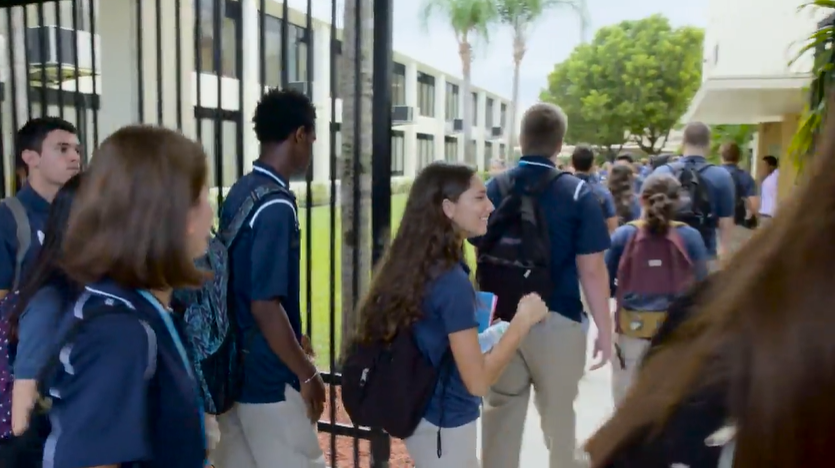
Among its goals, St. Thomas Aquinas High School, whose principal is among nine educators receiving a national outstanding school leadership award, strives to model for its students the daily practice of Christian living, inviting them to develop a personal relationship with Jesus Christ.
A veteran educator at the helm of a Ft. Lauderdale Catholic School is among nine academic leaders announced by U.S. Secretary of Education Miguel Cardona as recipients of the Terrel H. Bell Award for Outstanding School Leadership for 2022.
All nine school leaders, who are included in the 2022 cohort of National Blue Ribbon Schools, will be honored at a National Blue Ribbon Schools awards ceremony Nov. 3 in Washington, D.C.
Principal Denise Aloma’s career spans more than 50 years, most of it at South Florida’s St. Thomas Aquinas High School, where she served as an English teacher and assistant principal before becoming principal.
Aloma’s commitment to ensuring that all students graduate with 21st century skills contributed to St. Thomas Aquinas becoming one of the first Catholic high schools in the country to adopt a STEM focus, serving as a model for other schools in effective STEM program implementation. She also has focused on growing successful pre-professional programs that allow students to explore pre-law, pre-med, and pre-engineering.
Additionally, to help students accelerate their learning and explore career pathways, she designed and implemented a summer school program to encourage students to work ahead in core content areas, giving them more flexibility with class schedules.
In a news release announcing the award winners, Cardona, a former school principal, said he understands the vital role school leaders play in shaping school culture and welcoming learning environments, improving student achievement outcomes, and empowering teachers to meet the needs of their students.
“The nine school leaders receiving this year’s Terrel Bell awards have raised the bar for building positive school climates, increasing achievement, and finding creative ways to nurture, engage, and support students, families, educators, and school staff,” Cardona said.
“At a time when principals and other school leaders face many challenges, from addressing students’ unmet mental health needs to accelerating their academic recovery from the pandemic, the Department of Education is proud to recognize the essential work they do each day.”
The U.S. Department of Education, together with the National Association of Elementary School Principals, the Association for Middle Level Education, and the National Association of Secondary School Principals, present the Bell Awards to principals of National Blue Ribbon Schools for their outstanding work and the vital role they play in guiding their students and schools to excellence, frequently under challenging circumstances.
Other award recipients are:
Brigett Stewart, Piedmont Elementary School, Piedmont, Alabama
Miguel Marco, Wittmann Elementary School, Cerritos, California
Linda Bevil, James B. Eads Elementary School, Munster, Indiana
Julie Scott, R.L. Wright Elementary School, Sedgwick, Kansas
Catherine Bricelij, Myrtle Place Elementary School, Lafayette, Louisiana
James Sonju, Lincoln K-8 School, Rochester, Minnesota
Ryan Ambrose, Checotah Intermediate Elementary School, Checotah, Oklahoma
Mahri Aste, Mosaic Elementary School, Fairfax, Virginia
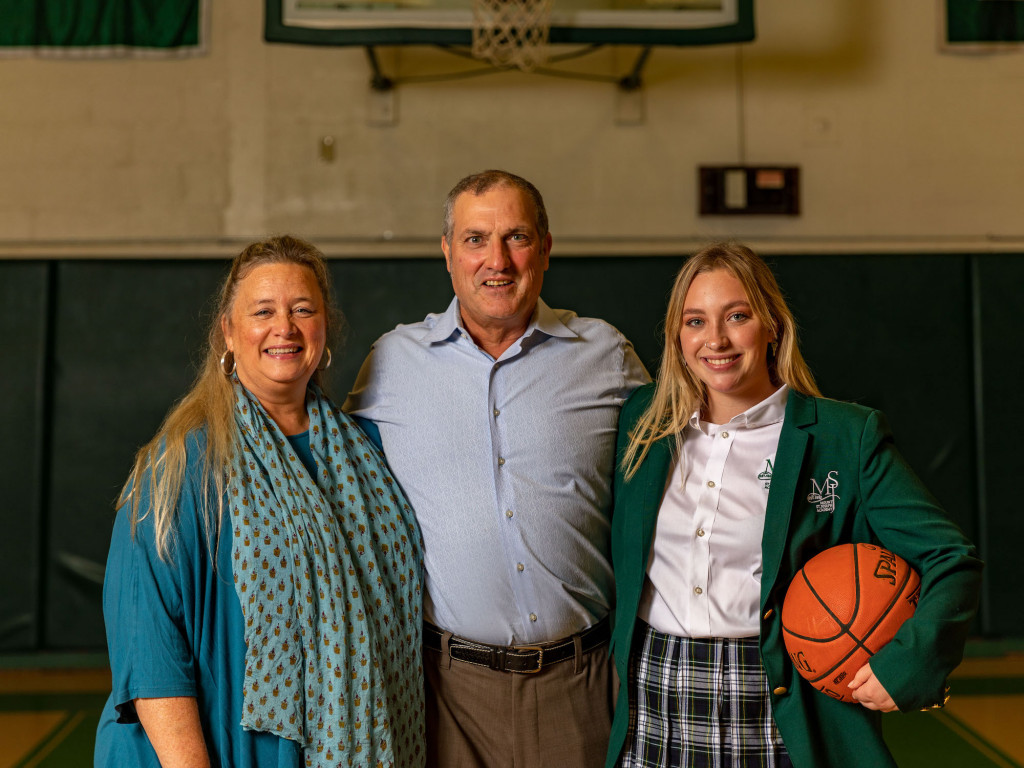
The Gallos were one of several Vermont families who sued the state over its policy banning religious private schools from participating in town tuitioning programs offered in areas without public high schools. Photo courtesy of the Institute for Justice
Vermont residents who live in towns too small to operate district high schools may now use public funds to send their children to faith-based private schools.
The Education Agency of Vermont recently told school administrators that they must comply with a 2022 U.S. Supreme Court decision that struck down a Maine law banning religious schools from participating in town tuitioning programs.
“Requests for tuition payments for resident students to approved independent religious schools or religious independent schools that meet educational quality standards must be treated the same as requests for tuition payments to secular approved independent schools or secular independent schools that meet educational quality standards,” the agency’s Sept. 13 letter said. A list of approved independent schools on the website showed 15 religious schools.
Rural and sparsely populated, Vermont and Maine have programs that offer scholarships to families in areas that don’t operate public high schools so they can send their kids to public or private schools elsewhere.
However, both states prohibited the money from being spent on religious schools, so parents who wanted a faith-based education for their kids were forced to pay out of pocket.
In 2018, a group of parents challenged the Maine program.
Several Vermont parents also filed similar lawsuits. In June 2021, the U.S. Court of Appeals for the Second Circuit struck down the prohibition against religious schools in the case A.H. v. French, brought by four Catholic high school students, their parents, and the Diocese of Burlington.
However, the Maine lawsuit, Carson v. Makin, was the one that made it to the U.S. Supreme Court and settled the issue nationally.
In that case, the high court ruled that education choice programs could not exclude schools based on religious instruction or activities, calling it “discrimination against religion.” A landmark U.S. Supreme Court ruling in 2020, Espinoza v. Montana Department of Revenue, struck down bans on education choice scholarships based on a school’s religious status but stopped short of addressing the issue of religious use.
The Supreme Court ruling in the Maine case reverberated across Vermont, and was cited as the reason for the policy change there.
The decision also drew praise from the American Federation for Children, a national education choice advocacy group.
“Every family deserves the right to choose the best K-12 education for their children, and we are encouraged to see the Vermont Agency of Education stipulate that families in tuitioning programs can choose religious schools,” said Shaka Mitchell, the federation’s director of state strategy and advocacy. “After a hard-fought battle in Maine, the Supreme Court has resoundingly confirmed this right, and we are thrilled that Vermont families will be able to access a fuller range of options as well. We hope other states will join Vermont and follow the ruling of the Supreme Court by ensuring all students can learn in the educational setting that best meets their needs.”
Maine Attorney General Aaron Frey responded to the Carson v. Makin ruling with a statement that schools must comply with the Maine Human Rights Act to receive funds. That law bans discrimination based on race, gender, sexual orientation, ethnicity, or disability, which contradicts some schools’ religious beliefs. As a result, the two schools that were part of that case have refused to participate in the tuitioning program.
However, Cheverus High School, a Jesuit college preparatory school in Portland, this week became Maine’s first religious school approved for funding. Though a Catholic school, Cheverus is not governed by the Diocese of Portland.
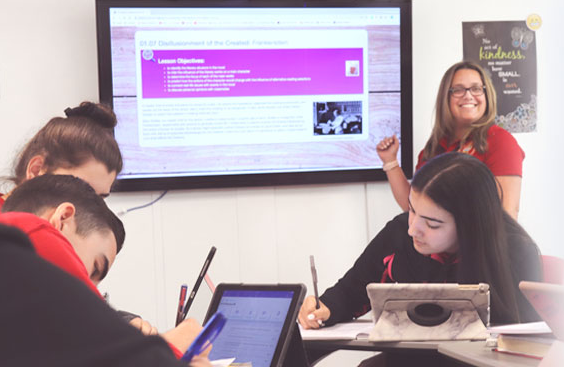
The Archdiocese of Miami Virtual Catholic School, owned and operated by the Archdiocese of Miami, is the only Cognia-accredited and archdiocesan supported virtual Catholic school in the nation. The school has the unique opportunity to provide Catholic education to communities on a global scale.
As Catholic schools across the nation experienced the first enrollment increase in two decades as part of a pandemic rebound in 2022, enrollment figures for the Archdiocese of Miami Virtual Catholic School grew, too.
Figures from the school show that full-time and part-time enrollment combined climbed from 1,187 in 2019-20 to 2,208 during the 2021-22 school year, translating to an increase of more than 86%. Principal Rebecca Bautista said that about 90% of that number represents part-time enrollment.
“I think things are going great,” Bautista said. “I think we’ve been able to reach a lot more families, and I think it’s going great not just for us, but for traditional Catholic schools.”
Bautista attributes most of the growth over the past three years to the coronavirus pandemic when many families sought refuge from the virus or from mask mandates.
“A lot of schools needed a virtual option, to be honest with you,” she said.
Jim Rigg, superintendent of schools for the Archdiocese of Miami, said the virtual school, along with Catholic schools overall, experienced gains during that time as public school board meetings became contentious over mask mandates and other cultural issues.
“I think a lot of families turned to Catholic schools so they could avoid the drama that was happening in public schools,” he said. He added that before COVID isolation and quarantine rules were relaxed, the virtual school provided students a way to stay on track with their schoolwork until they could safely return to campus.
“The virtual school has always existed to serve the students in the Catholic schools in Miami,” he said. “They have been a tremendous resource during COVID and can even better serve our Catholic schools.”
Most of the students who were attending full time back then have returned to traditional brick-and-mortar Catholic schools, and that’s perfectly fine with Bautista.
“Our bread and butter is not to take students away from brick-and-mortar schools,” she said.
In addition, state officials also did not extend a temporary waiver to a law that requires students receiving state scholarships to attend in-person brick-and-mortar schools. The state Department of Education issued the waiver in 2020 to allow flexibility during the pandemic and extended it during the 2020-21 school year but let it expire in 2021-22.
That meant that all students who were attending private schools on income-based education choice scholarships would lose that aid if they didn’t return to campus. The Family Empowerment Scholarship for students with Unique Abilities, which uses an education savings account model allows for spending flexibility and was not affected by the law.
(The FES-UA as well as other income-based scholarships are administered by Step Up For Students, which hosts this blog.)
Bautista said a handful of students attended the school using the FES-UA and that if Florida were to convert all its scholarships to ESAs, most of the families would prefer to stay at in-person schools. However, she sees benefit in ESAs because the flexibility would allow them to use spend part of their funds on courses virtual courses for enrichment.
She explained that school was founded in 2013 to support traditional Catholic schools by offering students the opportunity to take a class that was not available at their school, to recover credits or to get ahead through programs such as dual enrollment that allow middle schoolers to take high school courses.
The virtual option also allows students whose medical conditions may require that they attend school at home or whose participation in sports or other activities required frequent travel to have access to a Catholic education.
Archbishop Thomas Wenski, in a letter to families in 2013, said the school stressed the importance of “all Catholic schools to keep pace with the demands of the 21st century.” The school has kept that promise uppermost over the years, and in 2020, added kindergarten through fifth grade, bringing its enrollment that year to about 800. The school has since kept its lower grades and added adult education and Catholic certification courses for teachers.
‘We are fully K-12,” Bautista said.
Rigg, the superintendent, said the virtual school is no longer limited to serving the Archdiocese of Miami and has received a lot of calls from other areas.
“Through its programming, it’s enrolling a lot of different students,” he said. “They have growing clientele from around the country and around the world.”
 Editor’s note: This commentary from Patricia Levesque, chief executive officer for the Foundation for Excellence in Education and former deputy chief of staff for education for Florida Gov. Jeb Bush, appears in the summer issue of Education Next.
There’s a fierce determination among elected officials and education leaders to return our schools to normal. That’s understandable, but the desire for normalcy must not compel us to settle for an education system that was struggling long before the pandemic turned “normal” on its ear.
Right now, parents have a unique and unprecedented opportunity: To emerge from this pandemic with a transformed education system, one that offers more options to families and embraces new policies that build toward reimagining the entire system. It’s incumbent on education advocates, each and every one of us, to harness the energy, frustration and needs of families to create this better education system.
Success requires eliminating the conventional “us versus them” mindset. That friction is often on display between those seeking a student-centered system and advocates of the current system, but there’s often infighting among education reformers themselves. Proponents are criticized for being either too focused on incrementalism or thinking too big picture; too intent on reshaping existing systems or too committed to overhauling everything.
Disagreements can also devolve into reformers moving into camps, rallying around their one best approach. That’s absurd because there’s no such thing. The future of education requires a diversity of thought, as well as a diversity of approaches.
That’s why I see the education work ahead of us focused on three areas, which can truly transform education from system-centered to student-centered.
To continue reading, click here.
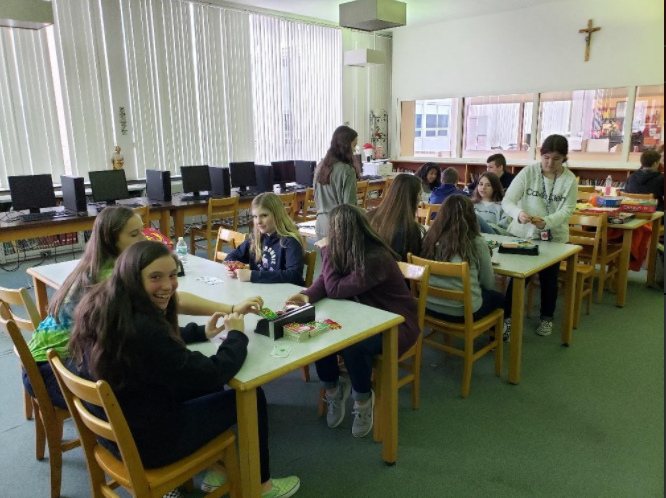
Bishop McCort Catholic High School in Johnstown, Pennsylvania, boasts a 13-to-1 student-teacher ratio, allowing faculty to challenge students to reach their academic potential. Recent graduating classes have achieved a 100% graduation rate, with 95% of students accepted to four-year colleges and universities. The school welcomes students participating in Pennsylvania’s Opportunity Tax Scholarship Program.
Editor’s note: This first-person essay from Pennsylvania father Jeremy Spontak was adapted from the American Federation for Children’s Voices for Choice website.
I am a single dad with full custody of my two children living in southwestern Pennsylvania. Raising two boys on my own is challenging, but our lives got so much better when I found out about Bishop McCort Catholic High School and our state’s Opportunity Scholarship Tax Program.
My son Joshua struggled academically for three years at our zoned public school before we found out about McCort. At one point, I requested that he be held back to give him a chance to catch up with his peers. School administrators told me that was not my decision, so they promoted him yet again, even though he could not master the material for his grade level.
The following year, he failed every subject. That’s when I decided to have him tested to see if he had a learning disability that was interfering with his progress. We did get a documented diagnosis, which I took to the school, but nothing changed. There was no additional help, no tutoring. Joshua continued to flounder.
Then COVID hit. Our public school was closed for almost two years to in-person instruction. The lack of structure – getting up every morning, getting dressed, going to school – was devastating to Joshua. He struggled for another year.
I had heard that Bishop McCort Catholic High School was offering in-person instruction. I visited the school and was impressed that it had been in operation since 1922, after Catholic parishioners in Johnstown raised $100,000 to launch it.
As much as I wanted to send Joshua to McCort, I didn’t see how I could afford private school tuition. Then school staff told me I probably was eligible for a state school choice scholarship. I applied for the A Opportunity Scholarship and was approved.
Since Joshua transferred to McCort, his grades have improved dramatically. I attribute that to the fact that class sizes are much smaller than at his previous school. The teachers have a chance to get to know every student – their strengths, their weaknesses, everything about them – and tailor instruction accordingly.
The school also provides the rigor and structure that Joshua needs. From Day 1, Joshua had the opportunity to join a community of students and teachers who are committed to advancing the rich Catholic mission of “learning to think rigorously so as to act rightly and to serve humanity better.”
With 10 Advanced Placement courses and 23 Honors courses, Joshua has lots of incentive to strive. And I am encouraged as a parent that, as the school website says, McCort empowers young generations to unlock their potential through a program of academic excellence, character building, social development, and leadership training.
Maybe best of all, Joshua has regained his love of learning. He is an all-around happier kid. This alone is assurance that moving my son to McCort was the best decision I’ve ever made for him.
I wish every parent could experience the benefit of choosing a great school for their child. If money is a barrier, I wish they would consider applying for whatever choice scholarship program their state supports.
Every child should have the opportunity Joshua has had to find educational success that I know will lead to lifelong career options and satisfaction.
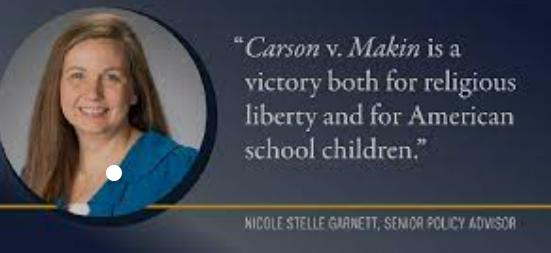 Nicole Garnett, senior policy adviser to the Alliance for Catholic Education and a Notre Dame University law professor, recently joined Tim Uhl, secretary of education/superintendent for the Catholic Diocese of Buffalo, on the Catholic School Matters podcast to discuss the recent Carson v. Makin Supreme Court case and implications for school choice moving forward. Here are some excerpts of the podcast:
The Catholic school movement has been advocating for the position that the court finally endorsed in Carson v Makin, which is that you cannot exclude a religious school from public benefit programs like school voucher programs because they’re religious. That is a position the Catholic Church has taken for over 175 years … So, there is a long history here of Catholic schools seeking public resources and being rebuked both politically and legally.
Neutrality toward religion isn’t math, it’s law. So, it’s not we don’t count up how many kids are in what kind of school and decide what neutrality is. It’s not a neutrality question, it’s a legal question ... The First Amendment requires neutrality toward religion.
It is true that Catholic schools have been flirting with being charter schools for a long time. It’s always important to keep in mind … it’s not necessarily a good idea that even if you could be a charter school that you want to be a charter school … there’s lots of political reasons you might not want to do it … it’s arguable that you should be permitted to if you want to.
You can listen to the full podcast here.
Catholic Education Partners believes parental empowerment over their children’s education opportunities will allow more families to benefit from Catholic education, allay the Catholic school-funding crisis, protect the religious integrity and autonomy of parochial schools, and ultimately serve the Common Good.
On this episode, reimaginED Senior Writer Lisa Buie talks with Shawn Peterson, president of Catholic Education Partners, a nonprofit organization based in the Minnesota Twin Cities area.
A former staff member in the Minnesota Legislature who worked for two Minnesota governors, Peterson talks about growing up in various learning environments, how his time in government inspired him to join the education choice movement, the benefits of a Catholic education for Catholics as well as non-Catholics, and trends in Catholic education.
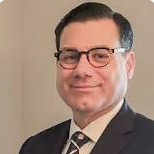
Shawn Peterson
“I saw budgets grow and get bigger and bigger. I saw test scores continue to decline, graduation rates go down, reading and math proficiency get worse, and minority and economically disadvantaged children suffer the most. I started looking at the results non-government schools were getting …
“These kids were doing so much better in non-government schools. If you’ve got money, you’ve already got education choice. If you don’t have money, that’s when you don’t have choice. My time in the Legislature and seeing what went on in conference rooms and hallways made me realize that parents should have these opportunities and these choices.”
EPISODE DETAILS:
LINKS MENTIONED:
https://catholiced.us/wp-content/uploads/2022/05/CATHOLIC-EDUCATION-PARTNERS_Booklet.pdf
https://press.vatican.va/content/salastampa/en/bollettino/pubblico/2022/03/29/220329c.html

