Lawsuits. Six families plan to intervene in a lawsuit by the statewide teachers union that challenges Florida school choice legislation. Gradebook.
 Charter schools. A South Florida charter faces closure under the "double-F rule." Sun-Sentinel. Three others seek waivers from the state. redefinED. The leader of Cape Coral's municipal charter system leaves to take a job with the Lee County school district. Fort Myers News-Press. A new K-8 charter gets a green light in Lauderhill. Sun-Sentinel.
Single-gender. The Pinellas district considers a new option for at-risk boys. Tampa Tribune.
Private schools. The Cato Institute critiques a recent Daytona Beach News-Journal article on school safety.
Campaigns. A Charlie Crist campaign ad filmed at a high school violates Pinellas school district policies. Tampa Bay Times. Brevard school board candidates debate. Florida Today.
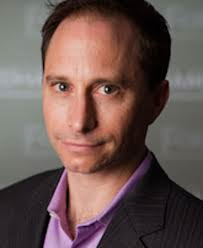
Petrilli
Is parental choice alone accountability enough for private schools that accept students with vouchers and tax credit scholarships?
The pro-school-choice Fordham Institute says no. In a policy toolkit released this week, it again made the case for some measure of regulatory accountability – and promptly drew fire from other school choice stalwarts at the Friedman Foundation, the Cato Institute and elsewhere (see here and here).
To continue the debate, Fordham Executive Vice President Mike Petrilli will be our guest next week for a live, hour-long chat.
The chat is like a press conference, only it’s in writing and open to anyone with a good question. To participate, just come back to the blog on Tuesday. We’ll start promptly at 10 a.m. All you have to do is click in to the live chat program, which you’ll find here.
In the meantime, you can send questions in advance. Either leave them here in the comment section, send them to [email protected], tweet them to @redefinEDonline and/or post them on our facebook page. See you next week!
Vouchers and testing. A new report from the Fordham Institute finds that mandated testing - and even public reporting of test results - isn't that big a concern for private schools worried about government regs tied to vouchers and tax credit scholarships. Coverage from redefinED, Choice Words, the Cato Institute's Andrew J. Coulson and Gradebook. AEI's Michael McShane says Florida's tax credit scholarship program (which, altogether now, is administered by Step Up For Students, which co-hosts this blog) finds the "sweet spot" with its testing and financial reporting requirements: "These regulations don’t sound too crazy to me; they seem to strike a good balance of accountability for safety, fiscal responsibility, and academic performance without being overly dictatorial in how schools must demonstrate any of those."
 Shooting rockets. Senate President Don Gaetz tells the Associated Press that Florida needs to slow down on ed reforms until it rights the new teacher evaluation system and other changes in the works: "We need to quit shooting rockets into the air. We need to give schools and school districts, teachers and parents time to institutionalize the reforms that have already been made. We need about a two-year cooling off period."
Ford Falcons. Schools need competition. EdFly Blog.
School choice. Education Commissioner Tony Bennett says at a National School Choice Week event in Tampa that some Florida districts deserve credit for expanding public school options such as magnets and career academies, reports redefinED. More from Tampa Tribune.
Charter schools. The National Alliance for Public Charter Schools ranks Florida fifth for its charter laws. SchoolZone. Gradebook. South Florida Sun Sentinel. StateImpact Florida. The Pinellas school district postpones a decision on whether to close a long-struggling Imagine school in St. Petersburg, reports the Tampa Bay Times and Tampa Tribune. The Volusia district's decision to shut down a struggling charter in Deland is headed to appeals court, reports the Daytona Beach News Journal. (more…)
What’s more off the wall? A Christian school teaching students that the Loch Ness Monster is a living dinosaur and proof of creationism? Or science supporters who continue to believe that public schools can significantly boost science literacy?
The Cato Institute’s Neal McCluskey suggests it’s a toss-up. He responded yesterday to the Washington Post’s Valerie Strauss, who predictably skewered vouchers after reports surfaced about some private schools using a biology textbook that says, “Are dinosaurs alive today? Scientists are becoming more convinced of their existence. Have you heard of the ‘Loch Ness Monster’ in Scotland?”
“I can certainly see why paying for this sort of thing would disturb a lot of people … ,” McCluskey wrote. “Let’s, however, use this to confront another, extremely dubious belief that many would never challenge: Government schooling leads to good science instruction.”
McCluskey efficiently lines up the evidence. A Gallup poll this month found only 15 percent of Americans believe human beings evolved without any involvement from God. National test scores show more private school students are proficient in science than public school students. And surveys show many public school biology teachers give short shrift to evolution because it’s too much of a mine field. “The result is that no one, no matter what their beliefs, gets coherent biology instruction,” McCluskey wrote.
I took a whack at this issue a few weeks ago, after a New York Times piece on tax credit scholarships cited examples of creationist teaching in private schools. (more…)
Editor’s note: Tuesday’s New York Times story about tax-credit scholarship programs sparked a flurry of reaction from leading school choice supporters, including John Kirtley, who chairs Step Up for Students, the non-profit that administers the tax credit program in Florida. In a blog post today, the Cato Institute’s Adam Schaeffer took exception to some of the guidelines Kirtley proposed for other state programs, and also raised concerns about what he calls the “hyper-centralization” of Florida’s program. Here is Kirtley’s response:
First, I want to thank Adam Schaeffer of the Cato Institute for his engaged dialogue on the vital subject of tax credit scholarship program design. I also want to say that I have been an admirer of Cato for over a decade, and even attended its wonderful “Cato University” in the late 1990’s.
The main point of my response is this: as someone who is trying to pass, grow and protect parental choice laws in Florida and across the country, I live in the real world of legislation and politics. We are trying to change something that has been the same for 150 years. Those who don’t want change are extremely powerful, well-funded, and have willing allies in the press. We have to fight hand-to-hand legislative and political combat state by state. And we can’t hand our opponents grenades with which to blow us up.
Adam is absolutely correct that you can only drive so much excellence through top-down accountability. Our scholarship organization’s president, Doug Tuthill, and I constantly talk about the “new definition” of public education we would love to see — a transformation from “East Germany” (pre-Berlin Wall fall) to “West Germany.” We see a system where end users allocate resources and choose among many providers and delivery methods – public or private. Of course I understand, as Adam asserts, that such a system will produce better results. I’m a businessman! Or at least I used to be, before this movement took most of my time. But we can’t wave a magic wand and create that transformation overnight. And as in any free market system, there is a role — though many will argue over the extent – to be played by government.
Adam points out there is more fraud and waste in public schools than in scholarship programs. So what? We’re held to a higher standard. It’s not fair, but it’s a fact. In Florida, when stories of public school teachers having sex with students was the topic of Letterman and Leno monologues, one of the most respected newspaper columnists in Florida blasted vouchers because a private school principal took a bunch of young girls unsupervised to Disney World. There weren’t even any scholarship kids at the school. Another newspaper called for the repeal of the tax-credit program because (among other things) not every school had submitted documentation of their fire inspections. At the same time, the Orlando Sentinel (to its credit) ran an article about public schools in the area that were so out of fire code they had to hire fire marshals to stand watch at them. No one called for those schools to be shut down.
The point is we operate in a zero tolerance environment in Florida. Opponents to choice are desperate for examples that the program isn’t being operated properly. They would love to find a family that makes too much money to qualify, or to learn household incomes or sizes weren’t documented properly. And it would hurt us if they did. (more…)
Editor's note: After redefinED posted Howard Fuller's comments about universal school choice, we asked the Cato Institute's Andrew J. Coulson for a response, which we published last week. To keep the debate going, we asked Matthew Ladner, senior advisor of policy and research at the Foundation for Excellence in Education, for his take. He generously offered the following.
 My friends Howard Fuller and Andrew Coulson started a needed discussion regarding the direction of the parental choice movement. Dr. Fuller has been quite outspoken in his opposition to universal choice programs in recent years, and Coulson raised a number of interesting and valid points in his redefinED piece. The parental choice movement has suffered from a nagging need to address third-party payer issues squarely. It’s a discussion that we should no longer put off. The example of American colleges and universities continues to scream a warning into our deaf ear regarding the danger of run-away cost inflation associated with education and third-party payers.
Howard Fuller and Andrew Coulson also indirectly raise a more fundamental question: where are we ultimately going with this whole private school choice movement? Dr. Fuller supports private choice for the poor and opposes it for others. He has concerns that the interests of the poor will be lost in a universal system. I’m sympathetic to Howard’s point of view. I view the public school system as profoundly tilted towards the interests of the wealthy and extraordinarily indifferent to those of the poor. We should have no desire to recreate such inequities in a choice system.
Andrew makes the case that third-party payer problems are of such severity that we should attempt to provide public assistance to the poor through a system of tax credits, and have other families handle the education of their children privately. Andrew’s proposed solution to the very real third-party payment issues is in effect to minimize third-party payment as much as possible, and to do it as indirectly as possible through a system of tax credits.
Despite the fact that Howard comes from the social justice wing of the parental choice movement and Andrew from the libertarian right, they agree that private choice should be more or less limited to the poor.
My own view is different from both Howard and Andrew’s. I believe the collective funding of education will be a permanent feature of American society and that it should remain universally accessible to all. I believe Howard’s real concerns over equity and Andrew’s real concerns over third-party payment can be mitigated through techniques other than means-testing. (more…)

