Charter schools are having a growing, positive impact on student performance in cities around the country, according to a new study from researchers at the Center for Research on Education Outcomes, or CREDO, at Stanford University.
Yet the findings released Wednesday present a mixed bag in Florida, where charter schools' results varied from one city to the next, and in several cases fell short of urban charter sectors elsewhere or district schools in their communities.
CREDO researchers compared the learning gains of charter school students with similar students in traditional public schools. Unlike their previous, national studies, they looked exclusively at urban schools, focusing on 41 regions in 21 states and the District of Columbia.
The national results, based on student test scores from the 2006-07 through 2011-12 school years, show urban charter schools provided students the equivalent of about 40 additional days of learning each school year in math, and about 28 in reading, on average.
The numbers aren't as flattering for urban charter schools in the seven Florida cities covered by the study.
In Miami, one of the bright spots, the study found charter schools significantly outperformed traditional public schools in both reading and math. The charter school advantage there was especially strong among students in poverty and those learning English. Tampa charters showed a significant advantage over traditional public schools in math, and achieved similar gains to traditional schools in reading.
However, in two cities, Fort Myers and West Palm Beach, the study found charter schools significantly under-performed in both tested subjects.
Charters' results in Orlando, Jacksonville and St. Petersburg were more mixed. Because the researchers looked only at urban schools, this study doesn't paint a full picture of charter schools' results throughout the state.
One of the three Florida school districts in line to receive $3.3 million to recruit high-achieving charter schools into disadvantaged neighborhoods appears to be pulling away from the initiative.
Broward County School Board members decided Tuesday to tell the state, as one member put it, "thanks but no thanks."
District Superintendent Robert Runcie said the grants were part of a state effort to tackle the tricky problem of charter school quality.
Among other things, they would have allowed districts to hire more staff to help oversee the charters they authorize.
Broward, Florida's second-largest school district, indicated in grant documents that its charter school office has a staff of seven, charged with keeping tabs on nearly 100 charter schools — more, Runcie has pointed out, than there are in the entire state of New Jersey.
The grant would also have allowed the district to use charters to meet its own goals, rather than passively awaiting applications from operators who might be loathe to target areas with the greatest needs. The new, proactive approach called for seeking competitive proposals from charter organizations with strong track records, directing them toward an academically undeserved area west of Fort Lauderdale, and ensuring they cultivated ties with the surrounding community.
"This is a grant that affords us enormous flexibility to focus on a primary goal of improving student achievement in low-performing schools in the district — chronically low-performing schools where we've struggled in the past," Runcie said.
School Board members, however, did not see it what way. There was no vote on the plan after Tuesday's two-hour workshop, because the board needed consensus to proceed, and most members made clear that they opposed the idea.
One objection, they stressed over and over again, was the spread of low-quality charters that under-perform, and in the worst cases, shut down soon after they open — problems the grant proposal was intended to help address, and which board members repeatedly blamed on a lack of state "regulation" of charter schools.
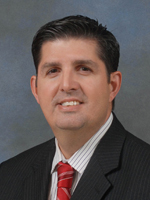
Rep. Manny Diaz Jr.
Florida's charter school sector, first created in 1996, has grown into its late teens. Its maturity has policymakers contending with a new set of issues.
How can the state improve districts' oversight of charter schools without subjecting them to unwanted mandates? Is the next generation of teachers and school administrators being prepared for changes sweeping through education, from the rise of digital learning to the proliferation of options outside of traditional school districts? If educators want to launch a new charter school, where can they go to figure out how?
A key lawmaker wants his colleagues to consider creating a new think-tank like institution, housed in one of the state's universities, to study charter schools and the issues they face.
Rep. Manny Diaz, R-Hialeah, has scheduled the issue for discussion at Tuesday's meeting of the House Choice and Innovation Subcommittee, which he chairs.
The idea, he said in an interview, is to create an independent resource, housed in an "academic environment" outside the state's system of K-12 education governance.
Universities in other states, like Michigan and Colorado, have created charter school institutes or centers. But those institutions are primarily authorizers of charter schools — a function that, in Florida, is largely reserved for school districts.

