 Jim Saunders, News Service of Florida
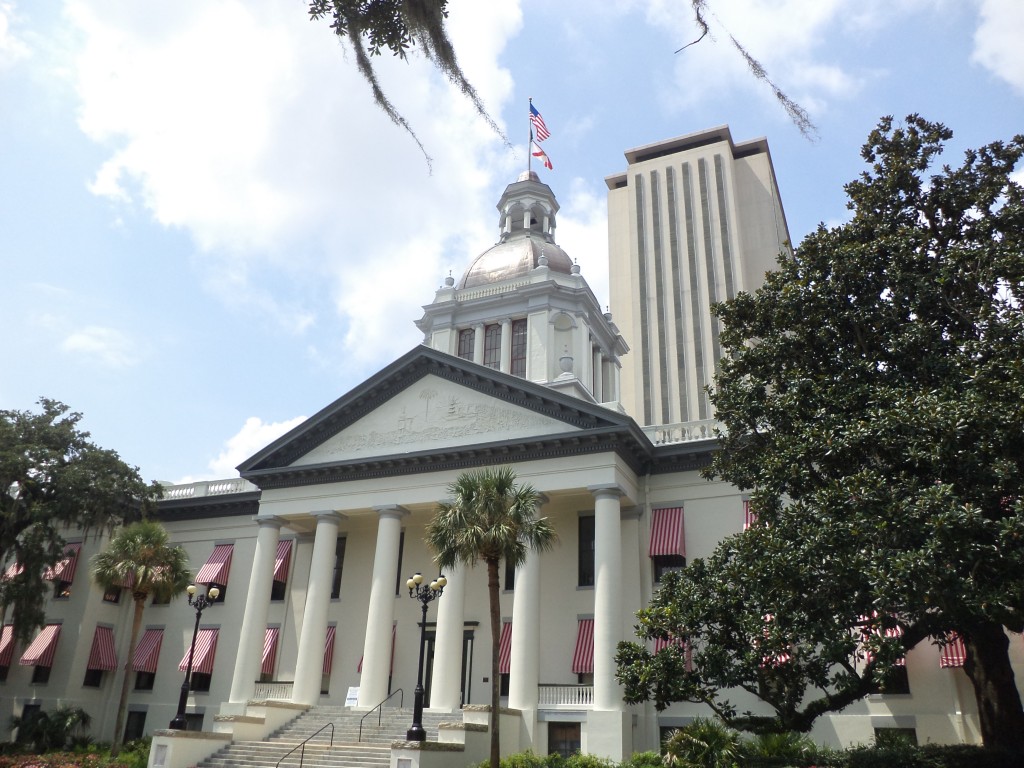
TALLAHASSEE --- Rejecting arguments of numerous school boards across the state, an appeals court Thursday upheld the constitutionality of a controversial 2017 law that sought to bolster charter schools.
A three-judge panel of the 1st District Court of Appeal backed a decision by a Leon County circuit judge, who turned down arguments that the mammoth education law improperly infringed on the rights of school boards to operate their districts.
The law, known in education circles by the shorthand HB 7069, was a priority of then-House Speaker Richard Corcoran, a Land O’ Lakes Republican who now serves as state education commissioner. Corcoran and other school-choice supporters used the measure to try to direct additional money to charter schools and to authorize “schools of hope,” a new type of charter school aimed at areas where children have been served by low-performing traditional public schools.
School boards challenged the constitutionality of the law in two lawsuits, which were consolidated into one case. They argued the law gave too much power to the state and violated part of the Florida Constitution about local operation of schools.
But Thursday’s 22-page ruling said school boards did not have legal standing to challenge some parts of the law, including the part establishing schools of hope. It cited court precedents and a legal doctrine that effectively limits the ability of public officials to challenge the constitutionality of state laws.
“The school boards’ constitutional challenge to HB 7069’s provisions represents their disagreement with new statutory duties enacted by the Legislature,” said the ruling, written by Judge Joseph Lewis and joined by judges Timothy Osterhaus and M. Kemmerly Thomas. “As the foregoing authority makes clear, however, the school boards must presume that the provisions at issue are constitutional.”
The ruling said the school boards had legal standing to challenge two parts of the law --- but it rejected the boards’ claims that those parts were unconstitutional.
Those issues dealt with a move by the Legislature to provide more building funds and federal Title I money to charter schools. The building funds involved money raised through local property taxes for capital-improvement projects, while the Title I program provides money to schools that serve large numbers of low-income students.
In a brief filed last year, attorneys for 10 school boards said the parts of the law dealing with building funds and Title I money “remove significant spending decisions from local school boards.”
“A school board that cannot determine how to best spend its tax revenues no longer has the power to operate, control, and supervise its schools,” said the brief, filed on behalf of the school boards in Alachua, Bay, Broward, Hamilton, Lee, Orange, Pinellas, Polk, St. Lucie and Volusia counties.
But the appeals court, in upholding last year’s decision by Leon County Circuit Judge John Cooper, pointed, in part, to a constitutional requirement that the state make “adequate provision” for public schools. Charter schools are public schools, though they are typically run by private operators.
“While charter schools are statutorily considered to be public schools, the reality is that they do compete with the traditional public schools in their districts. … Given such, the state’s constitutional duty to make adequate provision for Florida’s public schools must be interpreted to mean that the state has a duty to ensure that charter schools are not neglected by the school boards,” Lewis wrote in part of the ruling dealing with the building funds. “By requiring that charter schools receive a certain portion of capital millage funds, the state is not violating” the Constitution and is carrying out the purpose of the adequate-provision requirement.
Similarly, the appeals court pointed to the adequate-provision issue in upholding the part of the law dealing with Title I money.
“The school boards contend that prior to the enactment of HB 7069, they could use a portion of the Title I funds to fund district-wide programs, such as summer school, after-hours programs, district-wide science and technology initiatives, or a transportation system to ensure that low-income students could take advantage of the programs,” the ruling said. “They claim that the foregoing provision (in the law) unconstitutionally divested them of their right to decide how to spend federal Title I funds. In rejecting this claim, the trial court correctly recognized that the school boards do not have any constitutional right to federal Title I funds. Moreover, as is the case with capital millage, we find that the Title I issue is governed by the state’s constitutional authority … to ensure the adequate provision of education for all children in Florida. Ensuring that students in charter schools receive the federal funds that they are entitled to without relying upon the school boards’ discretion on how to allocate those funds does not violate Florida’s Constitution.”
The 10 school boards were plaintiffs in one of the lawsuits, while the Collier County School Board filed the other.
 Florida Gov. Ron DeSantis has vetoed just over $1.35 million in funding that would have gone to several charter schools around the state, including Academy at the Farm in Pasco County and Somerset Academy in Jefferson County.
The cuts were part of the $131 million in appropriations the governor excised from the $90.9 billion budget for the 2019-20 fiscal year, which begins Monday.
The governor’s office did not respond to a request for comment.
The veto disappointed Ray Polk, principal at Academy at the Farm. The K-8 school had requested $650,000 to fund infrastructure improvements and plans to expand to begin serving high school students in 2020-21.
Polk said a Tampa corporation would have matched up to $500,000 of the $2.5 million project, which includes modular classrooms. The school currently serves 588 students, but there is a waiting list of about 1,500.
“They’re building $85 million high schools. Compared to that, our request was just a drop in the bucket,” Polk said. “I’ll try again next year.”
DeSantis vetoed $200,000 that Somerset Academy had requested for improvements to an aging bus fleet that is non-compliant with state student transportation standards. All students in the district qualify for free- or reduced-price meals, and many families in the area just east of Tallahassee do not have their own transportation.
Somerset Academy made history in 2017 when the local school board unanimously voted to allow the South Florida-based charter operator to take over the district. Somerset Principal Cory Oliver could not be reached for comment.
Other vetoes included $500,000 to Lake Wales Charter Schools in Polk County, which was to be used for Hurricane Irma relief; and $75,000 to the Florida Charter Support Unit, a state program that helps guide new charter schools.
By Keith Jacobs
Keith Jacobs
The most polarizing aspect of the traditional public school system is that students encounter extensive and troubling variations in their school experience based on their socioeconomic or minority status. This aspect has for decades produced discriminatory practices.
Minorities and low-income families, for whom education is the link to success and escape from generational poverty, have suffered the consequences of a system that does not understand, nor adjust to, their needs. Nationwide, an achievement gap between advantaged and disadvantaged students has persisted for nearly 50 years.
So, what role should the government play in ensuring that these rights are restored to all children?
It took federal government intervention in the case of the Little Rock Nine and Brown v. Board of Education to combat discriminatory practices, such as Jim Crow and the concept of separate but equal, which were established by state and local governments. The government had a duty to ensure the equitable rights of all students regarding their education. At the time, these interventions were considered unpopular and brazen, but as we review the historical context, we revere the pioneers who had the gumption to stand up for what was right.
As we survey the education landscape, we hear our leaders say they want all children to receive a first-class, free public education that will prepare them for college or a career. Unfortunately, the current system neglects the specific needs of minority and low-income students while also failing to ensure equity of resources, standards and support across all schools.
In my experience, I was repeatedly told that a student’s ability to compute would lead him or her to a higher-paying job and ultimate success. This line of thought has led many school districts to curtail their curriculum and limit career, technical and arts education. Escaping from low-income situations is far more complicated than our current system would acknowledge.
Students in low-income neighborhoods also typically need support to combat socioeconomic deficiencies such as insufficient sleep, poor nutrition and inadequate clothing. These students are prone to physical and cognitive consequences that can lead to despair and render them apathetic toward education. Educational choice options can be tailored to address these obstacles.
The innovative response to this problem has been to create choice options that allow all students to receive an education that is best suited for their specific needs. Charter schools provide a variety of important benefits, such as innovation and specialization. But they remain controversial because choice opponents believe charter schools compete with, and remove funds from, traditional public schools. Such erroneous thinking has resulted in widespread discrimination toward families who exercise choice by attending charter schools. These families deserve the same rights and protections from the government as any other group.
Florida is at a unique crossroads. Choice opponents have been focused on funding for traditional public schools, standards and accountability, but have paid insufficient attention to equity learning for all students. This leads to discriminatory practices – such as restricting access to necessary funding -- toward charter schools, two-thirds of whose students are black or Hispanic. State lawmakers can end these practices by ensuring that charters receive their fair share of revenues from tax referendums.
As President Dwight D. Eisenhower demonstrated in 1957 with the Little Rock Nine, and as Lyndon B. Johnson demonstrated with the Civil Rights Act of 1964, Florida’s state government is obligated to recognize and eradicate any practices that discriminate against students.
Eisenhower famously said, “A people that values its privileges above its principles soon loses both.” This sentiment is just as relevant today. How often have we heard charter opponents berate the merits of a bill strictly because it varies from the established system – a system that has failed to meet the individual needs of the families who need it most? As opponents continue to fight over which system is best, the students lose.
Education choice is the social justice issue of our time, and Florida officials need to consider how they want history to remember them. Just as Eisenhower is lauded today for sending the Arkansas National Guard to Little Rock, Florida officials can be revered tomorrow for passing a landmark bill that establishes equity for all students.
It’s up to those lawmakers to decide if they want to continue to propagate inequitable systems that will prolong and exacerbate the achievement gap. Before they vote, they need only look to our history.
By Keith Jacobs
 As both an educator and a parent, my wish this holiday season centers around an essential building block for ramping up success for low-income and minority students – equitable funding for educational choice.
Funding is often the centerpiece in debates on the quality of the educational experience. What is missing from this debate are the implicit biases that negatively impact families who benefit from educational choice. These families are rarely, if ever, adequately represented in these discussions. What is also missing are basic facts about the degree to which choice options are funded.
Quality education has always been afforded to families who have influence and resources. But what if these resources were distributed equitably to ensure that ALL students had an opportunity to quality education that meets their individual needs? While this is not a novel concept, it is often overlooked by pundits who contend the only way to success is through traditional public education.

What is missing from this equation is that low-income and minority families are often neglected in the “traditional” educational experience. Instead, they are forced to adjust to mainstream norms while contending with poor health, inadequate housing, accelerated crime rates, single-parent families and even substance abuse. Imagine if these students all had access to high-performing charter schools (or other non-district schools of choice). Imagine if those schools received the same level of funding as their district counterparts.
For all kinds of reasons, more and more parents are electing for their children to attend schools of choice. More equitable funding will allow those schools to invest even more in innovative technology and quality professional development. It will allow them to attract and retain even more well-qualified teachers, and continue to build on their academic successes. The evidence with test scores and college enrollment suggests schools of choice are already getting better outcomes with fewer resources. Imagine what they can achieve with more equity in funding.
In a season when we look to help those in need, marvel at the innocence of youth and generally praise the decency of humanity, it is time to put our children above politics. I wish for equitable funding so every child, regardless of socioeconomic status, has an equal opportunity to be successful in the educational system that meets their individual needs. After all, this is the season of giving!
Keith Jacobs is manager of the Charter School Initiative for Step Up for Students.
Editor’s Note: This is the seventh in a series of posts where various members of the education choice world share an #edchoice wish. For Friday’s post, CLICK HERE.
COMING WEDNESDAY: Greg Dolan of Catholic Education Partners wishes for private school leaders to get more involved in policy and legislative advocacy for education choice.

Researchers at the University of Arkansas quantified the funding for both traditional and charter schools in 14 U.S. cities.
Charter schools have become a popular choice for families seeking alternative ways to educate their children. In 2017-18, more than 7,000 charter schools in the United States enrolled nearly 3.2 million students, an increase of 5 percent over the previous year.
Even though charters are public schools, they have been consistently underfunded compared to their traditional public school counterparts. A new study released this week offers a fresh look at this ongoing – and in some cases, increasing – inequity.
Researchers at the University of Arkansas, led by Corey A. DeAngelis of the Cato Institute and Patrick J. Wolf of the university’s Department of Education Reform, quantified the funding for traditional schools and charters schools in 14 U.S. cities: Atlanta, Boston, Camden, Denver, Houston, Indianapolis, Little Rock, Los Angeles, Memphis, New York City, Oakland, San Antonio, Tulsa, and Washington, D.C. (The authors also studied New Orleans but disaggregated it because of its unique situation. After Hurricane Katrina devastated the city in 2005, most of its public schools were turned into charters and were funded in part by federal emergency aid, making New Orleans an extreme outlier.)
Using figures from 2015-16, the school year with the most recent and reliable data, they found that on average, students in charter schools obtained about $8,000 less in local public funding per pupil than those in traditional public schools, a discrepancy of 74 percent. Charters in six cities – Boston, Houston, Indianapolis, Little Rock, San Antonio, and Tulsa – received not one cent from their local districts.
Only some states were willing to make up the difference. On average, traditional schools received $385, or about 4 percent, more state-level per-pupil funding than charter schools in the same location. Funding gaps were diminished substantially, but not eliminated, by state funding in Houston, Boston, and Denver, where charters received over twice as much state funding per pupil as traditional schools. Meanwhile, state-level education funding actually expanded the charter school funding gap in seven of the cities analyzed.
The funding gap may ebb and flow, but it persists.
A common complaint about such comparisons is that they don’t account for the fact that traditional public schools usually have a higher number of special education students requiring additional dollars. However, the Arkansas study addressed that, and found that differences in the rates of enrolling students with special needs fully explained the charter school funding gap in only one city: Boston, where charters gained a modest per-pupil advantage after accounting for special ed expenditures.
For the other 13 cities analyzed, accounting for the differences in funding for students with special educational needs still left unexplained gaps that favor traditional schools.
The solution is obvious: Equalize funding. The study’s authors recommend that states adopt weighted funding formulas that account for student characteristics, such as special needs, low-income, English Language Learner, and rural location, “and then funnel 100 percent of public school funding through that formula, regardless of whether the school the student is attending is a public charter or a traditional public school.”
All that requires is political will, which is like saying all you must do to fit into your old pair of pants is to lose weight. Funding gaps are nothing compared to the Grand Canyon that is the political divide on education choice.
And yet, a couple of states have made progress in balancing the scales.
Florida boasts the nation’s third-largest charter sector, with nearly 300,000 students enrolled in more than 650 charter schools. Nevertheless, they have suffered from the same funding inequities. Taxpayers spent $10,308 per pupil in traditional district schools in 2015-16, according to a 2017 report by Florida Tax Watch. By contrast, charter schools received only $7,307 per pupil, or 71 percent of district spending.
In 2017, the Legislature sought to narrow that gap by passing HB 7069, which requires school districts to share a portion of their capital dollars with charters.
The same year, Colorado similarly passed a law that requires districts to share certain property tax revenues with charter schools.
Studies such as the latest one from DeAngelis, Wolf, et al. should make it harder for public officials to ignore the funding inequities in the public education system. Their constituents who embrace charter schools should demand they pay attention – and restore a proper balance.
Charter schools across Florida are hoping lawmakers will allow them greater access to the Aaron Feis Guardian Program, established after the Parkland massacre, to be able to comply with the state’s new campus safety mandates.
Florida charter school officials struggling to comply with the state’s new campus safety mandates are hoping lawmakers can help: Expand access to the Coach Aaron Feis Guardian Program by requiring all county sheriffs to participate in training armed school personnel.
After the Parkland shooting in February, Gov. Rick Scott signed into law legislation increasing security measures at schools. The Marjory Stoneman Douglas High School Public Safety Act requires all public schools to hire a school resource officer (SRO), a sheriff’s deputy or trained employee to carry a gun on campus.
However, many charter schools (which receive less in revenue than traditional public schools, according to a study from Florida TaxWatch) can’t afford SROs. Finances are not the only obstacle. In many areas, there simply are not enough officers to meet the needs at each school.
The law created a cheaper alternative to SROs: the Guardian program, named after the Stoneman Douglas coach who died protecting students. It provides law enforcement training to public school staffers, excluding teachers, who want to carry a gun on campus. Both the school districts and the sheriff’s offices must agree to participate in the program.
So far, though, only 25 out of 67 school districts are participating in the Guardian program, according to the Florida Department of Education, despite the fact the state appropriated $67 million to fund it.
Lynn Norman-Teck, executive director of the Florida Charter School Alliance, said her organization would like to see all the sheriff’s offices participating in the Guardian program.
“This would help all schools – whether charter or district-run -- to comply with the state mandate,” she said. “We need to make sure there are personnel available to hire for the security positions on campuses,”
Senator-elect Manny Diaz, R-Hialeah, said he believes charter schools should be afforded greater opportunity to participate in the Guardian program.
He suggested one solution would be allowing personnel to be trained in other counties that have a Guardian program.
“That would probably be the best compromise where we are not forcing a sheriff to have a program,” he said. “I don’t see a reason we couldn’t have a Guardian certification program statewide.”
Osvaldo Garcia is principal at Passport Charter School in Orange County, where the school board chose not to participate in the Guardian program. He said he is not able to afford a full-time SRO at a cost of $50 an hour when the school was given only a little over $9,000 to hire one.
As a result, Garcia is sharing an SRO with 13 other schools, meaning the officer is not at the school on a full-time basis.
“If we had (an officer) on a daily basis it would be a struggle for us,” Garcia said of the costs of affording such a position. He said 41 other charter schools in Orange County are encountering similar issues.
Garcia said the Guardian program could help alleviate his situation, but that he also had concerns.
“How prepared are these people legitimately to have a handle on a difficult situation?” he asked. “They are not trained police officers who go through so many hours of training.”
Meanwhile, in Duval County, the sheriff’s office and school district are participating in the Guardian program.
Even so, Simaran Bakshi, principal at Wayman Academy of the Arts, a charter school serving 281 students in Jacksonville, said she is finding it difficult to find employees who are interested in applying for the program.
With the program requiring 170 hours of training, staff is expected to be absent a month, which is also a burden, she added.
Bakshi said she currently has an SRO at the school based on an affordable rate negotiated between the school district and sheriff’s office. But that rate will soon expire, leaving her paying more than $35 an hour for an SRO -- an amount she can’t afford.
Ralph Arza, director of government relations for the Florida Charter School Alliance, said while it seems unlikely lawmakers will change the law to mandate sheriff’s offices participate in the program, there could be another compromise.
He said if charter schools could hire a trained, licensed armed guard, which is not applicable under the law, that could provide an affordable option.
All across Florida, voters chose to raise their own taxes to pump more money into their local schools. Some districts will share that money with charters, some won't, and questions still remain yet in others.
As voters in eight Florida counties Tuesday approved extra taxes for public schools, charter school officials aren’t sure whether any of that money will be shared with charters.
Four of the counties – Alachua, Lee, Miami-Dade and Palm Beach – made formal decisions prior to the election not to share the revenue from tax increases with charter schools. Three others – Charlotte, Hillsborough and Polk – say they intend to share some portions. The eighth county, Martin, could not be reached for comment.
Charter officials say they are troubled by the decisions because they believe charters, as public schools, should also be allowed to receive some of the funding. They also worry that proposed salary increases at traditional public schools will make it harder for them to compete for the best teachers.
“It is hard to believe that charter schools have been a part of Florida’s K-12 public education system for over 20 years,” said Lynn Norman-Teck, executive director of the Florida Charter School Alliance. “Yet, we are not seen as a partner by some districts but as the other. It is clear when you look at the tax referendum language, they don’t see us as partners even though we are here working hand and hand with them to raise the bar in Florida, especially among minority students.” (more…)

In response to overcrowding concerns, the Lake County School Board approved a new charter school, Seven Lakes Preparatory Academy, in Clermont. After some advocacy by residents, the city council finalized the plans.
Tuesday night, city council members in the beautiful Central Florida town of Clermont had to decide whether to put children’s needs ahead of adults’ needs. We were told beforehand it wasn’t looking good.
For a few months, dozens of parents had attended information nights, sponsored by Florida Parent Network and run by Keith Jacobs, our manager of charter school initiatives. During these sessions, parents discussed their need for more educational options in fast-growing Lake County.
They talked about overcrowded classrooms, portables that smelled of mold and mildew, lunches scheduled at 10 a.m. because the sheer number of students required staggered, and far too early, breaks.
Parents told us about the lack of one-on-one attention their children were receiving and the low grades and behavior problems that were reported as a result.
Something had to be done. (more…)

Absent a crystal ball, government at all levels will have to be nimble and flexible in accommodating new ideas when it comes to school choice.
The Florida Supreme Court may have struck down a proposed education amendment to the state’s constitution, but the issue the measure raised can’t be easily dismissed.
In a 4-3 decision, the court last week removed from the November ballot Amendment 8, which would have given the state the authority to establish and operate public schools, bypassing local school districts. The four justices affirmed a lower-court ruling that the amendment’s language was misleading because it “fails to inform voters of the chief purpose and effect” of the measure.
Although Amendment 8, which was placed on the ballot by Florida’s Constitution Revision Commission, bundled three different education-related proposals into one ballot item, opponents objected to the part that would permit the state “to operate, control, and supervise public schools not established by the school board." Critics argued that the vagueness of that statement was meant to obscure its real purpose: to transfer the power to create charter schools from local school districts, where they often encounter opposition, to the state, which has been more receptive of charters. (more…)
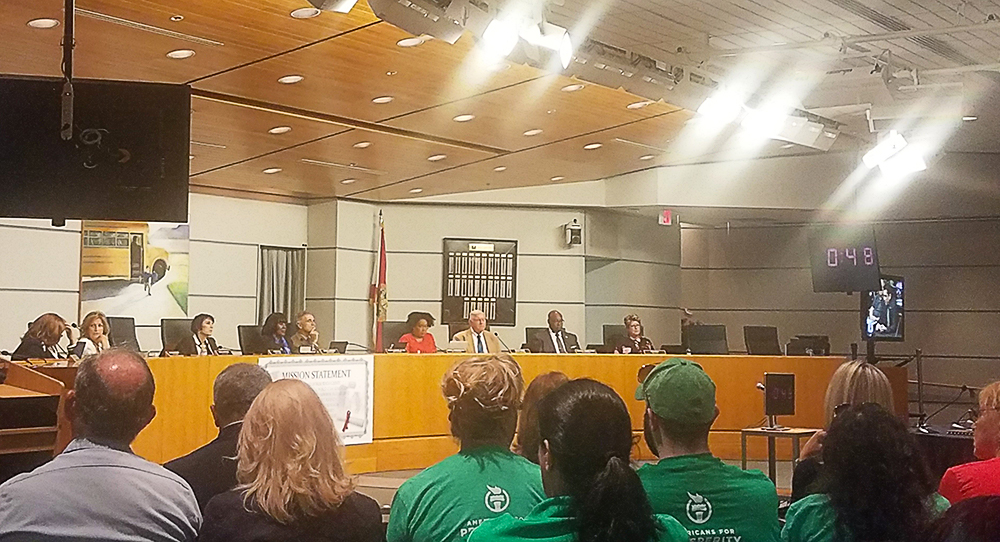
The Palm Beach School Board voted Wednesday to file an appeal challenging the Florida Board of Education's decision to overturn the board's rejection of two charter applications.
A School Board in South Florida is headed back to court, again, in its attempt to prevent two new charter schools from opening.
The Palm Beach School Board, which has been in litigation on these charter schools since 2015, voted unanimously and without debate on Wednesday to file another appeal to the Fourth District Court of Appeal. This time, it is challenging the Florida Board of Education’s decision this summer to overturn the district’s rejection of South Palm Beach Charter and Renaissance Charter High School applications.
The State Board followed the recommendation of the state Charter School Appeal Commission, which reviewed the case and decided on June 13 that the School Board did not have good cause to reject the applications.
Palm Beach previously argued that it has the right to reject the Renaissance application based on the school’s proposed budget, because the budget provides lower salaries for teachers than is offered in the district. In rejecting the South Palm Beach application, Palm Beach argued the school failed to meet the statutory requirements for using a strong innovation model.
This is not the first time the School Board has been at odds with the state board. In 2017, Palm Beach challenged the authority of the State Board to reverse School Board denials of charter applications. But the Florida Supreme Court tossed out the case.
The legal history goes further. When the School Board first challenged the opening of the South Palm Beach Charter in January 2015, the State Board overturned the decision. Then, the School Board appealed the decision to the Fourth District Court of Appeal, which ruled at the time that the State Board must hear the case again. The legal fight to keep Renaissance Charter out of Palm Beach also followed the same pathway through the court system.
The School Board’s decision Wednesday came one month after the board voted for a proposed tax referendum expected to generate $200 million for traditional public schools – and explicitly decided that none of the money could be used for charter schools.

