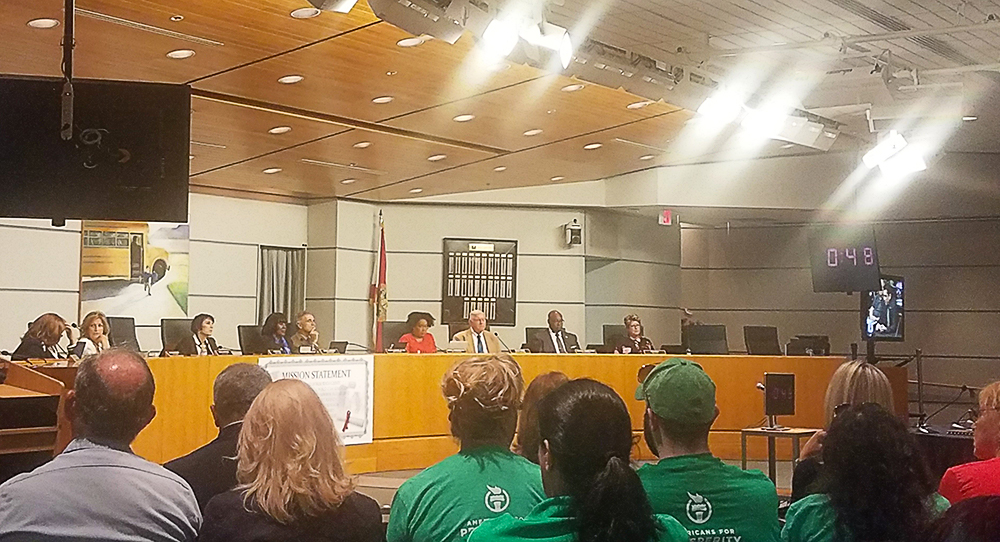
The Palm Beach County School Board unanimously votes to put a tax referendum on the ballot, leaving out charters.
The Palm Beach County School Board voted unanimously Wednesday night for a proposed tax referendum expected to generate approximately $200 million a year for traditional public schools – and none for charter schools.
The decision followed a hearing attended by roughly 20 charter school parents, teachers and leaders who argued that charter schools should be entitled to their fair share of the tax money. (more…)
Private philanthropy can’t seem to close the funding gap between district schools and charter schools. Although charter schools as a whole raise more per-pupil from private donations than district schools, the amount may just be, as a new study from the University of Arkansas puts it, “Buckets of Water into the Ocean.”
Private donations to large charter organizations have "generated a widespread perception that charter schools receive large amounts of revenue from philanthropic giving,” the researchers write. But how does that perception square with reality?
Last year the same authors examined the broader funding gap, finding that district schools received substantially less money per student in 2011. See more on that report, and some criticisms of it, here.
The new study looks at data from 15 states, and finds private donations help charters make up some of the shortfall, bringing in an average of $246 more per student than traditional public schools received from philanthropy.
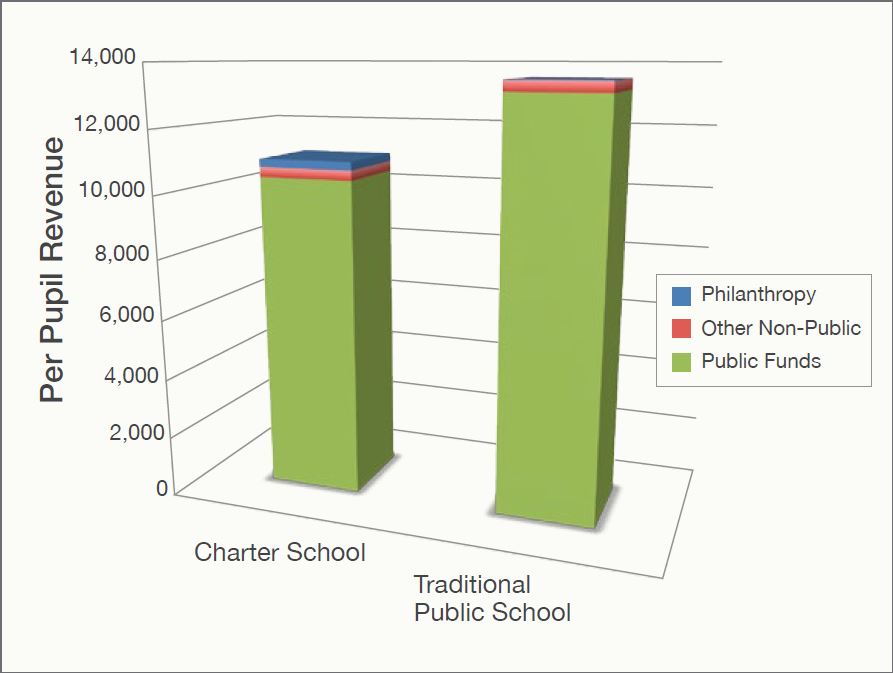
Per Pupil Revenue funding gap between charter and district schools - University of Arkansas
Still, the report shows, while they are more important to charters than traditional schools, philanthropic donations still make up a fairly small portion (about 2.5 percent) of overall school funding.
“The discussion of charter school philanthropy is not exactly much ado about nothing,” write the researchers, “but it is much ado about surprisingly little.” (more…)
Not surprisingly, leaders from some of Florida’s largest school districts lined up last week against a proposed state House bill that would make it easier for charter schools to open. What was unexpected, though, was one superintendent breaking from the herd.
Superintendent Robert Runcie
Broward County’s Robert Runcie not only supported the measure, he made a plea for everyone to work together.
“We need to move to an era where there is true collaboration going on between school districts and charter schools,’’ Runcie told the Florida House Choice & Innovation Subcommittee. “It’s the only way that we’re ever really going to fulfill the promise of providing every student and providing every school with the type of quality education that they need.’’
Runcie’s comments are noteworthy for all kinds of reasons. The 260,000-student Broward County school district is the second biggest in Florida and the sixth biggest in the nation. Florida, a leading charter state, is experiencing great tension – even animosity – between school districts and charters. And this particular legislative meeting was yet another example, with one lawmaker, Rep. Kionne McGhee, D-Miami, describing the charter school bill as the “wrecking ball of traditional public education.’’
For Runcie, the comments are also part of an emerging pattern.
Last summer, the Harvard graduate and former Chicago Public Schools administrator helped lead a statewide task force of district and charter school administrators. Their objective: to help the Florida Department of Education develop language that both sides can agree upon for the state’s new standard charter school contracts.
While that’s still a work in progress, Runcie most recently stepped up to show equal support for charter school teachers in Broward by agreeing not to withhold an administrative fee from their pay raises.
The money is part of a statewide $480 million allotment for teacher pay hailed by Gov. Rick Scott and approved last session. By law, districts can charge charter schools a 5 percent fee for processing funds that come from the Florida Education Finance Program. In Broward, that fee on the dollars earmarked for charter school teacher raises added up to about $11,000, said Robert Haag, president of the Florida Consortium of Public Charter Schools, which made the request.
Runcie not only complied, Haag said, but approved back pay for charter school teachers from July 1, when the raises went into effect.
“That was incredible,’’ Haag told redefinED, adding that he believes Runcie’s gesture will serve as a catalyst for other district leaders. “Listen, we don’t care if they keep 5 percent from our schools. But withholding 5 percent from our teachers? We can’t do that!’’
Charter schools: Three Broward County charter schools could owe the state as much as $1.5 million for failing to provide sufficient instructional hours and receiving funds for ineligible students, and the district is worried it may get stuck with the bill. Sun Sentinel. More from the Miami Herald.
Faith-based schools: The University of Notre Dame and the Alliance for Catholic Education park their national tour bus at Sacred Heart in Pinellas Park to promote Catholic schools. redefinED.
 Better Ed: Let's remove the hurdles, reduce the bureaucracy, and empower teachers with the resources and autonomy to allow them to do their jobs, writes former Florida Sen. Paula Dockery for The Ledger. Florida students of all races Continue to meet higher standards in education. Sunshine State News.
Common Core: Florida Parents Against Common Core co-founder Laura Zorc says she is undaunted by the Florida State Board of Education’s vote pushing forward the Common Core State Standards and will continue to fight to stop implementation of the new measures. TC Palm. An Orlando mom explains why Florida's testing policy needs to change. StateImpact Florida.
School boards: Palm Beach County School Board members warn the superintendent that if he doesn't hire a chief of staff soon - they will. Palm Beach Post. Charles Brink, the businessman-turned-education advocate, is not running for the Hillsborough County School Board after all. Tampa Bay Times.
School spending: The Manatee County School District Audit Committee calls the internal information technology department "outdated and inflexible." Bradenton Herald. Rising prescription drug costs and coverage plans for retirees may add up to higher health insurance costs for Pinellas County school employees next year. The Tampa Tribune.
Teachers: Hillsborough County's top teacher of the year finalists welcome the challenges of modern education. The Tampa Tribune.
Bullying: Harlem Globetrotter Shane “Scooter” Christensen talks to Pensacola elementary students about bullying and its impact on schools. Pensacola News-Journal.
Conduct: The Broward School Board dismisses its complaint against a Weston teacher accused of sleeping at his desk after an administrative law judge says it's impossible to prove the educator dozed off. Sun Sentinel.
Charter schools: The Franklin Academy charter school is opening a second campus next fall in Palm Beach Gardens. Palm Beach Post. The Leon County School district could soon be running a charter school on one of its existing campuses. Tallahassee Democrat. Lee County school officials are seeking $99,793 from Richard Milburn Academy of Florida Inc., which ran three charter high schools until closing for financial reasons. Fort Myers News-Press. Woodmont Charter School, an F-rated elementary and middle school run by Charter Schools USA, is advertising on television for more students - but not mentioning its state grade. Tampa Bay Times. A Pasco charter school approval may hit some snags. Tampa Bay Times.
Gender specific: Hoping to score public funding to create single-gender schools, Duval County's superintendent gives Rep. Erik Fresen, chairman of the House Education Appropriations Subcommittee, a tour of a local middle school with classes that separate boys and girls. Florida Times-Union.
Private schools: Tampa's Berkeley Prep plans to build a 75,000-square-foot arts and sciences center that will feature classrooms equipped with the latest technology, college-level laboratories and performance studios, as well as an art gallery, study areas, a recital hall and meeting spaces. The Tampa Tribune.
District schools: Pinellas County public schools are closer to securing a Bill and Melinda Gates Foundation grant that Superintendent Michael Grego says would “totally transform the school district.” The Tampa Tribune. A Pinellas County "turnaround'' school takes its best shot at academic success. Tampa Bay Times.
Charlie Crist: An opinion on charter-school funding by then-Republican Attorney General Charlie Crist is at odds with a portion of the Democratic base whose help he now needs to become the next governor. Florida Times-Union.
 Arizona: A charter school must repay $4.7 million in fees due to an inflated full-time enrollment count (Arizona Daily Sun). Charter schools are seeking $135 million in additional funding because they receive $1,100 per pupil less than traditional district schools (Arizona Daily Sun).
Florida: A state senator wants to restrict charter schools to specialized areas not currently served by district schools (The Florida Current). Charter schools learn to work with new transparency and open records rules (Daytona Beach News Journal). Homeschool students registered with private schools face fewer regulations ( WFSU). Florida has the third highest number of for-profit charter schools in the U.S. (Tampa Bay Times).
Georgia: Parents in Fulton County want school choice (Atlanta Journal-Constitution). The state isn't monitoring how charter schools spend public funds (Associated Press).
Louisiana: The state and U.S. Department of Justice must come up with an agreement to monitor the voucher program within 60 days (Heartlander). School choice wins, sort of, after DOJ changes its lawsuit to ask the court to approve transparency policies over the program (Huffington Post, Washington Times, The Christian Post, The Advocate). Forty-five percent of the students in Louisiana's voucher program attend a private school that is rated D or F (Times-Picayune).
Indiana: Charter schools in Indianapolis, thanks to the help of the mayor, will expand and grow next year (Chalk Beat). Indiana experienced a five-fold increase in vouchers and some schools now enroll a majority of voucher students (WNDU). A school board member in New Castle asks "who is profiting from vilifying" public schools (Courier Times)?
Massachusetts: A Catholic private school must raise $500,000 by June 2014 or the school will be shut down due to dwindling enrollment and rising costs (CBS Boston). (more…)
It’s early in the process, so early that Kristoffer Haines of Rocketship Education hesitates to share too much about the charter school network’s potential to come to the Sunshine State.
 Yes, Rocketship recently won a $100,000 grant from the Florida Charter School Growth Fund, a partnership that philanthropists and education leaders created to help lure high-impact charter operators to the state. Yes, the California-based chain is looking at the Miami-Dade school district as the site of one of eight possible schools in Florida.
“But it’s mostly been exploratory in nature for us,’’ the senior vice president of growth and development told redefinED recently. “We’re really doing work on the front end trying to engage the community and understand what the needs are, who the providers are.’’
That’s a trademark move for Rocketship, a high-performing K-5 charter school network devoted to closing the achievement gap for low-income students. The concept started in San Jose, Calif., where there are eight schools. This year, the network expanded to Milwaukee, with one school that opened in August. Another school is set to open next fall in Nashville, and Rocketship is working with communities for possibly more schools in Indianapolis, Memphis, Washington, D.C., and New Orleans.
And, maybe, Florida.
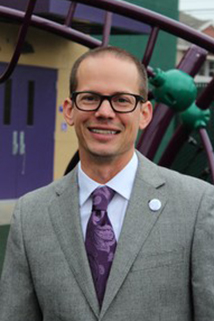
Kristoffer Haines
“It’s incredibly, incredibly early in the process,’’ Haines said.
State education leaders had hoped such a move would happen sooner, after ponying up $20 million of Florida’s Race To The Top funds and signing on with the Colorado-based national Charter School Growth Fund to start a grants competition in 2011. The goal was to award dollars to the Rocketships, KIPPs, Yes Prep Academies and other successful national chains wanting to set up shop in the poorest neighborhoods. So far, most of the recipients have been home-grown charter operators – a few with a lot of promise, but little experience running a school.
Haines said Rocketship, which combines high-quality teachers with a personalized learning approach and strong parent-engagement focus, has always been interested in Florida. “We like working with states that are progressive, thinking outside the box,’’ he said. (more…)

Despite the charge of uneven playing fields, it's charter schools and tax credit scholarships that face the greatest financial imbalances in Florida education.
With Florida now spending less per student than it did six years ago and less than at least three-fourths of the states, there is plausible case to be made for giving public education a raise. But Kathleen McGrory’s recent story on the status of a 2009 education adequacy lawsuit is a reminder that fiscal beauty is often in the eye of the beholder.
Let’s parse two of the claims in the suit:
The state is not putting up its fair share. In Florida, K-12 public education is funded by a combination of local and state taxes under a formula known as the Florida Education Finance Program. The complaint, filed four years ago, noted the state portion had dropped from 62 to 44 percent over the previous nine years. But that dramatic trend has made a similarly dramatic turn. This year, the state portion is back up to 57 percent – 58 percent if you count the state money spent on a scholarship for low-income students. This should ostensibly satisfy one of the major claims in the lawsuit. But the plaintiffs, which include Citizens for Strong Schools and Fund Education Now, are not likely be satisfied. The reason is the amount spent per student has remained basically unchanged – $6,873 in 2009-10 and $6,779 in 2013-14.
Charter schools and other options should be held to the same standards. It’s not entirely clear why a lawsuit aiming to enforce a constitutional provision requiring “adequate provision” for a “high quality” school system would take aim at learning options that are increasingly popular with Florida parents. But one of the attorneys, Neil Chonin, told McGrory that an important principle is at stake: “Our position is that there should be an even playing field.”
In a suit about financial resources, that’s a curious line to draw. (more…)
After a quiet start, a Race-To-The-Top-fueled effort to draw proven charter schools to Florida’s neediest communities is picking up steam.
The $30 million Florida Charter School Growth Fund, begun in 2011, has now doled out grants to seven schools for a total of $2.15 million. It also remains in the hunt for luring a nationally known network to the Sunshine State, recently awarding $100,000 to Rocketship Education to help it search for a new school in South Florida.
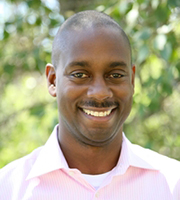
Darryl Cobb
Finding the right operators ready and able to set up shop in targeted areas takes time, said Darryl Cobb, a partner with the Colorado-based Charter School Growth Fund who leads the group’s Florida effort.
“It’s not as easy as waving a magic wand,’’ he said.
State education officials announced the Florida Charter School Growth Fund in late 2011. Florida kicked in $20 million from its Race To The Top award and the Charter School Growth Fund pledged another $10 million in private donations. (Its fund supporters include major education foundations like the Walton Family and Bill & Melinda Gates foundations.) The mission: Give grants to the best charter networks in the nation ready to open or expand schools in Florida’s poorest communities.
But organizers soon discovered many of those networks weren’t quite ready to expand to Florida, in part because of concerns about funding and authorizers. Strategy shifted to home-grown operators.
Youth Co-Op Preparatory Charter School, an A-rated K-8 school in Hialeah, was the first recipient. In November 2011, it got a $73,000 grant that went toward adding a high school. (Youth Co-Op received another grant for $250,000 in 2012). Since then, the fund has awarded grants to six more charter schools, including five from Florida.
More schools are on the way. The 5-year goal is to open 30 new high-performing charter schools that serve about 15,000 students a year in communities with persistently low achieving schools.
“Our hope is these operators will begin to transform the opportunities for students and families in these high-needs communities,’’ Cobb said. “We have to provide opportunities for them to succeed.’’
The process, though, hasn’t been without some tension, with some established charter networks in Florida complaining they have been left out.
“We’ve got amazing schools, but many of the operators don’t want to expand” to specific neighborhoods in need, said Adam Miller, director of Florida’s school choice office. “They’re perfectly content doing the amazing work their doing’’ and staying put.
The fund is open to any qualified operators willing to start or expand a school in those areas, Cobb said.
Common Core: "I completely agree with former Gov. Jeb Bush and U.S. Education Secretary Arne Duncan and bipartisan leaders across the country that the Common Core standards are simply better than what we have been relying on... '' writes Charlie Crist for the Tampa Bay Times. A Florida Insider Poll on the fate of Common Core finds 70 percent predict the new measures will stand, and 30 percent predict Florida will pull out three years after its implementation. The Buzz. The Polk County school district has been using Common Core State Standards in their lessons as well as the current Sunshine State Standards. The Ledger. And so has Sarasota County schools, says Superintendent Lori White. Sarasota Herald-Tribune. "They’ve been called everything from leftist indoctrination to another tool meant to debase teachers and public education,'' writes the Fort Myers News-Press, which takes a look at the new standards in Lee County.
PARCC: Education Week looks at who has the authority to withdraw from the testing consortium tied with Common Core State Standards, saying Gov. Scott can't do it alone.
Accountability: Tampa Bay Times columnist John Romano writes "The people who scream loudest about accountability in schools need to cool their jets for the next couple of years.''
Guns in schools: The Miami Herald spends three months investigating how much of a threat guns really pose to South Florida schools.
Achievement gap: Pinellas County schools Superintendent Mike Grego gives more details on a new plan to boost academic performance for black students. Tampa Bay Times.
School boards: Board members across the state will receive a more than 3 percent raise this year. That means pay for each board member in Broward and Palm Beach counties will increase to $42,455. Sun Sentinel. Hillsborough County School Board members April Griffin and Susan Valdes use Superintendent MaryEllen Elia's review to whine, posture and settle old scores, writes the Tampa Bay Times.

