California: The award-winning American Indian Model charter schools face closure after failing to fix problems with financial oversight that resulted in $3.8 million of questionable expenses (The Oakland Tribune).
Wisconsin: Three former state House speakers push for a voucher expansion (Associated Press). School choice options continue to grow with proponents pointing to achievement gains (WisconsinReporter).
Indiana: Ball State University pulls its sponsorship of seven struggling charter schools, likely ensuring their closure (Associated Press). School choice supporters press for an expansion of the state's voucher program (NWI.com).
Texas: A school choice proponent testifies that a tax credit scholarship program would save the state $2 billion a year (Houston Chronicle). More from San Antonio Express News. Waco-area school boards support a resolution opposing any publicly funded private school choice options for the state (Waco Tribune Herald).
Michigan: The legislative path for Gov. Rick Snyder's school choice expansion plans remain murky (MLive.com).
Tennessee: A school board member in Knox County tries unsuccessfully to convince his colleagues that private school vouchers are a good thing (Knoxnews.com). State lawmakers scrutinize Tennessee Virtual Academy, operated by K12 Inc., over poor test results (Tennessee Public Radio). Memphis charter schools are poised to grow - again (Memphis Business Journal). The NAACP pushes for more regulatory accountability for charter schools in the wake of complaints about one in Memphis (Memphis Commercial Appeal). Gov. Bill Haslam is expected to unveil his proposal for a limited statewide voucher in his State of the State speech tonight (News Channel 5).
New York: Twenty-four more Catholic schools in the state will close because they're not financially self-sufficient (New York Times). (more…)
Teacher pay. Gov. Rick Scott says he wants to set aside enough money in this year’s budget to give every district teacher a $2,500 raise. Coverage from Tampa Bay Times, South Florida Sun Sentinel, Naples Daily News, Sarasota Herald Tribune, Associated Press, Tallahassee Democrat, Pensacola News Journal. Politics and poll numbers are at play, the HT also writes. Teachers "suspicious," writes the Lakeland Ledger. Teachers "skeptical," writes the Tampa Tribune. Teachers unions "cautiously optimistic," writes the Florida Times Union.
 Marco Rubio. The senator tells an audience at the U.S. Chamber of Commerce that he’ll be pushing education reform, even if it’s not the sexiest issue: “The good news is it’s not partisan, the good news is it’s something that there’s broad support for," he said. "The bad news is because it’s not partisan. Because it’s not controversial, it’s not getting nearly enough attention as it needs to be getting." The Hill.
Tony Bennett and the Legislature. Gov. Scott cancels his appearance before the Senate Education Committee, but Tony Bennett talks to senators about voucher accountability, Common Core, SB 736, etc. Coverage from redefinED, SchoolZone (two posts here and here) Gradebook (two posts here and here), StateImpact Florida and the Associated Press.
Slow down. Florida superintendents want a longer timeline to implement a suite of changes, including new tests and teacher evaluations, reports the Fort Myers News Press.
Charter schools. A new study based on Florida data suggests charter schools might not be any better than district schools at showing low-performing teachers the door. Shanker Blog.
Teacher preparation. The National Council for Teacher Quality gives Florida a B- (the best grade it gave any state) for its teacher preparation policies. SchoolZone. Sherman Dorn critique here. (more…)
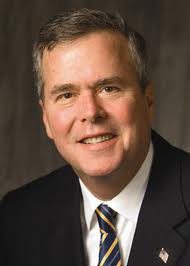 Jeb Bush on FCAT, Common Core, bipartisanship. He tells StateImpact Florida, “Education is one of the few places where you have left-right coalitions that are for reform and left-right coalitions that are against reform. It’s not as monolithic as other areas of policy.”
Orange school board considers more school choice. It’s considering a policy that would allow students at over-capacity schools to enroll at under-capacity schools, reports the Orlando Sentinel.
More on charter school funding. Orlando Sentinel.
Charter school teacher raises. Represented by the Broward Teachers Union, the charter school teachers in the Pembroke Pines system win a raise through arbitration, reports the South Florida Sun-Sentinel.
Proposed cut scores. For biology and geometry end of course exams and FCAT science. From Gradebook. From Sentinel.
FEA talks teacher evaluations today. From the News Service of Florida: Members of the Florida Education Association discuss impacts of the new teacher evaluation system that was created as a result of SB 736 setting up merit pay. FEA President Andy Ford and teachers participate.
Florida Board of Education openings. Two coming up, notes Gradebook.
When Florida and Mississippi schools were peas in a pod. Jackson Clarion-Ledger.

Welner
Tax credit scholarships in Chronicle of Philanthropy. (subscription required) The story leads with Step Up For Students and quotes “neovoucher” expert Kevin Welner: “He also argues that most states don't really know if they are saving money, since few have closely tracked how many students receiving scholarships would have gone to private schools without them.” Welner has raised this argument before, and it’s not the case in Florida, as redefinED has noted.
Charter school facilities funding. A state task force deadlocks on recommendations, reports the St. Augustine Record.
Charter school pay raises. Charter schools in Lake Wales look for ways to compensate their teachers, reports the News Chief.
F charter schools. Two in Escambia offer updates to the school board, reports the Pensacola News Journal.
Amendment 8 in the Washington Post. The amendment and its impact on vouchers is referenced, incorrectly, in a story on quality control issues with the D.C. voucher program. Here again is the real story.
 Who won the strike in Chicago?
Charter schools.
While the nation watched, story after story noted the obvious – that while 350,000 traditional public school students were displaced for more than a week, thousands of charter school students were in class. Even better, news coverage gave the general public a better idea of what charter schools really are.
“We were certainly disappointed that the strike happened, because I think it was a failure of adults to serve kids,” Stacy McAuliffe, chief operating officer of the Illinois Network of Charter Schools, said in the redefinED podcast below. But, she added, "I think it caused a lot of people to say, ‘Wait a minute. What are charter schools? A lot of people were asking, 'So wait, are they public schools?’ And it gave us a chance to really remind people yes, they’re public schools. They’re open enrollment. There’s no tuition. There’s no academic requirement. And yet, they’re open right now.”
Charter schools weren’t part of contract negotiations, but their rapid expansion in Chicago has stoked tensions between the district and teachers union. Charter enrollment has risen from about 20,000 in 2007 to 53,000 now. And the district is pushing for another 60 charters – up from 119 campuses now - in the next five years.
Still, the goal is quality, not quantity, McAuliffe said. She offered two definitions of success.
“One is, there’s a high quality seat for a child to sit in today at a charter school. And I think the charter movement is nimble and growing and can provide that in short order relative to a big bureaucracy like CPS,” she said. “The other is, that new models and innovations are being piloted and tried and demonstrated that then push the broader education sector to change.”
“Some of the policy issues that were on the table during the strike are things that the Chicago charter movement has been at the forefront of innovation on for a decade,” she continued. “So longer day, longer year, principal autonomy in hiring and firing, and teacher evaluations – all of those things are things that charters have been doing quietly for 10 or 15 years. And that have now broadened to be a part of the public education debate.”
McAuliffe also offered her take on why teachers, too, are increasingly choosing alternatives like charters instead of traditional public schools: “If you’re a teacher that wants to work in a place that’s a little more entrepreneurial, a little more where you have some room to grow in terms of, ‘I have an idea, I’d like to see it play out,’ charter schools are more fertile ground.”
 The number of instructional personnel in Florida charter schools more than doubled in the past five years and topped 10,000 for the first time last year, according to state data requested by redefinED.
Between the 2007-08 and 2011-12 school years, the number climbed from 4,900 to 10,707, the Florida Department of Education figures show. The vast majority are classroom teachers, but “instructional personnel” also include guidance counselors, media specialists, school psychologists and other professional staff.
The growth is more evidence of an underplayed dynamic in debates over school choice and education reform: Teachers, like parents, are increasingly choosing alternative educational options.
Florida is among the leading states in the number of charter schools and students enrolled in them. Since the 2007-08 school year, the number of charter schools in Florida has risen from 358 to 518; the number of students, from 105,239 to 179,940. Over the same period nationally, charter school enrollment grew from 1.3 million to more than 2 million, according to data from the National Alliance for Public Charter Schools.
The number of charter school teachers in Florida still pales in comparison to the number in traditional public schools. The number of instructional staff last year, in both the charter and traditional sectors, fell just shy of 190,000 last fall, according to DOE. That included 168,135 classroom teachers.
The Miami-Dade school district, the state’s biggest, had the most charter school teachers within its boundaries last year (2,085), followed by Broward (1,615), Polk (840), Palm Beach (710), Hillsborough (649) and Lee (631).
The number of online K-12 teachers is also growing fast in Florida. In the 2007-08 school year, Florida Virtual School had 424 full-time teachers. Last year, it had 1,175.
FVS began in 1997 with seven.
Editor's note: In our third installment of "blog stars," we're shifting course slightly. We'll continue to highlight posts from ed blogs. But if we stumble on a thoughtful newspaper column now and then, we'll throw that in the mix, too.
Rick Hess Straight Up: The Culture of 'Can't' in American Schools
 When it comes to reforming our nation's public schools, we hear a lot about what educational leaders can't do. Contracts, laws, and regulations assuredly handcuff school and system leaders. But the ardent drumbeat for "reform" has obscured the fact that school and system leaders can actually do much that they often complain they can't, if they have the persistence, knowledge, ingenuity, and motivation. In truth, it's tough to know how much blame should be apportioned to contracts and laws and how much to timid school boards and leaders who prize consensus and stakeholder buy-in ...
The problem is that in selecting, training, socializing, and rewarding leaders, we do not equip or encourage them to lead. Traditional educational leadership counsels tell leaders that they should rely wholly on coaching and consensus -- while placidly accepting contractual, bureaucratic, or policy barriers. Meanwhile, would-be reformers divert attention from lethargic leadership by rushing to blame "the union." Full post here.
Hartford Courant: A Eulogy For New London's St. Mary's School
That the school hung on until 2012 may be a minor miracle. The nuns are gone, but like other Catholic schools it managed to attract talented lay teachers willing to work for less than they would make at a public school. I chatted with the church's pastor, the Rev. Robert Washabaugh, who said a foundation called The Compass Fund has been a godsend to the school, helping many youngsters from low-income families — the traditional constituency of Catholic schools — make the $2,600 tuition. Alas, the recession caused the fund to cut back on its support.
What is particularly sad is that the school had come up with a good pedagogical plan. The school's 115 students today are 60 percent Latino, 30 percent African American and 10 percent Caucasian. Last year the school developed a dual language initiative, a plan that would make it the first Catholic school in the state to teach classes in English and Spanish. It was an excellent idea for 21st century America; sadly, the fiscal realities stopped it barely out of the gate.
In New London, where the public schools have struggled, St. Mary's was a great option for many families. At the risk of offending my friends at the ACLU, a situation such as this cries out for school vouchers. Religion and ethics aren't the worst problems these kids face. Full column here. (more…)

