The half-million-dollar payout to the principal of a failing charter school in Orlando has sparked far-ranging criticism of Florida charter schools and the laws that govern them. But over at the Fordham Institute's Choice Words blog today, Adam Emerson offers a different take. After doing some independent reporting, Emerson (the founding editor at redefinED before moving on to Fordham) says the Orange County School District should have responded earlier to obvious warning signs, including information contained in independent audits.
"It’s true that the charter school’s own board seemed absent in its required oversight of NorthStar, and it behaved (at best) irresponsibly in signing off on the outsize compensation for its principal," he wrote. "But the school district is responsible for overseeing the charters it authorizes, and that responsibility became more critical when audits highlighted conflicts of interest and other red flags." Read his full post here.

Shannon
School district officials and state lawmakers aren’t the only ones outraged by a failing Orlando charter school that cut its principal a check, as it was closing its doors, for half a million dollars.
“This is totally unacceptable,’’ Cheri Shannon, president and chief executive officer of the Florida Charter School Alliance, told redefinED Friday.
Added Lynn Norman-Teck of the Florida Consortium of Public Charter Schools, in a prepared release: “The alleged behavior of NorthStar is the exception, not the rule. There are many examples of public charter schools, their governing boards, and administrators, with exemplary records.’’
The Orlando Sentinel reported Thursday that NorthStar High School’s board of directors paid Principal Kelly Young $519,453.36 in taxpayer dollars. The lump-sum payment occurred two days after the Orange County School Board accepted the school’s plan to close instead of being shut down by the district for poor performance.
The principal’s payout was based on a contract that paid her $305,000 a year through 2014, even though the school’s contract with the district was up for renewal in 2012, the Sentinel reported. In addition, the charter school is still paying Young $8,700 bi-monthly to oversee the school’s shutdown, the newspaper wrote.
The story has stoked criticism of charter schools, which receive public money but are run by private boards. And it comes at a sensitive time. Charter schools in Florida served 180,000 students last year and are expected to enroll twice that many by fall 2017. Proponents, including Gov. Rick Scott, are pushing for even greater expansion. (more…)
by Kelly Garcia
In early spring of my first year teaching at YES Prep West, a high-poverty charter school in Houston, my school director shocked me with a list. It contained the home addresses of more than 20 incoming students, and I had about three weeks to visit each one. The undertaking turned out to be massive – 30 hours, a couple tanks of gas, and a couple pit stops at McDonald’s to feed my student helpers.
Teacher visits to student homes are still rare. But in my case, it planted seeds for partnerships that helped my students succeed.
The first step was to call each family and request a meeting when the parents and incoming student were both available. I learned quickly that the language barrier was going to make this challenging. Most of the parents spoke only Spanish. With some conversational Spanish skills, I struggled through several calls, unsure of whether I had translated the meeting date correctly.
I weaved through Houston with another teacher in the passenger seat and two current students in the back. At each stop, we were offered a treat: tamarindo sodas, homemade tamales, even fresh tortillas. Families gathered with nervous excitement over the journey they were committing to. At most stops, my students guided the meeting, translating my words from English to Spanish. We explained what made YES Prep so special - that every student, faculty member and administrator is working towards ensuring that each student is accepted to a four-college upon high school graduation. We promised the incoming sixth graders and their families that we would work tirelessly toward that goal for all seven years. Just this short introduction was often enough to make some parents tear up.
Once the parents internalized the extent of their child’s journey, they were excited and motivated to commit to a list of responsibilities they had to agree to in order for their child to attend. This list wasn’t a breeze. The school had mandatory Saturday classes. It also required students who did not complete their homework to stay after 6 p.m. the next day to finish it. The parents would have to provide transportation even though many of them were working two jobs and caring for small children. And yet, I never met with a parent who did not sign off on their responsibilities list. Any cynic who says parents – especially low-income parents - don’t care about their child’s education has never been to one of these meetings. (more…)
Shannon
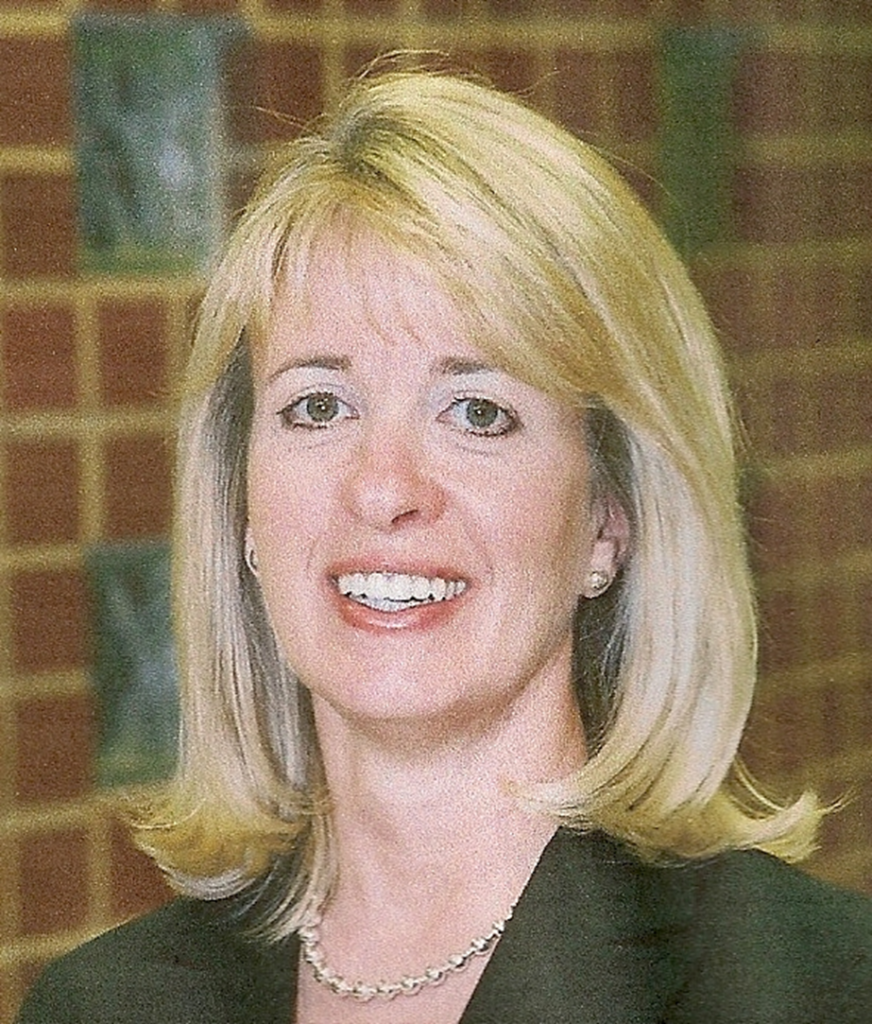
by Cheri Shannon
In an effort to transform our public school system, charter schools have provided a breath of fresh air. Free, open-enrollment public schools, charters were established in Florida in 1996 to provide more high-quality educational options for families. With the flexibility to innovate with curriculum, classroom time, technology and much more, charter schools are held to greater standards of accountability for student achievement. This means that charter schools that are effectively improving learning, as most in Florida are, should be celebrated as well as replicated so more students benefit.
However, if a charter school is not living up to its mission of providing a high-quality education for its students, then it should no longer be in operation. All public schools, whether a charter, magnet or district school, must ensure that every child has access to a strong educational program that meets his or her needs.
Since the first charter school opened 20 years ago in Minneapolis, we have learned that, occasionally, opening the door to let in fresh air brings with it some flies. Despite the strong performance of charter schools, there are a few underperformers that fall short of their mission to provide a high-quality education for all students. That is why local school boards and the Department of Education have moved to close at least three charter schools this year – actions we in the larger charter school movement support. The most recent action includes the decision to close Life Force Arts and Technology charter in Pinellas County, which had questionable curriculum and management, and to no one’s surprise, low student achievement. When charter schools like these do not meet their goals, they should no longer have the privilege of serving students and should close.
As we continue to hold charter schools accountable, as we should all public schools, we must not lose sight of the fact that parents of nearly 180,000 students actively chose to send their children there.
In the case of some poor performers, it’s perhaps because parents feel their child is safer in a small environment the school may provide, or because the nearby district schools are worse off. But those factors alone are not enough. Charter schools must be able to demonstrate the ability to improve learning, and when bad ones close, we should respect parents’ choices and work to ensure good schools will take their place. Parents will ultimately make good choices – they simply need access to more of them. (more…)
New Jersey: At the American Federation for Children national summit, N.J. Gov. Chris Christie invokes civil rights  era imagery to make his case for vouchers. (Associated Press) Louisiana Gov. Bobby Jindal tells choice advocates they have "truth and the American people on (their) side." (abcnews.com) Newark Mayor Cory Booker decries an education system that "chokes out the potential of millions of children." (redefinED) Beyond the headlines, choice supporters also talk accountability. (redefinED)
Alabama: Embattled charter school bill is watered down again before passage. (Associated Press)
New Hampshire: Charter schools in the state are expanding rapidly. (Concord Monitor)
Montana: Vouchers and tax credit scholarships become an issue in the race for governor. (Billings Gazette)
California: Two dozen high-performing traditional public schools in Los Angeles seek to become charter schools. (Los Angeles Times) (more…)
 Do critics have a double standard when it comes to scrutinizing school choice options like charter schools and vouchers? Florida Education Commissioner Gerard Robinson suggested as much in an interview published today by the Tampa Bay Times’ Gradebook education blog.
In response to a question from the Times editorial board, Robinson noted that charter schools that struggle academically and/or financially can be shut down (in Florida, that has happened many times) but that same ultimate penalty is rarely leveled at traditional public schools (off hand, we can’t think of any examples in Florida). “For the bad charter schools that aren’t working, they should close,” Robinson said. “But for the traditional schools that have also failed a number of our kids, we don’t see the same level of righteous indignation.”
Robinson has deep roots in the school choice movement, having once served as president of the Black Alliance for Educational Options. And interestingly enough, the editorial board's questions focused mostly on choice options. Here are some other excerpts:
On testing accountability in voucher schools: “The private school curriculum isn't aligned to what we test on the FCAT (the Florida Comprehensive Assessment Test). So you're comparing apples to oranges. At the same time, there are the Stanford tests, there are Iowas, there are other tests you can take. So I'm not against assessment. What I am saying is, simply saying because they don't take the FCAT therefore they're not accountable is not correct.... “
On charter schools vs. magnet schools: “Charters and magnets both are theme schools. Charters and magnets both are public. And charters and magnets both take money. You often find magnets cost more than charters. But yet people say charters take money from public schools. People say charters are creaming the best and brightest kids. I can tell you from looking at the scores, that's not the case. And yet the magnet schools … are taking the best and brightest students … Magnet schools historically have been the largest public school choice program in the country, but also been more exclusive than other programs. And yet, all the angst we put on charters.”
On closing the achievement gap: “I've often said what you don't have is a political gap problem as much as you have a political crap problem. … If white kids are reading better than black, Latino, Hispanic or Native American kids, that's not a reading problem. We know what it takes to get kids proficient in reading. The question is, are we willing to make the tough decisions, political decisions, to get the right resources - human and financial - into the schools or after-school programs … to make it happen?”

