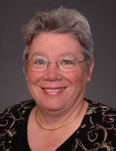
Frank
When people hear the term “school choice,” they usually don't think about it in a traditional public school setting, said Joy Frank, general counsel for the Florida Association of District School Superintendents. But public school districts offer students a growing array of choice programs, too, from online classes to career academies to International Baccalaureate programs.
“We have embraced choice,” Frank told members of the Florida House Choice & Innovation Subcommittee during its first meeting this week.
Frank’s comments are another sign of evolving perceptions regarding parental school choice. She and others who are grounded in the traditional public school camp may not embrace publicly funded private options such as vouchers and tax credit scholarships. But it wasn’t long ago that even public options such as IB and magnet schools were considered controversial. Implicit in her remarks is an acknowledgement that giving parents more choice for their children is a worthy goal.
Frank went on to tout public school choice programs across the state, including Polk County’s Central Florida Aerospace Academy, which has a high school at the Lakeland Regional Airport. She also lauded the phenomenal growth of school choice in Miami-Dade County, which opened its first magnet school in 1973 and now offers some 340 choice programs serving 43,000 students. (Coincidentally or not, the Miami-Dade school district also has among the highest rates of students enrolled in charter schools and private schools via tax credit scholarships.)
Traditional school leaders in Florida are increasingly making similar statements. (more…)
 Florida: The Seminole County School District, one of the state's biggest, offers more online classes and other educational options to compete with private and charter schools and home schooling (Orlando Sentinel). Meanwhile, another large district receives 36 applications for new charter schools (Palm Beach Post).
Tennessee: Gov. Bill Haslam says questions remain on a voucher proposal that's expected to get legislative attention next year (Nashville Public Radio). State education officials and the Nashville school board are in a standoff over a proposed charter school that wants to open in an affluent part of the city (Education Week).
Louisiana: In the wake of the new voucher program, state education officials will consider tightening rules for the establishment of new private schools. (New Orleans Times Picayune) Expanded online learning options give Louisiana students a chance to graduate early or catch up on credits. (The Advocate)
Washington: The state PTA opposes the charter school initiative on the November ballot. (The News Tribune)
Texas: Some charter school supporters oppose a state education funding lawsuit that suggests state resources are inadequate. (Austin American Statesman)
Indiana: Between vouchers and charter schools, northwest Indiana parents have more school choices than ever before. (Post Tribune) (more…)
 Charter schools took a page from Catholic schools when they arrived in the 1990s and began their expansion – character development, solid discipline, a no-excuses approach to success for low-income kids. But now it's Catholic schools, struggling with declining enrollment (in part because of competition from charters), that should borrow good ideas from charters, the author of a new report says.
Sean Kennedy, a visiting fellow at the Lexington Institute, points to how high-performing charter schools have embraced data and technology to better differentiate teaching, including use of “blended learning” models that have both improved student performance and reduced cost. “They’ve really invested in data,” Kennedy, a product of Catholic schools, said in the redefinED podcast below. “And that’s something that, unfortunately, for various cultural and just simply resource reasons, Catholic schools have shied away from.”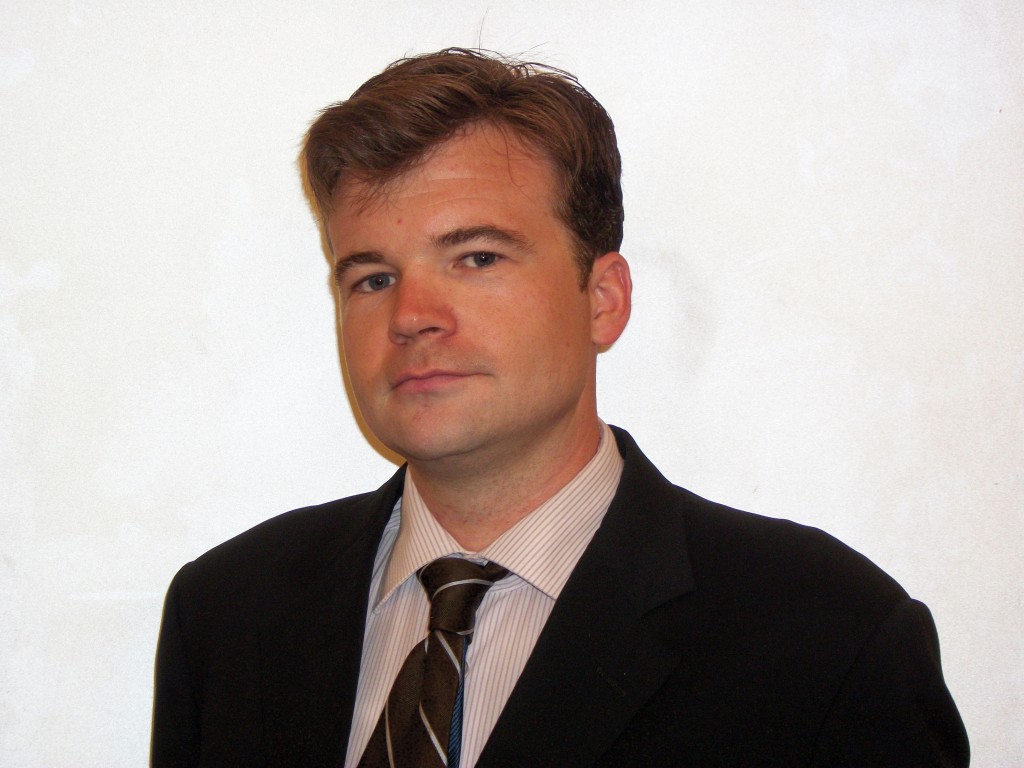
Kennedy says despite the funk they’re in, Catholic schools can more nimbly embrace promising trends than other education sectors and again stand out. They don’t have the bureaucratic or union entanglements of traditional public schools, and they still have the faith and character-building components in their favor.
“I’m very optimistic,” Kennedy said. Catholic school educators “often take huge pay cuts from what they would get in public schools. They often work much longer hours. And they love what they do. So if it can be presented to them in a way that this is going to benefit both their teaching and their students directly, I think teachers and administrators in Catholic education are at a special advantage to grab a hold of this data movement and really run with it.”
Kennedy also said vouchers and tax credit scholarships can be crucial in Catholic school reform efforts, particularly with Hispanic students. A project is now underway in the Tampa Bay area with two Catholic schools that accept tax credit scholarships and the Notre Dame ACE Academies, which aims to revitalize Catholic education. “There’s fewer and fewer kids in inner city areas being served by high quality Catholic schools, as these Catholic school business models kind of collapse in on themselves. And that’s a tragedy,” Kennedy said. “With the growing Hispanic population, there’s even greater need to serve these families.”
Editor’s note: Today, we introduce a new feature (even if we’re not sure the name will last) - an occasional compilation of bite-sized nuggets about school choice and education reform that are worth noting but may not be worth a post by themselves.
More anti-Muslim bigotry in school choice debates
It’s nearly impossible to go a month without hearing another example of anti-Muslim bigotry in a school choice debate.
The latest example: Louisiana state Rep. Valarie Hodges, who now says she wishes she had not voted for Gov. Bobby Jindal’s voucher bill because she fears it will promote Islam. “There are a thousand Muslim schools that have sprung up recently,” she said. “I do not support using public funds for teaching Islam anywhere here in Louisiana.”
The lawmaker’s comments echo Muslim bashing in school choice debates in Kansas, Alabama, Tennessee and other places in the past few months alone. Sadly, religious bigotry has long been a part of the school choice narrative. To repeat what we wrote in April:
The courts have ruled that vouchers and tax credit scholarships are constitutional. We live in a religiously diverse society and this pluralism is a source of pride and strength. We can’t pick and choose which religions are acceptable and unacceptable for school choice. And we should not tarnish whole groups of people because of the horrible actions of a few individuals. In the end, expanded school choice will serve the public good. It will increase the likelihood that more kids, whatever their religion, become the productive citizens we all want them to be.
Jeb Bush endorses pro-choice school board candidate
Jeb Bush doesn’t endorse local candidates often. But last week, he decided to back a Tampa Bay-area school board member who openly supports expanded school choice, including vouchers and tax credit scholarships.
Glen Gilzean, 30, is running against four other candidates to keep the Pinellas County School Board seat that Gov. Rick Scott appointed him to in January. The district in play includes much of the city of St. Petersburg and has more black voters than any other.
I don’t know how much Bush’s endorsement will help Gilzean. He's a black Republican in a district that leans Democratic (even if school board races in Florida are officially nonpartisan). But I do know this: Black students in Pinellas struggle more than black students in every major urban school district in Florida, and frustrated black residents are increasingly open to school choice alternatives. (more…)
 New Hampshire: The state legislature overrides Gov. John Lynch's veto of a tax credit scholarship bill. (Manchester Union-Leader)
North Carolina: School choice leaders throw in the towel on a legislative proposal for tax credit scholarships. (Associated Press) A judge rules that a virtual charter school cannot open, siding with the state board of education, which had refused to consider the proposed school's application. (Raleigh News & Observer)
New Jersey: Gov. Chris Christie says it's unlikely that a school voucher bill will move in the state legislature this year. (NJ Spotlight)
Florida: Faced with declining enrollment and increased competition from school choice, the Broward County School Board wants to open its own charter schools. (South Florida Sun Sentinel) Meanwhile, the state Charter School Appeal Commission sides with four of five charter school applications rejected by the Palm Beach County School Board. (Palm Beach Post)
Pennsylvania: A well-funded political action committee and the Philadelphia Archdiocese are pushing hard to expand the state's tax credit scholarship program. (Philadelphia Inquirer)
Texas: The state's main charter school group filed suit against the state, charging it with short-changing charters on facilities funding and arbitrarily capping the number of charters that can open. (Houston Chronicle) (more…)
 Last fall, Arlene Ackerman, the former schools superintendent in Philadelphia, made a stunning announcement for someone of her status. In a newspaper op-ed, she forcefully came out in favor of expanded school choice options, including more charter schools and yes, even vouchers. "I've come to a sad realization," she wrote. "Real reform will never come from within the system."
In this redefinED podcast, Ackerman talks more about her evolution.
For years, she pushed change from the highest perches in K-12 education. Before Philly, she headed the school districts in Washington D.C. and San Francisco. She led the latter when it became a finalist for the prestigious Broad Prize, annually awarded to the best urban school district in the country, in 2005. But the kinds of sweeping reform needed to help poor and minority kids, she said, too often met with resistance from unions, politicians, vendors and others who benefited from not budging.
A key turning point came a few years ago. Given current trend lines, her staff told her, all students in Philadelphia won't be proficient in reading and math until the year 2123. “It became real to me that it was important to include as many options as possible for parents,” said Ackerman, who now lives in Albuquerque, N.M. to be closer to her children and grandchildren. She said she began thinking, “What would I want for my children if my children were trapped in a school? What options and alternatives would I want available to me?”
Before the op-ed was published, Ackerman wrote a heads-up email to hundreds of friends and colleagues. Some said they understood. Some said she was almost a traitor. Most didn't say anything.
"I hope it provided an opportunity for people I know and respect to think about why somebody like me, who spent so many years within the traditional public school system fighting for radical change, would embrace charters and vouchers for low-income families," she said.
“If it changes the life of one child, it’s to me worth the effort,” she also said, referring to expanded choice. “The other thing it will do is force the traditional public school systems to change. It will put pressure for real reform to take place because there’s competition. Let’s face it: This country is built on competition. And it’s good.”

