A Florida House panel is drafting legislation aimed at drawing more "high-impact" charter school networks to the state's most undeserved neighborhoods.
While the state is home to nearly 650 charter schools and more than 250,000 charter-school students, it's attracted only a few schools operated by the likes of KIPP and Yes Prep, which have national reputations for helping disadvantaged students.
The proposed legislation, reviewed today by the House Choice and Innovation Subcommittee, would allow those networks to apply for "high-impact" status with the state Board of Education.
Under the bill, high-impact charter schools wouldn't have to wait three years to qualify for state facilities funding. High-impact schools in areas with "critical" academic needs (meaning they're served by D- or F-rated public schools) would also be exempt from the administrative fees school districts typically charge. (more…)
In the upcoming legislative session, the Florida Legislature is likely to grapple with an issue that's come up repeatedly in recent years. How can they stop financially shaky charter schools that suddenly shut down, without creating barriers to legitimate schools?
In a recent interview, Rep. Manny Diaz, who chairs a key panel on school choice issues, said lawmakers are looking for ways to make sure upstart charter schools are financially secure.
"You're going to have to have a base of support. You're going to have to have some people involved who can raise some money," he said. "I think that will eliminate a lot of the issues that we've been seeing."
Next week, Florida lawmakers will have their first discussion about reviving some of the charter school and school choice issues that went unresolved during this year's legislative session. Tuesday's meeting of the House Choice and Innovation Subcommittee will offer a first look at what's to come when the next legislative session starts in January.
An idea that's been floated in recent years would require new charter schools to secure a $250,000 surety bond or line of credit from a bank. If a school suddenly failed, there would be a financial cushion to ensure taxpayers aren't on the hook. That concept raised concerns among mom-and-pop charter advocates during a meeting of charter school operators and district authorizers in Fort Lauderdale.
"If this was a requirement when we opened 16 years ago, we would have never been able to open, and we have been a high-quality, high-performing school for 14 years," Maritza Aragon, the principal of the Youth Co-Op Preparatory Charter School in Hialeah, said. She added that "$250,000 for a nonprofit — a real, small, beginning nonprofit — is unrealistic."
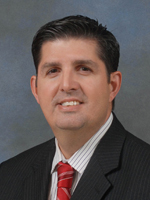
Rep. Manny Diaz Jr.
Florida's charter school sector, first created in 1996, has grown into its late teens. Its maturity has policymakers contending with a new set of issues.
How can the state improve districts' oversight of charter schools without subjecting them to unwanted mandates? Is the next generation of teachers and school administrators being prepared for changes sweeping through education, from the rise of digital learning to the proliferation of options outside of traditional school districts? If educators want to launch a new charter school, where can they go to figure out how?
A key lawmaker wants his colleagues to consider creating a new think-tank like institution, housed in one of the state's universities, to study charter schools and the issues they face.
Rep. Manny Diaz, R-Hialeah, has scheduled the issue for discussion at Tuesday's meeting of the House Choice and Innovation Subcommittee, which he chairs.
The idea, he said in an interview, is to create an independent resource, housed in an "academic environment" outside the state's system of K-12 education governance.
Universities in other states, like Michigan and Colorado, have created charter school institutes or centers. But those institutions are primarily authorizers of charter schools — a function that, in Florida, is largely reserved for school districts.
A Florida House subcommittee devoted to school choice has drafted a bill that, if approved, could make life a little easier for the state’s charter school operators - especially when it comes to facilities.
The bill, proposed by the the Choice & Innovation Subcommittee, would give charters free use of certain unused district facilities - and require the district to pay for upkeep.
If a district-owned facility that previously has been used for K-12 educational purposes is no longer being used, the bill says, “it shall be made available for a charter school at no cost.’’
The district may give academically successful charters priority for such facilities, and may require charters to enroll students previously assigned to the school if it was open the year before as a public school.
The district would have to maintain the charter school facility “at the same standard and level it would maintain any other district-operated school similar in age and condition.’’
That suggestion might prove popular among charter advocates, including the Florida Consortium of Public Charter Schools, which represents more than 400 charter schools.
Access to unused district facilities is No. 2 on the consortium’s list of legislative priorities this year. No. 1 is creating a charter school facilities assistance fund to help with new construction, maintenance and furniture and equipment purchases.
“Charter schools are public schools and deserve the same level of financial support and opportunities afforded to district public schools,’’ said Robert Haag, the consortium’s president. “Charter schools should have … equal access to school buildings that are sitting empty and are not being used for their original educational purpose.’’ (more…)
Florida House Speaker Will Weatherford announced committee assignments today (hat tip: News Service of Florida.) Here is who will serve as chairs and vice chairs of the education committees, including the new subcommittee on school choice and innovation:
Education Committee: Chair, Marlene O'Toole, R-Lady Lake. Vice Chair, Elizabeth Porter, R-Lake City.
Education Appropriations Subcommittee: Chair, Erik Fresen, R-Miami. Vice Chair, Marlene O'Toole, R-Lady Lake.
Choice and Innovation Subcommittee: Chair, Michael Bileca, R-West Miami. Vice Chair, George Moraitis, R-Fort Lauderdale.
K-12 Subcommittee: Chair, Janet Adkins, R-Fernandina Beach. Vice Chair, Ronald Renuart, R-Ponte Vedra Beach.
Higher Education and Workforce Subcommittee: Chair, Jeanette Nunez, R-Miami. Vice Chair, Jason Brodeur, R-Sanford.
To see all members by committee, click here.

