 Around the state: Changes in district quarantine policies in Polk, students awarded for being courageous in Sarasota, new civics curriculum for Florida students and the state Legislature's restraint ban. Here are details about those stories and other developments from the state's districts, private schools, and colleges and universities:
Miami-Dade: Graduation dates are set for seniors from 66 public schools, who will have the chance to walk across the stage to receive their diploma. Miami Herald.
Broward: A report released last week by state auditors found multiple violations of safety protocols in Broward schools. The findings show that complying with school security standards remains a challenge for the district, four years after the shooting at Marjory Stoneman Douglas High. WLRN.
Polk: Schools officials here announced a change in the district's quarantine policy, cutting in half the amount of time students and staff will have to stay at home if they have symptoms of COVID-19 or a positive test result. Lakeland Ledger.
Volusia: The Volusia County School Board has canceled the Tuesday workshop designated to discuss the extension of Superintendent Scott Fritz's contract, per the district's website. The extension of Fritz's contract has been a controversial issue, where teachers, district staff and parents have spoken out against the contract extension while area groups have sent letters of support for Fritz to the board. Daytona Beach News-Journal.
Sarasota: Several North Port students were honored for their courage recently at an awards ceremony called Do the Right Thing. Students from Imagine School of North Port upper middle and high school campus and North Port High helped others since the school year began. Some turned in money, while others told an adult when they heard about a student struggling with mental health issues. Your Sun.
Alachua: A ninth-grade PK Yonge Developmental and Research student named Marin Best has been selected to be a "youth trekker" for the Florida Wildlife Corridor Foundation. Best will be part of a documentary called "Home Waters" coming out later this year. Gainesville Sun.
Citrus: Citrus High School made an announcement via Facebook on Friday that current principal Laura Lindeman will be leaving for a district job on June 1. Citrus County Chronicle.
Learning losses: Gov. Ron DeSantis recently announced a batch of new funding to address student learning losses. The money comes from federal COVID-19 relief funds, and it will be used for after-school programs, reading intervention and creating regional mental health teams. One chunk of funding will support reading intervention and professional development for reading coaches, since DeSantis says it's crucial to have children reading at grade level by the time they reach 3rd grade. WUSF. Florida Politics.
Civics curriculum: A new civics curriculum is available for Florida fourth graders, and all Florida residents will be able to access it online for free. The state Department of Education approved a curriculum created by the state House. Florida House Speaker Chris Sprowls said the curriculum can assist in improving Florida's third place ranking in K-12 achievement. Citrus County Chronicle.
Pandemic update: The disruption and isolation of the coronavirus pandemic on students has been unlike anything they have ever experienced, with one counselor saying the impact on their mental health remains significant. Kids were already facing a mental health crisis before COVID-19, according to the U.S. Surgeon General, but the pandemic has only made it worse. WFSU.
Understaffing woes: The return to classrooms for schoolchildren nationwide doesn't equate to a return to work for many of their parents are finding needed after-school programs in short supply. Hiring and retaining staff are the biggest reasons school-based providers have not fully rebounded from pandemic shutdowns. Miami Herald. Meanwhile, students are stepping up to become employees at schools due to staff shortages. NPR.
Restraint ban: The state Legislature has banned teachers and other school staff from using zip-ties and handcuffs on students. The House and Senate approved legislation to prohibit those methods, which often target children with disabilities. HB 235 provides that only school resource officers, school safety officers, school guardians or school security guards can use mechanical restraints on students in grades 6 through 12. The next step? Approval of the bill by Gov. DeSantis. Florida Phoenix.
Legislative confusion: Two pieces of major legislation pushed by Gov. DeSantis and approved by the state Legislature have created confusion, critics say, over what public school teachers can teach in class. Orlando Sentinel.
Bill support: U.S. Education Secretary Miguel Cardona spoke with LBGTQ students to say the federal government supports them even if their governor does not in regards to the controversial parental rights in education bill. Fox 13.
Spelling bee champs: Twenty-four spellers in south Florida competed to become the champ and represent their county in the national bee, which will take place the week of Memorial Day in Maryland. The finals will be broadcast live on June 2. Miami Herald.
University and college news: University of South Florida is working to close learning gaps for male students through a mentorship program. USF officials hope such mentorship relationships will move students one step closer to addressing a longstanding issue: The growing gap in college completion rates between male and female students. Across the country, men are falling behind women not only in college enrollment, but in college graduation rates, with the gap widening in recent decades. Tampa Bay Times. The University of Florida launched the Artificial Intelligence Academic Initiative Center in March. The initiative, known as AI Squared, is designed to promote the use of AI and data science research. WUFT. University of Florida officials have selected a presidential search firm used by University of South Florida and Florida State University. The UF Board of Trustees voted during a meeting on Friday to select SP&A Executive Search from among four search firms interviewed. Tampa Bay Times. As educational institutions return to a level of normalcy, Florida Gulf Coast University students are calling for the school to honor graduating seniors with a commencement ceremony as in years prior. Instead, university leaders announced they are keeping their Grad Walk to honor graduates, with the concern being space and not COVID-19. Ft. Myers News-Press. The FAMU-FSU College of Engineering partnered with For Inspiration and Recognition of Science and Technology (FIRST) Robotics to host a regional competition in Tallahassee. The event featured robots built by high school students from across the Southeast, in addition to a team from Hawaii. Tallahassee Democrat.
Opinions on schools: The education budget passed by the state Legislature this year is the largest in the history of Florida. Step up for Students President Doug Tuthill and Legislative Affairs Manager Alexis Laroe discussed changes coming to educational choice programs in the Sunshine State. reimaginED. When Gov. DeSantis announced legislation to end the Florida Standards Assessment (FSA), he said the proposal would reduce school testing by 75%. But it's unclear whether a bill he signed on Tuesday will achieve that reduction. Miami Herald. The 2022 Legislative session was about waging cultural wars in the name of "transparency" and parental involvement in public education. South Florida Sun-Sentinel.
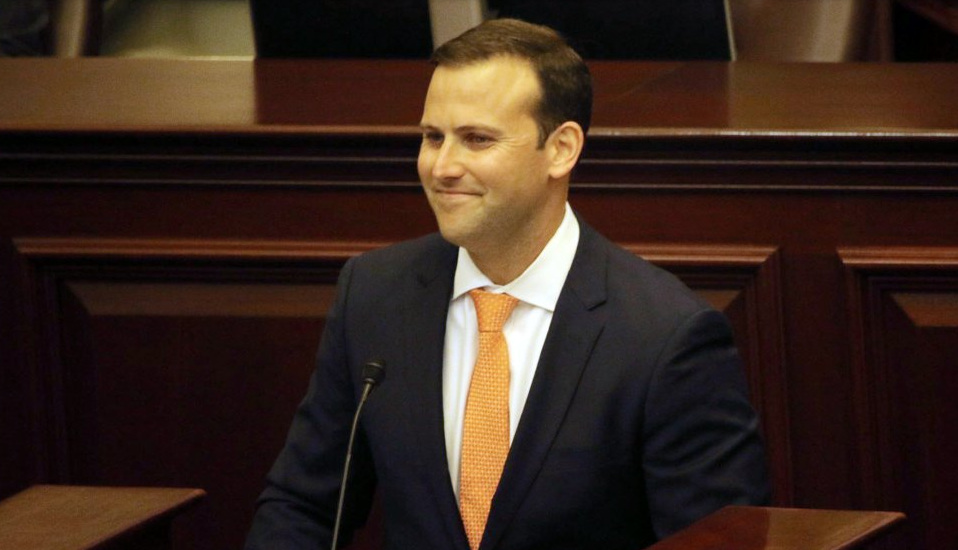 Editor’s note: Throughout the week, the Florida Department of Education is recognizing the 14th annual Celebrate Literacy Week, Florida! Florida House Speaker Chris Sprowls, R-Palm Harbor, joined Gov. Ron DeSantis and Florida Education Commissioner Richard Corcoran at a news conference at a Wakulla County elementary school to highlight the New Worlds Reading Initiative, a statewide book delivery system that sends one free book each month to students in kindergarten through fifth grade. More than 81,000 students have signed up for the $200 million program approved during the 2021 legislative session. Here are excerpts from Sprowls’ remarks. To see the news conference, click here.
The power of getting a new book and getting a child excited about reading, excited about learning about the characters inside the pages they are going to discover, is the reason the Florida House came up with the New Worlds Reading Initiative at the beginning of the last legislative session … Our principals and our teachers and our schools like this one have done such an amazing job in making sure our children are learning to read.
We’re proud to be fourth in the nation in fourth grade reading and making sure that we’re making those strides, but what really makes a state like Florida not just good, but great, is about our ability to acknowledge when we can be even better. And I think that’s what this initiative is all about.
When Education Commissioner Corcoran and the governor and I and others sat down and looked at the statistics in reading across our state, we found some alarming things. We realized that 88 percent of individuals who didn’t graduate from high school were struggling readers in third grade. We realized that 43 percent of kindergarteners were not reading at proficiency when they started in elementary school.
We realized that even though we’re doing better than so many of our national peers, it’d be 250 years if we kept on current trends to get to where we needed to be in reading proficiency in the state of Florida. And none of us thought that was good enough. Which is where you get the New Worlds Reading Initiative. It’s all designed because, if a child can read, they can learn. If they can learn, then anything is possible.
What we are doing in the state of Florida no other state has undertaken. No other state is taking a moon shot like the New Worlds Reading Initiative. And prioritizing the fact that we believe that every child has the opportunity to learn, to be successful, and to be on a pathway to prosperity.
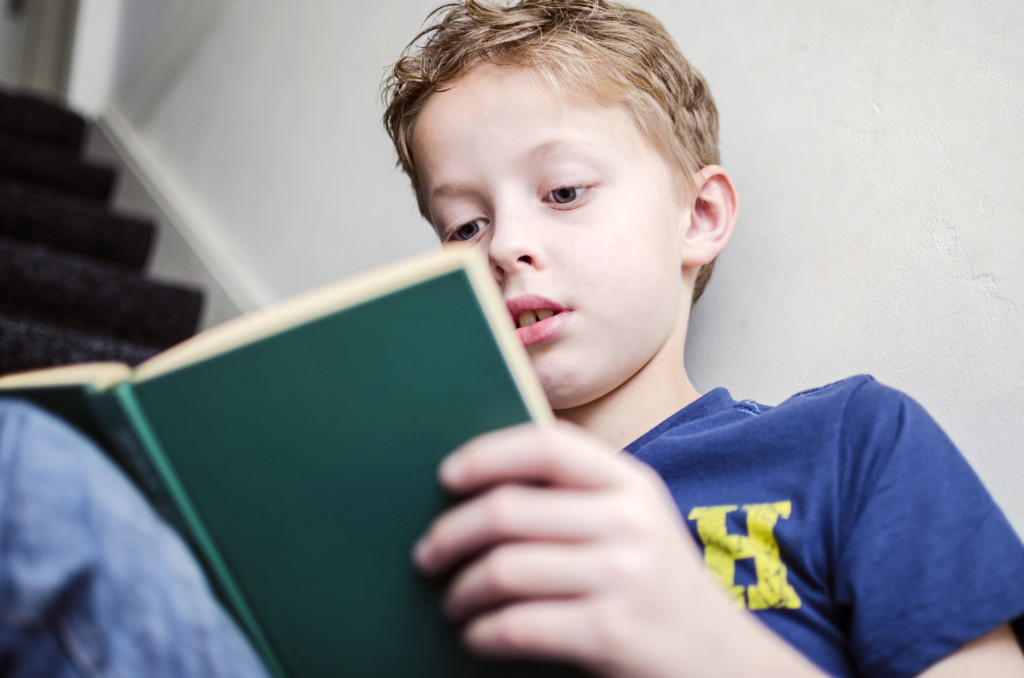 When Laura Negroni needed help boosting her daughter Natalia’s state reading test scores a few years ago, she turned to the Florida Reading Scholarship Account, which provided her with $500 she could spend on devices and tutoring services. (The Reading Scholarship Account program is administered by Step Up For Students, which hosts this blog.)
The iPad that Negroni chose gave Natalia access to books and educational games that improved her reading skills and brought her up to Florida standards.
Starting in December, an estimated 500,000 students like Natalia will get access to even more reading resources through the New Worlds Reading Initiative, a groundbreaking program approved by the Florida Legislature during the 2021 legislative session.
Outlined in HB 3, the program and other literacy initiatives were part of Florida House Speaker Chris Sprowls’ legislative agenda, which included HB 7045, the largest expansion of a school choice program in the nation.
“We cannot overstate the profound impact teaching a child to read will have on their future success,” Sprowls said while promoting the program at an event last summer featuring Gov. Ron DeSantis. “Not only do we open them up to new worlds and ideas, we give them the tools to expand their imagination, foster their curiosity and ultimately chart their own destiny.
To understand why lawmakers saw the need for the program, look no further than 2021 reading scores on the state’s standardized test, where 45% of third graders scored in the bottom two categories. A score of at least 3 is required for a passing grade.
Overall, 54% of third graders passed the spring reading exams compared to 58% in 2019, a troubling statistic based on education research. A long-term study by the Annie E. Casey Foundation found that students who were not proficient readers by the end of third grade were four times more likely to drop out of high school than those who were proficient.
While some of Florida’s decline was attributed to pandemic learning losses, state lawmakers cited the need for urgency for the state’s workforce to remain competitive.
“If we don't take aggressive new steps and just continue with current trends, it will be 230 years before every Florida student is reading on grade level,” Sprowls said in his opening remarks as house speaker.
Sponsored by state Rep. Dana Trabulsy, R-Fort Pierce, and signed into law on June 29, the program is the first statewide book delivery service for Florida’s struggling early readers. It is open to traditional district and district charter school students in kindergarten through fifth grade who are reading below grade level.
Eligible families who sign up now will receive one free hardcover book each month starting in December. Support material for parents will be included with each book.
Families can choose books at their child’s grade level from several genres including humor, adventure, art history and science that will be available in English, Spanish, Haitian Creole, Braille and large print. Among possible titles: “I Am Enough,” “Charlotte’s Web,” and “Hidden Figures,” based on the Florida Department of Education booklist embedded within the B.E.S.T. Standards.
“It’s critically important for Florida’s children to develop reading skills at an early age for them to be successful at school and in society,” Trabulsy said in July. “Through the New Worlds Reading Initiative, we give students and parents books and resources to partner with teachers and schools in achieving literacy goals.”
The $270 million program is funded by a combination of sources including $200 million in non-recurring funding for the 2021-22 fiscal year to be used to distribute books. Other revenue includes $71 million in federal COVID relief money designated to provide tutoring for students, literacy coach boot camps for tutors and others, and statewide progress monitoring for grades K-8 from the Florida Department of Education.
After January 2022, the bill provides credits against specific taxes under the New Worlds Reading Initiative Tax Credit and revises how corporate income taxes are applied under that initiative.
That funding will be similar to what supports the Florida Tax Credit Scholarship Program, which provides scholarships for families meeting income or other eligibility requirements to attend a participating private school.
The University of Florida Lastinger Center for Learning, a national education innovation hub whose stated mission is to create educational systems where every child and educator experiences high quality learning regardless of life circumstances, is administering the New Worlds Reading Initiative.
The Lastinger Center staff have spent the past two months preparing for the launch, said Shaunté Duggins, assistant director of the New Worlds Reading Initiative. They have conducted interviews and focus groups with several stakeholders across the state including families, district and community leaders, representatives from non-profit book delivery organizations, literacy leaders, and community partners. Families may soon hear and see ads in their communities and receive information from their child’s schools and from community partners that Lastinger is working with to get the message out to those who are eligible.
“We have a phased approach to the project,” Duggins explained. “We have an enrollment page on the website. We held informational sessions with district leaders two weeks ago. The sessions were really well attended, and a number of leaders were able to contribute favorite book titles.”
Her team is now working with a vendor to buy, store and distribute the books as well as to create a database to track enrollment. Additionally, the team has created media toolkits to help districts communicate with families.
“The toolkits are there to provide all the resources the districts would need to share the word: instructions in English, Spanish and Haitian Creole, phone scripts, social media assets, a QR code – and the list goes on,” she said.
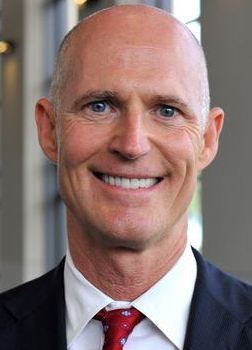
Florida students will soon be able to cross school zones and district lines under legislation approved today by Gov. Rick Scott.
 HB 7029 requires school districts to allow students to transfer to any public school that has room — including magnet and charter schools in neighboring districts — by the 2017-18 school year.
The change has drawn the interest of parents looking for options inside the public school system since it was first proposed last year. But it drew logistical concerns from some school districts, which worried about overhauling their enrollment procedures and sharing local tax revenue.
This week, the Orlando Sentinel reported some districts plan to band together to address those issues.
The 13 districts in the Central Florida School Boards Coalition will work together to create uniform ways of determining if schools have room for transfer students and then the transfer procedures, said Walt Griffin, superintendent of the Seminole County school district, during the coalition's meeting this morning.
"I want to just be in front it," Griffin said later. "So when parents do start asking for transfers, we're all on the same page."
Seminole has already had a few inquiries, he added.
Central Florida educators are worried about the rule, fearful transfers from one county's school district to another would dilute the value of local taxes, upend school construction plans and complicate efforts to accommodate growth.
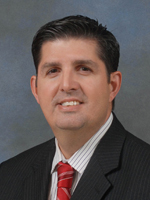
Diaz
As attention swirls around efforts to turn around persistently struggling schools, Florida lawmakers want to give some principals more money, extra training and more operational freedom to improve their schools' performance.
Rep. Manny Diaz, R-Hialeah, a former school administrator, has repeatedly pushed legislation that would give principals in traditional public schools some of the same autonomy enjoyed by charter schools.
This year, he's morphed the proposal into a new approach for turning around low-performing schools, especially in large urban districts.
Under the principal-autonomy pilot program in HB 287, school districts could select highly rated principals to take over schools with a string of "D" or "F" ratings.
The principals could receive special training from the University of Virginia, and up to $10,000 in extra money. Districts would need to give them "increased fiscal and administrative autonomy" and more freedom under state regulations. In return, the schools would need to set performance targets. (more…)
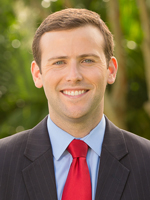
Sprowls
Parents would have more ability to choose among public schools for their children, charter schools would face more scrutiny before opening, and some principals at traditional schools could enjoy more charter-like freedoms under a combined school choice package set for a final vote Friday in the Florida House.
The charter changes and principal autonomy programs had already passed the House, but were added to HB 1145 today to bring it closer to the Senate's public school choice legislation.
The revised House legislation does not include a contentious plan to help fund charter school facilities with local property tax revenues. A range of funding issues are in flux because of a healthcare standoff that has deadlocked budget negotiations.
The revised House school choice legislation would also require school districts to give each parent a detailed breakdown of spending on their child's programs, create a new Institute for Charter School Innovation at Florida State University, and offer new incentives for public schools to require uniforms.
Rep. Chris Sprowls
School districts and their representatives raised a number of logistical issues as a Florida House panel advanced a bill that would expand public school choice and give students more freedom to cross district lines.
It seems like a simple concept: Allow parents to enroll their children in any public school where there's room.
The bill cleared the K-12 Subcommittee with bipartisan support, but not before its sponsor, Rep. Chris Sprowls, a freshman Republican from Palm Harbor, fielded a litany of questions about how it would affect everything from funding to high school athletics.
Ruth Melton of the Florida School Boards Association praised the idea of promoting school choice among districts, but suggested lawmakers look for more ways to accommodate low-income families who want to take advantage of the bill.
"There are a number of concerns," she said, "... but none of them insurmountable."
Here's a rundown of some of the issues that came up:
Why?
Rep. Bruce Antone, D-Orlando, wanted to know what the "rationale" was for allowing students to attend public schools across district lines.
Sprowls' short answer: "Opportunity, sir."
He elaborated: "We can't always choose where we come from, what neighborhood we're born into. But what we can do as a Legislature is do what we're trying to do with this bill, to empower parents, regardless of where they come from or what neighborhood that they're in. It's to give their child an opportunity. That opportunity, hopefully, is right down the street. But if it's across the bridge, in another school district, they'll have that opportunity as well."

