An episode of Paul MM Cooper’s outstanding documentary podcast series "The Fall of Civilizations" recounts the history of Carthage, which includes details of wars fought between the Carthaginians and Syracuse during the 300s BC. Carthage, a highly successful sea-trading nation, fought a number of wars with Greek colonies in Sicily prior to later wars with Rome.
Cooper describes how the Carthaginians made extensive use of mercenary armies, to spare themselves from the dirty business of fighting wars. During a Carthaginian siege of Syracuse, the Syracusans turned the tables on their attackers and sailed to attack Carthage. The wealthy but martially inept Carthaginians made impromptu efforts at fielding an army. This didn’t go well. The Carthaginians brought shackles in hopes of enslaving the Greeks, but instead found themselves routed in the field. Having scrambled behind their walls, the Carthaginians attempted to generate divine favor by sacrificing children to their gods.
Contemporaneous Greek accounts, and later archeological evidence, indicate that the Carthaginians may have been the last Mediterranean civilization to practice human sacrifice. As if this were not odious enough, wealthy Carthaginians would purchase and sacrifice other people’s children.
At first these rituals seem to have been an authentic sacrifice, giving up the life of your own children in the hope of receiving favor from the gods, but before long, wealthy Carthaginians found a way around this. In fact, they seem to have developed a macabre industry, a trade in other people’s children for sacrifice.
Fortunately, sensibilities have evolved in intervening millennia, and we don’t go in for either human or for that matter, animal sacrifice, these days. Still this account struck me as unsettling. We manage to field our own military here in the United States. The decades of scandal related to politically connected Americans avoiding the draft has, however, more than a faint echo of the Carthaginian elite sending someone else to fight for them. Dodging military service inevitably entailed sending someone less connected, less fortunate than yourself to fight and sometimes to die in your place.
The phrase “a trade in other people’s children for sacrifice” is perhaps a bit strong to describe what happened to students during the COVID-19 debacle, but perhaps not, especially considering the minimal value derived from billions of federal education dollars. No small number of Americans benefited from choice schools as children, benefited from choice schools as parents, but oppose programs to provide K-12 choice to others. Like Carthaginians of old, these people are willing to sacrifice someone’s children for one reason or another, just not their own.
Between damaging their demographic prospects by sacrificing children to statues and mercenary forces turning on them in the Second and Third Punic wars, the Carthaginians hit the dustbin of history.
Praeterea dico exercitia Carthaginiensium in America delenda est.
Progressives hostile to school choice groan when they hear conservatives talking about school choice as a civil right. Some choice supporters get a little uncomfortable too.
But there are plenty of folks with bona fide civil rights credentials (see here, here, here and here for starters) who use the same language, because they genuinely view the parental choice movement as another phase of the civil rights struggle.
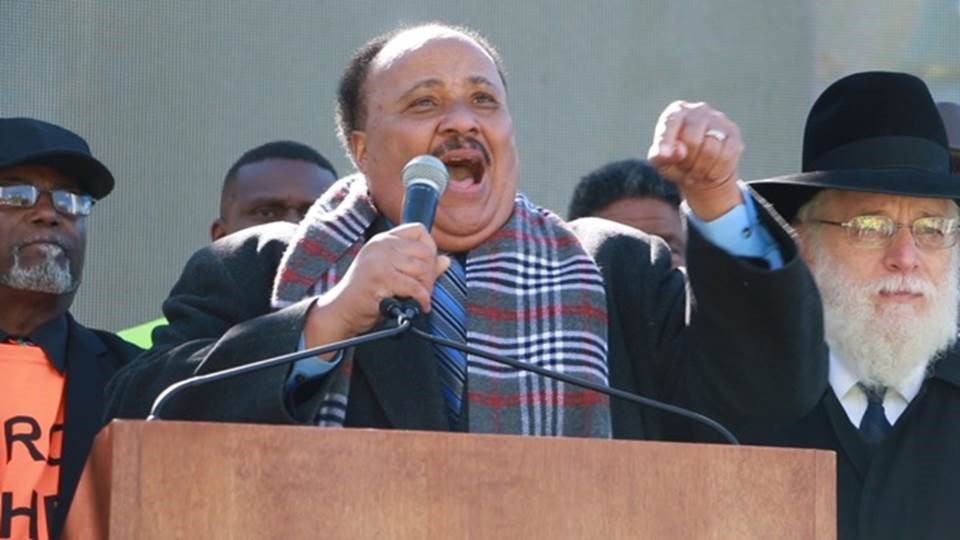
Martin Luther King III talked about school choice in the language of progressives and civil rights supporters: freedom, justice, opportunity.
Martin Luther King III is one of them. A year ago this week, he headlined a rally in Tallahassee that drew 10,000 people in opposition to the ongoing lawsuit against the Florida Tax Credit Scholarship, the largest private school choice program in America.* The event spawned a ton of news coverage, and one of King’s quotes made the rounds: “If the courts have to decide, the courts will be on the side of justice,” he told the crowd. “Because this is about justice. This is about righteousness. This is about truth. This is about freedom. The freedom to choose what’s best for your family, and your child most importantly.”
The whole of King’s remarks didn’t get as much attention. (See them in the video above, starting around the 5-minute mark.) So what better time than now, the holiday commemorating his father’s birthday, to give it a spotlight?
MLK III describes himself as a human rights activist. He is pro-Obama, pro-labor, pro-environment, pro-gun control. And his speech touched on reasons for school choice that choice-friendly progressives have long emphasized, particularly opportunity and diversity. King wove in comments on other issues that day – poverty, defense spending, criminal justice – that left no doubt he’s a man of the left. I suspect the massive crowd before him that day, overwhelmingly black and Hispanic, largely shared his views.
Despite popular perception, both left and right have supported school choice, and both have advanced compelling arguments in favor. Unfortunately, the views of the pro-choice left have been obscured by a bogus narrative that vouchers, charter schools and related programs are part of a sinister, right-wing scheme to destroy public schools.
Thankfully, somebody forgot to tell MLK III – and the thousands of parents cheering him. Here's what he said as his speech came to a close:
My dad told us a lot of things. He used to say that the ultimate measure of the human being is not where one stands in times of comfort and convenience. But where one stands in times of challenge and controversy.
He went on to say that on some questions, cowardice asks: Is the position safe? He said expediency asks: Is the position politic? He said vanity asks: Is the position popular? But that something deep inside called conscience asks: Is the position right?
He went on to say that sometimes we must stand up for positions that are neither safe nor popular nor politic. But we must stand up because our consciences tell us they’re right.
That’s what we are here for today. Because we’re standing on the right side of what’s right for our children ...
I hope more progressives give MLK III a listen.
Because on school choice, he’s right. From the left.
*The Florida Tax Credit Scholarship is administered by nonprofits such as Step Up For Students, which hosts this blog and pays my salary.
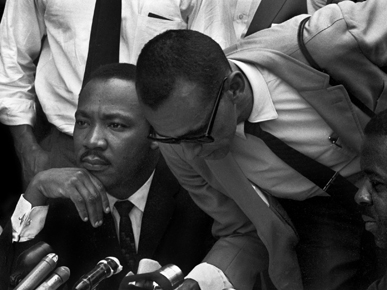
Wyatt Tee Walker, at right, was chief of staff to Martin Luther King Jr. and the first full-time executive director of the Southern Christian Leadership Conference. He was also instrumental in starting the first charter school in New York. He is among many noteworthy bridges between the civil rights and school choice movements. (Image from encylopediaofalabama.org)
Few civil rights leaders in America were in the thick of things as much as Wyatt Tee Walker. He was chief of staff to Martin Luther King Jr.; the first, full-time executive director of the Southern Christian Leadership Conference; and the lead strategist behind the Birmingham campaign – the clash that seared Bull Connor, fire hoses and police dogs into America’s consciousness and spurred passage of the 1964 Civil Rights Act.
 But Rev. Walker’s difference-making didn’t end there. Decades later, he played a key role in the push for school choice, making him, like Rosa Parks and Martin Luther King III, another noteworthy bridge between the two movements.
“All of the experience I gained in the human rights struggle was applicable to this new frontier of human rights,” he writes in the forward to “A Light Shines in Harlem,” the 2014 book by journalist Mary C. Bounds that chronicles New York’s first charter school, which Walker helped to create. “In my most reflective moments, I believe this is where Dr. King would be if he were still alive! In the charter movement, I am continuing the work of Dr. King that has far-reaching meaning.”
The National Alliance for Public Charter Schools recently honored Walker with a lifetime achievement award and this moving video tribute. He was vital to passage of New York’s charter school law in 1999, then to creation of the Sisulu Children’s Academy in Harlem, named for South African freedom fighter Walter Sisulu. Now called Sisulu-Walker Charter School, it boldly blazed the trail for Empire State charter schools, including the 200-plus now in New York City alone.
Those contributions are worthy of recognition in their own right. But they also offer yet more evidence of the oft-hidden ties between school choice, the civil rights movement and progressive politics. I know, I know; I’m a broken record. But I’d like to respectfully ask, again, that folks on the left who dismiss choice, because they think it sprung from an enemy camp, to consider Walker and so many others whose visions of social justice include expansion of educational freedom.
Clearly, it’s not profiteering and privatization that drive them. It’s a desire to find high-quality options for children who need them the most. In the case of African American communities, that powerful impulse, to use any and all resources to create the best possible alternatives, goes back centuries, fueled by racist laws that denied educational opportunities, then by laws and practices that resulted in schools that were inferior, or didn’t work, or both.
Besides serving as Dr. King’s trusted aide, Walker had been a local NAACP president and a state director of the Congress of Racial Equality. In the late 1960's, he moved to Harlem to become senior pastor of the influential Canaan Baptist Church. There, he continued to fight for better jobs, affordable housing and a long list of other issues that fellow progressives would find compelling. Eventually, he turned to his community’s educational challenges, and, in his view, the failure of traditional public schools to address them.
Walker rallied other inner-city ministers to support the bill that became New York’s charter school law. He offered space in his church to the Sisulu school. He welcomed private funding. Despite some ups and downs, the school ultimately succeeded, improving thousands of lives in the “capital of black America.” (more…)
This week, we received important reminders about the two oldest forms of parental school choice:
The housing market ... :
[W]hen asked at a news conference in November why the city did not at least do what it could to redraw attendance lines, [New York Mayor Bill de Blasio] defended the property rights of affluent parents who buy into neighborhoods to secure entry into heavily white schools. “You have to also respect families who have made a decision to live in a certain area,” he said, because families have “made massive life decisions and investments because of which school their kid would go to.” The mayor suggested there was little he could do because school segregation simply was a reflection of New York’s stark housing segregation, entrenched by decades of discriminatory local and federal policy. “This is the history of America,” he said.
... and address fraud.
My mom and dad had only been in America for four years. Their financial situation was tough, and they didn’t know the system yet. But they knew I had to attend the school where I was assigned, based on where we lived.
So my parents did something thousands of other public-school parents feel forced to do, because they feel they have no other options. They lied about where we lived so I could go to a different school where I would feel safe.
Traditional schools, assigned based on where students live, may be nominally public, but they aren't equally accessible to all. (See also: The latest chapter long-running legal battle of Missouri parents looking to transfer from low-performing school districts to higher-performing ones).
There's a better way. It involves creating new and better options for parents, and ensuring those options are most accessible to those who have historically been excluded from the old system.
Meanwhile...
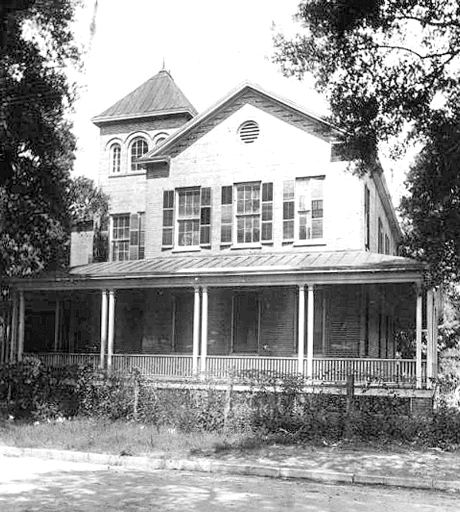
St. Benedict The Moor School, St. Augustine, Fla. Source: Wikimedia Commons.
A century ago, three Catholic sisters in St. Augustine, Fla. were arrested for something the state Legislature had recently made a crime: Teaching black children at what, in the parlance of the time, was known as a "negro school."
The ensuing trial propelled a 266-year-old French Catholic order and America's youngest Catholic Bishop into the middle one of the wildest and most racially charged gubernatorial campaigns in Florida history. A hundred years ago today, the white sisters won their legal battle, vindicating the rights of private institutions like the Saint Benedict the Moor School that fought to create educational opportunities for black children in the era of Jim Crow segregation.
Black parents' demand for quality education didn't begin with Brown v. Board, but hundreds of years before, in chains and in secret. But near the turn of the twentieth century, as Jim Crow laws reversed the progress made under post-Civil War reconstruction, public institutions intended to uplift freed blacks became increasingly inadequate and unequal. Black parents often turned to their own churches or to missionary aid societies, like the Sisters of St. Joseph, to educate their children.
The story of the three white Catholic sisters has been examined over the years by multiple scholars, whose work informs this post. And while details in the historical record are at times murky and ambiguous, the episode sheds light on the countless struggles across the South to educate black children who were pushed to the margins by oppressive public institutions.
* * *
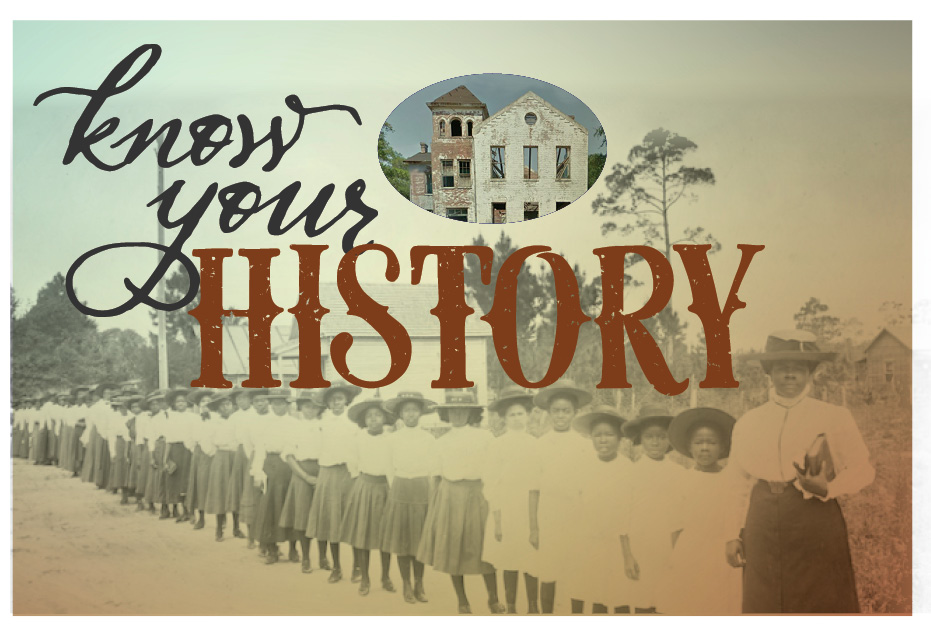 Founded in 1650 in Le Puy-en-Velay, a rural mountain town in southern France, the Sisters of St. Joseph took up a mission to serve, educate and care for the poor and disadvantaged. For the next 200 years, the sisters pursued their mission throughout France until they were invited to Florida by Bishop Augustin Verot after the end of the U.S. Civil War.
Verot, a native of Le Puy, recruited eight sisters for a new mission: To educate newly freed slaves and their children.
The sisters established Florida's first Catholic school for black students in 1867 along St. George Street in St. Augustine. They would go on to establish schools in Key West and in Ybor City. With the financial backing of a wealthy heiress, Saint Katharine Drexel, the Sisters of St. Joseph opened St. Benedict the Moor School in 1898.
The Sisters of St. Joseph, along with other religious groups like the Protestant American Missionary Association, educated black students in private and public schools in Florida for several decades. But then the legislature lashed out against their efforts. "An Act Prohibiting White Persons from Teaching Negroes in Negro Schools" unanimously passed through both chambers without debate, and was signed into law on June 7, 1913. (more…)
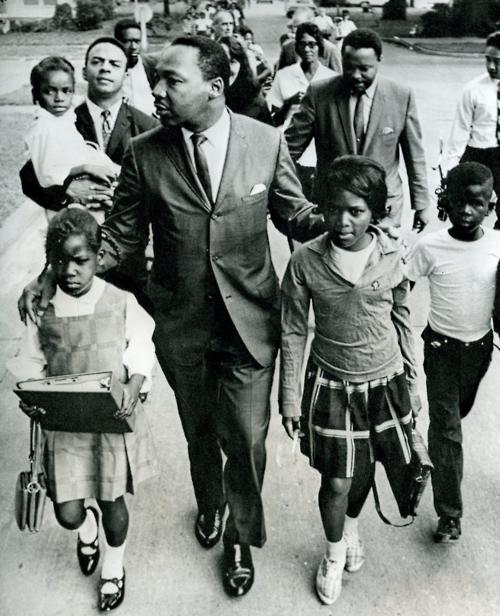 National education advocates and some of Florida's leading clergy have reflected on the words and legacy of Martin Luther King, Jr., and what they mean for school choice movement. Their words offer a backdrop as thousands of parents, students, educators and activists prepare to rally in Tallahassee on Tuesday.
In the Tampa Tribune, Rev. Manuel Sykes highlights the upcoming rally, which Martin Luther King, III is scheduled to headline.
Explicitly racist laws no longer segregate our children, but yesterday’s curbs on educational freedom have been replaced by new barriers that are just as unjust. Low-income parents are awakening to this reality, which is why thousands of them will descend on Tallahassee on Tuesday to send a message to those who defend such a system.
Unlike more affluent parents, low-income parents can’t just move to suburbs where public schools have more resources, more experienced teachers, and atmospheres more conducive to learning. These schools are not “public” like our parks and libraries. They are reserved for the families who can afford to live near them.
At The Seventy-Four, Derrell Bradford recalls King's lament of "white moderates," whom he came to see as a primary barrier to progress. (more…)
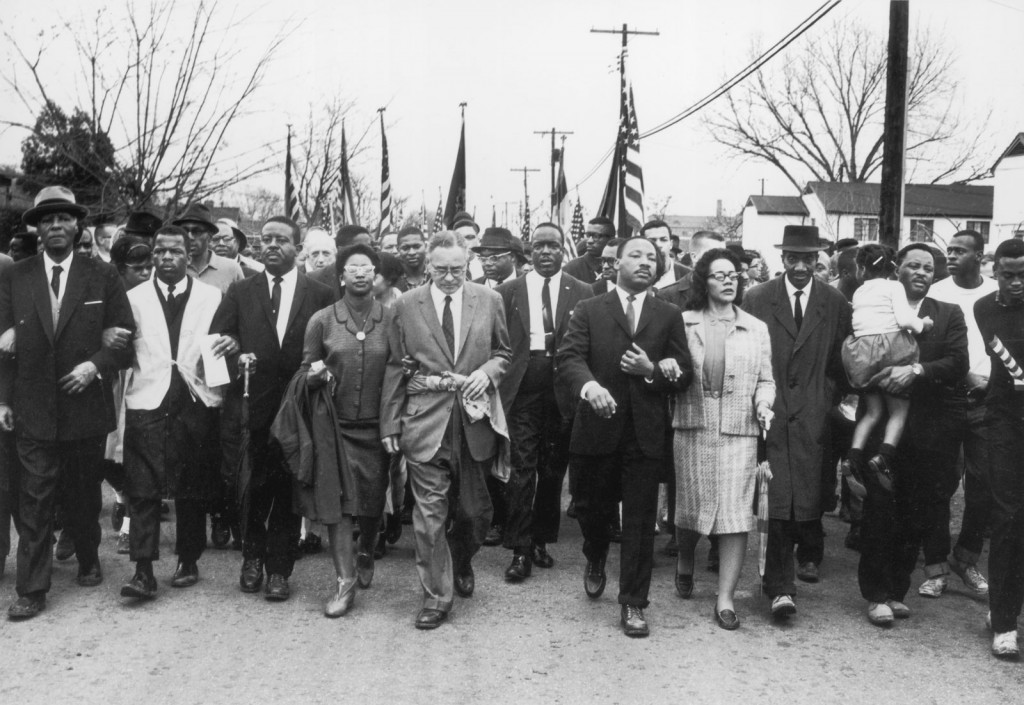
Florida civil right leader H.K. Matthews, who marched at Selma, says both that historic march and the current fight over school choice are about empowerment.
The historic march at Selma in 1965 and the current battle over school choice in Florida have a lot in common, writes Florida civil rights icon H.K. Matthews in an op-ed in today’s Fort Myers News Press.
Matthews participated in the Selma march, which is again the focus of national discussion thanks to a powerful new movie. He also helped lead the 2010 march on Tallahassee that drew nearly 6,000 people in support of tax credit scholarships for low-income children.
Watching the movie revived painful memories, Matthews writes. But it wasn’t the first time he had flashbacks to that pivotal moment in the civil rights movement, pointing specifically to the 2010 rally in Florida.
“Incredibly, nearly 6,000 people showed up — that's roughly 10 times the number who marched across that Selma bridge,” he writes. “Over 1,000 people slept on buses overnight to be there. They came to celebrate their own empowerment — the ability to choose the best school for their children.”
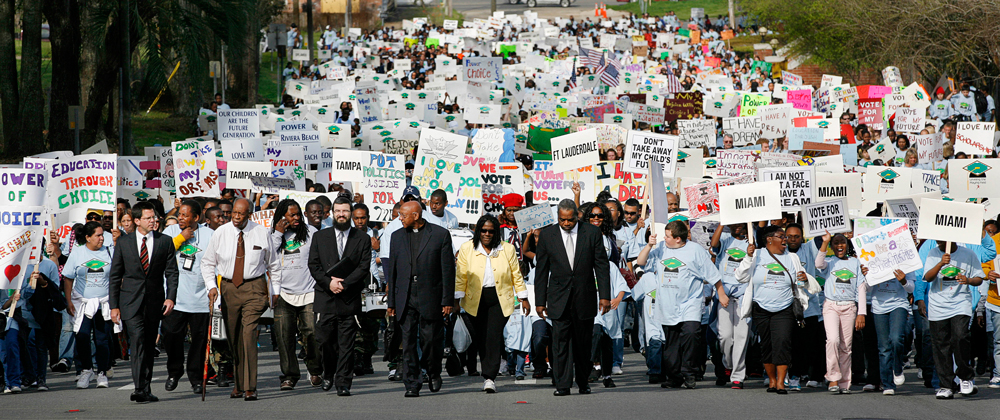
Rev. Matthews participated in both the first Selma march and the 2010 march in Tallahassee that drew nearly 6,000 in support of parental choice. He is in the front row on the left, walking with the cane.
The 2010 march preceded passage of a bill, later signed by then Gov. Charlie Crist, that expanded the scholarship program. Last August, the Florida teachers union, Florida School Boards Association and other groups filed suit to end the program, which is administered by nonprofits such as Step Up For Students, which co-hosts this blog. A key hearing in the case is set for Feb. 9.
“When I heard about the lawsuit, I had another flashback to the old movement,” Matthews writes in the op-ed. “The parallels were striking to me. Here were citizens demanding empowerment. A march symbolized that demand. And here were powerful groups trying to deny it.
“I suppose that this lawsuit will eventually end up in the Florida Supreme Court. One thing I'm fairly sure of: If nearly 6,000 people showed up just to demonstrate that they supported the program, how many will come if the most important thing to them — their right to choose the best school for their children — is threatened to be taken away?”
Read the full op-ed here.
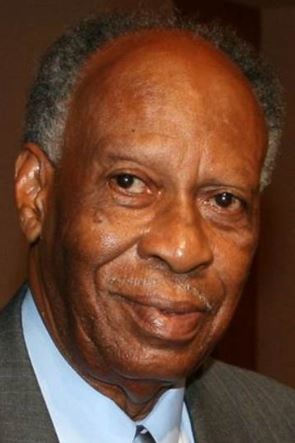
Rev. Matthews
Last month, Rev. H.K. Matthews, a civil rights leader in Florida who marched with Martin Luther King Jr. at Selma, pleaded with Charlie Crist to publicly denounce the lawsuit against the tax credit scholarship program for low-income students. Crist would not do so, but Matthews has not given up his fight against the suit.
In an op-ed in the Tallahassee Democrat, Matthews called the lawsuit filed Aug. 28 by the Florida teachers union, Florida School Boards Association, Florida NAACP and other groups “hard to stomach.”
“The truth is that wealthy children have always had choices, whether to neighborhoods with favored public schools or private schools that only money can buy,” Matthews wrote. “The union cries foul when that privilege is extended to those of meager financial means.”
Matthews is part of a politically diverse coalition opposed to the lawsuit that includes a number of prominent black ministers like himself. Nearly 70,000 students are being served by the program this year, more than two-thirds of them black and Hispanic. The program is administered by nonprofits like Step Up For Students, which co-hosts this blog.
In the op-ed, Matthew said he and other school choice supporters are not knocking public schools, calling them “the lifeblood of education.” “But the world is changing, and education needs to change as well,” he continued, noting the proliferation of other school choice options, including magnet schools, charter schools, virtual courses and career academies.
“The scholarship is not an educational miracle,” he concluded. “It’s simply an option that can work for some students but not all. The fact that it grants opportunities to economically disadvantaged students and those of color is something that gives hope to an old civil rights warrior like me.” Read the full post here.
Charter schools. High-performing Plato Academy plans to expand in Pinellas. Tampa Bay Times. The district is moving to take over a foundering charter for at-risk students. Tampa Tribune. The Palm Beach Post rips Mavericks High School in an editorial.
Private schools. A new Christian school in Ocala hopes to grow in the upcoming year. Ocala Star-Banner.
Civil rights. A federal investigation questions whether Hillsborough minority students have less access to experienced teachers and face tougher discipline. Tampa Bay Times. Tampa Tribune.
Books. A parent's complaint gets a novel pulled from a summer reading list. Tampa Bay Times.
Campaigns. Miami-Dade school board members rake in contributions despite facing little opposition. Miami Herald.
Finance. The Hernando district is spending more than it takes in. Tampa Bay Times. Manatee's budget situation is improving. Bradenton Herald.
Superintendents. Pinellas' chief gets his contract extended to 2020. Tampa Tribune.
Boundaries. Orange County approves a plan to redraw attendance boundaries for Jones High School. Orlando Sentinel.
Administration. The Okaloosa school district moves to standardize staff at all its schools. Northwest Florida Daily News. The Lee County school board approves a reorganization plan. Fort Myers News-Press. The Orange County school system is wasting money hiring class-size officers, an Orlando Sentinel columnist argues. Hillsborough schools get new principals. Tampa Tribune.
Vals and Sals. Broward schools keep their honorary titles. Sun-Sentinel.

Hanley
Editor's note: This is the third post in our series commemorating the 50th anniversary of Dr. King's Dream speech.
It was January 18th, the Saturday of the MLK weekend in 1997, when I printed out the “I Have a Dream” speech. I’m not completely sure why, except that I was transitioning in my life from international business to education reform. The powerful language and ideas King conveyed, especially the notion that we had defaulted on our promissory note, captured me then and have stayed with me. The speech has been in my briefcase ever since. Multiple times each year, I pull it out when I need to refresh my memory as to why I remain engaged in what is often such an arduous struggle.
By now, I hope, people are familiar with the dismal stats. Our schools remain mostly separate and unequal. Schools that enroll 90 percent or more non-white students spend $733 less per pupil per year than schools that enroll 90 percent or more white students. That’s enough to pay the salary of 12 additional new teachers or nine veteran teachers in an average high-minority school with 600 students. Almost 40 percent of black and Hispanic students attend those high minority schools, whereas the average white student is in a school that’s 77 percent white. Whites now constitute only 52 percent of K-12 demographics.
Meanwhile, only 19 percent of Hispanic 4th graders and 16 percent of black 4th graders scored proficient or above on the 2011 NAEP reading exam. About half of Hispanic and black students were “below basic,” the lowest category. Even our best students often leave the K-12 system unprepared, as best evidenced by a 60 percent remediation rate in the first year of college and large numbers of dropouts.
Although progress has been made, America remains in default on its promise of access to a high quality educational experience for all. In the words of Dr. King, we are addicted to the “tranquilizing drug of gradualism,” and mired in a “quicksand of racial (as well as class) injustice.” Powerful adult interest groups continue to benefit. That part is analogous to the civil rights struggle of the 50’s and 60’s, though thankfully so far without the snarling dogs, fire hoses and bullets. My frustration with the pace is that the vision of justice, of what is right and what is possible, is so clear. We see hundreds of charter schools, private schools and traditional public schools achieving at high levels with children of all classes and ethnicities. When we know better, as we do, we should do better. But mostly we do not.
Parental school choice alone is no panacea. Standards need to be raised; teacher recruitment, preparation, training, evaluation, and compensation systems dramatically restructured; and technology integrated to improve efficiency. But Dr. King would likely look askance at using school district attendance boundaries to corral families the way we do cattle, allowing them in and out only when it pleases the owner. This system is inherently unjust, immoral, and even evil when it condemns families to poor performing schools year after year, generation after generation. It forcibly segregates us from one another. Without choice, we de facto have Plessy v. Ferguson’s “separate, but equal” that has never actually been equal. Often it destroys hope. (more…)

