Top 10 again. Education Week ranks Florida No. 6 this year in its annual Quality Counts report. redefinED. Orlando Sentinel. Associated Press.
Teacher evals. StateImpact Florida writes about the new Gates study on the best way to identify the best teachers. SchoolZone notes it. Jay P. Greene rips it. District officials in Palm Beach County don’t feel good about the new, state-mandated system, reports the South Florida Sun Sentinel.
Common Core. Reformers have to win the messaging battle, writes Mike Thomas at the EdFly Blog: “Our success in passing school reforms has had more to do with prevailing in legislative bodies than prevailing in the public arena. This has led to a dangerous neglect of the need for marketing. We now are paying the price for that as our opponents vigorously fight back, defining reform as an attack on public schools that is degrading the quality of education. That this isn’t true doesn’t matter. Sound bites often trump data.”
 Rezoning retreat. After affluent parents complain, Seminole district officials back away from plans to equalize the number of low-income students at each school. Orlando Sentinel.
Fire them. Hillsborough Superintendent MaryEllen Elia recommends firing two aides and demoting a principal and assistant principal in the aftermath of the drowning of a special needs student. Tampa Bay Times. Tampa Tribune.
More school safety. Tampa Bay Times. StateImpact Florida. Panama City News Herald. (more…)
School funding. Gov. Rick Scott wants to spend additional revenue on public schools, reports the Florida Current. Funding and other education issues are woven through a mid-term progress report on Scott from the Tampa Bay Times.
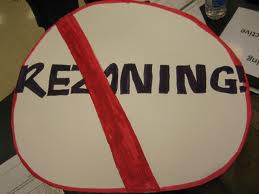 Rezoning. The Seminole school district is swamped with proposals, reports Orlando Sentinel. Affluent parents respond with “snobbery,” writes Sentinel columnist Beth Kassab. (Image from coolsprings.com)
Florida gets a B- for ed reform policies, according to a StudentsFirst report out today, the New York Times reports. That ties it with Louisiana for the top grade. A dozen states get F’s.
Best year ever. 2012 was a year of unprecedented accomplishments for the Miami-Dade school district, writes Superintendent Alberto Carvalho in the Miami Herald.
Career and technical. The Manatee school districts spends $44 million on a new main campus for Manatee Technical Institute. Bradenton Herald.
School grading. Poor grades for Polk high schools should be taken seriously. Lakeland Ledger.
School security. Editorials from Tampa Bay Times, Tampa Tribune, Palm Beach Post. More coverage from the Tribune and South Florida Sun Sentinel.
School enrollment. It's up in public schools by 30,000 statewide, in part because of declines in private schools. Palm Beach Post. A district audit finds a Palm Springs charter school overstated its enrollment, resulting in a $160,000 overpayment, the Palm Beach Post also reports.
Home schooling. Enough with the stereotypes, writes Mike Thomas at the EdFly Blog. (more…)
School choice battle. The Palm Beach Post sees one unfolding in the coming legislative session.
Charter school closing. Global Outreach Academy, citing financial problems, tells Flagler school district officials on New Year's Day that it's shutting down immediately, reports FlaglerLive.com. Another charter school closes mid-year in Lee County, reports the Fort Myers News Press.
2012: Year of pushback. Gradebook.
2013: Year of ... Common Core and parent trigger make the Fort Myers News Press list. Testing and Tony Bennett make the Gainesville Sun’s.
 Algebra Nation. A new project from UF’s Lastinger Center for Learning offers an online resource to help students, teachers and parents with the Algebra I end of course exam. Gainesville Sun.
More school security. After Newtown, several mayors want metal detectors and guards at all Palm Beach County public schools. Palm Beach Post.
Financial boot camp. High school students learn to manage money through a partnership program with the business community. Miami Herald.
I wish the education reform movement would put more focus on the broken schools of education that fail to attract highly qualified students or to train them to perform well in the nation’s classrooms.
 Six years have passed since The Education Schools Project, headed by Arthur Levine, former president of Teachers College at Columbia University, issued a comprehensive and scathing indictment of the nation’s schools of education. The report found an overwhelming lack of academic standards and understanding of how teachers should be prepared. It determined that “most education schools are engaged in a ‘pursuit of irrelevance,’ with curriculums in disarray and faculty disconnected from classrooms and colleagues.” Moreover, schools of education have become “cash cows” for universities. The admissions standards are low. The research expectations and standards are far below those expected in other disciplines. And there is no pressure to raise student academic outcomes because, at least in part, school districts often only care about a “credential” and not the learning it represents.
Have things improved since Levine’s report? Speaking at a panel during the recent Excellence in Action National Summit on Education Reform, Kate Walsh, president of the National Council on Teacher Quality, previewed the results of a comprehensive study to be published in U.S. News & World Report in April 2013. It affirms little has changed. For example, only about 20 percent of schools of education have admission standards that even require applicants to be in the top 50 percent of their high school graduating class. Only 25 percent of schools of education require their students to be placed with an “effective” teacher when student teaching. (more…)
Common Core: There is general acceptance among teachers, teachers unions and politicians in Florida that Common Core is a good thing, but questions remain about testing and funding, the Associated Press reports.
Next big step. President Obama can build on Common Core by creating another Race to the Top competition, inviting teachers to create top-notch, MOOC-like courses that can be viewed by students anywhere, write David Colburn and Brian Dassler in this op-ed for the Tampa Bay Times.
 Ed reform Christmas Carol. Have we forgotten the Ghost of Education Past? From EdFly Blog: “For some, this brings nostalgia for the days when teachers and schools set their own standards. Forgotten is that while this system worked well for the children of affluent parents who lived near the best schools, it failed a growing number of kids not born into such fortunate circumstances.”
Private school security. The Palm Beach Post looks at the response from private schools in the wake of Newtown. The Post also looked at how charter schools in Palm Beach County responded.
Rookies. A year in the life of a first-year teacher. Second in a series. Fort Myers News Press.
Transfers. A Collier County teacher fights an involuntary transfer. Naples Daily News.
More school grades. The grading formula is in flux. School Zone.
Is the FCAT required or not? StateImpact Florida.
A 73-second exchange between Gov. Rick Scott and capital reporters last week has raised the profile of testing in Florida’s scholarship for low-income children, but done little to deepen the debate. The question of testing is a legitimate one, but cannot be separated from the educational context.
Gov. Scott had no time to deal with such complexity. He was fielding rapid-fire questions after a state Cabinet meeting when he was asked whether students on vouchers should take the same test as those in public schools. His first answer: “Look, if you’re going to have state dollars, you’re going to have similar standards.” On followup, he said: “I believe anybody that gets state dollars ought to be under the same standards.”
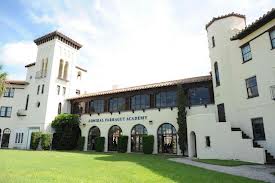
If the state required tax credit scholarship students to take the same tests as their public school counterparts, what might that mean for say, the 21 scholarship students at the highly regarded Admiral Farragut Academy in St. Petersburg? They’re a tiny portion of the 400 students at the school, which accepts the $4,335 scholarship as full payment. Would those students lose out on a remarkable learning environment?
The governor’s instinct is strong, but the statement took on a life of its own, spurring news coverage, editorials and a distinguished post from the Fordham Institute. Not surprisingly, much of the reaction was one-dimensional, focused on apples and oranges and what Ralph Waldo Emerson might have called a “foolish consistency." So allow me, as policy director for Step Up For Students, the nonprofit that oversees the Florida Tax Credit Scholarship for 50,812 low-income students this year in Florida, to try to paint the broad landscape.
Under Florida’s scholarship program, students are required to take nationally norm-referenced tests approved by the state Department of Education. More than two-thirds take the Stanford Achievement Test. Another fifth, which comprises mainly the Catholic schools, take the Iowa Test of Basic Skills. The test-score gains are then reported publicly each year by an independent researcher, respected Northwestern University professor David Figlio. Starting this year, those gains are also reported for every school with at least 30 students who have current- and prior-year test scores. The validity of these testing instruments is not really in dispute, which is why it is more than a little disconcerting that their results have been scarcely mentioned. The state’s leading newspaper managed to write an entire editorial directive, “Holding voucher schools to account is overdue,” without a single reference.
So, for the record, the state so far has issued five years of test reports for the tax credit scholarship, and two findings have been persistent: 1) The students choosing the scholarship were the lowest performers from the traditional public schools they left behind; and 2) On the whole they are achieving almost precisely the same test gains in reading and math as students of all incomes nationally. For the 70 schools that met the disclosure threshold this year, 50 kept pace with the national sample, eight exceeded and 12 fell short.
Not incidentally, these results provide the kind of data that is needed to judge whether students are making academic progress. (more…)
Florida Catholic schools are embracing Common Core academic standards and seriously considering whether to take the coming state tests aligned to them. In the meantime, their leaders say, 30 to 40 Catholic schools want to administer the FCAT in 2014, in what would be a trial run for potential transition to Common Core testing.
“Our mission is the same, public or Catholic school, to create productive citizens in our world that actually have the skills in life they need,” Alberto Vazquez-Matos, schools superintendent for the Diocese of St. Petersburg, told redefinED. “We’ll all be raising the standards and talking the same academic language.”
The push by Catholic schools towards common standards - and perhaps common tests - is an interesting counterpoint to the debate that followed last week’s comments by Gov. Rick Scott. Scott re-opened the door to a long-running conversation about voucher and tax-credit scholarship programs by saying he wants to see students in those programs take the same tests as their public school peers.
Right now, the state does not require tax credit scholarship students to take the FCAT, but they are mandated to take another comparable, state-approved test such as the Stanford Achievement Test or Iowa Tests of Basic Skills. Disabled students who use McKay vouchers to attend private schools are not required by the state to take any such tests.
This year, Catholic schools in Florida enroll 7,673 tax credit scholarship students. (The scholarship program is administered by Step Up for Students, which co-hosts this blog.)
Scott’s comments sparked suggestions from some school choice critics that private schools were dodging comparisons to public schools. But Florida’s Catholic schools have been quietly moving towards Common Core for more than year. In fact, all 237 Catholic schools in Florida will be rolling out a “blended’’ version of the language arts standards, right along with public schools, in 2014. (more…)
In an interview published this morning, incoming Florida education commissioner Tony Bennett tells Rick Hess that Gov. Rick Scott gave him two priorities: implementation of Common Core and Senate Bill 736.
The latter is the law, signed by Scott last year, that makes sweeping changes to how Florida teachers are evaluated and paid. As he did when speaking with reporters Wednesday, Bennett threw out the possibility of changes to SB 736, which has sparked widespread frustration because of new evals that even some reformers like Hess find problematic.
"Senate Bill 736 has created some challenges, but also some opportunities. It has and will continue to bring into focus how we think about the obstacles, the capacity challenges at the district level, and whether we need to make tweaks to the legislation," Bennett said. "When I met with administrators and teachers the other day, I said nothing is off the table in terms of 736. We want to make sure this is an effective, efficient, fair, measure of teacher effectiveness." Full interview here.
Basking in the glow. Interim education commissioner Pam Stewart touts the PIRLS results on CNN. U.S. Education Secretary Arne Duncan offers praise, notes Orlando Sentinel. More from Fort Myers News Press.
More Tony Bennett. Tampa Bay Times columnist John Romano sees the same old agenda. The Tampa Bay Times editorial board says the BOE pick shows it “values conservative ideology over proven performance.” More from Tampa Bay Times, Florida Times-Union, Palm Beach Post, News Service of Florida, Sunshine State News,
More on testing and voucher kids. According to this Tampa Bay Times story, Gov. Rick Scott will propose that tax-credit scholarship students take the Common Core tests when they replace the FCAT.
DOE errors. Board of Education members criticize mistakes in teacher evaluation data. Gradebook. School Zone. Sun-Sentinel columnist Michael Mayo isn’t a fan.
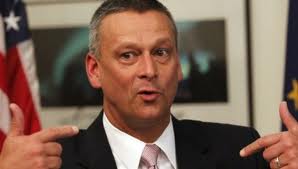 He’s in.
Tony Bennett, the hard-charging Hoosier with a rock-star rep, is the new face of Florida’s school system and its full-throttle reforms.
As expected, the Florida Board of Education voted unanimously Wednesday morning to select Bennett, the former state superintendent in Indiana, over two finalists with lower profiles. In doing so, they opted to give a new and bigger stage to a former science teacher and basketball coach who lost re-election last month, in a shocking upset, after championing school vouchers, school grades and other Florida-style initiatives.
Immediately after the vote, Bennett told reporters that even though his dream job was in Indiana, "there's only one state I believe is better than that, and that's Florida. This state is so vitally important to the national education discussion."
"I look forward to the great things ahead," he told the board.
Bennett's salary and start date are subject to negotiation, but the last two commissioners made $275,000 per year. Bennett said he expected to start work in mid January.
Board members discussed Bennett and the other two finalists for four minutes before the vote.
"His ability to get up to speed quickly would be very important for the state of Florida," said board member John Padget. And his willingness to travel the state to meet with teachers and other stakeholders "will be absolutely necessary," said member A.K. Desai.
“Tony has a great record of achievement in Indiana and I am confident he will be a tireless advocate for Florida’s students," Gov. Rick Scott said in a prepared statement.
As commissioner, Bennett will help oversee one of the biggest and most dynamic school systems in the country. Florida has 2.6 million students, with 40 percent of them attending something other than their zoned school. That's not by coincidence.
Since Jeb Bush was elected governor in 1998, the Sunshine State has been the nation’s leading lab for the transformation of public education. School grades, school vouchers, third-grade retention, merit pay for teachers – if it was controversial, it seems, it was either tried in Florida first or rolled out here in bigger, bolder fashion. Pressure to improve outcomes is coming from both a tough accountability system and, increasingly, from parent-driven school choice.
Bennett, the fourth commissioner in less than six years, faces even bigger challenges than his predecessors did. (more…)

