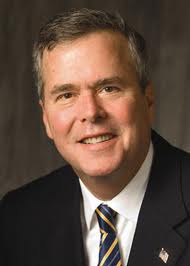
 Kicking off his foundation's fifth annual national education summit, former Florida Gov. Jeb Bush stressed the usual components of his reform agenda today but also accented an increasingly big talking point: bipartisanship.
Bush said “new coalitions on the left and right” are moving to revamp teacher evaluation and compensation systems and concluded his 30-minute remarks with a lengthy homage to the leadership skills of former Democratic President Lyndon Johnson. He also noted the bipartisan backing of so-called “parent trigger” legislation, which he predicted would pass the Florida Legislature next year after failing on a dramatic 20-20 tie in the Senate last spring.
“This is one of those great places where the center, left, right coalitions of this world need to work together. And that’s exactly what’s happened,” Bush said, singling out Parent Revolution, the left-wing group that has led the charge nationally for the trigger.
Referring to his own Foundation for Excellence in Education, which organized this week’s conference, Bush continued, “We’re supposed to be center-right, I guess,” but “we will work with everybody to be able to empower parents who right now feel hopeless about whether or not they have any say about their children’s future.”
The summit has grown in both stature and bipartisanship, and this year's event includes nearly 800 attendees from 46 states. John Podesta, former chief of staff to President Clinton, is today's keynote speaker. Arne Duncan, President Obama's education secretary, will address the group tomorrow.
Bush framed his remarks about education reform and expanded school choice with concerns about declining social mobility. (more…)
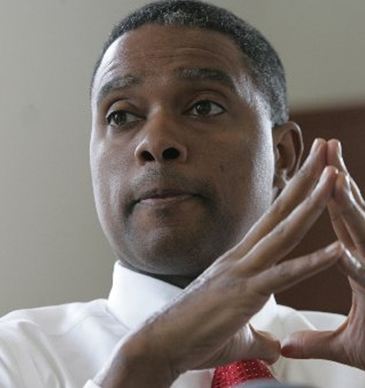 Gerard Robinson. The former Florida education commissioner, who stepped down three months ago, will be among the panelists next week responding to a new Brookings report on standardized testing and the Common Core. More here.
DOE responds to Tampa Bay Times contracting story. I can't remember the last time DOE did a point-by-point, line-by-line rebuttal to a story. Press release here.
Career academies. Get a nice write-up in the Gainesville Business Report.
Testing. New Duval Superintendent Nikolai Vitti removes some internal standardized tests from the district schedule, prompting praise from teachers union president Terrie Brady, reports the Florida Times Union.
FCAT. Will any private schools that accept tax credit scholarships give it? Asks Gradebook.
Contract talks. Continue next week in Palm Beach County after nearly falling apart last week, reports the Palm Beach Post’s Extra Credit blog.
Schools put kids in reach of convicts. Tampa Bay Times columnist Sue Carlton.
 ALEC to remain neutral on Common Core. Report from EdWeek. As we noted last week, Jeb Bush’s Foundation for Excellence in Education weighed in against the ALEC resolution. Thumbs up from Checker Finn. More from EdFly Blog.
Speaking of Common Core … Education Week writes about the dispute between the Florida Department of Education and a private vendor over a website that was supposed to prepare teachers and students for the new standards.
Teacher evals. The FEA holds a press conference to step up its criticism. Coverage from Orlando Sentinel, Gradebook, The Florida Current, First Coast News.
Agenda for ed conference. The fifth annual Excellence in Action National Summit on Education Reform, put on by the Foundation for Excellence in Education, is next week. Full agenda here.
Private school problems. Both the Bradenton Herald and Sarasota Herald-Tribune take a look at issues with The Prep Academy.
 Jeb Bush on FCAT, Common Core, bipartisanship. He tells StateImpact Florida, “Education is one of the few places where you have left-right coalitions that are for reform and left-right coalitions that are against reform. It’s not as monolithic as other areas of policy.”
Orange school board considers more school choice. It’s considering a policy that would allow students at over-capacity schools to enroll at under-capacity schools, reports the Orlando Sentinel.
More on charter school funding. Orlando Sentinel.
Charter school teacher raises. Represented by the Broward Teachers Union, the charter school teachers in the Pembroke Pines system win a raise through arbitration, reports the South Florida Sun-Sentinel.
Proposed cut scores. For biology and geometry end of course exams and FCAT science. From Gradebook. From Sentinel.
FEA talks teacher evaluations today. From the News Service of Florida: Members of the Florida Education Association discuss impacts of the new teacher evaluation system that was created as a result of SB 736 setting up merit pay. FEA President Andy Ford and teachers participate.

Rally photo from Families That Can.
California: 1,000 charter school parents and administrators rally to protest a proposed moratorium on charter schools (Los Angeles Times). The school board subsequently votes down a measure aimed at more oversight (Los Angeles Times). The school board at the center of the parent trigger fight could see turnover (Education Week).
Florida: Charter school supporters make a pitch for equitable funding and independent authorizers (redefinED). Charter school enrollment now tops 10 percent of total public school enrollment in eight Florida districts, a new report shows (redefineED). In the wake of Tony Bennett's defeat in Indiana, Jeb Bush's Foundation for Excellence in Education pushes back against Common Core critics (redefinED).
Tennessee: Gov. Bill Haslam's task force finalizes its recommendations for a statewide voucher program, agreeing it should be limited to poorer students (timesfreepress.com). More from The Tennessean and the Memphis Commercial Appeal.
Washington: The Seattle Times says the charter school ballot initiative has passed, even though opponents have yet to concede. Spokane Public Schools officials say they want to open a charter school (Huffington Post).
Illinois: Public school officials in Chicago plan to shut down poor-performing charters (Chicago Tribune).
Georgia: One of the state's bigger school districts considers creation of a full-time virtual school (Gainesville Times).
Colorado: Douglas County's voucher program heads back to court today, with both sides battling over a lower court ruling that it's unconstitutional (Denver Post).

Levesque
Tony Bennett’s shocking loss in Indiana has highlighted a deep and long-festering rift among some ed reformers over adoption of Common Core academic standards. Some observers pinned the loss on Republicans who see Common Core as federal intrusion tied to President Obama rather than a voluntary, state-led effort – and who saw Bennett as too cozy with it.
From Florida, one prominent Common Core advocate is pushing back.
In a letter last week to the American Legislative Exchange Council board of directors, Patricia Levesque, executive director of Jeb Bush’s Foundation for Excellence in Education, politely takes issue with a draft resolution that would revoke a state’s adoption of Common Core. She calls the standards a “crucial foundation” for reform and says while they’ll better prepare students for a global economy, they “do not dictate what textbooks must be used or how a district’s curriculum should be set up.”
“Resolutions like this one,” concludes the letter, dated a day after the election, “draw attention and resources away from what’s important – properly implementing the improved standards and working together to provide a high quality education to all students.”
In a blog post two days later, Levesque is far more edgy. (more…)

Kenny
The two-day Florida Charter School Conference officially opens Thursday with keynote speaker Deborah Kenny, founder and chief executive officer of the successful New York charter schools, Harlem Village Academies.
But a pre-conference schedule the day before offers sessions on starting a charter school and networking for principals, along with a three-hour town hall meeting featuring school leaders and legislators scheduled to talk about the future of charters in Florida.
No confirmations, yet, on the roster for that meeting. But look for discussions about charter school funding, especially calls for more oversight in light of the recent discovery of an Orlando charter school that paid its principal $800,000 last school year before the school shut down.
There might also be discussions on PECO funds – Public Education Capital Outlay dollars dedicated to school construction costs. Last year, lawmakers designated $55 million for charter schools and none for traditional public schools.
The rationale? Traditional schools can levy property taxes to build and maintain schools; charters don’t have that luxury. With 574 charter schools in 44 districts and more anticipated, expect debate about the public dollars in 2013.
Although the conference features a separate breakout session Friday on the Charter School Growth Fund, lawmakers might offer some details during the town hall meeting on how that money is used. The fund is made up of $20 million in Race To The Top dollars and $10 million in private donations. (more…)
 Shock and buzz. Tony Bennett’s loss was last night’s big jawdropper in the ed realm. But shock is already giving way to welling speculation that Indiana’s loss will be Florida’s gain.
Education Week wrote that Bennett, the Hoosier State’s superintendent of public instruction, “could be a natural fit” for the opening in Florida. Education researcher Rick Hess said Bennett will land on his feet “given that folks are likely to be clamoring for his services (including the state of Florida, which is desperately seeking a new chief).” The Gradebook, the ed blog for the Tampa Bay Times, put this headline on its first post of the day, “Might Indiana superintendent stunner yield Florida commissioner candidate?”
Speculation that Bennett may be headed to the Sunshine State began well before last night’s loss. And it’s easy to see why. Bennett championed Florida-style reforms in Indiana, including implementation of a statewide voucher program. He’s part of the Chiefs for Change group formed by Jeb Bush’s Foundation for Excellence in Education. And he makes a lot of sense when he talks persuasively about new definitions of public education that aren’t either/or. “We have allowed our opponents to draw a caricature of us that says we’re against public schools,” Bennett said last spring at the American Federation for Children conference. “I’m not an adversary of public schools. I’m an advocate for public school children.”
Applications for the Florida commissioner post are due by Nov. 30. We called and emailed the Indiana Department of Education to see if we could find out about Bennett’s plans. If we hear back, we’ll let you know.
In the meantime, there’s also plenty of commentary today about why Bennett lost to Glenda Ritz, an elementary school media specialist. (more…)
by Allison Hertog

Hertog
Last spring the U.S. Government Accountability Office issued a study concluding that charter schools enroll a lower percentage of special education students than traditional public schools. Some commentators have questioned this study’s methodology and conclusions, while others believe it confirms what they have seen in practice. Regardless of where you stand on that debate, charter schools have a great opportunity to increase their special education admissions and improve how well public education serves all struggling students.
Charter schools can do this by using a bottom-up model called Response to Intervention, along with the Common Core standards. Response to Intervention can be employed in any school – private, public, charter, maybe even virtual – but it is particularly well-suited for implementation and success in charter schools because of their enhanced freedom to enact school-wide reforms.
Response to Intervention (RTI) is a special education reform codified into the 2004 reauthorization of the federal Individuals with Disabilities Education Act. It's designed to decrease the rolls of special education students. Following a dramatic rise of the number of students identified as specific learning disabled (SLD) in the 1990s, researchers from the Progressive Policy Institute and the Thomas B. Fordham Foundation suggested in a landmark 2001 paper, Rethinking Learning Disabilities, that the SLD label was a “catch-all” for low-achieving students which serves as a “sociological sponge that attempts to wipe up general education’s spills and cleanse its ills.” A 2002 report from a presidential commission on special education stated up to 40 percent of children identified for special education weren’t truly disabled, but were simply not taught to read properly. (more…)

Horn
by Michael B. Horn
With the rapid growth of online learning - both in full-time virtual learning environments and even more often in blended learning in schools - there is an opportunity to transform the nation’s education system from its factory-model roots to a student-centric one that can customize affordably for different learning needs and thereby bolster every student’s learning and America’s competitiveness.
One of the main reasons the country’s education system fails so many students is because it was never built to help each child realize her fullest potential. Because students have different learning needs at different times - students learn at different paces, have different aptitudes, and have different levels of knowledge when they enter a classroom - harnessing the power of technology to do the positive things it has done in so many other sectors of society is vital.
Although this is an important national opportunity, it does not mean the best way to drive this innovation is from the federal government. That is one reason Digital Learning Now!, an effort led by former Governors Jeb Bush and Bob Wise to seize this transformational opportunity, focuses on the things states should do to create a student-centric education system.
That said, it is important that the federal government support the conditions for transformation - and eliminate onerous requirements for educators on the ground. To further this end, there are several steps it can and should take.
Implement backpack funding: Title I and Title II dollars should follow students down to the educational, not just school, experience of their choice. With the growth in online learning courses, it is important to allow students to access great teachers and the right learning experience for their needs regardless of their zip code.
Promote individual student growth as the measure of performance: Move away from No Child Left Behind’s AYP school site accountability model. Create transparency by having states focus on the growth in learning for each individual student. Given that a student-centric system will recognize that each student has different learning needs at different times, it only makes sense to move to a system that leverages technology and captures how each child is doing in near real time, not just on an annual basis, and can give credit to educators that help a student make meaningful progress regardless of where she started. To the end of creating transparency in the education system around student learning, as well as creating a bigger market to spur private investment in digital learning, supporting the Common Core state standards is also an appropriate role for the federal government - whereas acting as the nation’s education venture capitalist is not. (more…)

