In our everyday lives, we have choices.
We rarely buy whole LPs. We use programs like Spotify and Pandora to build custom playlists based on our individual tastes.
In everything from cars to spaghetti sauce, options have multiplied. Choice and customization reign.
As our culture has moved away from a ‘one size fits all’ approach to personalization to better meet an individuals’ preferences, the education field is following suit.
However, there is one problem.
Experts say there is not one universal term to describe “personalized learning." It means different things to a wide range of people who have different agendas.
Some say it is an excuse for unremarkable lessons with computers babysitting students for hours. Others say it is a new phrase that simply describes good instruction, where teachers connect with individual students. (more…)
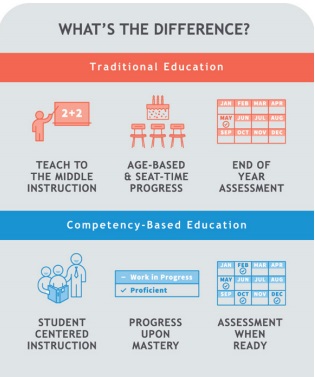
Florida is making a concerted push toward personalized learning — tailoring lessons more closely to individual students and allowing them to advance through school based on what they know, rather than the amount of time they spent in class.
Other states are, too, but there's something noteworthy about Florida's approach: It's largely being led by school districts.A state law passed earlier this year gives four districts and one university-based lab school the ability to participate in a pilot program to experiment with personalized learning.
A new report from the Foundation for Excellence in Education looks at personalized learning in three states, and notes Florida is taking a "bottom-up" approach. The law is intended to make way for changes districts are already carrying out, or at least hoping to pursue.
Lake and Pinellas Counties began their experiments a couple years ago, as part of a grant program funded by the Bill and Melinda Gates Foundation. The superintendent of Palm Beach County schools, Robert Avossa, was hired away from Fulton County, Ga., which is also participating in the Next Generation Systems Initiative Grant. The Seminole County school district and P.K. Yonge Developmental Research School are also allowed to participate in the pilot program.
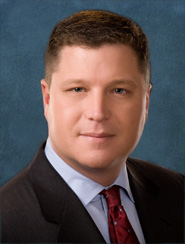
Sen. Brandes
Four school districts and a laboratory school at the University of Florida would have more freedom to explore competency-based education — in which students progress based on what they know rather than the amount of time spent in class — under a bill now headed Gov. Rick Scott's desk.
The Florida Senate approved HB 1365 this morning on a 31-6 vote.
The Lake, Palm Beach, Pinellas and Seminole County school districts, as well as P.K. Yonge Developmental Research School, would be able to apply to the state Department of Education for greater freedom to experiment with competency-based programs. In some districts and the lab school, those experiments have already begun.
Sen. Jeff Brandes, R-St. Petersburg, who sponsored the bill in the Senate, said Wednesday that the idea isn't exactly new. Florida Virtual School students, for example, move through material at their own pace, and the school only gets funded once they finish a course. Brandes said the state needs to prepare for a future in which all students advance from one unit to the next, or one grade to the next, once they've mastered the material.
"I think the best way for us to understand that is to do pilot programs to study it," he said. "I think the future of education is a student moving through a rubric at their own pace, not sitting in a seat as we've done for the last 100 years." (more…)
Students in two Florida school districts and one university-based lab school could advance through coursework at their own pace, based on "mastery of concepts and skills" rather than time spent in class, under legislation introduced today in both chambers of the state Legislature.
Sen. Brandes
The bills, filed by Sen. Jeff Brandes, R-St. Petersburg and Rep. Ray Rodrigues, R-Estero, would create pilot programs at P.K. Yonge Developmental Research School at the University of Florida, and in Lake and Pinellas County school districts.
Schools participating in the programs would have more flexibility to let students progress between units, courses, and grades based on whether they meet academic standards — a key principle of customized learning.
The two districts have both launched personalized-learning programs with backing from the Bill and Melinda Gates Foundation, which offered funding to half a dozen school systems around the country.
Politico Florida reported on the districts' efforts last month.
Lake County Schools won a $3.1 million grant from the Bill & Melinda Gates Foundation to implement the program, which the district launched this academic year in some grades within two elementary schools, one middle school and two high schools. Administrators hope to implement the program in all grades in those schools in four years.
Most of the grant dollars are funding professional development for teachers, said Kathy Halbig, the district’s coordinator for personalized learning.
“The big thing that we need help from the Legislature on is pacing,” Halbig said. “What that means is, if a student is really gifted in math, there should be opportunities for that student to deepen or enrich or move forward in that content area. Our goal isn’t to have second graders graduate, but if students really are gifted, we want them to be able to move as deeply into the material as they are able. We don’t want them to be held back by ‘teacher pace.’
The idea of competency-based instruction is not new. Florida educators were using technology to tailor student learning two decades ago, and it can trace its origin back more than a century.
But more recent advances in technology have allowed educators to begin upending the traditional "seat-time" model, in which students advance based on what they learn rather than move through the material in a fixed amount of time. That's one of the goals of Khan Academy's new "learning dashboard," which lays out "missions" for students to complete, with the idea that completing a mission will signal mastery of specific math standards.
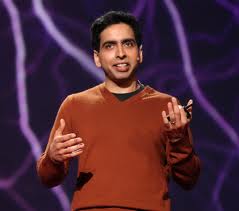 Salman Khan, the founder of Khan Academy, explained the significance of the organization's growth beyond video during a speech at this year's National Charter Schools Conference in Las Vegas. Right now, the learning dashboard is focused on math — perhaps the subject where learning is most cumulative. This is an excerpt from the keynote presentation he delivered on the conference's first day, edited lightly for length.
(Right now, at most schools), we shepherd (students) together at a set pace. Class time, there might be some lectures. They might do some homework. The next day, we might a review homework a little bit, get a little bit more lecture. And you can continue that cycle for maybe, about two or three weeks. And then you have an exam.
Let's say that unit was on basic exponents. And on that exam, I get an 80 percent, you get a 90 percent, and you get a 60 percent.
The exam has identified gaps. The person who got a 60 percent — 40 percent of the material, they didn't really get. Even the person who got an A, got a 95 percent, what was that 5 percent they didn't know? Even though that happened, the whole class then moves on to the next concept — say, negative exponents — pretty much ensuring that students are going to have trouble working on that.
And to put in focus how strange that is, imagine if we did other things in our life that way. Say, home-building. So you get the contractor in, and you say, 'You have a total of three weeks to build a foundation, do what you can.'
So he does what he can. Maybe there are delays. Maybe some of the supplies don't show up on time. Maybe some of the workers fall sick. And then, three weeks later, the inspector comes in and says, 'Well, the concrete's still wet over there. That part's not quite up to code. I'll give it an 80 percent.'
Oh, great. That's a C. Let's build the first floor. (more…)

Horn
by Michael B. Horn
With the rapid growth of online learning - both in full-time virtual learning environments and even more often in blended learning in schools - there is an opportunity to transform the nation’s education system from its factory-model roots to a student-centric one that can customize affordably for different learning needs and thereby bolster every student’s learning and America’s competitiveness.
One of the main reasons the country’s education system fails so many students is because it was never built to help each child realize her fullest potential. Because students have different learning needs at different times - students learn at different paces, have different aptitudes, and have different levels of knowledge when they enter a classroom - harnessing the power of technology to do the positive things it has done in so many other sectors of society is vital.
Although this is an important national opportunity, it does not mean the best way to drive this innovation is from the federal government. That is one reason Digital Learning Now!, an effort led by former Governors Jeb Bush and Bob Wise to seize this transformational opportunity, focuses on the things states should do to create a student-centric education system.
That said, it is important that the federal government support the conditions for transformation - and eliminate onerous requirements for educators on the ground. To further this end, there are several steps it can and should take.
Implement backpack funding: Title I and Title II dollars should follow students down to the educational, not just school, experience of their choice. With the growth in online learning courses, it is important to allow students to access great teachers and the right learning experience for their needs regardless of their zip code.
Promote individual student growth as the measure of performance: Move away from No Child Left Behind’s AYP school site accountability model. Create transparency by having states focus on the growth in learning for each individual student. Given that a student-centric system will recognize that each student has different learning needs at different times, it only makes sense to move to a system that leverages technology and captures how each child is doing in near real time, not just on an annual basis, and can give credit to educators that help a student make meaningful progress regardless of where she started. To the end of creating transparency in the education system around student learning, as well as creating a bigger market to spur private investment in digital learning, supporting the Common Core state standards is also an appropriate role for the federal government - whereas acting as the nation’s education venture capitalist is not. (more…)