I agree with Utah state Sen. Aaron Osmond’s assertion that over the last 150 years government has used compulsory school attendance laws to inappropriately usurp much of the parents’ responsibility and authority for educating their children. But while I believe this educational responsibility should be restored to parents, I also believe compulsory school attendance laws should be maintained, with some modifications.
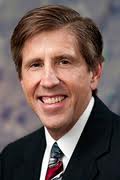
Tuthill
When mandatory school attendance laws were first passed in the mid-19th and early-20th centuries, brick-and-mortar schools and formal instruction were synonymous. That’s not necessarily the case today. In this new era of digital technology and customized teaching and learning, students are increasingly being educated in venues as diverse as libraries, community centers, private homes, museums, and Starbucks.
This proliferation of eclectic learning environments suggests our education laws should focus on compulsory learning and not compulsory school attendance. As long as children are making adequate progress mastering their state’s academic standards, the public should not care where this learning is occurring.
I oppose Sen. Osmond’s proposal to eliminate mandatory attendance (or learning) laws because the parents’ authority to education their children should not be absolute. Parents should never have the authority to purposely raise an illiterate child. That’s child abuse.
The Washington Post made a similar point in its recent editorial criticizing Virginia’s religious exemption law, which allows parents to opt out of the school attendance law without providing any evident their children are becoming literate:
“States have an interest and an obligation to see that children get a basic education; that’s why we have compulsory attendance laws. By writing such a broad exemption, Virginia has tipped the scales that balance a parent’s religious freedom with a child’s right to an education.”
In many ways, we’ve already begun making the transition from compulsory attendance to compulsory learning. In most states, homeschooling satisfies compulsory school attendance laws if parents can prove their children are making adequate academic progress. Unfortunately, what constitutes adequate academic progress is often vague and a source of disagreement between parents and local officials tasked with enforcing school attendance laws. If we're going to properly balance the parents' authority to educate their child with the government's interest in protecting children from abuse, then we must improve our ability to determine what constitutes acceptable academic progress for each child.
The new Common Core State Standards should help with this task since most students nationally will be working toward mastering the same content standards and their collective progress should help inform the progress we should expect from individual children.
Public policy should be more deferential to parental authority, but this authority cannot be absolute. We can create and implement policies that honor parents’ authority to educate their children while still protecting the child and society from abuse.
Editor's note: Utah state Sen. Aaron Osmond raised eyebrows and sparked debate last month with a provocative post on the senate blog that called for ending compulsory education and, essentially, expanding school choice options to include no school at all. The post drew coverage from Fox News to the Huffington Post (see here, here, here, here and here) and a fair bit of commentary, too (see here, here, here and here). On a related note, a fascinating case in Virginia - involving that state's broad religious exemption for school attendance - prompted the Washington Post to weigh in with this editorial over the weekend.
Here is Osmond's post in full:
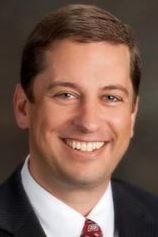
Sen. Osmond
Before 1890, public education in America was viewed as an opportunity - not a legal obligation. Prior to that time, the parent was primarily responsible for the education of their children. The state provided access to a free education for those that wanted to pursue it. The local teacher was viewed with respect and admiration as a professional to assist a parent in the education of their child.
Then came compulsory education. Our State began requiring that all parents must send their children to public school for fear that some children would not be educated because of an irresponsible parent. Since that day, the proverbial pendulum has swung in the wrong direction.
Some parents completely disengage themselves from their obligation to oversee and ensure the successful education of their children. Some parents act as if the responsibility to educate, and even care for their child, is primarily the responsibility of the public school system. As a result, our teachers and schools have been forced to become surrogate parents, expected to do everything from behavioral counseling, to providing adequate nutrition, to teaching sex education, as well as ensuring full college and career readiness.
Unfortunately, in this system, teachers rarely receive meaningful support or engagement from parents and occasionally face retaliation when they attempt to hold a child accountable for bad behavior or poor academic performance.
On the other hand, actively engaged parents sometimes feel that the public school system, and even some teachers, are insensitive to the unique needs and challenges of their children and are unwilling or unable to give their child the academic attention they need because of an overburdened education system, obligated by law to be all things to all people.
I believe the time has come for us to re-evaluate what we expect of parents and the public education system, as follows:
First, we need to restore the expectation that parents are primarily responsible for the educational success of their own children. That begins with restoring the parental right to decide if and when a child will go to public school. In a country founded on the principles of personal freedom and unalienable rights, no parent should be forced by the government to send their child to school under threat of fines and jail time. (more…)
The gurus of school choice have often shuddered at the word “regulation.” On occasion this instinctive hostility has been tactically justified. Viewed objectively, however, it is meaningless - even self-contradictory. And too often has it driven fair-minded listeners from the civic conversation about the ideal structure of this very necessary reform called “school choice.”
Regulation is itself a pre-condition of any system of choice, whether the intended beneficiary be the have-not family or the comfortable suburbanite. The empowerment of parents always comes as the effect of a particular set of rules. Nor is this reality limited to reforms aimed at the complex and private world of the family. The simplest of legal systems - one, for example, that embraced the most complete market freedom - would depend upon the regulatory oversight of some third-party authority to interpret and enforce those promises which constitute any market. Contracts are not self-enforcing. Nor is parental choice or any other human regime.
Children present perhaps the most obvious example of my point; by nature their lives will be regulated by someone. The only question is “by whom?” That the state will be one of the players seems quietly accepted by all. This includes the school choice reformer who has unequivocally embraced compulsory education - a thing to be enforced and paid for by the state. The issue, then, becomes how far beyond the requirement of schooling shall the state penetrate the natural territory of the family?
We appear to agree on rules forbidding child abuse. Beyond this and compulsory schooling, where shall we the people allow (or require) the state to go? The answer can come only in some cluster of regulation - some that command, some that limit the state. If it is parents who are to rule (i.e., to regulate their children), then government must be commanded (again, regulated) first - in a positive way - to subsidize the family’s preference in schooling, and second – negatively - to avoid subverting parental authority by unnecessary busybody rules. The state itself must be ruled in both positive and negative ways: it must do this; it may do this - but not that. (more…)
Much has been written on school vouchers that assumes they are primarily about economic efficiency and increasing the private sector’s role in education - a notion of educational choice that is widespread, understandable … and grossly incomplete.
Fifty years ago, the 18th Century idea of subsidized parental choice was reintroduced as a sub-species of free market theory. To choose a school became equivalent in form and in our discourse to the private procurement of insurance or apples; the parties exchange promises, then they perform.
There is truth to this; the school and the parent do make mutual promises that, by and large, the law will enforce. But to reduce parental choice to a simple bargain has been a tragic contraction of thought - an intellectual and political calamity. Any such contract to educate a child is profoundly more complex than the exchange of promises between A and B. Whether subsidized parental choice is a good idea thus is left an unintelligible question; it cannot be reduced to arguments for and against freedom of contract because children are not free.
This is a decree of nature itself. “Choice” is grown-up dominance of the child. This holds whether the deciding adult is a parent or a government stranger; one or the other will assign Susie to a school. The social and political issue, then, is more complex than a preference for or against free contract. Here in America the question is this: Should government continue to decide for children of have-not families, while the rest of us - as a matter of right - send our children to our own favorite school, whether public, private, or religious? (more…)

