A virtual classroom might include an aspiring tennis pro traveling in Europe, a child in the hospital battling cancer, and a student who left a traditional classroom to escape bullies. Two decades ago, it would be inconceivable that these disparate students would be learning together, with guidance from the same teachers. And it would be just as inconceivable that their school would be judged based on their combined academic performance.
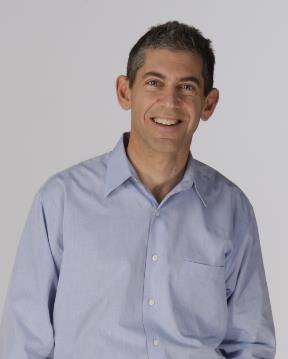
Guttentag
Steven Guttentag, the president and co-founder of Connections Education, one of the country's largest operators of online charter schools, says the diverse needs of students who enroll in online schools create a "measurement challenge" that neither his industry, nor its increasingly vocal critics, has managed to solve.
"We've got to figure this out. We've got to have objective measurements," he says. "That's key to the charter movement. It's key to public accountability. I'm not happy where we are. I'm not happy where the industry is with this right now."
Guttentag joined the latest edition of our podcast alongside Matt Wicks, the company's vice president for data analysis and policy. They're responding, in part, to a recent report by a trio of pro-charter organizations that called out virtual charters for poor academic performance and sought changes to the ways they're funded and regulated.
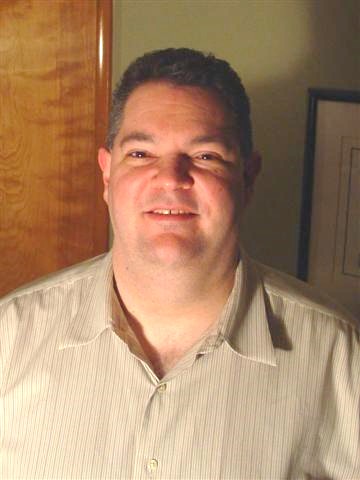
Wicks
The debate over online charter schools has spilled into charter school conferences, strongly worded press releases and recently, journals of education reform. Critics, including many leading charter school advocates, say the test results at online charter schools are abysmal, which indicates many of their students are making scant academic progress and drags down the performance of the charter movement as a whole.
But people on both sides of the debate have also pointed to nuances — "x-factors" — that may complicate the picture of online school performance. When do the students enroll? What are their expectations when they sign up? Are they trying to raise their test scores, or to solve some temporary, non-academic problem, like safety or a medical issue or a sudden family move? How far behind are they on credits? And how should that affect the way their schools are judged?
Neither Guttentag nor Wicks claims to have all the answers to those questions. But both say they're convinced solutions are more likely to arise in virtual education systems like Florida's, which allow multiple flavors of publicly funded online learning. In Wicks' words, states need to "allow that competition to spur innovation and improvement."
Editor's note: This is the second installment of "A Choice Conversation," an ongoing dialogue between Doug Tuthill, president of Step Up for Students and a redefinED host, and John Wilson, a former NEA leader who writes the Unleashed blog at Education Week.
 Doug Tuthill: John, in our last exchange you called “for a new contracting arrangement for providers to serve the unique educational needs of targeted student populations and innovation.”
Floridians have heeded your advice and are expanding options for educators and families through innovative public-private partnerships. For example, the Okaloosa school district contracted with Embry-Riddle Aeronautical University to run Florida’s best aeronautics high school institutes. The Florida Virtual School contracts with Connections Academy to operate its K-5 program, and last year the Duval County school district contracted with local churches to implement programs for suspended students. The Pinellas County teachers union has a corporate subsidiary that contracts with its school board to tutor students; career academies throughout Florida contract for services from a plethora of businesses and trade associations; and the state’s charter schools, Voluntary Pre-K program, McKay Scholarships and tax credit scholarships are all implemented through public-private partnerships, as are many magnet schools.
Managing all these public-private partnerships is challenging, and you’ve suggested using the “institution of public schools” as the oversight entity. I’m curious what you mean by the term “institution of public schools.” I’m also interested in your criteria for distinguishing between acceptable and unacceptable public-private contracts.
John Wilson: Doug, I guess you could say I am a traditionalist when it comes to describing the institution of public schools, but I am an innovator when it comes to expanding the providers of customized education for targeted students and innovation.
I see the district board of education as the "traffic cop" for assuring that all providers, whether charters, private, or public-private, operate within a contract signed by the board of education and the provider. The "traffic cop" should assure that providers meet their fiduciary responsibility, improve student achievement, and adhere to the relevant laws and regulations as well as the contract that was signed with the board of education. I think the community needs to know these arrangements are cost-efficient and effective with their tax dollars and that their children are receiving a high-quality education. Let me add that I am not so naive as to know that we will need to build, and in some cases rebuild, trust and a shared vision with all parties that provide education opportunities. (more…)

