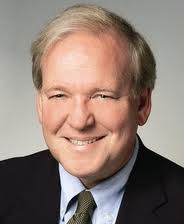
McCurry
In an American political system ripped apart by partisanship, the school choice movement stands out as a rare example of centrism, former White House Press Secretary Mike McCurry said Tuesday. But the movement can build even better bridges if it eases up on the name calling and finger pointing, he continued.
“We cannot demonize our opponents,” McCurry told several hundred people at the American Federation for Children summit in Washington D.C. “I hear too often, as I do the work I do at (the Children’s Scholarship Fund), hear people talk about teachers unions in a way that’s frankly ugly. Those people love our children just as much as anyone in this room. They happen to be particularly wrongheaded about the way … to improve their lives. But it’s not because they are ill motivated.”
“We need to recognize that, and have compassion for the people on the other side,” he continued. “Not everything needs to be mud wrestling on CNN with people calling each other names. … We’ve got to nurture the better angels on that side and understand where they’re coming from.”
McCurry worked for liberal Democratic Sen. Daniel Patrick Moynihan (himself a strong school choice supporter) early in his career and later for President Bill Clinton. He serves on the board of the Children’s Scholarship Fund, which provides privately funded scholarships for low-income students in grades K-8.
The school choice movement’s appeal to all points on the political spectrum is a source of pride, McCurry said. The movement needs to continue doing the hard work of making the center hold, of putting aside differences on other issues to find common ground on kids and education. He suggested it might even model good behavior in other realms. (more…)
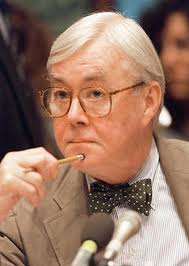
The late Democratic Sen. Daniel Patrick Moynihan once crafted a tuition tax credit measure with Republican Sen. Bob Packwood that garnered 50 co-sponsors, including Sen. George McGovern and 23 other Democrats.
Editor's note: This op-ed appeared over the weekend in the Huffington Post.
At least three more red states -- Texas, North Carolina and Tennessee -- will push for school vouchers in the coming months. But the familiar showdown between Republican lawmakers and teachers' unions masks a more intriguing political development on parental choice: Democrats are increasingly siding with parents.
Count me in the parent camp. I'm a lifelong progressive Democrat, former president of two local teacher unions, and current president of a Florida nonprofit that is the country's largest provider of tax credit scholarships for low-income students to attend qualified private schools. This year the Florida scholarship will serve more than 50,000 economically disadvantaged students who are mostly of color, and it aligns directly with the core Democratic Party values of social justice and equal opportunity.
For a host of complicated reasons, low-income kids are not generally doing well in traditional public schools. In 2011, according to the National Assessment of Educational Progress, the reading gap nationally between low-income and higher-income fourth-graders was 22 percentage points. Florida has seen encouraging progress with its disadvantaged students, yet startling gaps persist. Last year, 45 percent of low-income third graders scored at grade level or above on the Florida reading test, compared to 77 percent of higher-income students.
One way to combat the challenges faced by students in poverty is to give their parents more options. Affluent parents can buy homes in neighborhoods with preferred school zones, navigate the other public school choices, home school or pay for a private school. But low-income parents don't have these opportunities. Expanding choice is a way to help level the playing field.
This expansion is not either/or, and it's not public versus private. Educators understand that different children learn in different ways, and to that end, education is increasingly becoming customized. In Florida, we now have 1.5 million students -- about 43 percent of the total -- enrolled in something other than traditional neighborhood schools. Last year, there were 341,000 who chose through "open enrollment," 227,000 who picked choice and magnet programs, 180,000 in charter schools, 203,000 in career academies and 8,000 in full-time virtual instruction. Vouchers and tax-credit scholarships are not an invasive species on this fast-changing landscape, where lines between public and private are blurring. They're simply two more peas in a public education pod.
That's one reason the politics are changing. (more…)
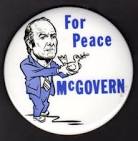 None of the recent obituaries of George McGovern - the former U.S. senator and Democratic presidential candidate who died Oct. 21 and was buried Friday - discussed his long struggle to reconcile loyalty to teachers unions with his belief that poor and working-class parents should be able to pick their children’s school.
McGovern, an end-the-war, feed-the-poor, liberal’s liberal, was for years a school choice champion. He once proposed his own tuition tax credit plan to help parents offset the cost of private school, and he was among 23 Democratic senators who co-sponsored a similar proposal from Sen. Daniel Patrick Moynihan, another liberal lion. But over time, his position changed, mirroring that of the Democratic Party as it became more dependent upon teachers union support.
Adam Emerson, founding editor of redefinED and now school choice czar at the Fordham Institute, wrote more about McGovern’s shift in this post from December 2011, shortly after the release of McGovern’s book, “What It Means to Be a Democrat.” Here’s a taste:
“We cannot abandon these schools and we will not,” McGovern announced to a throng of Catholic high school students in Chicago in the fall of 1972, according to the Washington Post. Catholic schools, McGovern added, are a “keystone of American education,” and without government help, families would lose the right to give their children an education in which spiritual and moral values play an important role.
Presidential candidates were born to flip-flop, but McGovern’s newest manifesto reminds us how far Democrats have strayed from a movement they once breathed life into. Moynihan was prophetic in 1981 when he wrote that as vouchers become more and more a conservative cause, “it will, I suppose, become less and less a liberal one.”
 We here at redefinED love to thump that drum, so it was nice to see the nation’s education paper of record picking up the beat this week. Three takeaways from Sean Cavanagh’s even-handed piece on the politics of school vouchers:
The big picture:
This year's presidential campaign offers at least one unequivocal contrast on education issues: The Republican candidate supports private school vouchers, and the Democratic incumbent does not. But at the state and local levels, Democrats' views on vouchers are more diverse and nuanced than what is suggested by the party's national platform …
The Florida example:
When Florida's GOP-controlled legislature in 2010 approved an expansion of a program that gives corporations tax credits for awarding needy students private school scholarships, the measure had significant backing from Democrats. When the original program was launched almost a decade earlier, only one Democrat in the entire legislature voted for it.
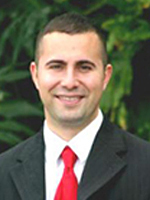
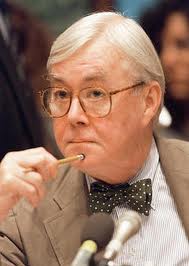
State Rep. Darren Soto, an Orlando Democrat (pictured above), said he supported the recent tax-credit expansion because it would help needy families in his district seek out Roman Catholic schools and other options.
"Religious education is very important and popular to a lot of my constituents," Mr. Soto explained in an interview. "There's room for a strong public education system, as well as private options." (more…)
 Editor's note: Adam Emerson, who writes the Choice Words blog at the Fordham Institute, wrote a lot about the progressive roots of school choice when he was editor here at redefinED. Here is his latest piece on the subject.
The 2012 Democratic Party platform released this week calls for the expansion of “public school options for low-income youth,” a position that has appeared in varying language in every Democratic platform since 1992. But as Marc Fisher of the Washington Post reported this week, the Democratic platform historically has been “a jagged series of experiments” that once made room for more than just public-school choice.
Today, the national party fervently rejects vouchers for private and parochial schools, but that wasn’t the case thirty years ago. In 1972, Democrats sought to “channel financial aid by a Constitutional formula to children in non-public schools,” a position that reflected not only the influence of the Catholic Church at the time but also the drive, the values and the persistence of the late Daniel Patrick Moynihan.
Moynihan, who also crafted education planks for the Democratic platforms of 1964 and 1976, followed the party’s (and his own) guidance. Soon after his election to the U.S. Senate in 1976, he proposed a tuition tax credit for families with children in private and parochial schools. That bill was co-sponsored by an almost even number of Republicans and Democrats, and, as Moynihan defiantly wrote in Harper’s Magazine at the time, “Why should the anti-Catholicism of the Grant era be given a seat at the Cabinet table of a twentieth-century President.” But that president, Jimmy Carter, had come into office with the support of the National Education Association, which worked with H.E.W. Secretary Joseph A. Califano, Jr. to kill the bill.
Since then, the NEA and the American Federation of Teachers have exerted ever greater influence over the Democratic Party while the Catholic Church has wielded less. Full piece here.

Checker Finn
Mitt Romney’s plan to voucherize (though he doesn’t call it that) Title I and IDEA has considerable merit - but it’s not the only way the federal government could foster school choice and it might not even be the best way.
It’s not a new idea, either. I recall working with Bill Bennett on such a plan - which Ronald Reagan then proposed to a heedless Congress - a quarter century ago.
It had merit then and has even more today. As America nears the half-century mark with Title I, we can fairly conclude that pumping all this money into districts to boost the budgets of schools serving disadvantaged kids hasn't done those kids much good, though it has surely been welcomed by revenue-hungry districts (and states). Evaluation after evaluation of Title I has shown that iconic program to have little or no positive impact, and everybody knows that the No Child Left Behind edition of Title I hasn't done much good either. It has, however, yielded an enormous number of schools that we now know, without doubt, are doing a miserable job, particularly with disadvantaged kids, but we're having a dreadful time "turning around" those schools. One may fairly conclude that Title I in its present form isn't working and probably cannot.
So why not try strapping the money to the backs of needy kids and letting them take it to the schools of their choice? This would help them escape from dreadful schools. It would make them more "affordable" for the schools they move into. It would remove one of the main barriers (the non-portability of federal dollars) that discourages states and districts from moving toward "weighted student funding" with their own money. And it would certainly go a long way to change the balance of power in American education from producers to consumers.
Having said that, a word of caution is needed. Few federal education initiatives work nearly as well as intended. (NCLB is again a large, recent, case in point.) Legitimate questions persist about what, exactly, is the federal role in the K-12 sphere, particularly in reforming it. A good case can be made for Washington to generate sound data, safeguard civil rights, support research, and assist with the costs of educating high-risk kids - but setting the ground rules for schools and operating the system is really the job of states. Moreover, the federal share of the school dollar - a dime - isn’t big enough to yield much leverage over how the system works. That’s why the Romney plan is apt to do some good in states (and districts) that want to extend more school choices to their students - the federal dime can join the state/local 90 cents in the kid’s backpack - but won’t make much difference in places that aren’t willing to put their own resources into this kind of reform.
Similar caveats must be attached to other possible methods by which Uncle Sam could try to foster school choice. Which isn’t to say such possibilities don’t exist. Indeed, I can think of four more opportunities. (more…)
Last week’s commentary in Salon was typical when it comes to the dominant narrative about school choice. Written by Michael Lind, policy director of the Economic Growth Program at the New America Foundation, it describes choice as an “eccentric right-wing perspective” and “an untested theory cooked up by the libertarian ideologues at the University of Chicago Economics Department and the Cato Institute.”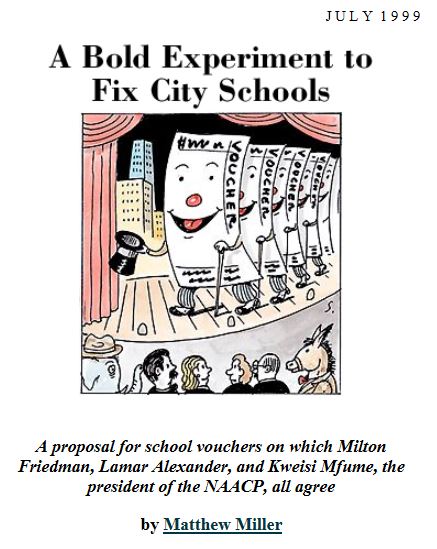
Well-respected newspapers and fringe blogs alike echo that view, though rarely with such creative flourish. The result is a near blackout of a richer, more fascinating and more historically accurate story line – one in which, for decades, if not longer, leading liberals and progressives also thought school choice was a good idea.
Now whether the left has a more compelling case for vouchers and charter schools is a debate for another day. But if more progressives knew their ideological ancestors saw school choice as a powerful tool for social justice, that awareness alone might go a long ways towards creating the conditions where a fair-minded debate is possible.
To that end, we’re introducing a new feature today, "Know Your History," – an occasional effort to highlight school choice’s roots on the political left. Maybe we’ll single out an academic journal article. Maybe we’ll spotlight an old op-ed. Or maybe we’ll get hold of the Congressional document that lists the 24 Democratic senators who supported legislation, introduced in 1978 by Daniel Patrick Moynihan, to give tax credits to families paying private school tuition.
Former redefinED editor Adam Emerson, now writing the Choice Words blog at the Fordham Institute, diligently mined this historical vein during his tenure here (with insightful posts like this one, and this one, and this one). But we’re confident there are plenty of other nuggets worth digging up that will add value to the conversation.
Today’s artifact: a lengthy 1999 piece from The Atlantic. Written by Matthew Miller, “A Bold Experiment to Fix City Schools” sketches the left’s reasoning for embracing vouchers and notes the contributions of John E. Coons, the Berkeley law professor who also serves as a co-host for redefinED. Here’s a taste:
To listen to the unions and the NAACP, one would think that vouchers were the evil brainchild of the economist Milton Friedman and his conservative devotees, lately joined by a handful of desperate but misguided urban blacks. In fact vouchers have a long but unappreciated intellectual pedigree among reformers who have sought to help poor children and to equalize funding in rich and poor districts. This 'voucher left' has always had less cash and political power than its conservative counterpart or its union foes. It has been ignored by the press and trounced in internecine wars. But if urban children are to have any hope, the voucher left's best days must lie ahead.
The voucher left. Has an interesting ring to it, no?
Seeking to improve national test scores consistently ranking near the bottom, Florida policymakers and educators created a system of academic standards and the FCAT to test performance against those standards. Despite substantially improving student learning, anti-testing activists have made headlines in recent months with strident arguments. No serious person, whether on the right or the left, should desire to return Florida’s schools to a transparency dark age.
Florida’s academic gains have a critical external source of validation. The National Assessment of Educational Progress (NAEP) has given academic achievement tests to random samples of students for many years. Administered by the National Center for Education Statistics, the NAEP provides a “gold-standard” measurement allowing cross-state comparisons. Education Week conducted a survey of education policy experts in 2006 and found NAEP to be both the most influential education data source and most influential education study. NAEP earned the highest possible score (100) in both categories.
Following the NAEP data back to the days before FCAT, we find the Florida ranked quite low compared to other states. The earliest available state by state exams for 4th and 8th grade reading and math (the main NAEP assessments) from the 1990s reveals that Florida students consistently ranked near the bottom. Florida students ranked 6th from the bottom in both 4th and 8th grade reading achievement, 5th from the bottom in 8th grade math, 10th from the bottom in 4th grade math.
All of these NAEP exams came before the advent of Florida’s standardized testing and other reforms. Tracking the NAEP data across time, however, reveals that Florida students have made progress greater than the national average. Florida students outgained the national average by almost 10% in 8th grade math, and more than 23% in 8th grade math.
The gains achieved by Florida students in reading have been truly extraordinary. Florida’s 4th grade reading progress has been more than three times the national average, and Florida’s 8th grade scores more than twice as large.
A recent problem with the FCAT writing test drew a great deal of attention from FCAT opponents. We should take care not to miss the forest for the trees. NAEP gave a Writing exam in 1998 (just before Florida’s reforms) and again in 2007. Florida students achieved the largest gain of any state and more than three times larger than the national average during this period.
Sadly, leading the nation in writing gains on the highly respected NAEP exam seems to mean little to Florida’s testing opponents.
The Washington Post's Jay Mathews mused last month about the similarities between the education platforms of President Obama and Mitt Romney, but he was also a little too eager to dismiss their differences on school vouchers as irrelevant. The issue of equal access to private schools speaks to the core values of each party, but the topic is particularly important to Democrats who were deeply divided on the issue in the 1970s, and are so again today.
Let’s start with some history. In 1922, the Ku Klux Klan pushed a referendum in Oregon, which the voters passed, making it illegal for children to attend private schools. The Klan thought outlawing private schooling, especially Catholic schools, would help reduce cultural pluralism in the United States. The Society of Sisters of the Holy Names of Jesus and Mary, which ran a Catholic girls school in Oregon, sued, and the law was overturned by the U.S. Supreme Court in 1925 (Pierce v. Society of Sisters).
The Pierce decision is arguably the most important legal ruling in the history of public education because it said the U.S. Constitution gives parents the authority to determine how their children are educated. But the ruling did not require the government to fund public education in a manner that allows all parents to exercise this authority. Enabling low-income parents to attend government schools for free but requiring them to pay to attend private schools prevents most low-income parents from exercising the authority granted them in the Pierce decision.
In the 1960s and 70s, liberal Democrats took the lead in trying to address this problem. In his 1968 presidential campaign, Hubert Humphrey supported tuition tax credits for parents choosing private schools, as did George McGovern in 1972, but both men lost. In 1978, Senator Daniel Patrick Moynihan, D-NY, and Senator Bob Packwood, R-Oregon, filed a tuition tax credit bill that had 24 Republican and 26 Democratic co-sponsors. But in a payback to the National Education Association for endorsing his candidacy, President Jimmy Carter had the bill killed and had support for tuition tax credits removed from the Democratic Party’s platform when he ran for re-election in 1980. Candidate Ronald Reagan then embraced allowing parents to pay for private schools with public funds in 1980, and the two national parties have formally maintained their contrary positions ever since. (more…)
It’s hard to miss Dick Morris. The former presidential aide and Fox News contributor has raised the volume on his rhetoric during the last couple of days to promote National School Choice Week, and Education Sector’s Kevin Carey was right to note that Morris does more harm to his cause when he harangues the interests and performance of public schools so viciously. But in an otherwise enjoyable essay for The Atlantic, Carey misses an opportunity to further explore how the choice movement evolved to become, as he says, so ideologically "ghettoized." Along the way, he succeeds in guiding us only to familiar territory.
As many do, Carey traces the movement's roots to Milton Friedman's 1955 essay, "The Role of Government in Education," but he dispatches the left turn that school choice made in the 1970s as if it was a political afterthought. In reality, the means-tested policies that facilitate public and private school choice today more closely resemble the proposals from the political left and center that surfaced between the Johnson and Reagan administrations than anything that Milton Friedman sought to test. Greater awareness of that history might not transform the debate, but it could help to lift it from isolation.
Lost to history are the rich Chicago radio debates that took place between Milton Friedman and Jack Coons, who was to champion the cause for equity in the financing of public education and emerged as one of the most stalwart liberal advocates for school choice. To Coons, the poor would show us the right way to develop a proper test for parental choice that extended to private and religious schools, under regulated conditions. He and colleague Stephen Sugarman developed their centrist theory and constitutional framework in their 1978 book, Education by Choice, which drew the attention of a Democratic congressman from California, Leo Ryan. Ryan urged Coons to draft an initiative, saying he would raise the money and organize the campaign. This all happened, of course, before Ryan left to investigate reports of human rights abuses at the Peoples Temple in Jonestown, where he was murdered. Coons and Sugarman began the campaign anyway, confident the money would somehow appear. "Both libertarians and teachers unions laid their curse, and the thing died," Coons would later write.
Around that time, a newly elected Democratic senator named Daniel Patrick Moynihan crafted a measure with Republican Senator Bob Packwood that would have awarded up to $500 in tax credits to families paying private or parochial school tuition. At one point, 24 Democrats and 26 Republicans in the Senate ranging from Sen. George McGovern to Sen. Barry Goldwater signed on as co-sponsors. Moynihan would write that, when the bill was heard, there was a palpable strength felt in the chamber "of the views pressed upon us that this was a measure middle-class Americans felt they had coming to them." Even soon-to-be elected President Jimmy Carter promised, in a campaign message to Catholic school administrators, that he was "committed to finding constitutionally acceptable methods of providing aid to parents whose children attend parochial schools." That was before Carter received the first-ever endorsement from the National Education Association. After he took office, the Moynihan-Packwood measure eventually fizzled.
And this flirtation with history cannot forget the forgettable experiment at Alum Rock, California, home to the nation's first test of school vouchers. Although the experiment took place under the auspices of the Nixon administration, the project began with a team led by the liberal Harvard social scientist Christopher Jencks. "Today's public school has a captive clientele," Jencks would write in Kappan. "As a result, it in turn becomes the captive of a political process designed to protect the interests of its clientele." It was that political process that eventually doomed Alum Rock to a compromise that agreed only to choice within public schools and guaranteed employment for the instructional staff. Just six of the district's 24 schools volunteered to be the educational guinea pig. The experiment lasted just five years.
This isn't just a trip down memory lane. What links these initiatives is a call for equity, and that has precedence in today's targeted voucher and tax credit scholarship laws in Milwaukee, Florida and most other states that have initiated private school options for the poor and disabled, and it has precedence in the positioning of our more innovative educational experiments in the inner city. I wish the organizers for National School Choice Week would do more to point to this Democratic heritage when they highlight the areas where we see growing bipartisan support for choice today, and I wish commentators like Kevin Carey would stop dismissing these points in history as if they had no relevance to our dialogue today. That job might be easier if people like Dick Morris stepped out of the spotlight for a moment.

