Northwestern University researcher David Figlio has released his sixth annual report on Florida’s Tax Credit Scholarship program. Figlio conducts this research through a contract with the Florida Department of Education (DOE).
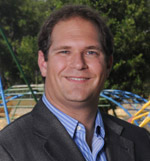
David Figlio
Tax credit scholarship students are required to take a DOE-approved standardized test every year, and their results are sent to Figlio for analysis. Most students take the Stanford Achievement Test (57.7 percent), but the Iowa Test of Basic Skills (22.5 percent) and Terra Nova (12.1 percent) are also popular.
The 2011-12 school year results, which are covered in this latest report, are similar to what Figlio found in his four previous studies (the first report created the baseline year). In terms of the scholarship students’ characteristics, he reports they tend to “come from less advantaged families than other students receiving free or reduced-price lunches … come from lower-performing public schools prior to entering the program … be among the lowest-performing students in their prior school, regardless of the performance level of their public school.” As he has in prior years, Figlio also found that “the tendency for the weakest prior performers on standardized tests to choose to participate in the FTC Program is becoming stronger over time.”
Figlio reported scholarship students returning to district schools also “tend to be those who were struggling the most in their private schools.” Apparently parents are more apt to change schools when their children are struggling academically, which makes sense.
The typical scholarship student “scored at the 46th national percentile in reading and the 45th percentile in mathematics, about the same as in the last several years.” These year-over-year achievement gains show “the typical student participating in the program gained a year's worth of learning in a year's worth of time.” This is significant because the national comparison group is comprised of students from all income levels. Usually low-income students lose ground when compared to the annual gains of more affluent students.
Figlio makes reference to a separate study he conducted that shows the tax credit scholarship program is improving the achievement of public school students: “There exists compelling causal evidence indicating that the FTC Scholarship Program has led to modest and statistically significant improvements in public school performance across the state.”
Figlio concludes his report by stating that, “a cautious read of the weight of the available evidence suggests that the FTC Scholarship Program has boosted student performance in public schools statewide, that the program draws disproportionately low-income, poorly performing students from the public schools into the private schools, and that the students who moved perform as well or better once they move to the private schools.”
The full report can be found on the Department of Education website: https://www.floridaschoolchoice.org/pdf/FTC_Research_2011-12_report.pdf
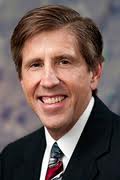
Tuthill
In today's chat, we talked with Doug Tuthill, president of Step Up For Students in Florida.
Readers asked him about everything from Common Core and private schools, to whether the value of tax credit scholarships should be increased, to the right balance between school choice and government regs when it comes to accountability.
Step Up is the largest private school choice program in the country. It’s expected to serve 60,000 students this fall. And as recent news stories have pointed out, it continues to experience strong growth. (Step Up also co-hosts this blog with the American Center for School Choice. As we noted in the advance post, we strive not to be self-promotional but in this case thought it was appropriate to feature Doug.)
Before joining Step Up in 2008, Doug had been a college professor, a classroom teacher, the president of two teachers unions and a driving force behind the creation of Florida's first International Baccalaureate high school.
You can replay the chat here:
 For the last month, the North Carolina legislature has been debating whether to create a scholarship program to help low-income families pay the tuition and fees at qualified K-12 private schools. Since this proposal closely parallels Florida’s tax credit scholarship program, I’ve traveled to Raleigh three times in recent weeks to discuss what we’ve learned in Florida about school choice over the last 10 years and how these lessons might apply to the North Carolina program.
Below are the lessons learned I’ve shared with supporters and opponents:
No essay titled the “Voucher Rabbit Hole” needs to be treated as though it were a search for academic truths, but Grand Prairie educator Jerry Burkett would better contribute to the current debate in Texas if he weren’t so fixated on Georgia.
To be sure, Georgia’s tax credit scholarship has been insufficiently accountable to taxpayers and has invited some abuses the Legislature took an important step toward fixing last week. But we should no more judge the fitness of all private scholarships based on the law in Georgia than we would judge the integrity of all public schools based on the cheating scandal in Atlanta.
In the same 2011 Southern Education Foundation report from which Dr. Burkett quoted so extensively, the foundation contrasted the practices it criticized in Georgia with a program directly to the south.
“The neighboring state of Florida,” the foundation wrote, “offers an example of a tax‐credit educational program that has evolved and improved over the last few years. As a public‐private venture, it has begun to require more effective measures for public accountability and educational performance from all entities and all private schools that take tax‐diverted funds to support student learning.”
Florida is now serving 51,000 low-income students with the largest tax credit scholarship program in the nation and, more importantly, offers an extensive public record on educational and financial impact as it completes its 11th year. Since I work for the nonprofit that oversees the scholarship and since Dr. Burkett mostly neglected it, let me offer some independent findings that could ease his fear of falling. (In Florida, we fear sinkholes instead of rabbit holes.)
First, we know the students who seek the scholarship are among the poorest and lowest-performing students in the state. The Florida law restricts the scholarship to students whose household income qualifies them for free or reduced-price lunch, which is 185 percent of poverty, and the average this year is only 6 percent above poverty. We also know through five years of state-contracted research that the students who choose the scholarship are the lowest performers from the public schools they leave behind. (more…)
A 73-second exchange between Gov. Rick Scott and capital reporters last week has raised the profile of testing in Florida’s scholarship for low-income children, but done little to deepen the debate. The question of testing is a legitimate one, but cannot be separated from the educational context.
Gov. Scott had no time to deal with such complexity. He was fielding rapid-fire questions after a state Cabinet meeting when he was asked whether students on vouchers should take the same test as those in public schools. His first answer: “Look, if you’re going to have state dollars, you’re going to have similar standards.” On followup, he said: “I believe anybody that gets state dollars ought to be under the same standards.”
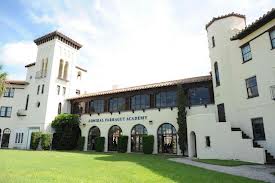
If the state required tax credit scholarship students to take the same tests as their public school counterparts, what might that mean for say, the 21 scholarship students at the highly regarded Admiral Farragut Academy in St. Petersburg? They’re a tiny portion of the 400 students at the school, which accepts the $4,335 scholarship as full payment. Would those students lose out on a remarkable learning environment?
The governor’s instinct is strong, but the statement took on a life of its own, spurring news coverage, editorials and a distinguished post from the Fordham Institute. Not surprisingly, much of the reaction was one-dimensional, focused on apples and oranges and what Ralph Waldo Emerson might have called a “foolish consistency." So allow me, as policy director for Step Up For Students, the nonprofit that oversees the Florida Tax Credit Scholarship for 50,812 low-income students this year in Florida, to try to paint the broad landscape.
Under Florida’s scholarship program, students are required to take nationally norm-referenced tests approved by the state Department of Education. More than two-thirds take the Stanford Achievement Test. Another fifth, which comprises mainly the Catholic schools, take the Iowa Test of Basic Skills. The test-score gains are then reported publicly each year by an independent researcher, respected Northwestern University professor David Figlio. Starting this year, those gains are also reported for every school with at least 30 students who have current- and prior-year test scores. The validity of these testing instruments is not really in dispute, which is why it is more than a little disconcerting that their results have been scarcely mentioned. The state’s leading newspaper managed to write an entire editorial directive, “Holding voucher schools to account is overdue,” without a single reference.
So, for the record, the state so far has issued five years of test reports for the tax credit scholarship, and two findings have been persistent: 1) The students choosing the scholarship were the lowest performers from the traditional public schools they left behind; and 2) On the whole they are achieving almost precisely the same test gains in reading and math as students of all incomes nationally. For the 70 schools that met the disclosure threshold this year, 50 kept pace with the national sample, eight exceeded and 12 fell short.
Not incidentally, these results provide the kind of data that is needed to judge whether students are making academic progress. (more…)
 Sad but true: The other day, one of Louisiana’s statewide teachers unions tweeted that the Black Alliance for Educational Options, the stand-up school choice group, supports “KKK vouchers.” It subsequently tweeted, “Tell everyone you know.” (Details here.)
Even sadder but true: This wasn’t an isolated event. In recent months, critics of school choice and education reform have time and again made similar statements and claims – trying to tie Florida’s school accountability system to young black men who murder in Miami, for instance, and in Alabama, trying to link charter schools to gays and Muslims.
But this is also sad but true: Reform supporters sometimes go way too far, too.
Late last week, the Sunshine State News published a story about two Haitian-American Democratic lawmakers in South Florida, both strong backers of school choice, who narrowly lost primary races to anti-choice Democrats. The story quoted, at length, an unnamed political consultant who sounded sympathetic to the arguments raised by school choice supporters. He made fair points about the influence of the teachers union in the Democratic Party; about racial tensions that rise with Democrats and school choice; about a double standard with party leaders when Dems accuse other Dems of voter fraud. But then he said this:
“It’s a kind of ethnic cleansing of the Democratic Party,” he said, according to the report, “centered on the interests of the teachers’ unions.”
School choice critics may often be wrong; their arguments may at times be distorted and inconsistent. But to brand their motivations with a term that evokes Rwanda and Bosnia is more than off-key. It’s repulsive. It’s also a distraction and counterproductive.
I’m floored by extreme statements from ed reform critics. In the past couple of months alone, a leading Florida parents group accused state education officials of using the school accountability system to purposely “hurt children”; a left-wing blogger described John E. Coons, a Berkeley law professor and redefinED co-host, as a “John Birch Society type” because of his support for parental school choice; and other critics used fringe blogs and mainstream newspapers alike to shamelessly tar Northwestern University economist David Figlio, a meticulous education researcher who is not only widely respected by fellow researchers on all sides of the school choice debate but is so highly regarded beyond the world of wonkery that he was cited as a prime example of this state’s “brain drain” when he left the University of Florida. I’m further stumped by how such statements are rarely challenged by mainstream media, and by how more thoughtful critics simply shrug and look the other way.
Attacks like these make me want to say, “At long last, have you left no sense of decency?” But then, at less regular intervals, statements like the ethnic cleansing quote come up and knock reformers off the high road. I’m left with a less satisfying response: “Can’t we all just get along?”
 The public release of test scores for low-income students on Florida Tax Credit Scholarships received remarkably little attention in the news media this year, leaving bloggers the freedom to interpret serious academic analysis with what amounted mostly to potshots.
Not surprisingly, Diane Ravitch weighed in to wag her finger at the straw men who have touted vouchers as “a panacea.” But at least she didn’t challenge the credentials of the state-contracted researcher, whose national reputation for thorough independent-minded critical analysis didn’t prevent two lesser-known Florida bloggers from doing so. She also didn’t snipe at a respected education writer for the state’s largest newspaper, branding her reporting on the test results as “propaganda,” as several online commenters did.
This kind of noise is usually best regulated by shutting the door, but those who have genuine concerns about whether a private learning option can help struggling, underprivileged schoolchildren deserve straight answers. I certainly cannot be viewed as an unbiased observer, but my work for the nonprofit that oversees the scholarship at least makes me an informed one.
So let’s start with Dr. Ravitch, who to her credit recited three direct paragraphs from the 41-page report. She also said that “students in voucher schools made academic gains similar to their peers in public schools,” which is a generally correct statement. But rather than read more deeply, she tried to minimize the significance through unsupported and unimportant claims that Florida tax credit scholarship supporters promised miracles.
The test scores and associated research do not speak to academic miracles, but they are encouraging. To repeat some portions of our previous post, two findings are critical for context.
First: For five consecutive years, the state researcher has determined that students who choose the scholarship are among the lowest performers in the public schools they leave behind. (more…)
A new report on the academic performance of low-income students receiving Tax Credit Scholarships in Florida finds they are making modestly larger gains in reading and math than their counterparts in public school.
That conclusion from 2009-10 test data is encouraging for those of us who work to provide these learning options, which served 34,550 low-income students statewide last year. But the report, released today and written by respected Northwestern University researcher David Figlio, is also a reminder of the inherent complexities of judging whether these programs work.
Figlio has both a brilliant mind and 13,829 test scores with which to work, and yet his report is filled with qualifiers and provisos and cautionary notes. That’s largely because the scholarship program is so different from the typical public education option. In this case, students are attending more than 1,000 private schools where, on average, four of every five students pay their own tuition. The average scholarship enrollment in each school, for 2009-10, was only 28 students.
That kind of school profile tends to serve as an asset to the economically disadvantaged students, but not necessarily for the standard approach to academic oversight. Since these are mostly private-market schools, the state won’t allow them to administer the state test, known as the Florida Comprehensive Assessment Test (FCAT). But the law does appropriately require every scholarship student to take a nationally norm-referenced approved by the state Department of Education, and most students take the well-regarded Stanford Achievement Test.
These tests do allow Figlio to make direct national comparisons, so we know without qualification that the typical scholarship student scored at the 45th percentile in reading and the 46th percentile in math. We also know that their year-to-year gain from 2008-09 to 2009-10 was the same as students of all income levels nationally, which is a solid piece of academic evidence
Where things get more muddled is in trying to compare to low-income students in Florida public schools. As odd as this may sound, the two groups are substantially different. And they are different in ways that tend to be counterintuitive. (more…)
The American Enterprise Institute brought together some luminaries in academia and policy yesterday to ask whether vouchers "force public schools into a zero-sum game by redirecting public funds and promising students to private schools? Or do school-choice options spur healthy competition by pressuring public schools to improve." The forum was built, in part, around the research of Northwestern University economics professor David Figlio, who recently found that the Florida Tax Credit Scholarship program boosted the academic performance of the public schools faced with the threat of losing students to the program. (Disclosure: the editors and contributors of redefinED work for the nonprofit that administrates the Florida program) Other panelists included Grover J. Whitehurst of the Brookings Institution, Nada Eissa of Georgetown University and Jane Hannaway of the Urban Institute.
The video here runs nearly 90 minutes:
Today's Philadelphia Inquirer devotes considerable attention to the impact school vouchers have on public schools. At a time when opponents to publicly funded private learning options are lobbing rhetorical hand grenades in several states, particularly in Pennsylvania and New Jersey, Inquirer reporter Adrienne Lu offers this fair-minded assessment:
While studies are relatively scarce, the early opinion among researchers appears to be that vouchers have done little, if any, harm to student achievement in public schools and in some cases have spurred small improvements on standardized-exam scores in public schools.
As evidence, Lu cites Northwestern University researcher David Figlio, who recently found that the Florida Tax Credit Scholarship boosted the academic performance of the public schools faced with the threat of losing students to the program. Figlio and co-researcher Cassandra Hart had highlighted that, no matter what measure they used (the closer private schools are to a public school, the density of private schools within five-miles of a public school, etc.) the effect was generally the same:
Although these effects are relatively small, they consistently indicate a positive relationship between private school competition and student-performance in the public schools, even before any students leave for the private sector. That is, these results provide evidence that public schools responded to the increased threat of losing students to the private schools.
In an interview with the Inquirer, Figlio rightly cautioned against looking at vouchers as "the magical pill that's going to turn the U.S. into Finland," but he made clear that, for any state considering a voucher program, "there's very little to be afraid of."

