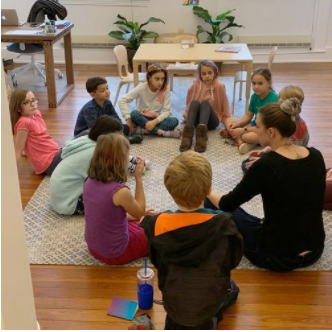
Acton Academy of Washington, D.C., is a Montessori preschool and student-centered elementary and middle school and one of 72 private schools serving close to 15,000 students in the District of Columbia.
Sixty-six percent of voters support reauthorization of one of the founding programs of the school choice movement according to a new poll released by a Maryland-based custom research firm.
Beck Research reports that when respondents were asked Feb. 23-27 via wireless or landline phones or text-to-web, “Based on what you know, would you say that you favor or oppose the D.C. Opportunity Scholarship Program,” only 22% said they opposed the program, while 12% were undecided.
When asked the broader question, “Generally speaking, would you favor or oppose school vouchers that allow lower-income families to send their child to any school they deem best?” 65% of respondents said they supported vouchers and 31% said they were opposed.
Tommy Schultz, CEO of the American Federation for Children, said the organization was not surprised at the poll results.
“Despite what detractors may suggest, there is strong bipartisan support for school choice and the Opportunity Scholarship Program in D.C. and Congress should listen and support this program with increased funding to meet demand and a permanent authorization,” Schultz said.
The DC Opportunity Scholarship Program, launched with bipartisan support in 2003, allows lower-income families to receive funding for their children to attend a participating District of Columbia private school. The only federally funded voucher program in the country, the program was enacted by Congress as part of a three-sector approach to improve educational outcomes in the District of Columbia.
According to the DC Opportunity Scholarship-Serving Our Children website, which provides information about the scholarship, nearly 40,000 District of Columbia children have applied for the Opportunity Scholarship since 2004-05 and more than 10,000 students have been awarded.
Currently, 95% of participating children are African American and Hispanic from families with an average annual income of less than $27,000.
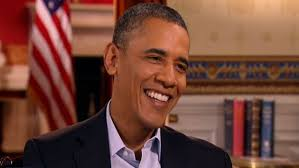 In a recent television interview with Bill O’Reily, President Obama discussed the D.C. Opportunity Scholarship program and stated the private school vouchers “didn’t actually make that much of a difference” and have not “significantly improved the performance of kids in these poorest communities.”
President Obama seems to be relying on the final report of the D.C. Opportunity Scholarship Program which stated, “there is no conclusive evidence that the OSP affected student achievement.” But it seems Obama’s (and some of the media’s) familiarity with the report ends here.
It’s true the final report did not find statistically significant reading gains, but earlier reports over the first three years did. The report also found large gains in graduation rates. And importantly, even the lead author of the final report, Patrick Wolf, supports expanding the D.C. voucher program. A deeper understanding of the report explains why.
First, the study examines the impact of being offered a voucher (after applying, qualifying and winning in the lottery process) – not the impact of using a voucher. This was done to set a really high bar for determining whether the vouchers made a difference. To achieve statistically significant achievement results, all the kids who won a voucher and used it to attend private schools had to score high enough to lift the scores of all the kids who won a voucher but stayed in public schools.
Next, random assignment studies (as great as they are) suffer from a major methodological flaw called “the real world.” Students were randomly assigned to a control group (no voucher offered) and a treatment group (a voucher was offered). Students in the control didn’t have vouchers, but that didn’t stop them from enrolling in private schools or charter schools. Students who were offered vouchers weren’t required to use them and if they did, they didn’t have to stay in the private schools.
By the final year report, 47 percent of students in the control group (who were not offered a voucher) ended up in private schools or charter schools at some point during the study. Regarding the treatment group, 78 percent of the students offered a voucher used a voucher, but only 27 percent used it to attend a private school during every year of the study. That means 51 percent of students offered a voucher used it inconsistently — returning to public, charter and private schools as they pleased.
In other words, one could summarize the study as examining the impact of some students using school choice vs. slightly fewer students using school choice. The DC study is not, as President Obama believes, proof that vouchers do not work. (more…)

