Editor's note: The Rev. Manuel Sykes is pastor of Bethel Community Baptist Church and president of the St. Petersburg NAACP, an active chapter on Florida's west coast. In this commentary, he responds to a recent Tampa Bay Times column that criticized a federal tax credit scholarship bill offered by U.S. Sen. Marco Rubio. The Times also published a letter to the editor from Rev. Sykes in today's editions.
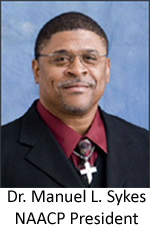 Florida offers the nation’s best lesson on whether private school options can help poor children, but the Tampa Bay Times seems uninterested in what these parents and students are telling us. Instead, it is busy pointing a distinctly partisan finger.
Argue if you want about whether the federal government should provide K-12 scholarships to low-income students, but the tax credit scholarship plan introduced by Republican U.S. Sen. Marco Rubio is not “bankrupt” or “craven.” It is instead a learning option that economically disadvantaged students wouldn’t otherwise have, and to label it as “money laundering” represents the kind of rhetorical excess that cheapens our public debate.
In Florida, more than 50,000 students are on a similar plan, and the results are encouraging to those of us who work with struggling children. The students who use the Florida Tax Credit Scholarship are truly poor – incomes barely above poverty and averaging less than $25,000 for a household of four – and more than two thirds of them are black or Hispanic. State research tells us they were among the lowest academic performers in the public schools they left behind, and testing results show they are making the same academic gains as students of all income levels nationally. Just as encouraging, the traditional public schools that are most impacted by students who choose the scholarships are themselves experiencing higher learning gains.
The educational results don’t seem to matter to those who prefer instead to dismiss scholarships as some kind of Republican conspiracy. Never mind that nearly half the Democrats in Florida’s Legislature also support this option, including a majority of the Black Caucus. Never mind those of us who work in disadvantaged communities in St. Petersburg and see children for whom these opportunities can make the difference between a diploma or a jail cell. Never mind that the Black Alliance for Educational Options, which represents elected black Democrats across the nation, has expressed its support for Rubio’s bill. (more…)
More Rubio vouchers. U.S. Sen. Marco Rubio needs a Florida-style coalition - meaning some Democratic lawmakers who see the value in expanded school choice - to get his plan for federal tax credit scholarships off the ground, writes Adam Emerson at the Choice Words blog. Education Week logs it in.
 More tutoring oversight. In light of abuses, the state-mandated program - which allows low-income parents to choose and access private tutors - should be scrapped, editorializes the Tampa Bay Times. The Miami Herald editorial board offers a more measured response, calling for better oversight and more regulatory accountability but acknowledging the predicament of low-income parents.
More parent trigger. Florida Times Union. FCIR.
Wall of shame. At Jefferson High in Tampa, teachers keep tabs on embarrassing questions from students with a "Wall of Shame" in the teachers' lounge. Tampa Bay Times.
School safety. A 14-year-old is arrested for allegedly molesting an 8-year-old at a school for special needs students in Clearwater. Tampa Bay Times.
Charter schools. Teachers need more options, too, says Senate President Don Gaetz, reports StateImpact Florida. A growing number of charters in Palm Beach County increasingly pits independent charters against charter networks, reports the Palm Beach Post.
Magnet schools. Palm Beach district officials hope they can land a federal grant to create and bolster magnets at three underutilized schools. Palm Beach Post.
Dual enrollment. Growing numbers of students are taking the classes, raising concerns about state college costs and high school curriculum. Tampa Bay Times. (more…)
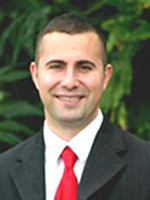
Rep. Soto
School choice Democrat has edge in senate race. State Rep. Darren Soto, D-Orlando, who supports vouchers and tax credit scholarships, appears poised to capture a state senate seat, reports the Sunshine State News.
DOE ends contract. From the Associated Press: “Florida is terminating a $20 million contract to build a website intended to help students, parents and teachers master new academic standards.”
Rick Scott ed plan called “timid.” The Daily Caller quotes Joy Pullman, managing editor of School Reform News: “Gov. Scott has released a comparatively tame education agenda, which reflects the vitriolic backlash he’s faced from the education establishment, and possibly a bit of “reform exhaustion” in a state that has made continual, serious education changes across the past 15 years.”
More no on Amendment 8. Hernando Today publishes a Florida Voices op-ed that says Amendment 8 is bad and really about vouchers.
Fate of double-F charter. The Board of Education will decide next week if the Sweetwater Branch Academic Elementary School in Gainesville can stay open, the Gainesville Sun reports.
 Sad but true: The other day, one of Louisiana’s statewide teachers unions tweeted that the Black Alliance for Educational Options, the stand-up school choice group, supports “KKK vouchers.” It subsequently tweeted, “Tell everyone you know.” (Details here.)
Even sadder but true: This wasn’t an isolated event. In recent months, critics of school choice and education reform have time and again made similar statements and claims – trying to tie Florida’s school accountability system to young black men who murder in Miami, for instance, and in Alabama, trying to link charter schools to gays and Muslims.
But this is also sad but true: Reform supporters sometimes go way too far, too.
Late last week, the Sunshine State News published a story about two Haitian-American Democratic lawmakers in South Florida, both strong backers of school choice, who narrowly lost primary races to anti-choice Democrats. The story quoted, at length, an unnamed political consultant who sounded sympathetic to the arguments raised by school choice supporters. He made fair points about the influence of the teachers union in the Democratic Party; about racial tensions that rise with Democrats and school choice; about a double standard with party leaders when Dems accuse other Dems of voter fraud. But then he said this:
“It’s a kind of ethnic cleansing of the Democratic Party,” he said, according to the report, “centered on the interests of the teachers’ unions.”
School choice critics may often be wrong; their arguments may at times be distorted and inconsistent. But to brand their motivations with a term that evokes Rwanda and Bosnia is more than off-key. It’s repulsive. It’s also a distraction and counterproductive.
I’m floored by extreme statements from ed reform critics. In the past couple of months alone, a leading Florida parents group accused state education officials of using the school accountability system to purposely “hurt children”; a left-wing blogger described John E. Coons, a Berkeley law professor and redefinED co-host, as a “John Birch Society type” because of his support for parental school choice; and other critics used fringe blogs and mainstream newspapers alike to shamelessly tar Northwestern University economist David Figlio, a meticulous education researcher who is not only widely respected by fellow researchers on all sides of the school choice debate but is so highly regarded beyond the world of wonkery that he was cited as a prime example of this state’s “brain drain” when he left the University of Florida. I’m further stumped by how such statements are rarely challenged by mainstream media, and by how more thoughtful critics simply shrug and look the other way.
Attacks like these make me want to say, “At long last, have you left no sense of decency?” But then, at less regular intervals, statements like the ethnic cleansing quote come up and knock reformers off the high road. I’m left with a less satisfying response: “Can’t we all just get along?”
Darren Soto, a Democratic state representative from the Orlando area, isn't out to privatize public schools. He supports public schools at the same time he backs vouchers and tax credit scholarships for low-income kids. And he is among a growing number of Democrats who are doing so.
In the clip above (which comes to us from our friends at the Hispanic Council for Reform and Educational Options), Soto makes it clear that he doesn't see expanded school choice as an either/or. "I'm supportive of that careful balance," he says, "where we provide opportunities for folks for who the public school isn't working or who are seeking a parochial or other specialized program, while still making sure that we fund the base program in public schools as well."
On a related note, check out this op-ed in last week's Huffington Post. It's on the connection between vouchers, Hispanics and revitalized Catholic schools. (Ignore the headline. It's completely at odds with the content of the piece.)
 The Louisiana Senate made national headlines this week with its historic 24-15 vote in favor of a statewide voucher program. But once again, media coverage ignored a key development: The vote was bipartisan.
Seven of 15 Democrats, including four black Democrats, voted in favor of HB 976, which also expanded other school choice options. That's on top of 12 Democrats who voted for the bill in the House. All of them did so despite tremendous pressure not to stray from the traditional party line or from historic allies like the Louisiana teachers union.
Despite all the Democratic votes, the union stuck to the story: The voucher agenda was pushed by out-of-state influences, the conservative American Legislative Exchange Council and Wall Street - a nefarious cabal out to "rob local funds from our neighborhood schools."
Widely repeated lines like these are what prompted redefinED this week to spotlight a couple of Florida folks who support vouchers and tax credit scholarships. One is a St. Petersburg, Fla. pastor who also happens to be a Democrat and the head of the local NAACP. The other is a Sanford, Fla. dad whose podcast interview I posted this morning. "I'm just a dad looking to do the best for his son," Mike Enters told me.
The debate over school choice is more dynamic and nuanced that its loudest critics want you to believe. And it's more interesting than what you'll read in the papers.

