A bipartisan plan to bring tax-credit scholarships to one of the nation’s largest and bluest states has fallen short, at least for now.The provision did not survive the $142 billion annual spending budget that New York lawmakers adopted early this morning, leaving supporters instead to push for its adoption this summer in the regular session.
The “Education Investment Tax Credit” had been tied to the Dream Act, which would provide state college aid to undocumented immigrants, in a political deal that unraveled in the final days of budget deliberations. Neither survived.
Among those expressing regret was Cardinal Timothy Dolan, the Archbishop of New York, and his reaction was pointed: “Our elected officials must cease allowing public school teachers unions intent on creating a government school monopoly to continue dictating education policy in our state. We turn again to our leaders to do the right thing, and pass the education tax credit, not for any interest group, but for the children of our state.”
That the effort came so close, though, speaks to both its future possibilities and the changing politics surrounding private school choice.
In New York, supporters of the scholarship program have assembled a broad coalition led by prominent Democrats, including Gov. Andrew Cuomo, and supported by organized labor. Both Cuomo and the state Senate proposed the Education Investment Tax Credit in their budgets. Though the Assembly did not include the plan in its budget, a majority of its members have signed on as co-sponsors.
by Marcus R. McCoy Jr.
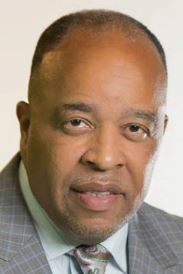
Bishop McLaughlin
Florida faith and community leaders took to the airways again this week to condemn a lawsuit that seeks to end the nation’s largest school choice program. And this time, they called out one of the groups backing it: the NAACP.
Bishop Vaughn McLaughlin, one of Florida’s most prominent pastors, dedicated both of his weekly radio broadcasts in Jacksonville on Tuesday to rally support for the state’s tax credit scholarship program, which was sued in August by the Florida teachers union, Florida School Boards Association, Florida NAACP and other groups. The program is administered by nonprofits such as Step Up For Students, which co-hosts this blog, and serves nearly 70,000 low-income students this year.
McLaughlin said he is “surprised and highly disappointed” by the NAACP’s position. More than two-thirds of scholarship recipients are black and Hispanic. Their average household income is 5 percent above poverty. And data shows that while they tended to be the students who struggled the most in public schools, they are now making solid gains in their new schools.
“I am adamant about this because our kids in Duval County are doing worse than almost all of the kids in every big district in the state of Florida,” McLaughlin said. “When you break the 10thgrade reading scores down into different demographic groups, what you’ll find is that while 67 percent of white students in Duval passed the 10th grade reading test, only 30 percent of black students did.”
“Now, I don’t think I need to explain to anybody what it means for our community, and our city and our society, when less than a third of our black students are able to pass a 10th grade reading test,” McLaughin continued. “I think you know what the implications are.”
The latest “radio rally” by Florida faith leaders is another sign that the political coalition supporting the school choice scholarship program is broader than media reports often suggest, and will continue to cause tensions within the Democratic Party. Like a similar event hosted by Miami Bishop Victor Curry in November, McLaughlin’s rally was joined by parents, educators and other faith leaders.
“When one cannot find a job because they did not receive the proper education, they resort to crime in the street,” said Garland Scott, pastor of Embassy Fellowship. “If you eliminate this choice for our children, you are making the choice for them to go to jail.”
“It’s critical that we reiterate who is doing this; it’s the school boards, it’s the NAACP,” said Kyle Harrison, pastor of Harvest Christian Fellowship.
The Jacksonville event was held a day after both sides in the lawsuit squared off at a key hearing in Tallahassee. Citing rulings by the U.S. Supreme Court and two state supreme courts, lawyers for the state and the scholarship parents contend the plaintiffs have no standing to sue because the program is funded with corporate contributions donated in return for tax credits, not state funds. Leon County Circuit Judge George Reynolds asked both sides to submit draft orders within 10 days.
McLaughlin and his wife Narlene founded a private school, The Potter’s House Christian Academy, which serves students who rely on scholarships to cover tuition. Blenda Salter, the school’s administrator, said she has witnessed major improvements in the children who attend.
“When I look at these kids, I see myself because I grew up in a public school and came from a low-income family, so I know what it’s like not to have,” she said. “I see these children learning in an environment where they are thriving and don’t understand why these groups like the NAACP are trying the hinder our children.”
McLaughlin said his intent was not to speak ill of public education but to stress the importance, value and need for school choice, especially for those who cannot afford it.
“We need to be heard,” he said. “The tax credit scholarship is a benefit to our community, the indigent and the low-income. And we are going to fight for our children.”
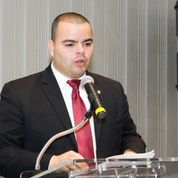
Democratic NY Assemblyman Marcos Crespo, speaking at the HCREO conference in Florida: "I don’t lose sight of the fact that I don’t know better than the parents who know their children. And my responsibility is not to tell her what she needs, it’s to provide options for her to choose." (Photo credit: Johana Sanchez)
New York Assemblyman Marcos Crespo is the latest example of an influential Democrat offering full-throated support for school choice, including options such as tax credit scholarships.
At a press conference in Miami last week, Crespo pointed to Florida’s tax credit scholarship program, the nation’s largest private school program, as giving New York a “playbook for something that works.” (The program is administered by nonprofits such as Step Up For Students, which co-hosts this blog.)
Crespo repeatedly referred to Miami scholarship student Valentin Mendez, who preceded him at the press conference. He also referenced the Catholic school education that helped shape U.S. Supreme Court Justice Sonia Sotomayor.
Like Crespo, Sotomayor hails from the Bronx. Her success wouldn’t have been possible without the school, and without her mother’s sacrifice in paying tuition, Crespo said. “Us in government,” he continued, “have a responsibility to create more opportunities for more Justice Sonia Sotomayors.”
Here are Crespo’s remarks in full, edited slightly for length and clarity.
I want to thank you and CREO for bringing us all together on this important conversation. It’s hard to follow Sen. Sandoval and Valentin and his testimony. But I’ll share with you what’s happening in New York.
I represent the community in the southeast section of the Bronx that has been known for far too long for all the social ills associated with urban communities and low-income communities. We have talked for years that education is our priority. We have talked about fixing a broken system that continues to fail to graduate and prepare enough students in our community, particularly minority children, Hispanic children, low-income community children. We’ve talked about the fact that 80 percent of the kids graduating from our school system, when they go to college, they need remedial courses because they’re not prepared for the academics they’re going to confront there. Think about that.
We talk about the economy of the state, and whatever state you’re in, whether New York or Illinois or Florida or wherever you are in this country, you’re not competing with just your own local community businesses. You’re competing in a global market. We talk about the failure of this country to be competitive with other superpowers around the world, and we have that conversation but we don’t do anything about it or enough about it.
I’m here today, and I’m here with friends who are Republicans and Democrats because as the senator said, this isn’t a partisan issue. The issue of education is a moral issue. It’s a rights issue. And it is an issue of opportunity and growth that is going to keep this country to be the great country that it’s been. We cannot do that without preparing the next generation. We cannot achieve that without empowering our young people to be the leaders of tomorrow. We say that far too often as a punchline and not as a real goal, and as a commitment for anyone regardless of what label you use to describe yourself and your politics.
I don’t know that an elected official, or a bureaucrat working at a state education agency anywhere in this country, can know better what’s best for Valentin than his mom who spoke here earlier. No one can tell her what’s best for her son.
In every state in this country, we talk about diversity. We talk about the strength of our diverse communities, we talk about the diversity of faith, of cultures and languages that make the United States what it is, certainly New York what it is. But then we don’t translate that very concept into the way in which we provide opportunities. Ladies and gentlemen, one size doesn’t fit all. (more…)
From the News Service of Florida:
In a move that highlights the political crosscurrents confronting Democrats on education issues, a coalition emphasizing the benefits of state-approved vouchers for low-income students called Wednesday for the Florida Education Association to drop a lawsuit challenging the program.
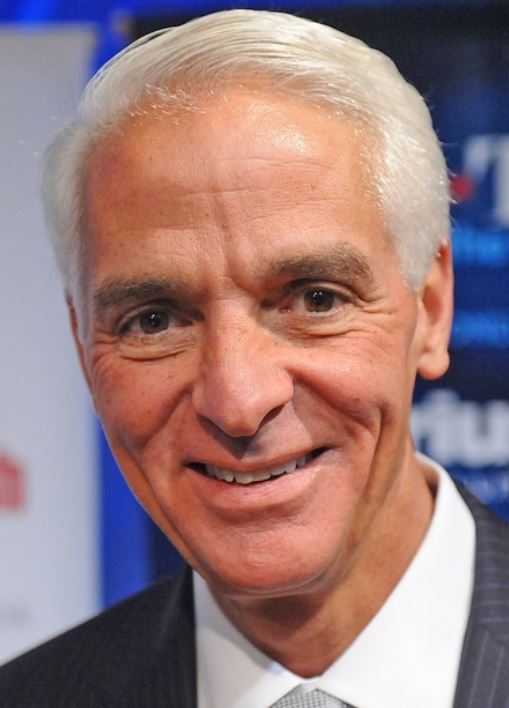
Charlie Crist
The Save Our Scholarships Coalition, which held a conference call with reporters to draw attention to the request, consists largely of African-American, Hispanic and Jewish leaders --- some of whom have constituents who are parts of key Democratic voting blocs in Florida. But the coalition is at odds with the state's largest teachers union, which often provides resources and organizational muscle for Democratic candidates.
The coalition's leaders are not exclusively Democrats by any means. For example, Julio Fuentes, head of the Florida Hispanic Chamber of Commerce and the Hispanic Council for Reform and Educational Options, often supports Republican causes and candidates.
But in remarks on the conference call Wednesday, he underscored the demographics of those who receive the 68,000 awards from the Florida Tax Credit Scholarship Program, as the voucher system is formally known,
"Many of these children are minorities and come from economically disadvantaged families," Fuentes said. "We have an army of motivated educators who are willing to roll up their sleeves and be part of the solution."
H.K. Matthews, a civil-rights leader, also joined the call to question the motives of Florida Education Association leaders fighting to undermine the program.
"I cannot for the life of me fathom why these educators are willing to jeopardize the well-being of the state's poorest students," Matthews said.
At the same time, the lawsuit filed in August to challenge the voucher program is supported by the Florida NAACP and a Jewish rabbi --- highlighting the complicated fissures within Democratic voting blocs over the tax-credit system.
The lawsuit says the $357.8 million program, which provides tax credits to companies that donate money to nonprofit entities that pay for children to go to private schools, violates constitutional limits on aid to religious institutions and the Legislature's responsibility to fund public education.
Without the scholarship program, the tax dollars businesses would otherwise owe the state could be used to help fund public education, voucher critics say.
Joanne McCall, vice president of the FEA, said Wednesday that her group didn't intend to back away from its lawsuit. She said lawmakers should instead provide the support necessary to build up the state's public schools.
"If they did all of those things, there would be no need to have any kind of scholarship programs," McCall said.
The dispute comes at an awkward time for Democrats, who are trying to beat incumbent Republican Gov. Rick Scott in next month's election. Scott wasted no time in flaying the FEA lawsuit when it was filed, but Democratic candidate Charlie Crist --- a former Republican governor who later became a Democrat --- has been more cautious about the program.
The section on Crist's website devoted to education policy doesn't address the voucher program beyond a promise that, if elected, Crist would "ensure that corporations receive the same tax incentives for investing in Florida's public schools as they do for investing in private schools." The Crist campaign did not respond to a question Wednesday about whether he believed the FEA should drop its lawsuit. (more…)
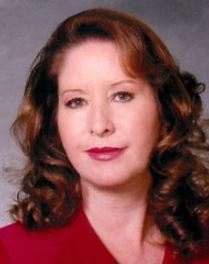
Gloria Romero
Editor’s note: This is the last post in our series on the Democratic Party’s growing divide over ed reform and ed choice.
by Gloria Romero
While in the belly of the beast of government, I had a front row seat on how the wheels of government are greased to function for politically connected interests. Over time, I chose not to just be a cog in the ever-churning wheel of special interests and status quo, from both the left and the right. I saw a political system, led by Democrats, that was all too willing to ignore the needs of ordinary citizens, particularly the poor and minority kids I represented in East Los Angeles.
There is no aspect of state government operations or public policy in California, particularly education policy and budgeting, that is untouched by the power of the California Teachers Association (CTA) and its affiliates in Sacramento. With approximately 300,000 members, each paying some $1,000 a year in dues, it commands the most powerful war chest in California, raising over $300 million annually to finance its operations. From 2000-2010, CTA spent over $210 million on political campaigning — more than any other donor in the state, even outspending the pharmaceutical, oil, and tobacco industries combined.
Its political war chest is legendary. It dominates elections, including school board races in which voter turnout is anemic, often less than 10 percent. Political consultants fear crossing them because of the potential to be “blacklisted.” Almost half the entire California budget funds education thanks to Proposition 98, a 1988 initiative crafted by CTA. Democratic legislators fear interfering with it even though few understand how the formula functions.
Former Democratic Senate President Don Perata was one of the few to challenge it, comparing it to a “runaway escalator.” In retribution, CTA ran ads against him. It was not interested in “taking him out”; rather, the message was akin to sending dead fish to fellow caucus members so they would have to choose loyalty: their own president or CTA.
Former CTA staffers are ensconced in legislative leadership offices. Legislation benefiting their membership flies through the Capitol. Indeed, class size reduction was sold to voters as “benefiting kids.” In fact, it has more so grown the numbers of dues-paying members rather than improved the academic skills of, particularly, poor and minority children.
California teachers are amongst the highest-paid in the nation; yet, there is little accountability for student achievement or teacher performance. Laws make it almost impossible to fire teachers for incompetence or misconduct. Charter schools, mostly non-union, are attacked by the teachers unions. Any hint of privatization, including opportunity scholarships for kids in failing schools, are “off the table.” The 2010 Parent Empowerment Act I wrote, giving parents unprecedented tools to fight for their kid, like parent trigger and open enrollment, continues to be vilified.
Money flows to those who control the levers of power, and in California that means Democrats. (more…)
Editor's note: This is the fifth post in our series on the Democratic Party's growing divide over ed reform and ed choice.

Whitmire
by Richard Whitmire
This spring I attended the Democrats for Education Reform conference in Lake Placid and watched a line of teacher union protesters, including Randy Weingarten, stand in the cold Adirondack rain and wave signs at us with slogans such as “Public Education is not for Sale.” I recall thinking: "This is going nowhere good.”It’s hard to be optimistic about the possibility that this political divide among Democrats will narrow. In Chicago, fiery teachers union president Karen Lewis is close to running against Democratic Mayor Rahm Immanuel. In New York, progressives still haven’t forgiven Democratic Gov. Mario Cuomo for putting down Democratic Mayor de Blasio over charter schools. In Los Angeles, where all the players are Democrats, the school board temporarily severed two of the highest performing charter schools there. And then there’s the NEA weirdly calling for the resignation of Education Secretary Arne Duncan. Yes, that nice Democrat Arne!
All these conflicts have one thing in common: Democrats v. Democrats. Or, to put it more precisely, liberals (think Cuomo) v. progressives (think de Blasio). While there are many education issues that fall along this divide, only one appears to have no resolution: charter schools. The bluer the state, the bigger the divide. On July 16 the Massachusetts Senate rejected an attempt to lift the very tight lid on charter schools, despite the fact that the state has the nation’s highest-performing charters.
What’s the problem? The fact that top charters have gotten significantly better in recent years (I define that as roughly the top fifth, the charters capable of adding a year-and-a-half of growth for every school year) presents a broad and enduring threat to traditional school districts and unions: These charters can both replicate quickly and produce student results that most districts can’t match. How to contain such an existential threat? Superintendents and unions, joined in common cause, rely on friendly legislatures (think of what just played out in Massachusetts) and lawsuits (think of San Jose, where opponents use zoning laws to slow down charter expansion).
Will the “pushback” strategy work? Definitely, at least in the short term. But not the long term. Given that parental choice is relatively widespread, and parents are not inclined to relinquish that choice, all that will matter in the end are quality schools, whether they are district or charter. But that “end,” can be far, far away. The power of the anti-charter forces to block expansion is considerable, and, at least from my perspective, that means denying quality schools to thousands of parents. How to solve that dilemma? (more…)
Editor's note: This is the third post in our series on the Democratic Party's growing divide over ed reform and ed choice.

Myles Mendoza
by Myles Mendoza
Mayor Rahm Emanuel is the in the political fight of his life. As a result of challenging the status quo by fighting for reform in Chicago Public Schools, Emanuel’s reign as mayor of one important cities in the United States is not guaranteed to continue.
Here’s one reason why: the mayor polls poorly among the city’s many African-Americans. In fact, only eight percent of them would support Emanuel if the election were held the today.
That’s one of the reasons why Chicago Teacher’s Union President Karen Lewis is currently entertaining the idea of a possible mayoral run. According to a recent Chicago Sun Times poll, she was leading Emanuel 45 percent to 36 percent with 18 percent of the likely voters undecided.
Previously, the Mayor faced an even tougher fight against another potential candidate, Cook County Board President Toni Preckwinkle. Although she withdrew, a race against Preckwinkle showed Emanuel losing by 24 points.
While, recent Ed Choice Illinois polling shows the Mayor now ahead by 12 points generally and by 3 points in the African-American community, it is clear his greatest challenge is with African-Americans. How did the Mayor get into this situation?
When he first entered office, Emanuel rightly assessed that African-American neighborhoods were getting the short end of the stick when it came to the quality of the education they received.
Emanuel looked to the education reform community for solutions. Chief among them was the concept of making schools accountable by tying eligibility for public dollars to performance.
That’s why he expanded high-performing charters like Noble Street and Urban Prep and shut down the highest amount of low-performing schools in American history - the majority of which were located in African-American communities.
But, in doing so, he made a fatal flaw. (more…)
The recent ruling in Vergara v. State of California once again highlighted growing tensions in the Democratic Party between two key constituencies: Teachers unions on the one hand; low-income, black and Hispanic families on the other.
Is there a path to reconciliation? We asked folks who have thought about that a lot. Next week, we’ll run their responses.
Here’s the prompt:
In the Vergara decision, Los Angeles Superior Court Judge Rolf Treu took a clear-eyed view of teacher employment policies that too often saddle low-income students with the least effective teachers. “The evidence is compelling,” he wrote. “Indeed, it shocks the conscience.” Yet those policies have long enjoyed full-throated support from teacher unions and their Democratic allies.
A similar rift exists over educational choice. Blacks and Hispanics are embracing charter schools, vouchers, and tax credit scholarships, which parental choice supporters see as expanding opportunity and empowerment of low-income families. But teacher unions, facing loss of market share and political power, are fighting every step of the way.
Democratic lawmakers are increasingly caught in the middle, and increasingly torn. Straddling the divide is becoming more and more difficult as more and more black and Hispanic parents benefit from charters and vouchers – and publicly raise their voices in support.
So, what’s the solution? Can Democrats continue to stiff-arm minority constituencies on ed policy without repercussion? Is there real risk in black and Hispanic voters turning to the more reform-friendly confines of the Republican Party? How long before something gives?
Should/can Democrats write off the teacher unions? Should the ed reform community more actively recruit reform-friendly Democrats for primary challenges? Or should they more aggressively push unions to modify their organizing model to better align with a public education system that is becoming more customized and decentralized?
Read the Dem Divide series below
Gloria Romero: Money leads Democrats to put teachers unions over poor kids
Ben Austin: Democratic leaders will follow parents on ed reform, eventually
Richard Whitmire: Houston & D.C. offer paths for ed reform Democrats
Joe Williams: Suburbs hold key to resolving Dem tensions over school choice
Myles Mendoza: Rahm Emanuel offers lesson for Democrats on ed reform
Rep. Marcus Brandon: African-Americans must blaze own path on school choice, ed reform
Doug Tuthill: New type of teacher union is key to relieving Democratic tensions
It's not new news that progressive icon Howard Dean likes charter schools. Or that another big-name Democrat likes charter schools. Or that another big-name Democrat is all aboard with school choice (Cory Booker, Joe Trippi, Mike McCurry ... ). But until that expanding list starts to dent the narrative that parental school choice is a Koch Brothers scheme, well, we'll keep highlighting them. 🙂
The latest is what Dean said at a recent appearance at a college in Vermont. He told the audience his son taught for Teach for America in New Orleans, then continued:
“And his kids that he was teaching in the 9th grade … were essentially illiterate. Now this is 40 years after the civil rights movement, 40 years after African Americans and whites were supposed to have equal opportunity under the law. These kids had no equal opportunity. They were being starved by a corrupt school board, and a culture that had never valued them as much as they valued white kids. I was furious. I was so angry, in a moment I converted my whole philosophy of education, to we had to try anything we could to get inner city schools better."
"And inner city schools are being reformed by people in your generation who are joining Teach for America. There are principals … tons of them, all over the country, who are not yet 30 years old. It’s the charter school movement. There’s some things I don’t like about the charter school movement. They’re not all created equal. For profit charters are clearly worse than non profit charters. But the charter school movement is transforming inner city education. It is getting kids through high school with diplomas that never would have had a chance even five years ago."
Plenty of thoughtful folks would disagree with Dean about for-profits in education. And we can only hope his eye-opening led him to revisit his opposition to vouchers, too. But in the big picture, it's clear Dean is representative of a trend: growing bipartisan support for a growing array of options. (more…)

Trippi
Some people grow up on the wrong side of the tracks. Joe Trippi, the legendary Democratic consultant, grew up on the wrong side of the school zone. On one side of the arbitrary, invisible line that ran down his street in L.A.: safe schools, high school grads, kids who went on to college and careers. On the other side: gangs, dropouts, a dead end.
Trippi got across the line, thanks to a tenacious mom. But, he told redefinED in a recent phone interview, he’s haunted by what happened to the kids who didn’t. And 50 years later, he’s aghast that the same “crazy way to shuffle kids around,” as he put it, remains largely intact.
“It’s just unfathomable to me,” Trippi said in the podcast attached below. “I think about all of those years, and that system is still in place today, everywhere. Most places anyway. Too many places.”
Trippi is yet another high-profile Democrat who supports school choice, including publicly funded private options like vouchers and tax credit scholarships. His personal experience informs that position. So does something more urgent and practical: a belief that with so many kids falling through the cracks, it makes sense to put all options on the table. “I think we should try them all,” he said. “The current status quo, it may be working for some kids, maybe even many." But for too many, it isn't.
Democrats and school choice have a long, tangled relationship. Few know better than Trippi. He’s been deep inside Democratic politics since the 1970s, and his firm, Trippi & Associates, has advised National School Choice Week since its inception in 2010. So what’s he seeing on the ground now? A lot of Democrats coming around on school choice, especially at the local level, especially in inner cities.
Even more will come around, Trippi said, if both sides cut the nastiness, and if school choice supporters continue to stress bipartisanship. To that end, the Republican push to emphasize school choice in the run-up to the 2014 elections carries some risk, he said. “I’m not begrudging them for their efforts. I know they care about it,” Trippi said. But making school choice partisan potentially sustains “the polarization and the demonization on both sides.”

