Florida's status. Matt Reed, Florida Today's editorial page editor, takes a look at NAEP data and the most recent Education Week Quality Counts report and concludes: "We obviously have room to improve. But our system is neither starving, as educators always say. Nor is it “broken” or “failing,” as reformers keep telling us."
Florida's status, Part II. Diane Ravitch's latest take, after quoting a Florida teacher at length: "There is no Florida miracle. Education has only gotten worse over the past few years, no matter how schools, districts and the state itself game the system. And, contrary to what the media will tell you, it is NOT teachers’ fault, unions’ fault, and I won’t even blame it on the kids or their parents this time. It is the fault of education “reform” led by Jeb Bush et al."
Charter schools. The South Florida Sun Sentinel writes up the bill that would require school districts to share unused or underused facilities with charter schools. Bad idea, editorializes the Palm Beach Post.
Gays and lesbians. The Lake County School Board considers rules that would keep a Gay-Straight Alliance from forming at a middle school. Orlando Sentinel.
Teacher evaluations. Tampa Bay Times on one impact (or not) of the new system in Hillsborough: "After years of planning and training, observation and deliberation, the first wave of firings has begun under a teaching-improvement project funded by the Bill & Melinda Gates Foundation. The tally: Three teachers." (more…)
Two sitting school board members in Florida are among the latest batch of applicants vying to be state education commissioner.
 Rick Roach (at left), now serving his fourth term on the Orange County School Board, is perhaps best known outside of the Orlando area for his criticism of the Florida Comprehensive Assessment Test, the state's main standardized test. Roach revealed on The Answer Sheet blog in December that he did poorly on the math and reading portions of the 10th grade FCAT when he took it last fall. On her blog last month, Diane Ravitch called him a hero. The Orlando Sentinel has more on his bid to be commissioner here.
 Andy Tuck (at right) is a school board member in rural Highlands County. In his application, he wrote that Florida's education system "needs to be looked at from a more objective and business approach" and should put more "attention and accountability" on leadership positions. Interestingly, the Highlands school board was among those that did not join a popular resolution last summer critical of Florida's testing regimen. "I don't necessarily agree with high-stakes testing," Tuck told Highlands Today in June, "but I believe until we have a better solution on how we should evaluate learning gains, I don't think we should be passing any resolution."
Roach and Tuck are among 18 people whose applications came in after the Florida Board of Education voted last week to extend the commissioner search through early December. So far, 34 people have applied. As with the first batch, there are no obvious "rock stars" in the mix, which includes a number of school principals and small-district superintendents. One name that stands out: Dane Linn, executive director for state policy at The College Board.
You can see the first 16 applications in this earlier post here. Attached below are the most recent 18. (more…)
 The public release of test scores for low-income students on Florida Tax Credit Scholarships received remarkably little attention in the news media this year, leaving bloggers the freedom to interpret serious academic analysis with what amounted mostly to potshots.
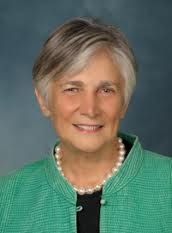
Not surprisingly, Diane Ravitch weighed in to wag her finger at the straw men who have touted vouchers as “a panacea.” But at least she didn’t challenge the credentials of the state-contracted researcher, whose national reputation for thorough independent-minded critical analysis didn’t prevent two lesser-known Florida bloggers from doing so. She also didn’t snipe at a respected education writer for the state’s largest newspaper, branding her reporting on the test results as “propaganda,” as several online commenters did.
This kind of noise is usually best regulated by shutting the door, but those who have genuine concerns about whether a private learning option can help struggling, underprivileged schoolchildren deserve straight answers. I certainly cannot be viewed as an unbiased observer, but my work for the nonprofit that oversees the scholarship at least makes me an informed one.
So let’s start with Dr. Ravitch, who to her credit recited three direct paragraphs from the 41-page report. She also said that “students in voucher schools made academic gains similar to their peers in public schools,” which is a generally correct statement. But rather than read more deeply, she tried to minimize the significance through unsupported and unimportant claims that Florida tax credit scholarship supporters promised miracles.
The test scores and associated research do not speak to academic miracles, but they are encouraging. To repeat some portions of our previous post, two findings are critical for context.
First: For five consecutive years, the state researcher has determined that students who choose the scholarship are among the lowest performers in the public schools they leave behind. (more…)
After more than a decade working in education reform I learned long ago that if I stopped to kick every snapping dog along the pathway, I would never arrive where I needed to go. But every now and then I read something, such as Diane Ravitch’s latest op-ed on CNN.com, and have to take a breath and ask “Really?” One of my earliest resources as I was starting in education reform back around 2000 was her book, “Left Back: A Century of Failed School Reforms.” But now it appears she’s utterly abandoned that historical analysis in favor of status quo incrementalism and apologies for failure.
Let’s just think about Dr. Ravitch’s assertions:
The NAEP test scores of American students are at their highest point in history: for black students, white students, Hispanic students, and Asian students.
They are at their highest point in history in fourth grade and in eighth grade, in reading and math.
I tend to agree with Dr. Ravitch that the National Assessment of Educational Progress (NAEP) test is the most valid measure of academic performance. But why is that? Primarily, as my American Center for School Choice colleague, Alan Bonsteel, recently reminded us, it is because most states have catered to their own self-interest, aligning examinations to weak standards to give the appearance of academic achievement rather than actually increasing the amount of learning necessary for student success in this century. So for most of the last 10 years, under No Child Left Behind, we permitted widespread creation of dysfunctional and often meaningless standards aligned to dysfunctional and meaningless tests. Logically, this history does not make for a persuasive indictment of the value of legitimate standards and assessment tools.
But beyond that, let’s look at Dr. Ravitch’s assertion:
The “highest point in history” while true, is relative to what?

With the exception of the Asian/Pacific Islander group, I doubt anyone is throwing a parade for the educational system’s accomplishments over the last 20 years. Are 7-point gains over 20 years for African-Americans and Hispanics and a 9-point gain for white students really the kind of progress we expect after multiple billions of real increased educational spending? Yet this seems to be what Dr. Ravitch finds acceptable performance. (more…)
Editor's note: Here's another selection of "choice nuggets," a feature we started last week to keep some smaller but still blogworthy items from going to the compost heap. 
Are vouchers too popular, or not popular enough?
For years, school choice critics have posited that vouchers and tax-credit scholarships will open the floodgates for a mass exodus from public schools. So it was a bit of a monkey shock last week to read Diane Ravitch belittling Louisiana’s new voucher program because, in her view, too few students had applied.
“Not exactly a stampede for the exits,” Ravitch wrote. “No big rush to enroll in the little church schools that are supposedly better than the public schools … ”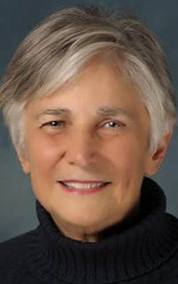
According to published reports, about 9,000 students applied for vouchers, not counting those already enrolled in the voucher program in New Orleans. Sounds like a lot of people to me. But if it’s obvious that only a small percentage of parents will opt for private schools (because, truth be told, most parents are satisfied with their public schools) then why are critics so upset? Doesn’t that undermine the argument that school choice is a Trojan Horse for profiteers?
Ravitch ends her piece by suggesting Louisiana officials puffed up the application numbers. “As usual,” she concluded, “they were playing the media for headlines.”
Two days later, the Washington Post’s “Answer Sheet” blog ran Ravitch’s piece in full.
A tale of two reports
Two national reports released in the last week purported to offer some gauge of academic progress in Florida’s public schools. One relied on apparently undisclosed measures to determine that Florida’s educational ranking dropped from No. 35 to No. 42 in the past year. The other tracked nearly 20 years of scores from the National Assessment of Educational Progress to conclude that Florida students have made more progress than their peers in every state but one.
Guess which report got more play? (more…)
Romero
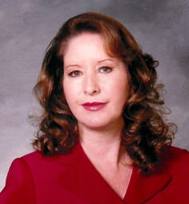
by Gloria Romero
Diane Ravitch, are you listening?
This is former state Sen. Gloria Romero calling.
I am the author of California’s first Parent Trigger law, the first parent trigger law in the nation. Since I first wrote that law, some 15 other states have seen some version of the law introduced in their states.
I wanted to reach out to you since we have never met, and I look forward to meeting you so we can one day talk directly with each other. Woman to woman.
In one of your recent blog posts on Education Week, you wrote that the parent trigger came from the American Legislative Exchange Council (ALEC). On the blogosphere, I now read many claims that ALEC wrote the law. This is completely false, and I ask you to correct this.
Please, stop saying that some organization I had never met until just this year gave me the idea and somehow, miraculously, turned it into law without me not knowing about it. ALEC happens to like the law and encourages other states to write similar laws. That is true. But that does not mean it developed either the idea or the law. That’s preposterous! Quite frankly, it’s also a bit sexist and ethnocentric to assert my work actually came from someone else - that somehow the Latina senator from East Los Angeles couldn’t think on my own, or figure out how to write a bill and turn it into law.
To be fair, you are not alone in failing to acknowledge my role, or the role of other strong individuals (mostly women of color) in getting the bill passed. I always recognize Ben Austin from Parent Revolution for suggesting the idea. Unfortunately, the materials Parent Revolution distributes make it sound as if parents cascaded on the state Capitol and forced this into law. It seldom concedes in its materials that someone actually had to write a bill and argue and negotiate for its enactment. While it sounds romantic to say parents demanded this and descended on the Capitol to force this into law, that is too much Hollywood. In fact, we did have parents in Sacramento. But many of them were from organizations that were not affiliated with Parent Revolution, and they are seldom acknowledged.
One day I will write the full story of how the Parent Empowerment Act (its official title) became law. In the meantime, let it suffice to say that both you and Parent Revolution and anyone else who writes about the law should know that once the idea was discussed with me, I chose to expand and develop it in a bill. I developed a strategy. I worked with my legislative staff to write language. I assembled a “rag tag” army of civil rights activists who understood that this was our moment to enact the change in which I so strongly believed. And I never saw an ALEC representative. (more…)