Every legislative session the debates surrounding education choice remind me how our perceptions of reality are influenced by our cognitive biases, and why teaching students (and adults) about these biases is so important.
Opponents of education choice regularly attack these programs for, among other things, taking money away from district schools, promoting racial segregation, only serving high-performing students, lacking accountability, generating profits for wealthy investors, and inappropriately using government funds to promote religion. Education choice supporters rebut these attacks with information showing they are false. But after almost three decades of this back and forth, the two sides are farther apart than ever.
Ironically, facts are contributing to this growing divide. Psychology journals are full of research showing that people’s beliefs are often strengthened when presented with contrary facts. Contrary facts often trigger people’s defense mechanisms. They go into fight or flight mode and reinforcing their commitment to their beliefs is how they protect themselves. I heard an interview a few years ago with a man who believed former President Obama was born in Kenya. When the reporter presented him with a copy of Obama’s Hawaiian birth certificate he saw this as evidence confirming his belief. “That they went to all this trouble to forge a birth certificate is proof of a coverup,” he said.
Assertions that the horrific Sandy Hook Elementary School shootings never happened continue to haunt parents whose children were killed. Conspiracy theorists see testimony from these parents about their dead children as proof the shooting never occurred.
I wish fact-resistant beliefs and conspiracy theories were confined to a small group of people. They aren’t. These tendencies are hardwired into our genome.
The March 2019 edition of the journal Social Psychology and Personality Science includes an article entitled “Logical Reasoning: Ideology Impairs Sound Reasoning.”
The researchers found that both liberals and conservatives evaluated entire arguments based on the believability of the arguments’ conclusions, which led to “predictable patterns of logical errors.” Each side was better at identifying flaws in their opponents’ arguments than they were in their own, which illustrated how political beliefs “distort people’s abilities to reason about political topics soundly.”
The existence of cognitive biases that impede rational thought is common knowledge throughout cognitive and social psychology and behavioral economics.
National Public Radio journalist Hannah Rosen, on her podcast “Invisibilia,” recently added an interesting twist to this phenomena when she explored how empathy can reinforce and perpetuate cognitive biases. She found that people, especially young people, avoid empathizing with people they disagree with because they don’t want empathy to lessen their opposition. Rosen concludes that empathy is starting to appear “more like tribalism, a way to keep reinforcing your own point of view and blocking out any others.”
Consistent with Rosen’s reporting, I’ve noticed that education choice opponents often resist meeting and spending time with low-income and minority families using scholarships and vouchers to attend non-district schools. I’ve always suspected that they’re afraid they might empathize with these families and this empathy would undermine their determination to oppose education choice. It’s easier to deny low-income and minority families access to more education options if they’re just statistics.
Despite our ubiquitous tribalism, group think, and various cognitive biases, I remain optimistic that we can learn to get along in a fact-based world. Education is the key. Specifically, teaching young people to be more self-aware of these biological and cultural traits and how to manage them effectively. I spent over a decade teaching high school students how to develop and maintain good critical thinking skills. It can be done. Admittedly, it’s more difficult convincing highly partisan adults to use these skills when emotions are running high.
Public education would benefit if education choice opponents and supporters spent time talking to each other instead of yelling at each other. I spent over a decade as a teacher union leader, and now I’m president of the country’s largest education choice organization. I’ve been on both sides, and I know that we agree far more than we disagree. We all share a passion for expanding excellence and equity in public education. That’s where we should be focusing our collective energy.
Doug Tuthill is president of Step Up For Students, which helps administer the nation's largest private school choice program (and co-hosts this blog).
The term “for-profit” has been weaponized in public education by teachers unions and their tribal allies.
They wield it against education improvement initiatives they oppose, especially education choice programs not covered by collective bargaining agreements. (Choice programs not operating under collective bargaining, such as Florida’s Voluntary PreK program, are not targets of for-profit attacks.)
For-profit corporations are forbidden to operate charter schools in Florida and California. Yet these schools are constantly being attacked for profiting off students. The overwhelming majority of Florida private schools serving tax credit scholarship and voucher students are non-profit, but newspaper editorial boards regularly criticize them for making profits.
These critics seem unfazed by the reality that district schools could not function without the products and services purchased from for-profit corporations. School buses, desks, instructional software, hardware, interactive whiteboards, books, pencils, pens, copy machines and paper are all purchased from for-profit companies. School buildings are constructed by for-profit companies using materials purchased from for-profit corporations. A proposed law requiring school districts to purchase products and services only from nonprofit organizations would be fiercely opposed by school districts, who would correctly see this as an attempt to destroy public schools.
Despite their for-profit criticisms, teachers unions rely on the profits they make from for-profit businesses to help pay their bills. During my tenure as a Florida teachers union leader, we sold insurance and financial services to teachers through various for-profit businesses. I still use a National Education Association credit card through a for-profit venture involving the NEA, MasterCard, and Bank of America.
The NEA’s for-profit businesses are not illegal. Nonprofits can own for-profit businesses provided the profits from those businesses are used for nonprofit purposes. My hometown paper, the Tampa Bay Times, is a for-profit company that is owned by the Poynter Institute, a nonprofit which provides professional development opportunities for journalists.
While teachers unions’ criticisms of for-profit businesses in public education may be disingenuous, ensuring taxpayers get the best possible value from education products and services purchased with public funds is important. But requiring that services teachers unions don’t like, such as charter schools, be purchased only from nonprofit organizations is not the best way to serve the public good. The best way is through effective contracting and oversight by government agencies.
When state government or a local school board purchases services, they should focus on maximizing the public’s benefits, not on the characteristics of the providers. As a taxpayer, I don’t care if a provider is gay or straight, male or female, black or white, for-profit or nonprofit. I want children to receive great services for a fair price. Focusing only on quality and price may not further the political agendas of certain advocacy groups, but it does serve taxpayers and the people receiving these services.
Determining what constitutes the best services for the best price is often challenging in public education. An afterschool tutoring program, a neighborhood district school, or a Montessori charter school may work well for some students, but not others.
The legendary management consultant, W. Edwards Deming, defined quality as customer satisfaction and not goodness, because what is good for one person may not be good for another. This is why parental empowerment and education choice are essential for helping determine what constitutes quality in public education. Empowering parents and educators to customize each child’s education is the best way to maximize the public’s return on its public education spending.
Given the proliferation and necessity of for-profit organizations in public education, attacking those that aren’t covered by teachers union collective bargaining agreements would seem a flawed political strategy. But it works with people and organizations who are part of the same political tribe as teachers unions, most notably many daily newspapers, Democratic politicians, and liberal advocacy groups.
As more low-income, minority, and working-class families participate in education choice programs, I hope teachers unions and their political allies will become more open to seeking common ground with these families. Many of these families are struggling to break the cycle of generational poverty. Hypocritical attacks on for-profit organizations providing services to school districts and state governments are not serving the greater good. We need to focus our collective energy on how to efficiently deliver educational excellence and equity to every child.
Doug Tuthill is president of Step Up For Students, which helps administer the nation's largest private school choice program (and co-hosts this blog).
Florida Gov. Ron DeSantis caused an uproar recently when he commented that all publicly-funded K-12 education services are part of public education. He was speaking about a proposed new education voucher program that, if it becomes law, will give low-income and working-class families public funds to help pay for private school tuition and fees. The assertion that education vouchers are part of a devious scheme to dismantle and privatize public education is undermined if publicly-funded vouchers are part of the public education system. Hence, the strong political backlash from education choice opponents to the governor’s statement.
My hometown paper, the Tampa Bay Times, immediately attacked the governor’s comment by quoting a line from the Florida Constitution stating that Florida is required to provide “a uniform, efficient, safe, secure, and high quality system of free public schools.” But the governor didn’t say all publicly-funded education services are part of public schools. And I don’t think he was making a legal or constitutional argument. He was simply stating the obvious. It’s in the public interest to understand that public schools, alone, can never meet the educational needs of every child because much of their education occurs outside of schools. And always will.
The Florida Constitution properly requires that we provide every child access to a high-quality public school. But sit in any teachers’ lounge and you’ll quickly hear that educators know that’s not enough. Especially for children trying to escape generational poverty, we need a concept of public education that extends well beyond public and private schools.
The criticisms of Gov. DeSantis’ comment illustrate an obstacle people of good will face when discussing how best to improve public education. We don’t have a common set of linguistic and conceptual understandings to facilitate our discussions. Consequently, we often talk past each other.
Conversely, debates about how to improve our nation’s health care system, while often contentious, benefit from commonly understood concepts. Perhaps applying some of these health care reform concepts to public education could help us clarify where we agree and disagree, and maybe help us find common ground.
The New York Times recently published this useful glossary of health care reform terms:
Single-Payer: A health care system in which the government pays for everyone’s health expenses.
Private Pay/Private Insurance: Individuals pay for their health care through their personal funds and/or a private insurance provider.
Public Option: Allows individuals who don’t qualify for the current Medicaid or Medicare programs to purchase health insurance from the government.
Socialized Medicine: A single-payer system in which the government owns the hospitals and employs the medical staff. The British health care system is an example of socialized medicine. The British government owns the medical facilities and pays the doctors and nurses. According to the Times, in the U.S., the Veterans Administration health care system is an example of socialized medicine.
Medicare for All: Expanding the current health care system for older adults to cover everyone. Some Medicare-for-All proposals are single-pay programs that cover all medical expense, while others include privately-funded co-pays and options for supplemental private insurance coverage. No current Medicare-for-All proposals include socializing the U.S. health care system by requiring doctors, nurses, and other medical personnel to become government employees.
Universal Coverage: Everyone is guaranteed access to health care. This could be accomplished through a single-payer system, requiring everyone to purchase private insurance, or some combination of single payer, private insurance, and a public option.
I don’t speak for the education choice movement. But my sense is that the goal of most education choice advocates, using the Times’ health care reform taxonomy, is a single-payer public education system that provides universal coverage and allows educators to participate without having to be government employees. This approach is similar to Canada’s health care system and Sen. Bernie Sanders’ Medicare-For-All proposal.
Most ed choice advocates would also support weighted funding based on each student’s needs and allowing parents to supplement single-payer funding with private funds.
Education choice advocates are generally skeptical of socialized public education (and socialized medicine). They are fine with doctors and teachers working as government employees in government-owned VA hospitals and district schools, respectively. But they think doctors and teachers should have the freedom to choose whether they want to be in public or private practice. Doctors have this freedom today. Most teachers do not.
Our two primary public health care systems today, Medicare and Medicaid, provide a context for understanding what Gov. DeSantis might have meant when he equated publicly-funded K-12 education services with public education. U.S. doctors who treat both private- and public-pay patients are simultaneously participating in private and public health care systems. When doctors in private practice are being paid by private health insurance companies to treat a patient, they are in a private health care system; when they start treating a Medicare patient a few minutes later, they are participating in a public health care system. From one minute to the next, what determines whether private practice doctors are participating in a public or private health care system is who is paying the bill.
If we apply today’s health care reality to K-12 education, private practice teachers are in private education when they are being paid by private funds and participating in public education when they are being paid by public funds. Given Gov. DeSantis’ congressional background and his experience with the Medicare and Medicaid programs, it’s not unusual that he may see parallels between public health care and public education.
The history and politics of public education and public health care differ greatly, which is why Sen. Bernie Sanders and others on the Left strongly support a single-payer, universal coverage plan for health care, yet oppose a similar plan for K-12 education. But low-income and working-class families are increasingly flexing their political muscles and causing the politics around education choice in public education to change. Gov. DeSantis’ comment will eventually be seen as common sense, even by the Medicare-For-All political Left.
Florida needs a better system for determining quality and imposing regulatory accountability. School grades are a one-size-fits-all solution. We can do better.
The state of Florida’s latest annual report on the performance of students receiving tax credit scholarships contained these facts: 22.9 percent of scholarship students came from public schools rated “D” or “F” in the prior school year, while 30.3 percent of came from public schools rated “A” or “B.”
School grades are intended to inform parents about the effectiveness of district and charter schools, but tax credit scholarship parents aren’t impressed. Apparently, most of these low-income and working-class parents are using other means to determine which schools will work best for their children.
I was skeptical when Florida first started grading schools.
Schools are not a monolith. As any teacher will attest, there at least five or six distinct mini-schools within a typical district high school. Even smaller elementary schools have several diverse subcultures. Yet schools are assigned a single grade that is supposed to signify a school’s effectiveness for all children.
I was also skeptical because of the strong positive correlation between standardized test scores and family income. Higher-income children, on average, have higher standardized test scores than lower-income students. Since Florida’s school grades are based on standardized test scores, I knew schools serving higher-income students would have the highest test scores and, therefore, the highest grades.
Sure enough, when Florida’s school grades first appeared, schools in affluent communities received As and Bs, while schools in low-income communities received Ds and Fs. To address this issue, the state quickly modified its grading formula to include annual test score gains so schools serving low-income students could increase their grades through gains, even if their absolute scores were still much lower than their peers in the affluent schools.
This modification did help reduce the number of schools receiving Ds and Fs. But it didn’t address the misconception that school grades are an accurate measure of how well a school will meet the needs of every student.
I finally came to appreciate school grades when I realized their true value had nothing to do with helping parents find the best schools for their children. Instead, state government was using these grades to coerce school districts into focusing more attention and resources on under-performing students, most of whom were from low-income families with little political power.
This was a use I could support. School grades have forced school districts to put more resources and effort into helping low-income and minority children, and the results have been impressive. Compared to their peers, low-income and minority students in Florida have made some of the biggest gains in the nation over the past 20 years. The state led the country in reading and math gains on the most recent National Assessment of Educational Progress, and according to an Urban Institute analysis, Florida ranks No. 1, No. 1, No. 3 and No. 8 on the four core NAEP tests, once adjusted for demographics.
Florida’s Advanced Placement test results are also noteworthy. Even though the state has one of the nation’s highest rates of students eligible for free- or reduced-price lunch, it ranks fourth in the percentage of graduating seniors passing AP exams.
Florida – and school grades – deserve credit.
At the same time, we can’t overlook the limitations of a one-size-fits-all regulatory system.
Florida’s low-income fourth graders now rank No. 1 in the nation in reading, after being near the back of the pack 20 years ago. But being No. 1 in reading still means only 30 percent of Florida’s low-income fourth graders are proficient. We can and should celebrate Florida’s pace-setting progress while acknowledging it’s nowhere near enough.
Flaws in school grades have also helped generated ongoing conflict.
I sympathize with teachers who reject evaluation systems that use inadequate and, often, inappropriate data to judge their effectiveness. Holding teachers responsible for student achievement in subjects they aren’t teaching makes no sense. Meanwhile, many middle- and upper-class parents resent the excessive test prep and increased focus on basic skills. It’s not the state’s fault if school districts are not customizing teaching enough to provide remediation for those who need it and enrichment for those who don’t. But a system built on standardization is prone to standardized responses.
Florida needs a better system for determining quality and imposing regulatory accountability. School grades are a one-size-fits-all solution in a pluralistic world. We can do better.
The future of public education is customization. Soon, public education will be able to continuously provide every child with customized learning options. Some of these options will occur in schools; others in venues such as libraries, museums, nature parks, and online. Faced with this plethora of options, parents, students, and teachers will need to access information that will help them choose the best learning options at any given moment. This is the information system that will replace school grades.
Once all parents have the power to choose and pay for their child’s learning options, and once they have the information they need to make good choices, Florida’s state government will no longer need to use school grades to coerce school districts to address the needs of disadvantaged children. Until then, state government should keep using school grades to maintain the political pressure on school districts.
We can and should appreciate the progress school grades have helped spur, particularly for our most disadvantaged students. At the same time, we should acknowledge that better systems are coming – and push to get them here with all deliberate speed.
Editor’s note: redefinED continues its journey through the archives, reviving on Saturdays interesting posts on various topics that deserve a second look. Throughout March, we’re featuring pieces on school accountability. In today’s post, which originally appeared in August 2018, Step Up For Students president Doug Tuthill suggests we can do better than the one-size-fits-all approach of school grades in determining quality.
 Removing Runcie: The president of the NAACP Florida State Conference and member of the national NAACP board of directors, Adora Obi Nweze, is warning Gov. Ron DeSantis that trying to remove Broward Superintendent Robert Runcie from office would be “an extreme overreach, highly political and racist.” DeSantis has mused about removing Runcie, though he conceded last week that he doesn't think he has the authority to do so and instead might target school board members. Sun Sentinel.
Closed meetings: Tensions erupt at a Broward County School Board meeting between members over the actions of Superintendent Robert Runcie. Lori Alhadeff, whose daughter Alyssa died in the shootings at Marjory Stoneman Douglas High School, wants meetings between parents and Runcie to be open to the public. School officials say the meetings are closed so parents can speak freely. The Sun Sentinel is suing, saying the meetings are a violation of the state's open meetings law. Meanwhile, an audio recording of Monday's meeting has been obtained. Sun Sentinel. WSVN. (more…)
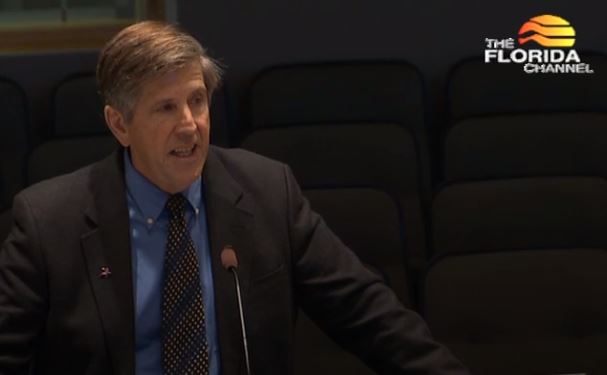
Step Up For Students president Doug Tuthill speaking before the Senate Education Committee
Step Up For Students president Doug Tuthill told a Florida Senate committee today that nearly 70,000 additional students could have been awarded Florida Tax Credit Scholarships had the requisite funding been available.
While nearly 13,000 students were found conditionally eligible for the scholarship and placed on a waitlist, the number of overall applicants was much higher.
“I don’t know what the full demand is,” Tuthill said. “We haven’t kept the application open for a full season the last couple of years because demand is so high.”
Tuthill explained to committee members that Step Up shut down the scholarship application process last June when it became apparent that demand could not meet supply. Had the organization allowed the process to remain open, evaluating and approving every application that was eligible, it would have offered “false hope” that Step Up didn’t think was ethically appropriate, Tuthill said.
Families of all students on the waitlist fall within 185 percent of federal poverty guidelines, qualifying them for a full scholarship. Tuthill vowed that Step Up, which hosts this blog, will be present during the upcoming legislative session to discuss the demand of low-income families fighting for their children.
“We need to figure out ways to address (the demand),” he said.
In response to a question from Sen. Bill Montford (D-Tallahassee) about other issues scholarship families may be facing, Tuthill said transportation is a main barrier for low-income students. He said Step Up is looking for ways to address the issue, perhaps by allowing families to use scholarship dollars toward transportation costs.
Tuthill also referenced the slow start in enrollment to the Hope Scholarship, created by the Florida Legislature in 2018 to give public school children relief from bullying and violence. While Floridians have contributed $14.3 million of their automobile purchase taxes to the scholarship, only 91 scholarships have been awarded.
Sen. Janet Cruz (D-Tampa) said she has heard from principals in her district who are grappling with the Hope application.
“The application process … is very burdensome on everybody,” Tuthill said. “I think we’ve overregulated the principals, the families and the schools. A more streamlined process may help (everyone).”
Doug Tuthill is president of Step Up For Students, which helps administer the nation's largest private school choice program (and co-hosts this blog).
I have spent my entire 42-year professional career working in either education or print media. Moving back and forth between the two was always easy because their functions are so similar. Both help people acquire the information and knowledge they need to be good citizens.
When historians write about education in the early days of our republic, they focus on print media because that was the country’s primary public education system in the 17th, 18th, and early 19th centuries. Government-subsidized mail delivery in the 18th and 19th centuries made access to public education via print media available to the masses. The pamphlets, newspapers, and letters that arrived through the mail were how many learned how to read and write.
Education and print media began taking separate paths in the 19th century. Passage of the nation’s first mandatory school attendance law in Massachusetts in 1852 marked the permanent divergence of how society would manage media and education. From 1852 onward educators would increasingly be government employees tasked by government leaders to help accomplish certain social goals. For example, the Protestant-controlled Massachusetts state government passed this 1852 law to help assimilate the growing influx of Catholic immigrants into Protestantism.
As a student in the 1960s and ‘70s, I experienced government using public schools as instruments of social engineering. My first six years of public schooling were spent in a racially segregated school the local government used to perpetuate segregation in my community. In the late ‘60s and early ‘70s, the courts forced our local school board to desegregate my schools as part of a federal government effort to end racial segregation.
Most educators must be government employees because most teaching jobs are in district schools. But U.S. journalists have never been coerced into becoming government employees. While we have always had legal and regulatory disputes in media—should the New York Times be able to print the Pentagon Papers, can Carol Burnett sue the National Enquirer for libel, or is Facebook sufficiently protecting users’ privacy—our minimalist regulatory oversight of U.S. media has generally worked well.
The public good is best served when journalists have the freedom to report the truth as they see it, even if their truths make some government and business leaders uncomfortable. Since they are human, all journalists are biased. But information is the lifeblood of a democracy. I’d rather have lots of information coming from numerous journalists with diverse biases than a handful of elected and appointed government officials controlling the information we have access to.
Unfortunately, our regulatory approach to public education is more onerous and, consequently, much less effective. Government exerts too much control over educators working in district and charter schools. As government employees, public school teachers lack the professional freedoms that journalists and most other professionals enjoy. This limits their freedom to always exercise their best professional judgments, just as it would if most journalists were forced to be government employees.
It’s puzzling that many journalists do not support educators having the same professional freedoms and opportunities they do. A proposal requiring that journalists at National Public Radio (NPR) or the Public Broadcasting System (PBS) become government employees would be fiercely opposed by most American journalists. Yet many of these same journalists support requiring public educators to be government employees. When educators advocate for having the freedom to own and manage schools, they are often accused of trying to “privatize” or undermine public education. Why educators can only serve the public good if they are government employees while the journalists at NPR or PBS can only serve the public good if they are not government employees is unclear.
I also don’t understand journalists who assert that they can serve the public good while working at for-profit corporations such as the Huffington Post or The New York Times, but teachers working at for-profit charter or private schools cannot serve the public good. Why is it fine for for-profit corporations to employ journalists but not educators?
Public education will work best when teachers have the same professional freedoms as the journalists working in public radio and public television. For over 225 years we’ve shown that giving journalists the freedom to collect and report information with minimal government oversight, while often messy and contentious, works. It will also work in public education. With more professional autonomy, educators will occasionally make bad decisions just as journalists do. But over the long run, our society will benefit from the innovation and entrepreneurship that comes from empowering and trusting our teachers in the same ways we empower and trust our journalists.
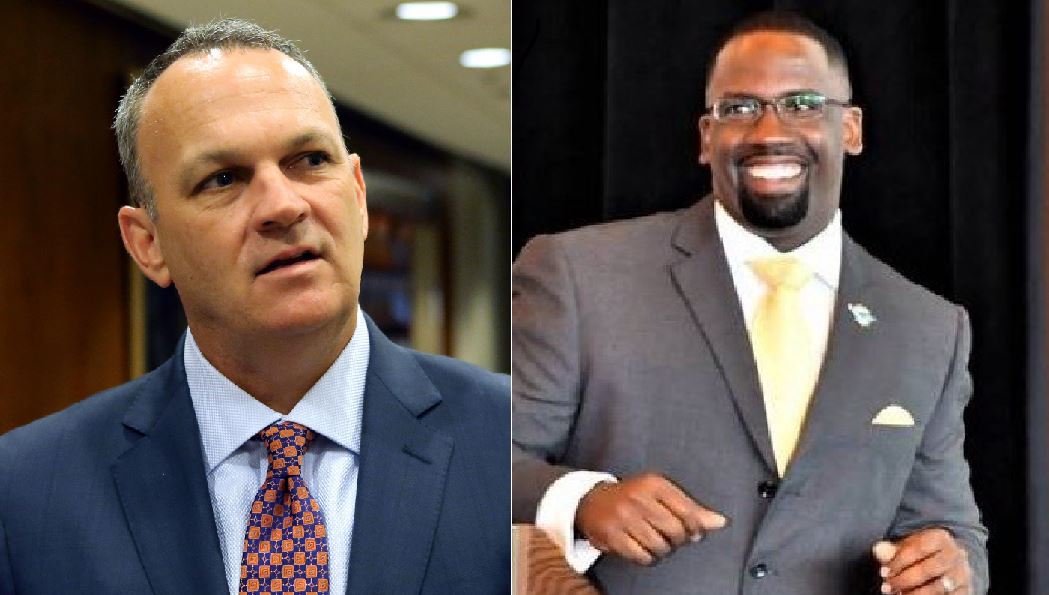
Richard Corcoran is the new Commissioner of Education. Fedrick Ingram is the new President of the FEA. Both have publicly signaled an interest in working together.
A day after the Florida Board of Education unanimously approved former House Speaker Richard Corcoran to be Florida’s new Commissioner of Education, the new president of Florida’s state teachers union extended an olive branch.
Florida Education Association (FEA) President Fedrick Ingram told the Tampa Bay Times: "We want to work with anyone who wants to empower our public schools…If we have to consult, work with and possibly collaborate with Mr. Corcoran, we will certainly do that to the extent possible, if Mr. Corcoran wants to do that…What I want is genuine conversation, policy talk about what can empower the classroom, what can empower student success…We teach our kids, if you have differences, you sit down, you talk it out…We will not agree on everything. But there has got to be some common ground."
Commissioner Corcoran quickly embraced Ingram’s invitation: "I've always had an open mind. I've always had an open door…The focus needs to be on providing our school children … the best world-class education possible. Anybody whose motivation is that, I'll sit down and meet with them."
I hope Ingram and Corcoran find time to talk. If they do, a dialogue I facilitated over a decade ago on behalf of the Collins Center for Public Policy might inform their discussions.
From 2006-08, John Kirtley, the founder and board chair of Step Up For Students (SUFS), met periodically with the FEA leadership, which at the time included President Andy Ford, Executive Director Aaron Wallace, and Public Policy Director Jeff Wright.
They began by getting to know each other. John talked about the great experiences he had in district schools growing up, Andy talked about how important attending Catholic schools was for him, and Jeff jokingly asked John where his horns were since everyone in FEA assumed he was the devil.
By their Jan. 25, 2007 meeting in Orlando, the group had agreed to a list of shared beliefs:
“We share a passion for all students being successful in school and being properly prepared to be successful in life, especially those urban, low income and minority students who may have fewer resources and opportunities available to them.
“Blaming individuals or institutions does not help educate students, nor does a public versus private school debate. Choice programs based on blaming ’failing public schools’ only serve to divide us.
“We need sufficient diversity in our learning environments to ensure the needs of all children can be met. All parents should have the right and ability to match their children with the learning environments that best meet their needs. A school or program that works for one student may not work for another student.
“All schools receiving public funds should serve the public good and be fiscally and academically accountable for how those funds are spent.”
On Feb. 9, 2007, the group met again in Washington, D.C., at a National Education Association gala fundraiser. The FEA leaders took John around and introduced him to several key NEA national and state leaders. Although more than a few eyebrows were raised, the NEA leaders were classy. John received a warm welcome.
On March 7, 2007, FEA’s Communications Director Mark Pudlow issued the following public statement on behalf of Andy Ford and John Kirtley:
“After years of stereotyping and talking past each other, we recently sat down and started talking to each other. Turns out we have many common values and aspirations, most notably our passion for insuring all children — especially low-income children -- receive the high quality education they need and deserve.
“While our talks are still in the early stages, we have made good progress in a short time. We are not naïve about the challenges ahead, but we are determined to resolve our previous disagreements and reach consensus on short and long-term initiatives that will help all students. Reducing Florida’s achievement gap is a moral imperative that we are committed to tackling together.
“We know we can accomplish more for children together than we can separately. These are hopeful times.”
By this point, the sense of hope and possibility within the group was high. They decided it was time to turn their words into actions. They agreed on a win-win compromise and asked Marshall Ogletree, a member of Wright’s legislative team, to turn their compromise into legislative language.
FEA would support Florida’s tax credit scholarship program, which enables low-income children to attend private schools or public schools in another school district. In exchange, Kirtley and the education choice community would support a pilot program allowing district choice schools to operate under the same regulatory accountability as private schools serving scholarship students. The group thought the balance between regulations and consumer choice in the accountability system for scholarship schools might work well in district choice schools. Kirtley also agreed to support a provision that redirected all the cost savings from the tax credit scholarship program to these district choice schools.
Soon after the 2007 legislative session opened in March, Ford, Wright, and Kirtley met with Senate President Ken Pruitt to present their legislative proposal. Sen. Pruitt opened the meeting by joking that he assumed there was a scheduling error when he first reviewed that day’s meetings. That Kirtley and the FEA leadership would be in his office at the same time presenting a joint proposal didn’t seem possible. And yet, here they were.
Sen. Pruitt listened politely, encouraged the group to keep at it, but was noncommittal. My sense watching the discussion was that he was somewhat intrigued, but skeptical the group could pull this off.
Kirtley next began sharing the proposal with other key political leaders. A few were hostile since the proposal rolled back some of the increased regulations on district schools that had only recently been enacted. But most had the same response as Sen. Pruitt. They were intrigued but skeptical the group could follow through.
A common theme Kirtley heard was that leaders wanted a more public commitment, especially from the FEA leadership. The FEA had developed a reputation in Tallahassee for making private commitments that they later back away from in public.
John was talking to the FEA about Andy Ford speaking at an April 12 education choice rally at the capital. If Ford made a public statement supporting the group’s proposal, key political leaders said they would publicly support the proposal.
Kirtley formally invited Ford to speak at the April 12 education choice rally, a draft speech was circulated, and then we waited to see how the internal discussions within the FEA would unfold. Ford eventually declined to speak at the rally or make any public statements supporting the proposal. Jeff Wright did come to the rally and stood in the back with me. The group’s legislative compromise was now dead.
When I accepted Kirtley’s invitation to become SUFS’s president in August 2008, my role changed from group facilitator to being SUFS’s primary point of contact with the FEA. Jeff and I continued to have occasional discussions about possible areas of collaboration. In his Sept. 20, 2007 testimony to the Florida Tax and Budget Reform Commission in Jacksonville, Ron Meyer, FEA’s lead attorney, laid out his reasons for why the FEA had no intention of challenging the constitutionality of the McKay or tax credit scholarship programs. For the next two years, we settled into a state of peaceful détente.
Leading into the 2009 legislative session, we made several changes to SUFS’s legislative agenda at Jeff’s request. He said if we made those changes the FEA would not oppose our items. A month later the FEA stood up in committee and opposed the bill containing these provisions. Jeff told the House Democratic Caucus that the FEA opposed the bill because of internal political pressures. We pretty much stopped talking after that. The FEA filed a lawsuit to shut down the tax credit scholarship program in 2014. They lost.
Fed Ingram’s election represents a sea change in the FEA’s internal politics that bodes well for his ability to follow through on any commitments he makes.
From 1974 until 2000, Florida’s district teachers were divided between two competing statewide unions with diverse histories and cultures. When Andy Ford became president in 2003, these cultural differences were still dividing the organization and undermining Andy’s ability to make bold moves. In addition, Andy was from a mid-size local, Duval County, which also limited his internal political clout.
For over 40 years, Pat Tornillo ran the state’s largest local teachers union in Dade County, and one of the two state teacher unions. Tornillo was the stereotypical strongman union leader. He was also a crook who betrayed his members. Tornillo pleaded guilty in federal court to tax evasion and mail fraud in 2003 and went to prison. Tornillo’s political demise created a crisis within the Dade union that took over a decade to clean up.
Fed Ingram’s election means Dade County is now ready to resume its historical role as the controller of the state teachers union. The cultural divide within the FEA has also largely been resolved with the American Federation of Teachers’ more top-down, autocratic leadership style becoming the norm. This all means Ingram probably has more organizational power than any previous state union president, including Tornillo. Ingram should have the internal political power to follow through on any commitments he makes.
Any systemic, sustainable improvements that Ingram and Corcoran agree to will probably be based on the same concerns about overregulation and insufficient access to education choice that informed the 2007 agreement between Kirtley and the FEA. District schools are overregulated, and low-income and working-class parents don’t have the same access to diverse learning options as more affluent parents. To have a lasting positive impact, any grand bargain will have to include less regulation of district choice schools and more choice for less-affluent families.
Ingram’s ability to embrace progressive improvements in public education is hindered by his union’s business model, which assumes a top-down, command-and-control management system that disempowers teachers, parents, principals, and students. One-size-fits-all union contracts require a one-size-fits-all public education system. Corcoran is going to push for a more flexible, customized system that empowers educators, students, and parents to meet the unique developmental needs of each student. This is the core tension that undergirds most disagreements today surrounding how best to improve public education. Ingram’s ability to navigate this tension within his union will be important.
New faces in old positions often provide the opportunity for progress. I hope Corcoran and Ingram seize the moment.
Doug Tuthill is president of Step Up For Students, which helps administer the nation's largest private school choice program (and hosts this blog).
Here are some education choice stocking stuffers that would please me this holiday season.
Over the years, we have tried and failed to systematize educating the whole child. Our latest attempt includes focusing on social and emotional learning (SEL). While everyone seems to agree that integrating SEL into public education is essential, we’re making little progress in how to assess SEL skills. We need developmentally appropriate, reliable and valid measures of SEL skills. These assessments should generate formative data that are continuously available to educators, parents, and students.
The accountability systems in public education need to improve. We need less regulatory accountability and more accountability via consumer choice. The balance we have between regulatory and consumer choice accountability in Florida’s private school choice programs provides a good model for our district and charter schools. Florida doesn’t require its public schools to be accredited, which is a good first step, but public school principals should be empowered to hire whomever they want, provided the employees pass a criminal background check. Requiring principals to hire state-certified teachers often forces them to hire a less effective teacher. In Florida, we also need to return control of class sizes to schools. That we’ve put class size limits in our state constitution is crazy. A key to improving public education’s accountability system is ensuring families have the funds and information they need to access the best learning options for each child.
We need to get serious about lifelong learning. The days of graduating from high school, vocational training, or college with the knowledge and skills needed for lifelong employment are over. Public education needs to become the vehicle through which we operationalize lifelong learning. Everyone should have a permanent, publicly-funded Education Scholarship Account (ESA) to help fund their continuous learning. Even old guys like me.

As our new redefinED editor, Matt Ladner, continually reminds us, there is a demographic tsunami heading toward Florida. The combination of aging baby boomers needing more medical care and young children flooding into our schools is going to crush Florida financially. We need to start preparing now. Our new governor needs to get with legislative leaders and set up a bipartisan process to begin planning for how we’re going address this challenge. One solution is embracing public education delivery models such as virtual education and community/private schools that require less government-funded capital investment. Removing the class size amendment from the Florida Constitution would help here also.
I miss the days when Florida Democrats were engaged in innovative efforts to improve public education. I was fortunate to work on education reform initiatives with Democratic leaders such as Bob Graham, Betty Castor, Buddy McKay, Lawton Chiles, and my friend and neighbor Doug Jamerson. We didn’t always agree, but I appreciated their willingness to challenge the status quo and put the needs of children — particularly disadvantaged children — first. Being out of power often causes a party’s governing instincts to diminish. They become the party of no instead of the party of solutions. Public education desperately needs bipartisan solutions to its vexing problems. It’s common knowledge that opposing education choice contributed to the Democrats losing the recent governor’s race in Florida. It’s in the party’s best interest, but more importantly it’s in public education’s best interest, for Democrats to rediscover their drive to create a public education system that works for everyone.
Civil Rights and education choice legend, Dr. Howard Fuller, made a powerful case at Jeb Bush’s recent ExcelinEd education reform conference in Washington, D.C., for the need to connect education reform with improvements in health care and housing. I’d like to add criminal justice reform to Dr. Fuller’s list. Congress just passed some timid improvements to our country’s highly dysfunctional criminal justice system. Much more needs to be done. I don’t know of any institution in our country that does more to perpetuate generational poverty than our criminal justice system. From cash bail, to the stacking of charges to strengthen prosecutors’ leverage in plea bargaining, to sentencing biases, to extended probations that almost guarantee returning to prison, to the confirmation bias that pervades the system and assumes a defendant is guilty until proved innocent — which almost never happens because most cases end in a plea bargain -- the system is stacked against low-income people. Criminal justice reform must occur in parallel with education reform if we’re going to succeed in reducing the disparities in quality of life that are explained by race and class. The podcast Serial recently did a deep dive into Cleveland’s criminal justice system. Prepare to be appalled by what you hear, but these stories are typical of what’s happening every day in communities across America.
Finally, let’s respect the importance of linguistic precision and start using “education choice” instead of “school choice.” I understand that school choice is a term most people are familiar with, which is why many still use it. But it’s imprecise and often inaccurate. Choice in public education occurs between schools, within schools and classrooms, and outside of schools. Families using ESAs, for instance, often spend their funds on education products and services beyond schools. We mislead and disrespect our readers/listeners when we ignore this reality and pretend all education choice is school choice.
I hope our redefinED readers/listeners have a safe and joyful holiday season. Thank you for joining us on our quest to help public education fulfill the promise of equal opportunity.
Editor's Note: This is the fourth in a series of posts where various members of the education choice world share an #edchoice wish. For Monday's post, CLICK HERE.
COMING TOMORROW: Step Up For Students' Geoff Fox explains why one-size-fits-all didn't fit him, and why he would have benefited from education choice.

