 Safety panel: Florida schools are underreporting crimes by students, painting a false picture of school safety, and skimped on security tests before the Feb. 14 massacre at Marjory Stoneman Douglas High School in Parkland, according to members of the state commission appointed to investigate the shootings. The panel suggests penalizing schools for underreporting crimes in their annual reports. The security assessments, which were optional until this year, were rarely performed. Stoneman Douglas never did one, and in 2017 only 16 of the state's 3,900 public schools did. Sun-Sentinel. Associated Press. WFOR. Former Brevard County School Superintendent Desmond Blackburn isn't able to convince his peers on the state panel that a sworn police officer belongs on every school campus, including at elementary schools. Florida Today.
Amendment 8: The Florida Supreme Court will announce its decision today on whether proposed constitutional Amendment 8 will stay on the Nov. 6 ballot. The amendment, put forward by the Constitution Revision Commission, would create an entity other than local school boards that can approve charter and public schools, set term limits for school board members and require civics education in schools. The League of Women Voters is objecting to the charter school provision, and is asking the amendment be removed from the ballot because it’s “misleading.” Tampa Bay Times.
Redirection of funds rejected: Incoming legislative leaders reject Gov. Rick Scott's call to allow school districts to use $58 million in unspent funds for school security. Scott proposed uncommitted money from the armed guardian fund be divided up among the state's districts to hire more officers or use on other security measures. But House Speaker-elect Jose Oliva, R-Hialeah, and incoming Senate President-elect Bill Galvano, R-Bradenton, both say the money should stay in the armed guardian fund, and that the program needs time to grow. Many school districts favored school resource officers over arming school employees or security guards, and didn't apply for the guardian funds. Associated Press.
Top court gets Amendment 8: An appeal of a judge's decision this week to remove proposed constitutional Amendment 8 from the November ballot will skip the appeals process and be heard by the Florida Supreme Court. The state had appealed the decision to the First District Court of Appeal, which immediately passed it on to the top court because "involves a question of great public importance and requires immediate resolution." The court has asked the state to file its arguments by Monday. Amendment 8 would allow the state to create an entity that could authorize charter and public schools outside the jurisdiction of local school boards. It would also set term limits for school board members and require civics education. Monday, a Leon County judge ruled the proposal "fails to inform voters of the chief purpose and effect of this proposal.” Orlando Sentinel. Gradebook. Florida Phoenix. News Service of Florida. (more…)
Budget problems: A tiny increase in financial support from the state and more unfunded mandates have Florida school districts scrambling to cope. To make ends meet, some districts are asking voters to approve property and sales tax hikes, while others consider larger class sizes, trimming teaching staffs and making cuts in educational programs and bus services. And raises are out of the question in most districts. "It has become increasingly difficult to provide the level of service with the dwindling resources," says Martin County Superintendent Laurie Gaylord. Tampa Bay Times.
Open enrollment: It's the time of year when students can transfer from school to school under the state's open enrollment law, which allows such transfers to schools that have available slots. But as students are discovering, not all that many schools are accepting transfers. In Orange County, only 36 of the 187 traditional public schools are accepting students from outside their zones. In Seminole, just 15 of the 58 schools are, and in Lake only 6 of the 19 elementary schools are. Last year, only about 1,200 students of the more than 311,000 enrolled in Lake, Orange and Seminole public schools transferred. Orlando Sentinel.
School threat responses: The number of Florida children involuntarily committed for psychiatric observation skyrocketed after the Feb. 14 shootings at Marjory Stoneman Douglas High School. On Feb. 27, 195 children were taken for observation under the Baker Act, the highest single-day total in at least five years, according to records kept by the University of South Florida. Between 2011 and 2016, the number of children hospitalized under the Baker Act rose by almost 50 percent. Sun-Sentinel. Volusia County has arrested 27 students for making threats against school since the Feb. 14 shootings at Stoneman Douglas High in Broward County, while Lake has arrested five, Osceola and Orange three apiece and Seminole none. Orlando Sentinel.

Manatee County middle school students participated in the annual Technology Student Association competition last month, showing off skills that included engineering and design. Photo provided by Manatee schools.
Career and technical education is attracting a lot of attention from Florida lawmakers this year, and an effort to expand it in the upcoming session appears to have bipartisan support.
CTE is the centerpiece of proposed legislation that builds on the state’s Career and Professional Education Act, which created industry-certification programs at the high school level.
Senate Bill 1076, filed last week by Sen. John Legg, R-Lutz, would add more partnerships with business and community leaders to develop similar initiatives in middle and elementary schools. It also would elevate industry certifications to a level that can satisfy certain high school requirements.
Senate President Don Gaetz, a Republican from Destin, told redefinED this week that passage of the legislation would result in historic changes that, ultimately, would make education in the Sunshine State more relevant. He said lawmakers should be able to back it no matter their party affiliations.
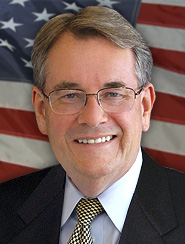
Sen. Don Gaetz
“All of us … want our graduates to walk across the stage and get a degree in their hands that results in a job,’’ Gaetz said. “It’s a sea change in educational delivery.''
Sen. Bill Montford, a ranking Democrat from Tallahassee, said he endorses the bill and the sentiment behind it.
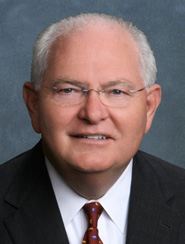
Sen. Bill Montford
“We need a different pathway for a lot of our students,” said the former Leon County schools superintendent, who heads the state superintendents association. “This is not a dumbing down of our curriculum. It’s not a retreat. This is what is best for our children in these schools.’’
Freshman lawmaker Shevrin Jones agreed. The Democratic representative from West Park has co-sponsored a bill that calls for more focus on career education.
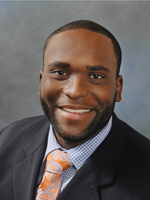
Rep. Shevrin Jones
“Not everyone is going to college,’’ said the former high school educator, who taught Advanced Placement Biology until his election to the House last year. “What this will do is allow us to make sure that our students are prepared to go into the workforce.’’
But expanding career education doesn’t shut the door on a college degree, Montford said. “Most college students work,” he said. “This is a good fit.’’
Legg’s bill is at the forefront of this overhaul, serving as the cornerstone of another bill the lawmaker filed last month that ties education to economic development.
The so-call STEM zone bill would create hubs that invite colleges and universities - as well as K-12 district schools, private schools and charters - to help develop a pipeline of highly-skilled workers for careers in science, technology, engineering and math fields.
Florida industry leaders like what they’re hearing.
“It’s very difficult to connect skilled workers to jobs,’’ Ron Avery, chairman of the St. Augustine-based Ronco Group, which includes industrial, engineering and manufacturing businesses, told lawmakers at a committee hearing last month. “There are 4,000 manufacturing jobs open in Florida. We need to figure out today how to fill these.’’ (more…)

