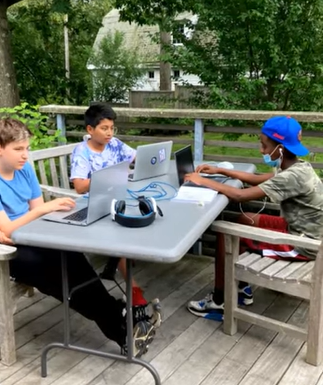
At KaiPod Learning Centers, eight to 10 online learners or homeschoolers come together in person to work on their coursework and collaborate with their peers, supported by a highly-qualified KaiPod coach. Parents choose the curriculum that works best for their child delivered in a two-, three- or five-day plan.
Editor’s note: This analysis from Mike McShane, director of national research at EdChoice, appeared last week on forbes.com.
Earlier today, the National Microschooling Center released a new report on microschooling in America based on a survey of 100 current and 100 potential microschool leaders. It paints a fascinating portrait of an emerging sector of the education system at a critical juncture in its history.
By all accounts, microschooling is growing in America. Networks like Prenda, KaiPod, Acton Academies, and Wildflower are expanding across the country. Estimating the total number of microschooling families is challenging, but in several of our recent EdChoice polls one in 10 parents have responded that their children are enrolled in a microschool.
There are many reasons to believe that number is inflated, but even if the true figure is a quarter of that, we are still talking about millions of schoolchildren.
The study offered numerous interesting findings.
First, while more than half of microschools are located in commercial business spaces or houses of worship, almost 14% are located in a private home and 1% are located in an employer-owned facility.
This diversification of school location both shows the potential for microschools conveniently located close to where people live and work and also raises questions about how issues of zoning, building codes, and the like will intersect with microschooling.
Second, microschools are experimenting with the school day and week. While 54% of microschools are in class full time, 46% offer some kind of hybrid or part-time schedule. Our polling at EdChoice indicates that a substantial proportion of parents (routinely 40-plus percent) would like some kind of hybrid schedule, and the numbers of microschools offering such a school week lines up quite closely to those figures.
Third, to comply with local regulations, around a third of microschools operate as private schools, while just over 44% operate as “learning centers” catering to homeschooled students. It is an underappreciated fact that states actually regulate private schools to a substantial degree, and it appears that many microschools are not able to function within those strictures.
By operating as a learning or enrichment center for students who are classified by the state as homeschooled, schools are able to operate in the ways that they want to. It is not clear if this is the optimal path going forward.
To continue reading, click here.
 Editor’s note: This article appeared Wednesday on thehill.com.
One way of reading the 2022 midterm elections—which resulted in narrow majorities in a divided Congress—is that our divided electorate actually bunches toward the middle. Ticket-splitters abounded in swing states across the country, revealing a thirst for common ground.
Educational choice emerged this year as one common-ground issue where the election results are catching up to the polling.
Simply put, school choice has support from a silent majority of Americans. Our polling at EdChoice consistently shows school choice is popular with rural and urban communities, among every ethnic and racial group and by both teachers and parents. It resonates strongly across different generations and education levels. And, critically, for electoral politics, school choice has bipartisan support.
Voters desperately want to coalesce around areas of agreement, and school choice checks all the boxes.
The EdChoice Public Opinion Tracker, in partnership with Morning Consult, paints a consistent, clear picture of the bipartisan desire for school choice. In the August edition of EdChoice’s Public Opinion Tracker, we found the majority of Republicans and Democrats supported education savings accounts (ESAs), vouchers and charter schools.
ESAs, perhaps surprisingly, garner support from Democrats at a higher rate than Republicans. ESAs allow parents to withdraw their children from public district or charter schools and receive a deposit of public funds into government-authorized savings accounts with restricted, but multiple, uses.
We see this trend often in our monthly Public Opinion Tracker polls and in our 2022 Schooling in America report, which found 77% of Democrats and 76% of Republicans support ESAs.
It’s not just our polling, either. Results from the 2022 Education Next Survey revealed more of the same trend. Democrats support school choice programs like vouchers and tax credit scholarships at 50% and 64%, respectively.
At the same time, 49% of Republicans support vouchers while 59% support tax credit scholarships. The bipartisan support for school choice is no fluke.
To continue reading, click here.
 Editor’s note: This analysis from Mike McShane, director of national research at EdChoice and a reimaginED guest blogger, appeared last week on forbes.com.
Last week, we at EdChoice released our annual Schooling in America survey. For the past 10 years, we have asked a representative sample of Americans a battery of questions about the American education system. Each year, it gives us the opportunity to see what Americans think about our nation’s schools.
It also gives us the chance to see how opinions have changed over time. I can’t give every finding justice, but here are five things that stood out to me.
General opinion on education doesn’t change that much.
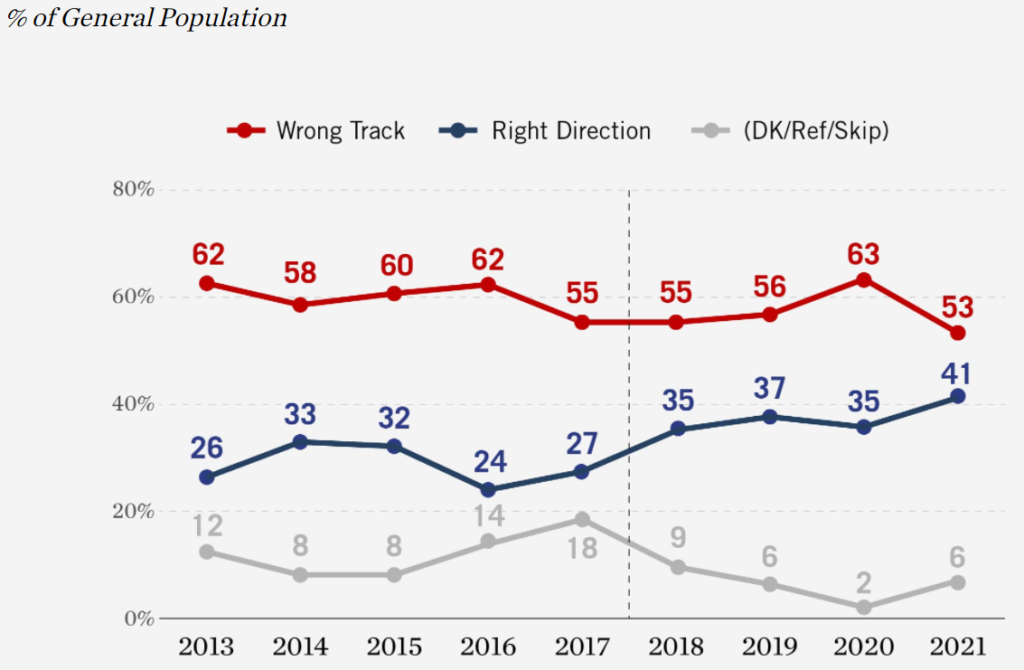
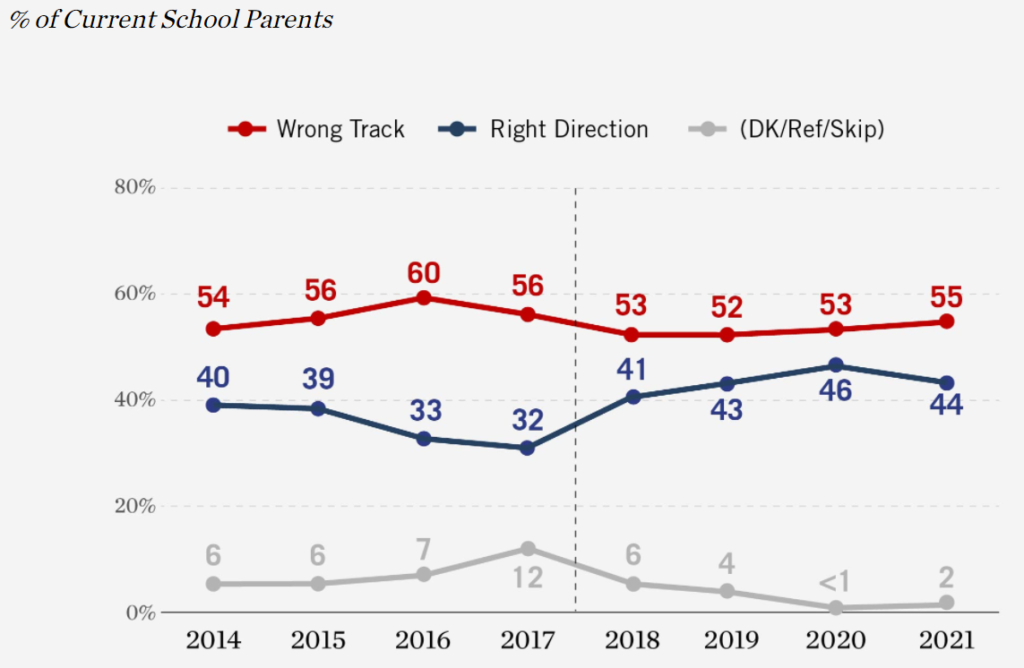
The survey asks Americans if they believe that the education system is heading in the right direction or if it is on the wrong track. Looking at the last decade of responses, we don’t see a great deal of change.
In 2013, 62% of Americans thought that the education system was on the wrong track and 26% thought it was headed in the right direction. By 2022, it was 61% wrong track and 34% right direction. When we ask parents specifically, we see a similar result.
In 2014, 54% of parents thought schools were on the wrong track and 40% thought it was headed in the right direction. By 2022 it was 52% wrong track and 48% right direction.
There have been two presidential elections, a pandemic, the Royals have won the World Series, and there have been a host of other unexpected events in that time period, and yet, opinions on schools have barely budged.
Opinions on school choice policies have changed.
In the first four years of the survey (2013 to 2016) support for education savings accounts, tax-credit scholarships, vouchers, and charter schools all declined among the general population. After starting with levels of support between 60 and 66%, they dropped to between 52 to 59% over that time period.
To continue reading, click here.
 While school parents and the general public are more likely to be pessimistic about the direction of K-12 education, about two in five American adults believe it’s heading in the right direction – an 18-percentage point increase since 2016 – according to the most recent survey from EdChoice on schooling preferences, choice reforms, and education overall during the COVID-19 pandemic.
Just over half say K-12 is on the wrong track, a 10-percentage point decrease since fall 2020.
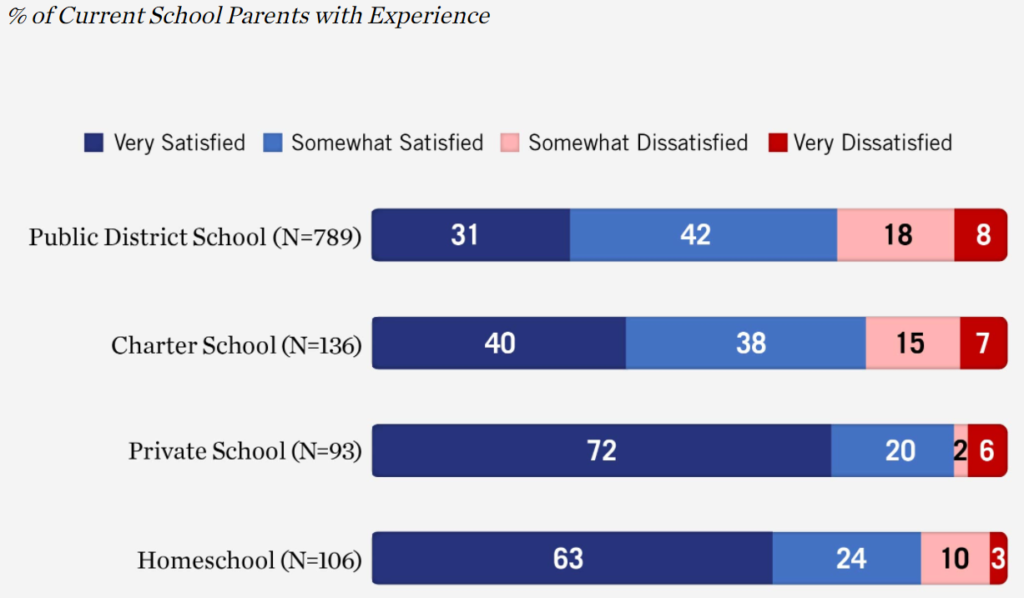
A far greater proportion of private school parents – 92% – report being somewhat or very satisfied with their children’s schooling experiences compared to other sectors. Homeschool parents showed the next-highest level of satisfaction at 87%, followed by charter school parents at 78%. Among parents of children who attend public district schools, 73% were somewhat or very satisfied with their children’s schooling experience.
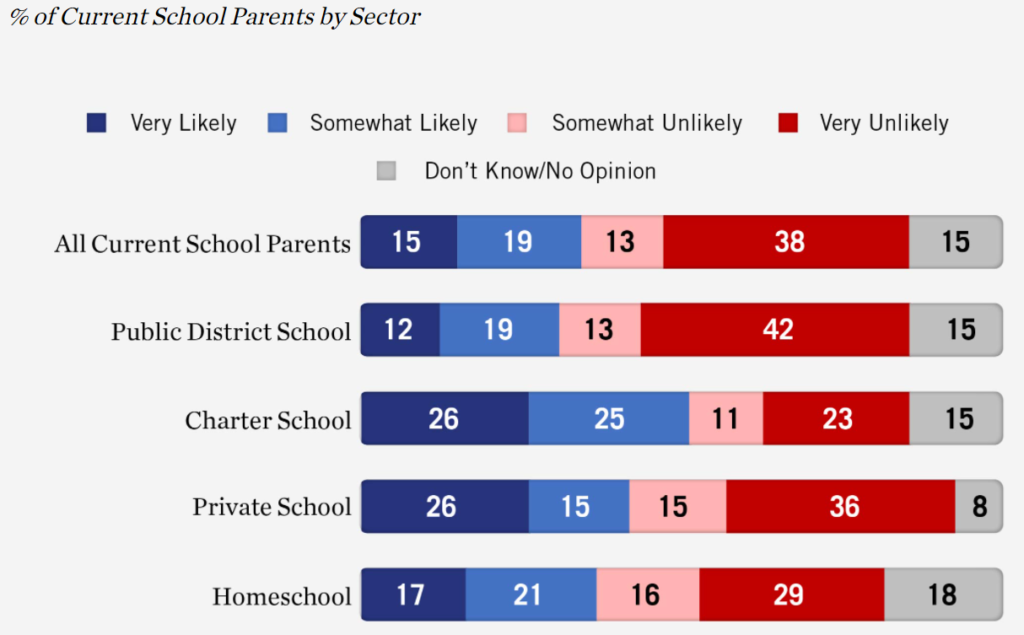
The survey also polled parents on their likelihood of seeking out learning pods for their children. More than half of charter school parents said they were at least somewhat likely to do so, substantially higher than parents with children at other types of schools.
Among private school parents, 41% said they were at least somewhat likely to seek out learning pods; among homeschool parents, the number was 38%, while public district school parents were least likely to seek out learning pods at 31%.
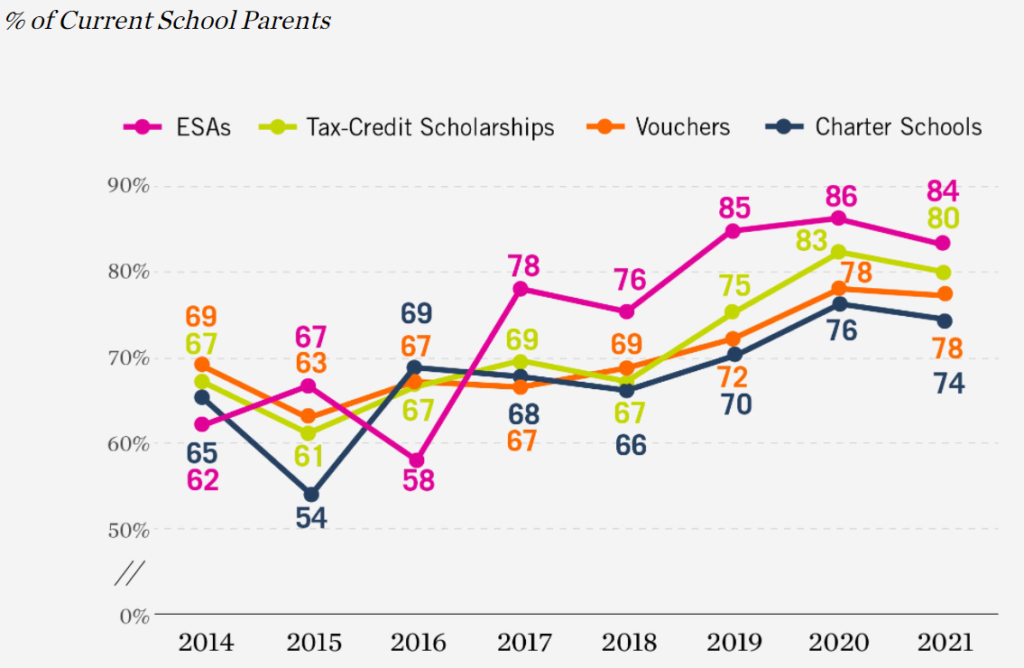
Meanwhile, support for education choice remains strong, statistically similar to 2020 and much higher than in 2018 or prior years. Parents showed the greatest degree of support for the most flexible form of choice: education savings accounts.
An overwhelming 84% of parents support ESAs, which are taxpayer funded accounts that can be used for many approved educational expenses beyond private school tuition. Tax credit scholarships were next in popularity, garnering support with 80% of parents.
Seventy-eight percent of parents supported vouchers and 74% supported public charter schools.
You can listen to a podcast detailing the survey results here.
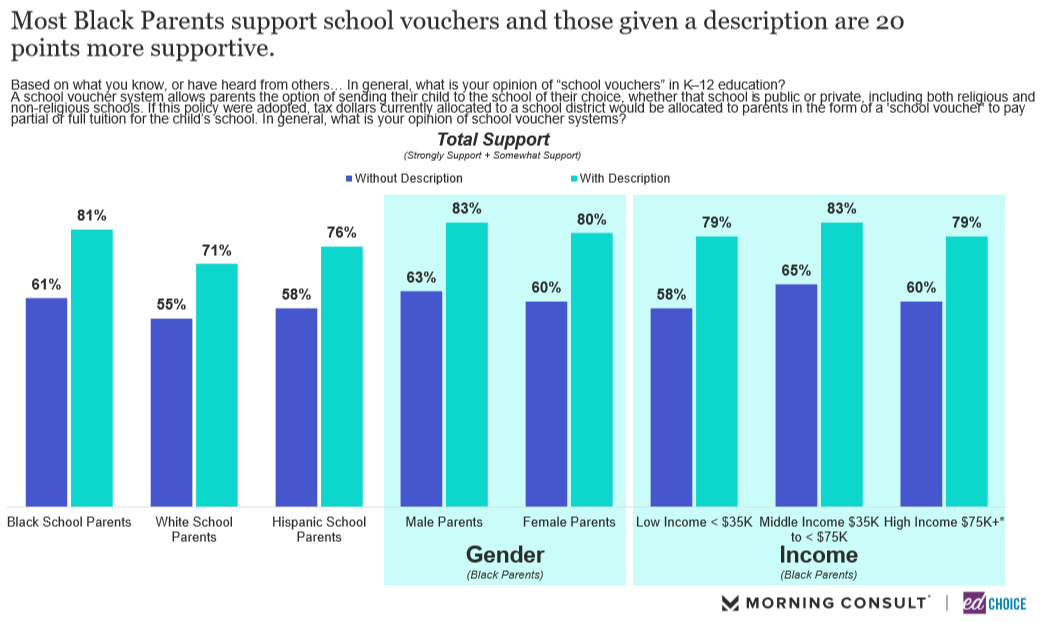 While school choice policies are overwhelmingly popular across all major demographics, Black parents, when provided a definition of those policies, support them to a higher degree than white parents according to a new survey from EdChoice.
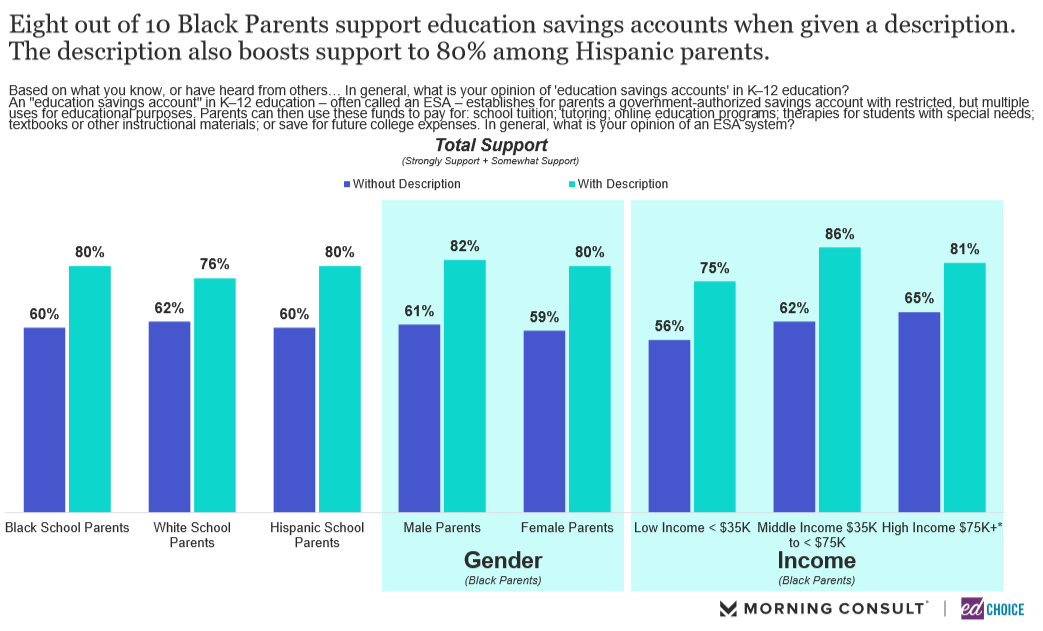
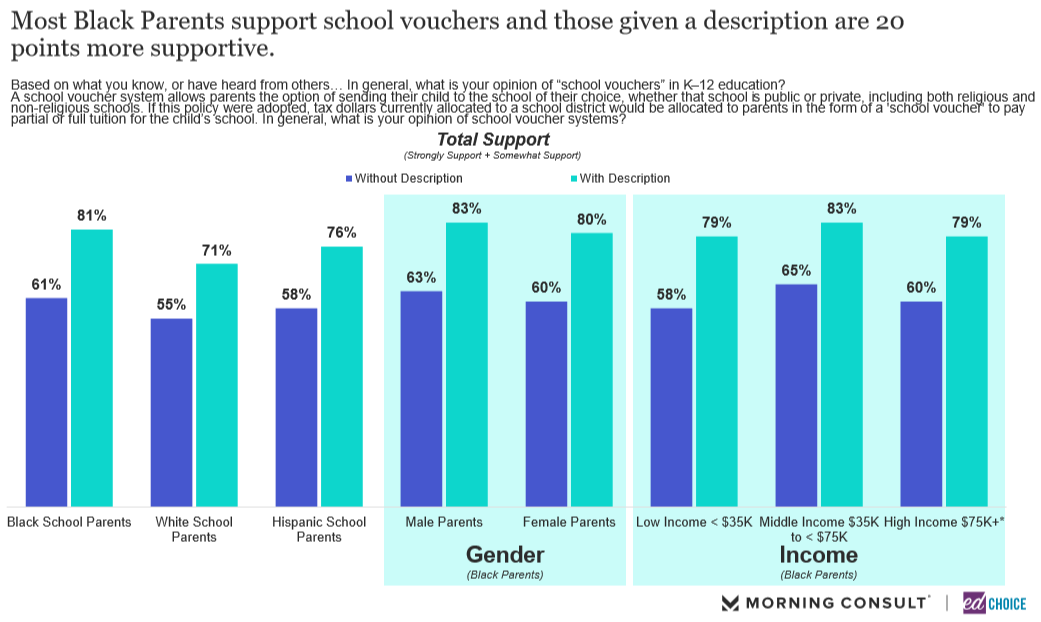
The survey, which included 405 Black parents of K-12 students as well as a nationally representative sample of 1,134 K-12 school parents, shows 81% of Black parents favored vouchers, 10 percentage points higher than the supportive share of white parents. Notably, there was no difference in support between low-income Black parents and high-income Black parents.
Meanwhile, 80% of Black parents support education savings accounts compared to 76% of white parents; support for charter schools is slightly higher among Black parents at 74% compared to 73% for white parents.
For the survey, vouchers were described as a system that allows parents the option of sending their child to the school of their choice, whether that school is public or private, including both religious and non-religious schools, using tax dollars currently allocated to a school district to pay partial or full tuition for the child’s school.
Income levels were broken down into low income (less than $35,000); middle income ($35,000 to $75,000); and high income (more than $75,000). Support for vouchers among those levels was 79%, 83% and 79%, respectively.
The survey described education savings accounts as a government-authorized savings account with restricted but multiple uses for educational purposes that can be used to pay for school tuition, tutoring, online education programs, therapies for students with special needs, textbooks or other instructional materials, and future college expenses.
Level of support among income levels was slightly more varied on this question, with 75% of low-income families, 86% of middle-income families, and 81% of high-income families showing favor for education savings accounts.
The survey described public charter schools as public schools that have more control over their budget, staff and curriculum and are exempt from many existing public school regulations.
The survey queried respondents on several other education-related topics and returned these key findings:
· Black parents have maintained similar levels of comfort when it comes to their children returning to in-person learning when compared to March. Nearly half of Black parents believe it will be safe for their children to go back by September 2021.
· Nevertheless, both Black and Hispanic parents are more likely than white parents to prefer schooling take place at home in some capacity. Just over 40% of Black parents signaled they would like schooling to occur at home three or more days per week after the pandemic.
· Over two-fifths of Black parents say they are currently participating in or looking to form or join a learning pod – an increase of 5 percentage points since March. Hispanic parents remain more interested in both pods and tutoring than both Black and white parents.
· Both Black and Hispanic parents are more likely than white parents to believe that offering additional resources for their children would be beneficial for their development this upcoming school year.
· Black parents are less likely than both white and Hispanic parents to either vaccinate themselves or their children.
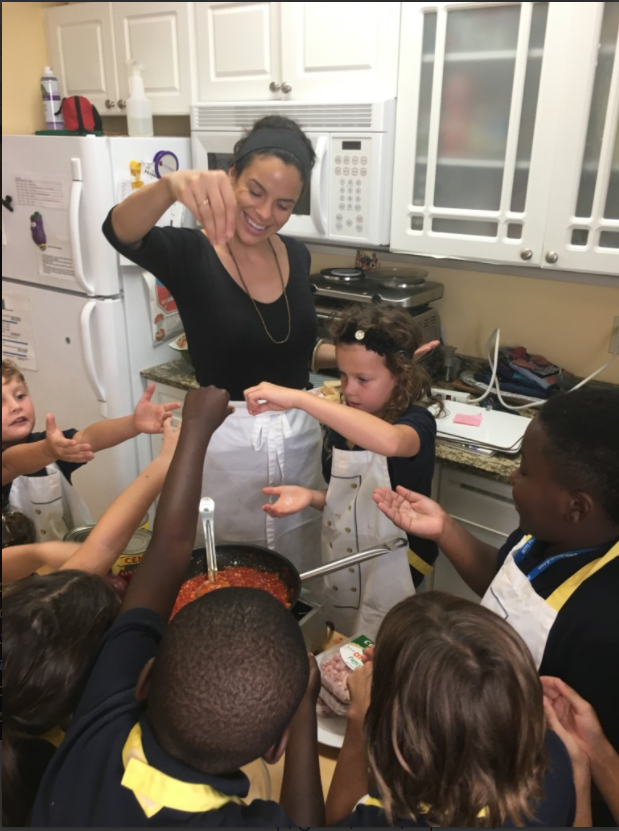
BB International School in Pompano Beach, Florida, is an example of how education choice opens the door to more fun and less bureaucracy. Here, first- and second-graders in Alexa Altamura’s class mix academics with enrichment.
What teachers need are PODS (All together now!)
Teachers want those PODS! (Everybody)
Teachers love those PODS, PODS,
PODS are what they need (PODS are what they need)
Okay, so now that I’ve got a song stuck in your head for the rest of the day (week?) let’s discuss an EdChoice survey that shows teachers love learning pods. And that includes teachers from every K-12 sector:
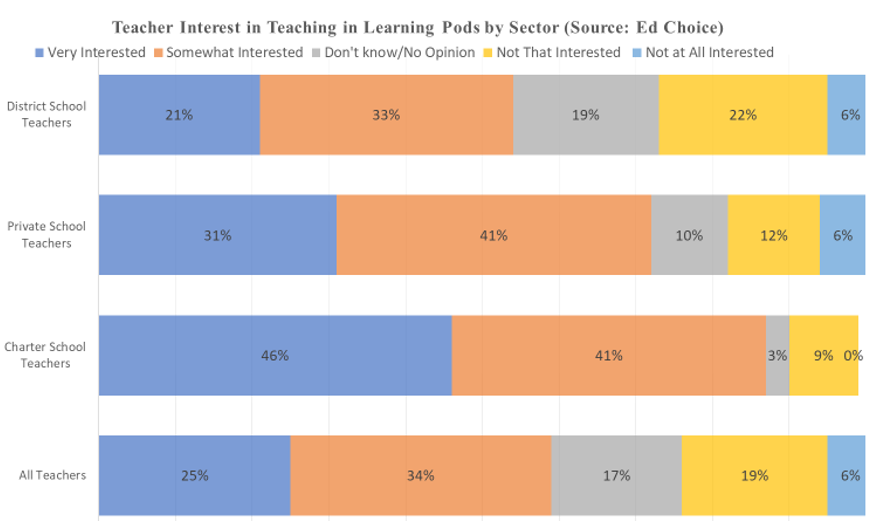 The research shows some 87% of charter school teachers are either “very interested” or “somewhat interested” in teaching in a learning pod; 59% of all teachers are interested. Schools just might want to find a way to give teachers what they want, especially given the fact that the same survey shows families also want multiple options for their children this fall:
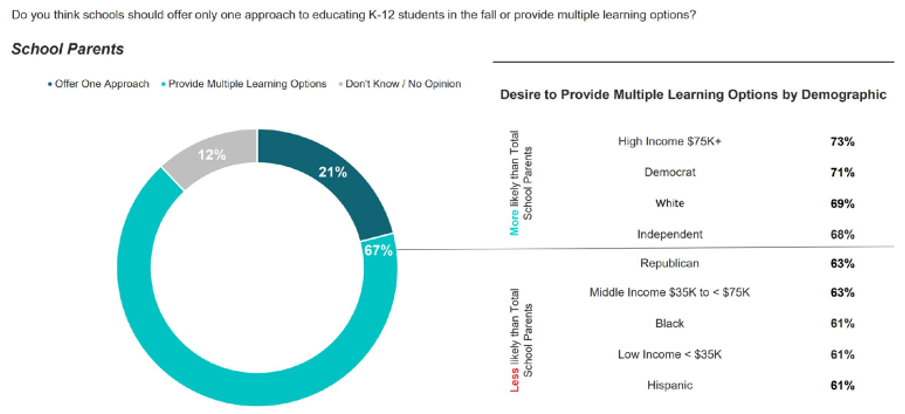 Oh, and then there is the new Tyton Partners survey showing that families dropped more of their own money on learning pods last fall than on private school tuition:
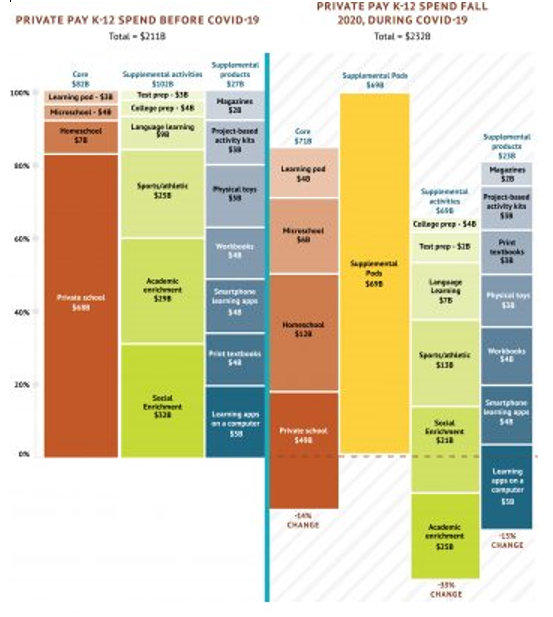 It would be interesting to survey former teachers on what they think of pods. Every state has a large pool of experienced teachers, many of whom tapped out of the profession in frustration of various sorts. Could they be tempted back into the teaching profession by new school models with more fun and less bureaucracy?
I’d love to find out, because we need all the effective teachers we can get.
Editor’s note: This post’s author, Emily Anne Gullickson, J.D., M.Ed., is president and founder of Great Leaders, Strong Schools and a former middle school teacher in Phoenix.
Emily Anne Gullickson
In 1939, representatives from 48 states developed a set of school bus standards resulting in a massive standardization of school transit systems in America. Last year, 26 million students in the United States boarded nearly 480,000 yellow school buses to go to their public school.
Almost 80 years later, a lot has changed in the technology and transportation industries, yet we continue to have a one-size-fits-all approach to transporting students.
School districts are struggling to provide efficient bus services in the face of escalating costs and increasingly complex education systems where more students attend public schools outside their neighborhoods.
Arizona recently was recognized as the most choice-y school choice state in the nation according to EdChoice. For 40 years, our state has led the way with public school options, beginning with open enrollment, which allows students to choose any school both within the boundaries of the school district in which the student rides and to transfer to public schools outside of their resident school district. With the onset of public charter schools in 1995, families truly were no longer limited to a geographically defined attendance zone in Arizona.
Yale University researchers compiled information in 2016 indicating that nearly one in two K-8 students in Maricopa County do not attend the district school to which they were assigned based on home address. The actual number is higher, as the analysis was conducted before the large pandemic shift and did not include homeschool families, online students, or students attending private or parochial schools.
Yet we still have not achieved giving all parents a real chance to truly have access to the full range of public education options. If transporting a student across town to a public school that is the right fit is a burden to a family, then that family does not actually have true access to public schools of choice.
Barriers also are experienced in our rural and remote communities. An optimal student transportation system is highly context-dependent; what works in a rural school district may not work in an urban or suburban district. Rural districts must use the same large buses to transport students as in Phoenix or Tucson, even when the number of students being transported and the geographic terrain does not justify them, resulting in empty seats, poor fuel efficiency and major wear and tear on the vehicles.
Arizona’s remote communities are not alone in having fewer alternatives than urban counterparts. According to the Community Transportation Association of America, approximately 28% of rural residents live in areas in which the level of transit service is negligible, and another 38% of rural residents live in areas without any public transit service. A choice is not a choice if you can't get there, no matter how simple and accessible the open enrollment process is.
This fall, our sister organization A for Arizona hosted focus groups with school partners and community members about transportation barriers and solutions. The feedback that was shared served as inspiration for Arizona Senate Bill 1683, championed by Senate Education Chairman Paul Boyer, which provides innovation grants as an incentive and support to public school leaders wanting to rethink our school transportation system to better serve public school families.
These grants will allow a series of locally driven solutions to be tried and evaluated to lead to greater efficiency and cost savings, recognizing geographic and local needs and providing access for more families to the public learning options that best meet each child’s needs.
With this transportation grant program, public school systems could leverage partners to improve operational and cost-efficiency as well as data collection, such as length of ride times, radio-frequency identification cards to track student ridership daily, and the latest GPS technology utilized in other modes of mass transit. GPS tracking for school buses also would empower parents to monitor a school bus’s status and exact location while capturing data for more efficient routing.
Other ideas such as neighborhood carpools and grants to parents are on the table here, too. Whatever it is that district and charter leaders are thinking about trying, they can pilot it with these grant dollars before trying to expand statewide. Transportation regularly is the least efficient component of a school budget and is about to break the budget of smaller schools and systems. Innovation is necessary, and these grants put some money on the table to help leaders do just that.
Under this bill, local school leaders who want to opt in with a grant proposal have the flexibility to design community-driven solutions while maintaining necessary protections for student safety and educational opportunity.
Now is the time to reimagine and rethink education – which must include how to get students to where they can learn best.
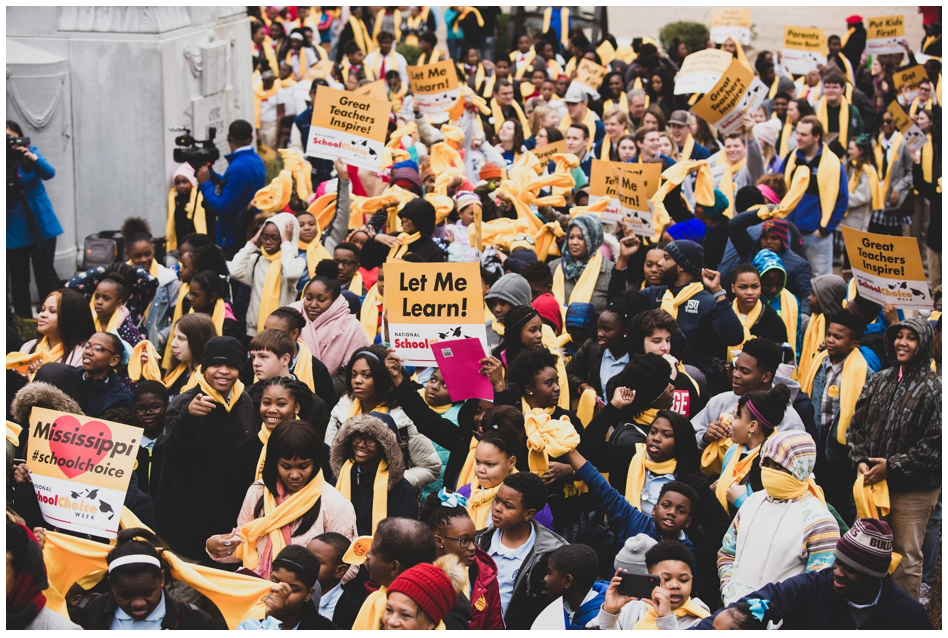 National School Choice Week, set for Jan. 26-Feb. 1, is a time to celebrate the progress made in the expansion of schooling options for families. Within the lifetime of this author and many of you readers, only parents who could afford to strategically purchase real estate or pay for private school tuition on top of their district taxes could exercise choice in education.
We’ve come a long way from that system. For instance, in Florida, hundreds of thousands of students make use of various forms of choice. Of Florida’s 3.4 million preK-12 students, 47 percent attended a school of their choice during the 2017-18 school year.
Of that number, more than 292,000 attended charter schools, nearly 263,000 took advantage of open enrollment options, and more than 226,000 found seats in choice and magnet programs within public school districts. Another 87,591 participated in home education programs and 159,297 took advantage of career and technical education public high schools.
Florida families will have much to celebrate next week, but there’s still much more to do.
Families are best served by a set of options both diverse in educational approach and reasonably proximate to the family. In Florida, there are 1,818 schools serving low-income students through scholarships, 1,660 district magnet programs and 655 charter schools. Meanwhile, the ability for families to choose district schools other than their assigned school has improved.
That’s a good start, but there’s a catch: Many of these schools have students on waitlists. While the number of proximate “good fit” schools is a blessing, sitting on the waitlist for a proximate “good fit” school feels like a curse. The ability to scale high-demand schools is crucial.
Here are the results of an EdChoice poll that queried parents’ schooling preferences by type. The results show that while more than eight in 10 American students attend public district schools, only about three of 10 parents said they prefer a district school.
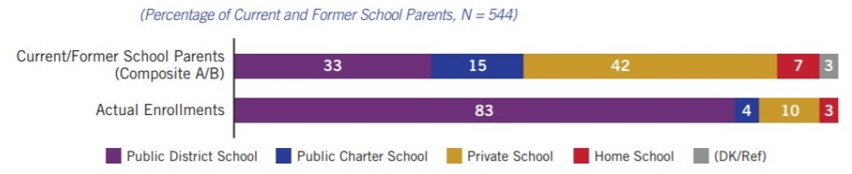
EdChoice and others have asked polling questions like this one by sector. In this example, approximately four times as many people preferred private and charter schools as actually attend those schools. This result indicates a certain level of dissatisfaction with district schools in the abstract, but that does not mean that in a truly demand-driven system, parents would lead a mass exodus from district schools.
The bottom bar of the graph shows that neither charter nor private schools have anything like the capacity to take a mass exodus. Adding school supply inevitably represents an incremental endeavor.
A rich empirical literature in Florida and elsewhere indicates that district schools show improved performance in the face of competition. Districts also can develop specialized schools focused on high-demand offerings. Choice therefore represents a good strife rather than a dire threat to districts.
While all families want their children to have a safe school that will equip them with the knowledge and habits necessary for success in life, there are a great many paths up that mountain. The most important mix of school offerings is not by sector but rather by focus. While there is a limited number of school sectors, there is a great desire for variety.
Families are diverse in their educational desires, with some preferring an arts focus and others preferring a STEM focus. Many families want classical education, and America has a variety of culturally differentiated schools. Many families need a second-chance school that specializes in helping students who have fallen behind catch up, others desire programs and schools with deep experience in helping students with disabilities.
Many families desire industry training, but others want their kids to get a perfect score on their college entrance exam. Arizona has charter schools focused on equestrianism that do quite well academically. (Your author’s sisters would have given their two front teeth to attend one of these schools.)
It is an act of hubris and folly to attempt to be all things to everyone within a single school. The best-case scenario would be to become the jack of some trades and the master of some.
Education, of course, also happens outside of “school,” and at this point Florida is close to the only state to recognize this, although only in a very modest way. Nevertheless, innovators are developing the technology and practices needed to allow students to engage in multi-vendor education.
There will be thousands of celebrations next week, which are needed and appropriate. But then we’ll have to roll up our sleeves and get back to work. The education freedom movement has come a long way, but we have a good long way yet to go.

