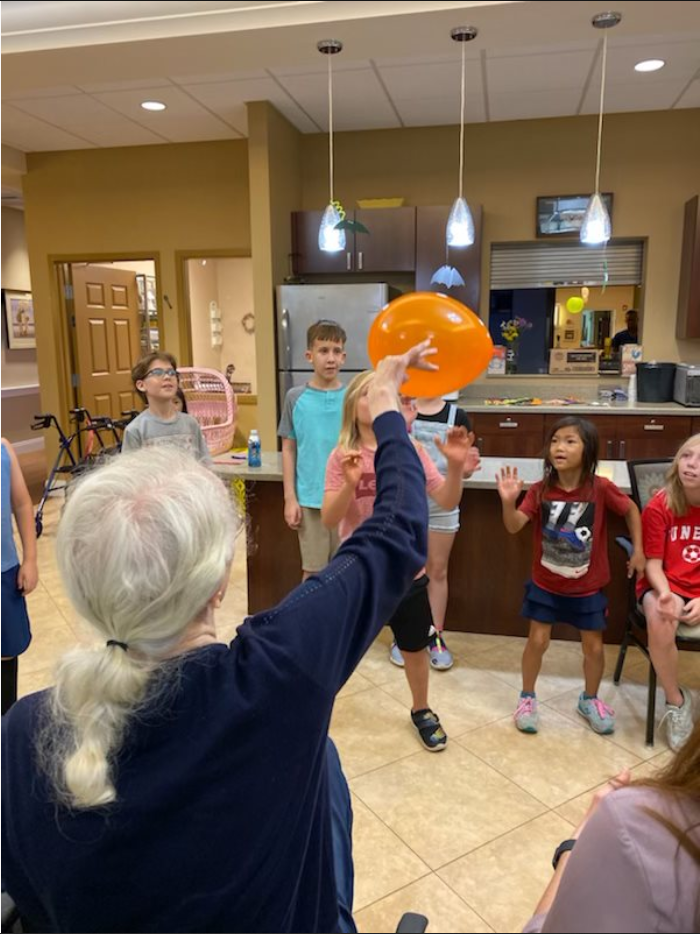
Educator-entrepreneurs at schools such as Service Learning Microschool in Clearwater, Florida, are establishing networks of trailblazers with similar backgrounds and goals who can provide members with emotional and practical support, yield mentors, and inspire the next wave of entrepreneurs.
Editor’s note: James Shuls, an EdChoice fellow, distinguished fellow in education policy at the Show-Me Institute, and former dean of the College of Education at Southeastern University in Lakeland, Florida, recently worked with Michael Q. McShane, director of national research for EdChoice, as an adviser on research conducted by Step Up For Students that culminated in a new report titled “How Can I Stay In It But Not Stay In It?” Shuls provides additional commentary here on the report, first published on the Show-Me Institute’s website. You can read the full report here.
Being an entrepreneur is hard work. Or so I’m told.
I’ve never actually been an entrepreneur. From what I gather, to become one you must have an idea of a product or service that other people want. And you must be able to produce that good or service for a price that other people are willing to pay.
Those two things are key. Without an idea, you’ve got nothing. Without customers, your business will flop.
We rarely use this sort of entrepreneurial thinking in education. For one, the vast majority of students—roughly 90%—attend a public school. Charter public schools are growing in this sector, but traditional public schools still enroll, by far, the most students of any school type.
Of the roughly 10% of students who attend private schools, most attend some sort of religious school. Catholics have historically served the lion’s share of private school students.
With public and church-sponsored schools dominating the landscape, there has never been much room for entrepreneurs. Even if someone had a great idea, they would struggle to compete with free public schools or church-supported private schools.
That is beginning to change.
In places such as Florida, where school choice programs allow students to attend private or microschools with publicly supported scholarships, we are seeing the start of something interesting—teachers becoming entrepreneurs.
I recently had the pleasure to serve as an advisor on a report conducted by Step Up For Students, a “state-approved nonprofit scholarship funding organization that helps administer four scholarships for Florida schoolchildren.”
Step Up conducted focus groups with former public school educators who left the public school system to start their own schools. These teachers thought they had a great idea to serve students, and thanks to the scholarship program, families had the means to pay tuition at the schools.
Check out the terrific slide deck or the video below to learn more about these teachers turned entrepreneurs.
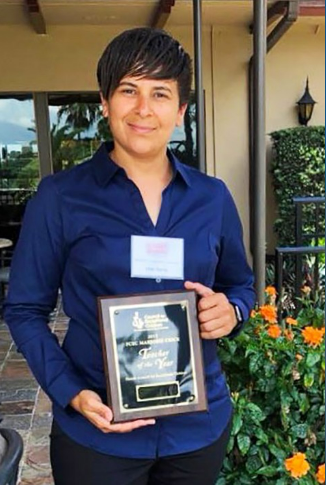
Cher Harris, who launched Autism Inspired Academy in Clearwater, Florida, for students with special needs, is one of 10 educator-entrepreneurs featured in a new report from Step Up For Students and EdChoice.
Editor’s note: Michael Q. McShane, director of national research for EdChoice, and James Shuls, an EdChoice fellow and former dean of the College of Education at Southeastern University in Lakeland, Florida, served recently as advisers on research conducted by Step Up For Students that culminated in a new report titled “How Can I Stay In It but Not Stay In It?” McShane and Shuls provide background on the report in this post that published in The 74. You can read the full report here.
Most conversations about school choice focus on students and families, and for good reason. School choice allows parents to choose the best educational opportunities for their children without having to make financial sacrifices for tuition or move to another district.
But there is another important group that benefits from school choice: teachers.
Recently, we served as advisers on research conducted by Florida’s Step Up For Students that explored what led a small, varied group of teachers to leave their posts in traditional public schools and strike out on their own to start new private schools. Leaving pay, pensions and the security of a public school job, they tapped into resources provided by Florida’s rich school choice environment to create new educational opportunities.
What these teachers had to say can shed light on ways to support further innovation in education.
The 10 teachers-turned-school founders were an interesting bunch. On average, they had spent a decade in traditional schools. Three founded large private schools (serving more than 150 students), three started small private schools (serving up to 150 students), and the others created a microschool, a hybrid homeschool, a homeschool co-op and a learning pod. Four of the schools were specifically for students with special needs.
All 10 had their own reasons for opening a new school, but frustration was a common theme. Whether it was low academic standards, the ever-present shadow of standardized testing or having to watch students fall through the cracks, all felt they could not remain in a system that they thought wasn’t working.
As one put it, “As a special education teacher in the public school system, I saw my students … going into middle school, and a lot of them were not receiving services. They were going into classrooms where there was no one helping them to organize or to understand the different things that were going on. That’s when we started to really seriously talk about how we would do our own school.”
To continue reading, click here.
 Editor’s note: This commentary from James V. Shuls, dean of the College of Education at Southeastern University and a fellow at EdChoice, appeared Monday on RealClear Education.
Here is a mental exercise an education scholar once gave an audience: Imagine you were sitting in a classroom somewhere in the world and knew nothing about the language, the students’ appearance, or anything else that would help you establish where you were. How would you know whether you were in a democratic nation or a totalitarian one?
His answer: classroom practices and content should look different in a democratic nation.
Let’s take the exercise a step further. Imagine you were dropped into a nation that valued diversity, freedom of thought and religion, and the rights of the individual. How would you expect its educational system to look?
I suspect you’d find a wide variety of types of schools – Montessori and classical, STEM and the arts, religious and secular, and more. Further, students in those schools likely would be there by choice, not by residential assignment. In a society that embraces freedom, we could expect to see a system of education that maximizes educational pluralism and educational choice.
In short, it’s not just what goes on inside a classroom that should look different in a democracy, but the very educational system itself that should look different.
To continue reading, click here.
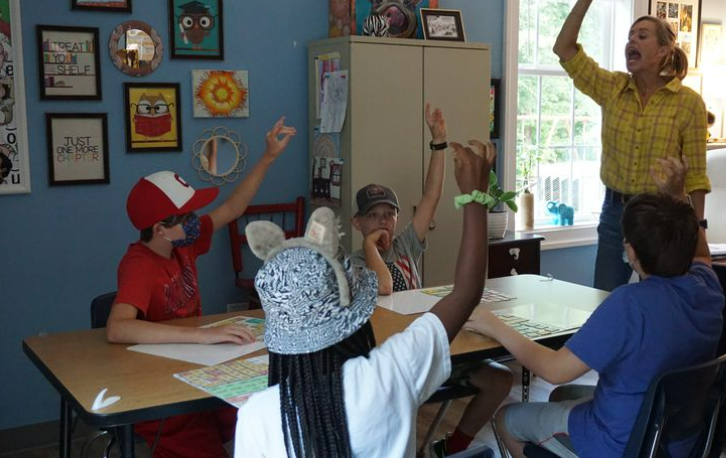
Brookwood Christian School in Acworth, Georgia, serves students who have not been successful in public or private schools due to their unique learning needs. The school participates in the Georgia Special Needs Scholarship Program.
Editor’s note: This article appeared Monday on The Center Square.
Georgia's school choice programs saved taxpayers at least $605 million in fiscal year 2018, an updated analysis by EdChoice found.
EdChoice examined the fiscal effects of 40 private educational choice programs in 19 states and the District of Columbia. The nonprofit found the Georgia Special Needs Scholarship Program and the Georgia Qualified Education Expense Tax Credit saved taxpayers between $605 million and $1.1 billion in fiscal 2018.
Each taxpayer saved money on the sum they would have paid in taxes for each student enrolled in the program to attend public schools. The programs saved each taxpayer between $4,355 to $8,013 per student, according to the report.
Georgia Center for Opportunity Vice President of Public Policy Buzz Brockway said the report dispels some misconceptions about school-choice programs.
"There is a falsehood out there that if we expand access to different educational options for Georgia families, we'll end up hurting traditional public schools," Brockway said. "Data like this from EdChoice clearly show this isn't the case."
To continue reading, click here.
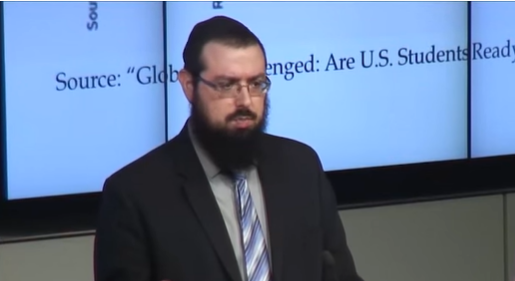 On this episode, Ladner and Bedrick discuss Bedrick’s new report, Who’s Afraid of School Choice? The report investigates the frequently intense and dramatic rhetoric used by education choice opponents dating to the 1990s and examines its validity, pondering the question: Has education choice “destroyed public education” as opponents claim?
Offering proof that these claims are baseless, Ladner and Bedrick discuss academic performance in states with established choice proliferation, demonstrating that a rising tide lifts all boats and that choice expansion tends to coincide with improved outcomes in traditional school districts.
"What actually happens in these states? Is it true public schools end up defunded and you have this catastrophic effect on its performance? In fact, the answer is no, not even close … Clearly these claims are 'Chicken Little' claims."
EPISODE DETAILS:
 Editor’s note: Watch this space for an analysis of the new EdChoice study coming later this week from reimaginED contributor Patrick Gibbons.
A delightful new study from EdChoice titled, “Who’s Afraid of School Choice?” documents a sampling of some of the innumerable times school choice opponents have predicted the destruction of public education due to passage of education choice programs.
Here are some predictions of doom highlights.
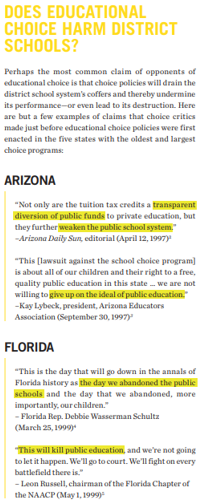
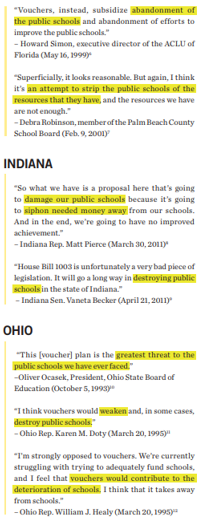
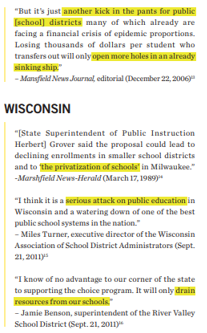
Here is what actually happened in terms of public-school results in these states:
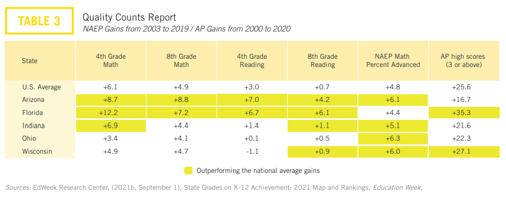
If this is the end of the world as we know it, I feel fine!
You might think decades of making Chicken Little arguments and predictions on outcomes that never came to pass might deter opponents, but the study shows you would be mistaken. EdChoice’s analysis of statements these opponents made in 2021 indicate the apocalyptic rhetoric flowed freely, regardless of whether the education choice proposal was expansive, as in West Virginia, or very modest, as in Arkansas.
Ergo, if you’re aiming to pass choice legislation, you may as well go big, because your opponents will accuse you of destroying public education regardless.
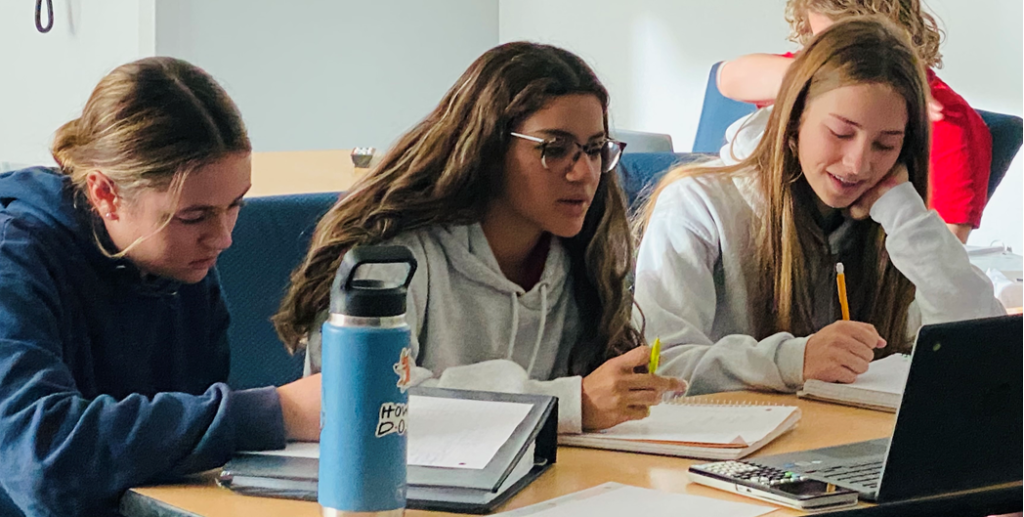
Dayspring Early College Academy, about 40 miles north of Tampa and one of a plethora of education choice options in Florida, opened this fall to 199 students and expects to grow to 300 students by 2023.
Florida’s private school choice programs have saved taxpayers more than $2.8 billion since 2000, according to new research from the national school choice advocacy group EdChoice.
Martin Leuken, director of Ed Choice’s fiscal research and education center, analyzed 40 private school scholarship programs in 19 states and Washington, D.C., for the report titled, “Fiscal Effects of School Choice.” Combined, scholarship programs in these states have saved taxpayers nearly $12.4 billion between 2000 and 2018, the last year Leuken examined.
The total cost of educating the 460,129 scholarship students in those 19 states and D.C. was just $2.4 billion, or 1% of the total cost of public education in those states.
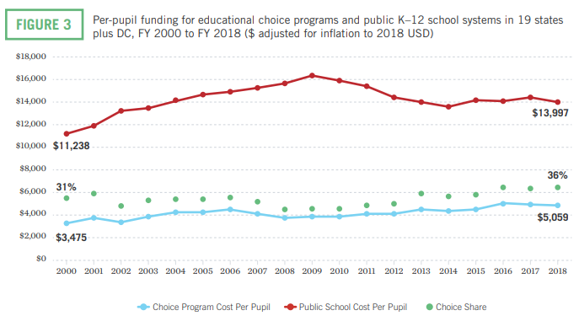 Savings were generated because the cost of the scholarship programs were significantly lower than that of public schools. According to the research paper, the average scholarship cost $5,059 in 2018, compared to $13,997 per pupil for the public school.
Florida’s estimates include the McKay Scholarship, the Florida Tax Credit Scholarship, and the Gardiner Scholarship. The Family Empowerment Scholarship, which began in 2018, is not included in the study.
The Gardiner Scholarship, now the Family Empowerment Scholarship for Students with Unique Abilities, saved taxpayers $87 million from 2014-2018.
According to EdChoice, the cost of educating a student with special needs in a Florida public school was $18,239 compared to an average cost of $10,268 for the Gardiner Scholarship.
The McKay Scholarship saved the state $2.4 billion from 2000-2018. Researchers estimate the cost of the program at $7,104 per pupil.
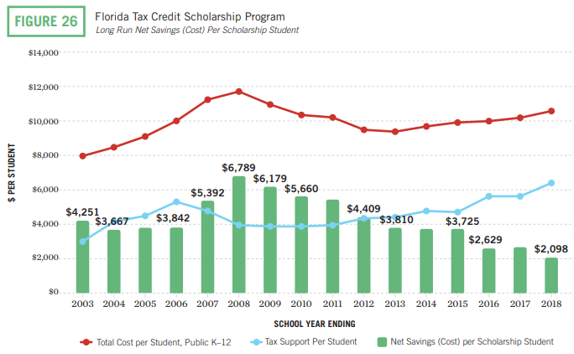
The Florida Tax Credit Scholarship saved the state $330 million between 2002, when the program offered its first scholarship, and 2018. The average scholarship was worth $6,465, compared to $10,610 for the per-pupil cost of a public-school student.
According to Lueken, the average scholarship in Florida was worth about 54% of what the state spent on public school students.
 In the latest installment of EdChoice’s “Big Ideas” podcast series, director of policy Jason Bedrick speaks with reimaginED executive editor Matt Ladner about Ladner’s recent report, “Microschools versus Waitlists: A Guidebook for the Innovative Arizona Educator.”
At the top of the interview, Ladner provides a definition of microschools and how they differ from learning pods. He goes on to detail what he’s observed regarding the rise of microschools in his home state of Arizona, a launching pad for education innovation, and what he’s seen first-hand on visits to microschools:
“My instant reaction watching kids do project-based learning was, ‘This looks like a lot of fun … obviously the kids are totally into it."
The interview includes Ladner’s take on why microschools are gaining a loyal following across the country, why this is a great time for education entrepreneurs, and what this groundswell could mean for K-12 education in the future.
You can listen to the interview here.

The longer students remain on Florida’s Gardiner Scholarship program, the more likely their parents are to spend money on curriculum, tutoring and specialized services, a new working paper finds.
The study, “Distribution of Education Savings Accounts Usage Among Families,” by Michelle Lofton of the University of Georgia and Martin Lueken of EdChoice, examines the spending patterns of families on the scholarship program over multiple years. It is the largest of its kind to date.
The Gardiner Scholarship, created in 2014 and named after State Sen. Andy Gardiner’s family, provides parents of students with special needs with a scholarship worth an average of around $10,000. It is set up as an education savings account (ESA) where parents can use the funds on more than just school tuition and fees. They also can purchase textbooks, school supplies, curriculum, tutoring, therapies and more.
The scholarship is currently limited to students with specific needs such as autism, Down syndrome and spina bifida. Last year, 17,508 students received a Gardiner Scholarship, with more than 9,000 enrolling in one of 1,870 private schools.
According to the researchers, family spending patterns change the longer they remain on the program. As families become more familiar with the program, they begin to spend more money on expenses other than tuition and fees, representing a desire to further customize their child’s education.
The study also finds rural families are more likely to spend the scholarship on curriculum and instruction than on private school tuition.
“These findings imply that families enrolled in ESAs are learning from prior usage and are able to customize education to areas beyond tuition over the course of their child’s educational life cycle,” the researchers wrote.
Since 2015, families have averaged 21 purchases, spending $8,373 a year. Usage increased from 60% of funds in 2015 to 88% by 2019.
Expenditures on tuition increased by 11%, or $550 over that time. But expenditures on instructional materials, specialized services, and college tuition savings plans increased considerably more -- instructional materials by 400%, or $1,375, and specialized services by 200%, or $450.
The number of purchases increased over time as well. In 2015 families averaged just nine purchases, but by 2019 families were averaging 30 purchases a year.
Spending varied by race and income as well.
Parents of Black and Hispanic students spent more of their scholarship, on average, than white students. They were also 7 to 9% more likely to spend the scholarship on school tuition than white students.
Parents in the top-quartile income areas spent more money on fewer items but spent less on tuition and more on tutoring and specialized services than families in bottom-quartile income areas.
The Gardiner Scholarship will become part of the Family Empowerment Scholarship for the 2021-22 school year, though the ESA component of the program will remain exclusive to children with special needs. Florida’s McKay Scholarship, a voucher program for students with special needs, will also merge with the Family Empowerment Scholarship in 2022.
Parents or guardians may apply for the scholarship here.
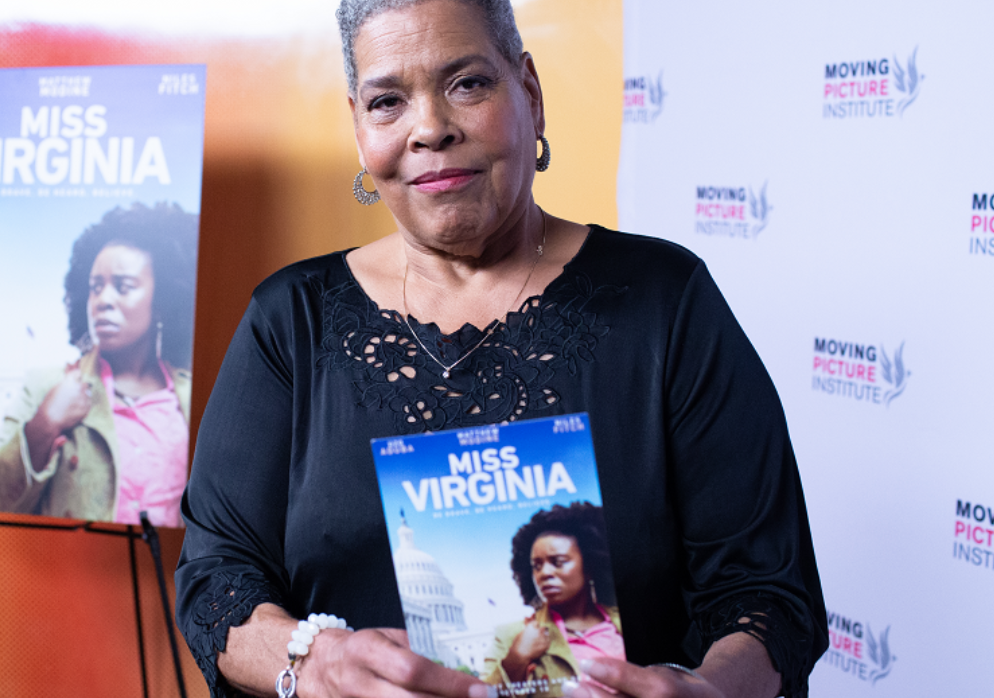
The 2019 film "Miss Virginia" was based on the life of Virginia Walden Ford, a leading advocate for parent empowerment who has fought for decades to create new educational opportunities for children and families.
In the 2019 feature film “Miss Virginia,” a working mother in the nation’s capital struggles to help her teenage son escape a violent public school and leads a grassroots movement to rally parents to
demand new school choice options for their children. A turning point in the story occurs when Miss Virginia learns that D.C. public schools were spending more per child than the cost of tuition at her son’s private school.
“When parents learn what their public schools are spending on their child’s education, they begin to ask questions,” explains parent activist Virginia Walden Ford, whose real-life story inspired the film. “They think about how those dollars might be put to better use. They start wanting more school choice options.”
Thanks to Project Nickel, a new search engine created by Lincoln Studio in partnership with EdChoice, parents in most states can now learn exactly what their local public school spends on their child’s
education.
Armed with this information (particularly after many public schools have been closed for long periods during the pandemic), parents across the United States may demand the power to use their child’s share of school funding to obtain a high-quality education.
Project Nickel is made possible by the 2015 Every Student Succeeds Act, bipartisan legislation updating the Elementary and Secondary Education Act. ESSA requires that states report per-student spending by public schools to the federal government. The Department of Education recently has begun aggregating and publishing this data.
To make this information more accessible to the public, Lincoln Studio partnered with EdChoice to develop a website. Project Nickel is a first-of-its-kind search engine of U.S. public school per-student spending data required to be reported to the U.S. Department of Education under a bipartisan 2015 law. Parents and anyone interested in what a public school spends per child can quickly get an answer by simply entering the school’s name.
As of May 2021, Project Nickel presents data from each of the 37 states that have complied with federal law and reported spending data to the Department of Education, which has published the data. The remaining states and territories have not yet complied with the 2015 law to report information to the Department.
The search engine currently includes data from nearly 50,000 public schools across the United States and will be adding more schools as the Department publishes more data.
New transparency about what public schools are spending has the potential to change how the public thinks about public education funding and the value students are receiving.
Many Americans underestimate what public schools spend. Fifth-three percent of Americans think public school funding is too low in their state, according to a 2020 EdChoice survey. But most people
don’t understand what public schools actually spend.
The survey found that the median estimate was $5,000 per child. But that’s well below the lowest state’s average per-pupil expenditure. The National Center for Education Statistics reports that the average per-pupil spending at public schools in 2017-18 was $13,800. This means that the average child who entered first grade in 2017 will likely have more than $160,000 spent on her education through high school.
Current per-pupil spending levels are likely to balloon in the coming years. Since the beginning of the pandemic, Congress has provided $190 billion in emergency funding for K-12 public education. According to Department of Education data, $63.3 billion of the $65.5 billion in federal funding awarded in 2020 remained available as of the end of February.
That means just 8% has been spent. Overall, state departments of education have an extra $120 billion in new federal emergency education funding still available.
Virginia Walden Ford thinks this new transparency about school spending will be valuable for parents.
“I am so excited about Project Nickel and its potential to reach parents and give them additional information as they make decisions for their children’s education. The question of education spending ALWAYS comes up, especially after parents see the film,” Walden Ford explained.
A growing number of states across the country are enacting policies like education savings accounts to give parents direct control of education funding. Greater public awareness about what public schools are spending per child will start new conversations about whether students are receiving a high-quality education from that investment, particularly after prolonged closures in many districts during the pandemic.
“Project Nickel’s search engine can help parents and everyone concerned about the quality of public education understand exactly what public schools are spending,” reasoned Virginia Walden Ford. “That’s a key step in building greater support for expanding parental choice in education and promoting equal opportunity.”

