
States with recent education choice lawsuits involving EdChoice Legal Advocates and the Institute for Justice.
As education choice options expand for families across the nation, opponents are stepping up their fight to preserve the status quo.
Observers say these conflicts are examples of growing pains that come when a society undergoes transformational change.
 “It’s just part of the cost of doing business,” said Michael Q. McShane, director of national research at EdChoice, a national nonprofit think tank. “Educators are not alone in challenging policies they don’t like. New laws get passed; people who can’t do things democratically try to do things through the courts.”
Michael B. Horn used a famous quote (often misattributed to Mohandas Gandhi) to describe the spate of lawsuits: “First they ignore you, then they laugh at you, then they fight you, then you win.”
“I think we’ve entered the fight stage,” said Horn, the co-founder, distinguished fellow, and chairman of the Clayton Christensen Institute and an author of several books on disruptive innovation. “Education choice has gotten big enough that the entrenched interests dedicated to preserving the status quo are starting to see it as a threat.”
Legal fights over education choice began in the 1800s when Catholic families opposed the Protestantism taught in public schools. In 1925, the U.S. Supreme Court ruled in Pierce v. Society of Sisters that parents had the right to put their children in private schools. In 2002, the high court issued another landmark decision, Zelman v. Simmons-Harris, which upheld an Ohio scholarship that allowed parents to spend the money on religious schools. The high court found that when the parent controls the expenditure, the state has no role in determining whether the parent will choose to use funding at a religious or secular school.
With the Zelman ruling settling that question, choice opponents began trying to insert race-based arguments using the language of state constitutions. Michael Bindas, a senior attorney at the Institute for Justice who argued the landmark case Carson v. Makin before the U.S. Supreme Court, outlined that shift in a paper published in the Syracuse Law Review. According to Bindas, common arguments center on education clauses requiring states to maintain uniform or common public school systems. Education choice opponents, he said, take that a step further and claim that private scholarship programs could upset racial balances that state constitutions require state governments to maintain. They also argue that the requirements that states maintain public school systems bar them from establishing concurrent private education choice programs. Lower court judges in Ohio and Utah recently cited this argument in striking down choice programs. Ohio plaintiffs also raised the issue of racial balance argument, which the judge rejected.
McShane and Horn say the spate of lawsuits won’t stop education choice programs from becoming the norm in public education. However, they will delay the transition.
“Yes, these cases are a headache and can delay implementation, but school choice has a good track record,” McShane said. “It will take numbers and time, and it’s going to tip over into a different mindset.”
Where things stand
Montana: Families are waiting on a judge to rule on a lawsuit brought by opponents of a 2024 education savings account program for students with special needs. Plaintiffs argue that the law allowing reimbursements for $6,800 per child violates several provisions of the state constitution and redirects tax dollars to private institutions at the expense of students with special needs who remain in public schools. The judge denied the plaintiff’s motion for a temporary halt to the program, allowing families to continue using their ESAs while the case is pending.
Ohio: The state has appealed a lower court’s ruling that declared the state’s $700 million Educational Choice Scholarship Program (EdChoice) unconstitutional. In siding with the coalition of school districts and other choice opponents, the judge said that the program was not a subsidy program, as the state argued, but a separate system of schools in violation of the state constitution. However, the judge rejected the plaintiffs’ argument that the program violated the state constitution’s education clause by creating racial imbalances in the district schools. The 10th District Court of Appeal is expected to hear the case in 2026.
Utah: Families are continuing to receive funds from the Utah Fits All scholarship program while a district court ruling in favor of a teachers union-backed lawsuit is under appeal to the state Supreme Court. A district judge ruled that the state constitution prevents lawmakers from using tax revenue to fund education programs other than public education, higher education, and services for people with disabilities. The judge rejected the state’s argument that it had met its funding obligations to public education and that nothing in the law prohibited it from funding a separate program to support families choosing private or home education.
Wyoming: Families seeking to use Steamboat Legacy Scholarship ESAs had to find other options for the 2025-26 school year after a trial judge blocked the state from distributing funds in July at the request of the Wyoming Education Association and other plaintiffs until the judge rules on their lawsuit against the program. The judge recently denied a motion by state officials and attorneys for two families to dismiss the lawsuit based on their argument that the plaintiffs lacked legal standing.
Missouri: Education choice advocates scored a win last month when a judge denied the teachers union’s request to freeze payments to the MOScholars K-12 scholarship program as their lawsuit continues. MOScholars began in 2021 as a tax credit program supported by private donors. Earlier this year, the state allocated $51 million to the program, prompting the Missouri Education Association to file the complaint, which contends that the allocation unconstitutionally diverts taxpayer funds to private schools.
Arkansas: The state’s Education Freedom Account program is being fought on two fronts. In June 2024, opponents sued in state court, arguing that the program illegally diverted tax dollars from the public school system to benefit private schools. The judge denied the state’s motion to dismiss the complaint, so state attorneys are appealing to the state Supreme Court.
The same plaintiffs filed another lawsuit a year later in U.S. District Court. It argues that the program violates the Establishment Clause of the First Amendment because “it aids in the establishment of religion” by providing state funding to private schools operated by religious organizations. The state refutes that by arguing that the money can go to schools representing a wide variety of faiths, as well as secular schools.
They also argue that the program violates the Equal Protection clause of the 14th Amendment because it discriminates against low-income families, families in rural areas where there are fewer private schools and students with disabilities, because private schools are exempt from the federal Individuals with Disabilities Education Act. The program is also discriminatory, according to the complaint, because private schools are not held to the same standards as public schools. The state attorney general has filed a motion to dismiss the case, arguing that the plaintiffs lack standing.
Kentucky: The Kentucky Supreme Court heard arguments on Sept. 11 about whether the state’s charter school funding law violates the state’s constitution. Charter schools have been legal in the Bluegrass State since 2017, but there was no state funding mechanism. Lawmakers passed House Bill 9, which allocated money to charter schools, which are publicly funded but independently managed. A trial court judge ruled in 2023 that the law violated the state constitutional ban on the use of tax dollars to support non-public education and the constitutional requirement for “an efficient system of common schools.”

Maria Ruiz calls the Utah Fits All Scholarship Program 'a rich blessing' for her family and is one of two parents fighting to protect the program from being shut down. This week a district judge ruled it unconstitutional. Photo courtesy of the Institute for Justice
Editor's note: This story has been updated with the outcome of the status hearing on April 23.
When Utah officials defended a union-backed court challenge to its Utah Fits All Scholarship Program, they relied on cases in five other states in which courts upheld similar programs as constitutional.
 However, in her ruling against Utah’s scholarship program last week, Third District Judge Laura Scott noted the absence of a Florida case: Bush v. Holmes.
The 1999 complaint challenged the Florida Opportunity Scholarship Program. In it, the Florida Supreme Court ruled in 2006 that the program violated the constitution’s provision requiring a “uniform” system of public schools for all students.
On page 31 of the 57-page order in the Utah case, Scott cited Florida Chief Justice Barbara J. Pariente’s opinion, which said that the Opportunity Scholarship Program “diverts dollars into separate, private systems…parallel and in competition with the free public schools” and funds schools “that are not ‘uniform’ when compared with each other or the public school system.”
Scott wrote that the Florida provision “acts as a limitation on legislative power” and that in spelling out how something must be done, it effectively forbids it from being done differently.
Scott used that reasoning, along with a 2001 Utah Supreme Court ruling that dealt with the legislature’s authority to grant the state board of education the power to approve charter school applications, to form the basis for her ruling that declared the Utah Fits All program an unconstitutional overreach.
Because Utah’s Education Act does not mention any other duties except “establish and maintain a public education system which shall be open to all children of the state, and a higher education system, which shall be free from sectarian control,” it is a ceiling and not a floor.
“Accordingly, the court concludes that the legislature does not have the plenary authority to create a publicly funded education program that is outside of the public school system that is neither open to all the children of Utah nor free.”
An attorney representing two scholarship parents trying to protect the program, said the judge based her ruling on a flawed interpretation of the state constitution.
“The district court abandoned the plain text of the Education Clause and read in a restriction on legislative power where none exists,” said Arif Panju, senior attorney for the Institute for Justice. “In state after state, state supreme courts have had to reverse trial courts in these cases.”
Lawmakers approved the Utah Fits All program in 2023. It took effect in fall of 2024 and gives eligible K-12 students up to $8,000 a year for private school tuition and other costs.
In the first year, more than 27,000 students applied for 10,000 available scholarships. Among them is Maria Ruiz, a restaurant manager and mother of two whose husband has battled serious health problems and amassed a large medical debt. The scholarship program has allowed her to afford private school tuition and keep her son and daughter in the schools that she has determined provide the best educational fit.
If the court shuts down the program, “I wouldn’t be able to pay,” she told NextSteps last month.
Scott’s ruling didn’t say if or when the program would be halted. State officials say they plan to appeal to the Utah Supreme Court. The Institute for Justice, which represents two parents seeking to protect the program as intervenors, say they also plan to appeal.
The district court abandoned the plain text or the Education Clause and read in a restriction on legislative power where none exists. In state after state, state supreme courts have had to reverse trial courts in these cases.
This isn’t the first time that issues like those raised in Bush v. Holmes have surfaced in challenges to education choice programs in other states. Last summer, education choice opponents sued the state of Arkansas over its Education Freedom Accounts program that provides state funds for approved educational expenses. The program, passed in 2023, is being phased in over three years, with universal eligibility in the third year.
The complaint, filed in circuit court, says the Arkansas Supreme Court has “consistently upheld the constitutional requirement that public school funds may not be used for non-public purposes.” It also says the law will “drain valuable and necessary resources from the public school system and create a separate and unequal school system that discriminates between children based on economic, racial and physical characteristics and abilities.”
The case is pending.
Though the Florida Supreme Court sided with choice opponents, legal experts criticized the 2006 ruling as flawed and politically inspired. The Harvard Law Review said the court based its decision on “adventurous reading and strained application” of the Florida Constitution.
Where things stand
The big news: Yamilette Albertson Rodriguez could hardly contain her excitement. A Philadelphia billionaire whose name she had never heard before had donated $900,000 to cover tuition for her three kids and other students whose state scholarships had been ripped away by a South Carolina Supreme Court ruling.
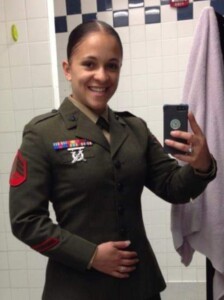 “This is awesome!” said Rodriguez, a 37-year-old manager at a Sherwin-Williams store in the Lowcountry town of Bluffton near Hilton Head Island. “I can breathe again.”
Jeffrey Yass, a businessman and philanthropist worth $49.6 billion,. co-founded Susquehanna International Group, a Wall Street trading giant. Yass and his wife, Janine, have poured a growing share of their fortune into education causes. They most recently funded the Yass Prize, a competitive program that awarded hundreds of thousands of dollars in grants and an annual $1 million top prize to education innovators.
The Palmetto Promise Institute, which championed the South Carolina Education Scholarship Trust Fund program when state lawmakers passed it last year, broke the news Thursday morning that Yass’ donation would cover all participating students’ private school tuition through Dec. 31. The think tank is seeking donors to help cover costs until the legislature can approve changes that help the program pass constitutional muster.
"(Some of these schools) would be taking huge financial losses, especially some of the schools that took dozens of families, dozens of these ESA kids," Wendy Damron, the institute’s president and CEO told the Post and Courier. "They would take this huge financial hit and maybe be hesitant to try it again. So, he was just making an investment in our kids in South Carolina."
Catch up quick: The Education Scholarship Trust Fund was the product of two decades of efforts to pass an education choice program that was not limited to students with unique needs.
 Low-income families approved for the program received $6,000 per child that parents could use for 15 different categories of expenses, including tutoring, therapy, and tuition. Months after its enactment, a group that included the South Carolina Education Association sued the state, arguing that the program violated the South Carolina Constitution’s ban on public funds being used for the direct benefit of any religious or other private educational institution. Attorneys for the state and for the families countered that the direct benefit went to parents, not institutions, and noted the existence of similar programs for preschoolers and college students.
The ruling: On Sept. 11, 180 days into the school year, the state Supreme Court issued a 3-2 ruling that struck down the provision allowing the scholarships to go toward tuition, saying it didn’t matter that the parents were the ones who chose where to spend money from among a variety of schools.
The fallout: The decision left parents, whose household incomes were 200% above the federal poverty line, scrambling for alternatives if they couldn’t afford the tuition. Education choice supporters pulled out all the stops to keep the program afloat. The statewide Catholic diocese started the St. Rita Relief Fund to raise money toward the tuition of scholarship students at their schools. Palmetto Promise Institute posted video interviews of affected families. The state education superintendent asked the court to let the ruling take effect after the current school year. The governor asked the court to reconsider the ruling. The court said no to both requests. Lawmakers, who have the power to call a special session, decided not to, pledging to take up the issue in January.
Rodriguez, a Marine veteran who had served in counter-piracy operations in the Middle East, vowed to find extra work on top of her 45-hour job at the paint store to keep her teenage daughter and first-grade twin sons at the Anglican school where they were thriving.
“I started to really pinch pennies,” said Rodriguez, a single mom who also supports her 65-year-old father as he battles cancer and other health issues. To make things worse, Hurricane Helene tore shingles off her roof. She said insurance wouldn’t cover the damage, leaving her to pay for repairs herself.
After a recent food pantry visit, her daughter asked, “Mom, does this mean we’re poor?”
“It just means we’re hurting right now,” Rodriguez replied. Today’s news, she said, was just what her family needed.
“My daughter will be so happy,” she said.
The big story: Nearly 3,000 low-income students and their families now find themselves scrambling for education options a month into the new school year after the South Carolina Supreme Court tossed out the state’s fledgling education savings account program as unconstitutional.
The state Department of Education announced on Wednesday afternoon that it has halted all tuition and fee payments being directed to private schools and courses. However, a department spokesperson said the actions relate only to payments made on or after Sept. 11 and that families would not have to return funds already spent. Also, all other allowable expenses would continue to be paid.
"The Department will work closely with parents to assess viable alternatives for their children if continued attendance at their current school is no longer an option, thanks to this lawsuit and subsequent ruling," department spokesperson Jason Raven said.
Raven added that the department will "do everything in its power to work with the Governor, General Assembly, and impacted schools to support the low-income families who are the victims of this ruling and will communicate with them regarding options that remain within the Education Scholarship Trust Fund program."
State Education Superintendent Ellen Weaver blasted the timing of the lawsuit, which the state NEA affiliate filed six months after the law’s passage and said the ruling “wreaks havoc” on families.
 “Families cried tears of joy when the scholarship funds became available for their children, and today’s Supreme Court ruling brings those same families tears of devastation,” said Weaver, a school choice champion. “While I respectfully disagree with the holdings of the majority decision, I remain committed to working with the governor and the General Assembly to find a way forward to support these students and educational freedom for all South Carolina families. These students deserve better, and I will not rest until they get it.”
The ruling: The 3-2 decision, handed down Wednesday, ruled that taxpayer dollars can’t be used to pay for private school tuition. It relied on the state’s Blaine Amendment, which keeps popping up as the battle for education choice shifts from federal to state courts in the wake of landmark U.S. Supreme Court rulings. The wording varies by state, with South Carolina’s version stating that taxpayer dollars cannot directly benefit private schools. At issue was what qualified as a direct benefit.
Specifically, the court struck down broad sections of the Education Scholarship Trust Fund (ESTF) – a program created last year by lawmakers and administered by the South Carolina Department of Education, which provides roughly 5,000 academic scholarships totaling $6,000 each for eligible K-12 students.
Justice Garrison Hill wrote for the majority that the program already in place for this school year violates the state constitution’s prohibition against public dollars directly benefiting private schools and said he found the arguments in support of the program’s constitutionality were “unconvincing.”
“They read our Constitution as allowing public funds to be directly paid to private schools as tuition as long as the funds are nudged along their path by the student, who may, through an online portal, choose to use the funds that way,” Hill wrote, with former Chief Justice Donald Beatty and acting Justice James Lockemy concurring.
The other side: In a scathing dissent, newly installed chief justice John Kittredge, backed by justice John Few, wrote that “the majority opinion pays lip service to the policy-making role of the legislature.”
“Our constitution allows the legislature — and only the legislature — to make this policy decision,” he wrote.
Kittredge added that the funds flow through the state treasury to a third-party trust fund, then to a family’s account, which parents can direct to the school of their choice, which includes some private schools.
“The majority opinion finds this is a direct benefit to the private school, that is, that public funds are ‘immediately’ going from the State Treasury to the private school,” he wrote.
Kittredge also disputed that the program, which includes $30 million of the state’s $14 billion education budget, has harmed district schools, noting that the legislature has steadily increased funding each year and approved a record amount this past year.
School choice leaders across the nation criticized the decision and expressed sympathy for the participating families.
“Today, a court overturned a duly passed piece of legislation on the basis of an indefensible misreading of the words of our State Constitution,” said Wendy Damron, president of Palmetto Promise Institute, a think tank that supports education choice. “It is unconscionable that the Supreme Court would rip away these scholarships from children and families counting on the funds for their education this year.” Damron encouraged state education officials to appeal.
Neal McCluskey, director of the Cato Institute's Center for Educational Freedom, responded in a post on X: “Sad news for South Carolinians.” He added that Cato filed a brief in the case “making clear, among other things, that by empowering diverse families to freely seek what they think is right, choice is important to defusing social conflict.”
Next steps: Gov. Henry McMaster said the state would ask the court to “expeditiously reconsider” its ruling due to concerns about effects it may have on other programs.
Fallout for pre-Kand college programs: The ruling comes despite the existence of other state programs that have allowed pre-kindergarteners and college students to use public funds at private schools, which choice advocates say supports the constitutionality of the K-12 ESA program. The pre-K program “is clearly in violation of the state constitution based on the school choice ruling,” Shawn Peterson, president of Catholic Education Partners, noted in an X post to point out the double standard.
Possible long-term solution: Jason Bedrick, a research fellow at the Heritage Foundation suggested that the legislature act quickly and examine other funding methods such as a tax credit program in the wake of the court’s “flawed decision.”
The story: After trying once and failing, opponents of Arkansas legislation that established education savings accounts are trying again to shut it down with a lawsuit.
The latest: The complaint, filed in circuit court by four parents of district school students, claims that the state’s 2023 law establishing the Education Freedom Account program violates the state constitution by redirecting tax money that would have benefited public schools. It says the state Supreme Court has “consistently upheld the constitutional requirement that public school funds may not be used for non-public purposes.” It also says the law will “drain valuable and necessary resources from the public school system and create a separate and unequal school system that discriminates between children based on economic, racial and physical characteristics and abilities.”
How it works: The EFA program, part of the comprehensive LEARNS Act, provides state funds for approved educational expenses, including private school tuition. The program is being phased in over three years, with eligibility reserved for low-income families the first year. Eligibility will be available to all students in the third year.
Who has benefited: Since the law took effect last year, more than 5,400 students have benefited by receiving about $6,600 each in state funding. The law caps participation at about 14,000 students during the 2024-25 school year, with the award amount increasing to $6,900.
Echoes of Florida: The Arkansas complaint raises similar issues to those in Bush v. Holmes, the 1999 case that challenged the Florida Opportunity Scholarship Program. Though the Florida Supreme Court sided with choice opponents, legal experts criticized the 2006 ruling as flawed and politically inspired. The Harvard Law Review said the court based its decision on “adventurous reading and strained application” of the Florida Constitution.
Though lower courts found that the scholarship program violated the state’s ban on indirect aid to religious schools, the state’s high court sidestepped that issue, instead ruling that the program violated the constitution’s provision requiring a “uniform” system of public schools for all students.
Chief Justice Barbara J. Pariente wrote that the program “diverts dollars into separate, private systems…parallel and in competition with the free public schools” and funds schools “that are not ‘uniform’ when compared with each other or the public system.”
Leslie Hiner, vice president for legal affairs at EdChoice, said the Florida high court’s decision likely stemmed from the fact that Justice John Roberts had recently been appointed to the U.S. Supreme Court, possibly resulting in greater support for religious freedom.
“That (Florida Supreme) court did everything they could think of to walk all around the religious liberty claims,” she said. “The widely held belief was that the court could see that if they were to rule on the religious liberty issue, this case was going to go up to the United States Supreme Court. No one on the other side of school choice wanted to see that happen.”
Then as now: Fourteen years later, that question went to the U.S. Supreme Court, which issued two rulings in 2020 and 2022 that settled the religious freedom issue. Espinoza v. Montana and Carson v. Makin prohibited states with education choice programs from banning religious schools from participation.
After those landmark decisions took the religious question off the table, opponents have turned to Blaine “variants” that they argue ban all private schools from participating. They also are relying on state constitution language that they say limits governments to spending on public schools. Thus, the claims that the Arkansas constitution prohibits funding for “any system which is free and not public,” echoing the claim in Holmes that Florida could not establish education systems that are “parallel and in competition” with public schools.
Past as prologue: Hiner said that despite the choice opponents’ victory in the Florida case, the Sunshine State went on to become a national leader in education choice programs passing universal eligibility education savings accounts in 2023. Today, 31 states, the District of Columbia and Puerto Rico have passed school choice policies.
“We didn’t think that position [in Holmes] would have the kind of validity that would stick on other states, and we were right about that,” Hiner said.
Watch list: The Alaska Supreme Court is scheduled to hear oral arguments Thursday in an appeal of a trial judge's ruling that struck down its allotment program. The program, which had been in place since before Alaska gained statehood, offered correspondence courses to students in remote areas but was changed over the years and most recently functioned as an education savings account. Arguments begin at 10 a.m. Anchorage time. You can watch the livestream here.
The headline: Utah’s largest teachers union filed a lawsuit against the nation’s second most expansive program that allows parents to direct their children’s public education funding.
Driving the news: The Utah Education Association challenged the law just weeks before 10,000 students were expected to start using their Utah Fits All scholarship funding, and more than a year after the legislature approved the program. The $82.5 million education savings account program grants eligible students up to $8,000 each that can be spent on private school tuition and approved educational goods and services. Though eligibility is universal, low-income families receive priority. The state also has two other school choice scholarship programs for students with special needs.
The complaint: Union officials, joined by a teacher, parent and a state school board member, allege that the program drains money from district schools and would deprive students with special needs of services guaranteed only in public schools. It asks a judge to declare the program unconstitutional and stop it permanently.
Education choice opponents have used these arguments in lawsuits filed in other states. What didn’t get discussed at the union’s news conference on Wednesday was Utah’s Blaine amendment. These bans on public funds flowing to religious institutions in state constitutions have continued to be among opponents’ legal tools of choice even after two landmark U.S. Supreme Court rulings in the past four years struck them down. Utah’s constitution says:
Neither the state of Utah nor its political subdivisions may make any appropriation for the direct support of any school or educational institution controlled by any religious organization.
Yes, but: Though lawsuit sidestepped the Blaine amendment, it cited another part of Utah’s constitution specifying that the legislature shall provide a public education system that is free and open to all students and “free from sectarian control.”
What opponents are saying: The union blasted the state for giving ESA students more than double the amount it spends on public school students.
"This discrepancy is not just unfair, it is a deliberate undermining of public education,” Utah Education Association President Renée Pinkney said.
However, the reality of how Utah students are funded is more complex. While the state provides direct aid of about $4,000 per student to public schools, it shares costs with local districts through property taxes and motor vehicle fees. The final total ends up being more than $11,000 per student, according to the Libertas Institute, which published a breakdown after opponents made those claims earlier this year. Students who fall into certain categories, such as, those with special needs, English language learners or those who attend high-poverty schools, get more money from the state.
What school choice advocates are saying: “Families in every state deserve the right to choose the best education for their children, and it is shameful but not surprising that the teachers unions are pulling out all the stops trying to block this opportunity in Utah,” said Ryan Cantrell, vice president of government affairs for the American Federation for Children. “The fact that more than 27,000 students applied for 10,000 scholarships in the first year of the program demonstrates the incredible demand for choice in Utah, and the unions are on the wrong side of this issue.”
On defense: The Partnership for Educational Choice, a joint initiative of the Institute for Justice and EdChoice, announced plans to intervene in and defend the program on behalf of participating families.
“Utah Fits All scholarship program empowers parents to choose the education that will work best for their children,” IJ managing attorney Arif Panju said. “The Utah Education Association is trying to deny Utah families that opportunity in order to protect the monopoly on education that it currently enjoys. The union and its allies will not succeed in depriving families of the desperately needed alternatives that Utah Fits All provides.”
Thomas M. Fisher, EdChoice vice president and director of litigation, praised Utah lawmakers for putting families first.
“Utah was right to prioritize students' needs over a state monopoly, and we will eagerly defend its decision to empower families.”
The story: As legal challenges to the wave of newly adopted education choice laws wind through the courts, a judge just handed New Hampshire a big win.
On Tuesday, the Merrimack Superior Court rebuffed a legal challenge to the Granite State’s Education Freedom Account Program, siding with the state and three parents who intervened with the help of the Institute for Justice.
Presiding Judge Amy L. Ignatius determined that the state legislature “established proper safeguards and did not impermissibly delegate a government function” when it authorized a scholarship funding organization to administer the program.
Flashback: The New Hampshire legislature created the EFA program in 2021 to provide low- and middle-income families with education savings accounts that parents can use for various education expenses, including private school tuition.
In December 2022, Debrah Howes, the head of the American Federation of Teachers in New Hampshire, sued state Education Commissioner Frank Edelblut, claiming the program violated restrictions on educational funding in the state constitution and state law. The program now serves 4,000 students and continues to grow, according to state education officials.
Zoom In: Howes’s legal arguments focused on several funding sources, including the state Education Trust Fund used to provide adequate education grants to school districts. The complaint also cited a constitutional provision that requires money from the state-run lottery be used exclusively for state school districts.
In rejecting these claims, Judge Ignatius ruled that the nine funding sources that contributed to the Education Trust Fund in 2022 are not segregated, making it impossible to prove that the lottery proceeds were allocated to the program. She also pointed out that after Howes filed her lawsuit, legislators amended the law om 2023 to allow the distribution of Education Trust Fund money to scholarship funding organizations, making Howe’s claim moot.
The judge also ruled that the state’s delegating the program’s management to the Children’s Scholarship Fund New Hampshire did not violate any laws and that the legislation also established an oversight committee to monitor implementation and determine which expenses qualified as educational.
What they’re saying:
“The EFA Program helps my daughters attend a school that meets their unique needs and in which they are thriving. It is a great relief that the program will continue to support educational options that work for my kids and for so many other families across the state.” — Amy Shaw, one of the parents who intervened in the lawsuit
“The court’s decision underscores the legality of the EFA program previously approved by legislators, but more importantly allows New Hampshire students and families to find the best educational pathway available for their unique needs. The value of this program continues to be far-reaching, with numerous success stories emphasizing just how impactful EFAs have been statewide.” — Frank Edleblut, New Hampshire’s education commissioner
“The Legislature should be focusing far more time and resources on the needs of the 160,000 Granite State public school students who deserve a robust curriculum and fully staffed schools, not on the 4,000 students whose families choose to take state-funded vouchers. Vouchers have exacerbated an already disparate burden placed on local property taxpayers to fund the basic right to a quality public education. — Debrah Howe, president, American Federation of Teachers New Hampshire
“This decision preserves the ability of Granite State families to have real options so they can make the best educational choices for their students. All children should be able to receive the strongest education possible to meet their learning needs, no matter their economic status.” — John Formella, New Hampshire’s attorney general
“New Hampshire families in need are grateful and relieved that justice prevailed and that the court dismissed the case and upheld the constitutional EFA program. New Hampshire parents believe they should have the power to spend their child’s education funding on an education that they know will work for their children. All New Hampshire children should have the education that is the right fit for them to realize their unique potential.” — Kate Baker Demers, executive director, Children’s Scholarship Fund New Hampshire
Possible next steps: The plaintiff can file a motion with the judge to reconsider and can also appeal to the New Hampshire Supreme Court.

