 Editor’s note: This commentary from Robert Enlow, president and CEO of EdChoice, appears in the Spring 2023 issue of Education Next.
One in seven of America’s K-12 students has recently gained education freedom. Arizona, Arkansas, Florida, Iowa, South Carolina, Utah, and West Virginia have funded education savings accounts for all or nearly all their families. Those families, in turn, can use their ESAs for a variety of education expenses, including tuition, curriculum, tutoring, and therapies.
ESAs empower teachers and families to customize the education for each unique child. As an added benefit, ESAs foster positive competition for public schools, bringing in a rising tide that lifts all educational boats for children.
These ESA laws mark the start of a major shift in how K-12 education in America is funded and delivered. Now, the real work begins. Passing strong ESA laws is hard, but implementing these programs with excellence is harder.
For the education freedom movement, nothing is more important right now than implementing with excellence. Education freedom will only thrive when the public trusts parents, not bureaucrats, to be in charge of their children’s education. That trust will only build as student outcomes improve, as parents and teachers are empowered, and as programs are executed with excellence.
Quite simply, if we do not follow good policy with excellent, parent-centered implementation, we risk ruining it for everyone, starting with our children.
The logistics of ESA programs can be daunting, as states put purchasing power directly into the hands of millions of families, create a “marketplace” where families can select and pay from a wide selection of approved schools, tutors, and other education-related vendors, and then hold everyone accountable for complying with relevant laws and rules.
Fortunately, past experiences from across the country offer lessons on how to make a daunting task easier as we move from policy to practice.
The policy shift is partly a mind shift. For a century, policymakers have largely chosen to put the needs of the K-12 system above those of individual students in a drive for efficiency, consistency, and uniformity. The result is a factory model where children and teachers are too often treated as widgets, and where nearly one-third of children are failing to learn how to read a basic, grade-level text.
The system’s current multi-layered bureaucracy will have trouble adjusting to a system designed to meet the unique needs of each child. Most of the current system’s government workers will be reluctant, at best, to publicize the availability of education freedom. Their jobs depend on having captive customers, and it is difficult for them to embrace a world where students are not forced to attend a zoned school and get assigned to classrooms.
To continue reading, click here.
 Editor’s note: This commentary from Lindsey M. Burke, director, Center for Education Policy at The Heritage Foundation, and Jason Bedrick, research fellow at the center, appeared Wednesday on The Heritage Foundation’s website.
In his essay “Opening Doors for School Choice,” Rick Hess has offered characteristically sage and sober advice to advocates of school choice. In the midst of the movement’s most successful year ever—five states have enacted universal education savings accounts or ESA-style policies so far, in addition to several more new or expanded choice policies—Hess urges advocates to leverage their momentum prudently.
The window of opportunity for school choice is still open, but who knows for how long? To take full advantage before the window closes, Hess advises advocates to focus on how school choice solves problems for parents; to pay attention to the details of how choice policies work for families and educators, from transportation to barriers to entry; to explain how choice policies better serve the public interest; and to ensure that choice policies serve all families, not just the worst off.
However, it is worth elaborating on a point Hess made in passing that holds the key to this recent progress. In explaining why parents embraced school-choice policies in the wake of the pandemic-era school closures, Hess observes:
Parents were left hungry for alternatives, especially amidst bitter disagreements over masking and woke ideology. This was all immensely practical. It wasn’t about moral imperatives or market abstractions. It was about empowering families to put their kids in schools that address their needs, reflect their values, and do their job.
The choice movement’s recent successes stem from a confluence of factors, but one key ingredient has been a shift in how some central players in the movement talk about school choice. In his seminal book, “Agendas, Alternatives, and Public Policies,” John Kingdon argued there are fleeting moments in which a public policy problem, favorable political conditions, and a ripe policy idea are in alignment.
School closures and the politicization of the classroom posed a significant public policy problem for many families to which school choice could provide a solution, both in offering parents an immediate escape hatch to educational alternatives and in giving parents more bargaining power with their local district schools. When school officials know that dissatisfied parents can take their money and leave, they have a strong incentive to listen.
However, leveraging the favorable political conditions required choice advocates to connect with parents over cultural issues—an approach that the movement had previously avoided.
To continue reading, click here.
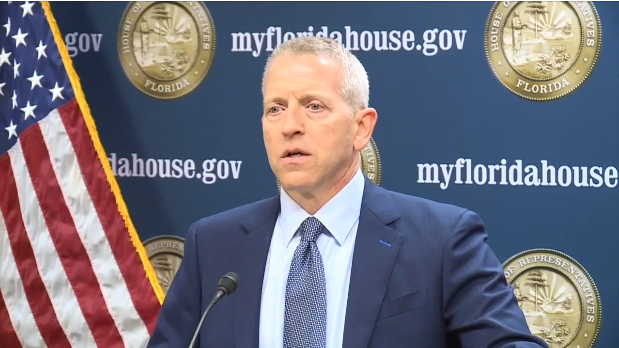
Florida House Speaker Rep. Paul Renner on Thursday announced a plan for universal school choice that if approved would make all students eligible to receive state funds for private school tuition regardless of income or ability. Expansion of education choice in the Sunshine State is a high priority of Gov. Ron DeSantis.
Editor’s note: This article appeared Monday on the74million.org.
Capitalizing on parents' frustration with public schools during the pandemic, Republican governors across the country are putting education savings accounts at the center of their legislative agendas.
Some hope to significantly broaden the concept of ESAs, which allow families to tap state education funding to pay for private school tuition, tutoring and other education-related expenses.
In a “Condition of the State” address earlier this month, Iowa Gov. Kim Reynolds said the state should spend the same amount on students, whether they attend public schools or not.
“We have to set aside this us-versus-them mentality,” she said. “If you want to pretend that this is a war between two different school systems, then you’re not focused on our children.”
Reynolds is one of more than half a dozen GOP governors who seek to join the eight states that currently have ESAs. They say parents across the political spectrum want more control over their children’s education, and blame districts and teacher unions for extended school closures. But critics say the programs undermine funding for the traditional schools attended by the vast majority of students.
“There is a push among some Republican governors to make this a priority,” said Jessica Levin, director of Public Funds for Public Schools, a campaign of the left-leaning New Jersey-based Education Law Center. “But when they are proposed, there is a broad spectrum of groups that come out against them — pastors, rural legislators, parents.”
Governors proposing the programs draw inspiration from the recent expansion of Arizona’s empowerment scholarship and Florida’s long history of taxpayer-funded private school choice.
To continue reading, click here.
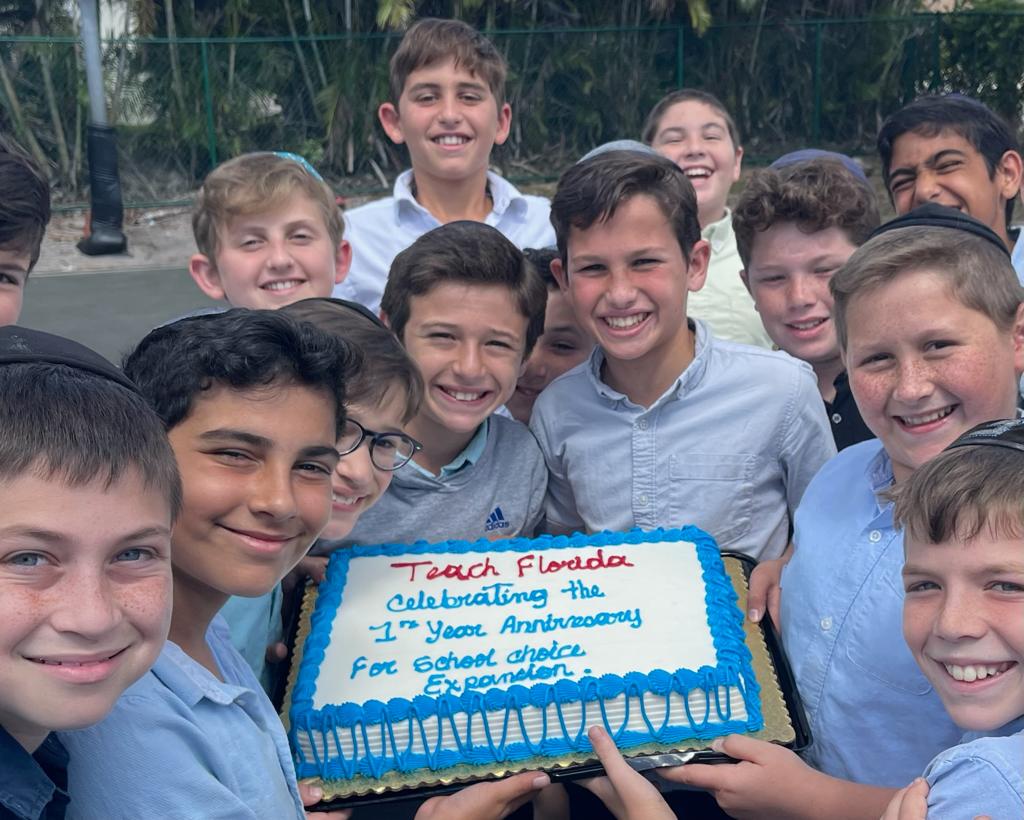 Editor’s note: You can watch a livestream of the celebration here.
Like most birthday parties for 1-year-olds, this one had cake. It featured remarks from guests who were impressed with the past 12 months of growth. It included predictions about continued growth.
What was unusual about this birthday party was that its purpose was to mark the first anniversary of a piece of landmark legislation – Florida House Bill 7045, the nation’s largest expansion of education choice.
“Amazing things are happening, and we’re here to celebrate those amazing things,” said Daniel Aqua, the executive director of Teach Florida, a division of Teach Coalition, a national Jewish organization that promotes secure, strong, and affordable nonpublic schools.
The organization sponsored the event, held at Yeshiva Elementary School in Miami, to thank lawmakers and others who supported the bill and to encourage support for expansion.
Speakers included state Rep. Randy Fine, R-Palm Bay; state Rep. James Bush III, D-Opa Locka; Jim Rigg, superintendent of schools for the Archdiocese of Miami; Dr. Martin Karp, a former vice chairman of the Miami-Dade School Board; and John F. Kirtley, chairman of Step Up For Students, the nation’s largest scholarship funding organization and the host of this blog.
Fine, who sponsored HB 7045, retold a story he has shared on the House floor about his reasons for championing education choice.
“This is the story of two 13-year-old Jewish boys,” he said. The first boy “was the only Jewish boy who went to his government-run school. People would tease him and pick on him. They would beat him up.”
Fine said the bullying escalated to the point that it was no longer safe for the boy to eat lunch in the cafeteria or use the student restrooms. The boy begged his parents to “get me out of this school.” His parents were great parents, Fine said, but “they didn’t have a lot of money.” The boy “had to tough it out” but later graduated and enjoyed a successful career.
Fine said the second boy told his parents that a student had made an anti-Semitic comment, but the school didn’t do much to help. The boy’s parents had money and were able to transfer him to a school where he thrived.
“The first boy was me,” Fine said. “The second boy was my son.”
He added: “That’s not the world we should live in. We should not live in a world where you have to be rich to have options.”
Fine used the story to illustrate his belief that education choice programs should be further expanded to be accessible to all families.
“Every family needs to have the same options,” he said.
Bush, who was one of five House Democrats who supported the Republican majority in voting for HB 7045, thanked all those who supported it.
“I believe we must empower our parents so that they will have the opportunity in the future to determine what is best for their child and their student, and I believe that one size does not fit all,” he said, pointing out that the legislation gave 3,900 students in his district the opportunity attend a school that can address their specific needs.
Rigg, who moved to south Florida from Chicago after the bill had been approved, said it is gratifying to be part of a state that affirms parents’ right to make decisions for their children.
“I’m thrilled to see what happened when our wonderful choice programs were expanded even further,” he said, referring to House Bill 3, which granted automatic eligibility to dependents of law enforcement officers and was approved during the 2022 session.
Kirtley, who helped found the education choice movement in Florida two decades ago, said choice has improved Florida’s overall performance over the past 20 years, even though it drew strong opposition in the beginning.
He recalled how the state’s redefinition of public education prompted a 2014 court challenge. A massive rally two years later clearly showed how popular choice had become for families when more than 10,000 supporters arrived at the state Capitol in Tallahassee to defend their rights.
Kirtley pointed to the crowd's diversity, which represented a variety of races, faiths, and philosophies.
“Your Orthodox community responded. You joined 10,000 people to march and protest this lawsuit, he said. “You are on the edge of a revolution. You are revolutionaries.”
The lawsuit failed in two lower courts and was rejected by the Florida Supreme Court in 2017. Despite the win, Kirtley encouraged audience members to continue to advocate for their right to make the best educational choices for their children.
“We won, but we’ve got to be vigilant,” he said. “We can’t relax.”
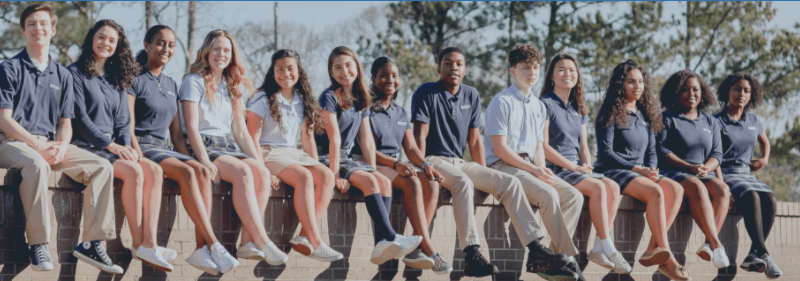
Killian Hill Christian School in Gwinnett County, Georgia, is one of 831 private schools serving more than 153,000 students in the state. A strong community of parents, faculty and staff are dedicated to preparing students to be Christian leaders of the future.
Editor’s note: This article appeared Tuesday on georgiarecorder.com.
A new school voucher bill sponsored by Georgia Senate Pro Tempore Butch Miller moved forward in a Senate committee Tuesday.
Senate Bill 601, or the “Georgia Educational Freedom Act,” would provide a $6,000 scholarship to nearly all of Georgia’s approximately 1.7 million public k-12 students to switch to a private school.
Children should not be limited to the school they happen to live near, said Miller, a Gainesville, Georgia, Republican who is running for lieutenant governor. He argued giving parents the means to send them elsewhere will help them succeed.
“I couldn’t be more thankful for the teachers and employees of our school systems, not just in my community, but around the state,” he said. “However, every child is different, every system is different, and not everyone in our state is blessed with the opportunities my children have had, and I think that we’ve seen through the pandemic that there are more options, parental options for our schools.”
School vouchers have been a perennial issue at the Capitol, with opponents decrying them as a means of funneling public dollars to less accountable private institutions.
Miller argued against that idea with a common talking point in the “school choice” movement. While the proposed law would take away the state portion of the money allocated to educating a transferring student, the school would still receive the local portion of the funding, resulting in a net gain, he said.
To continue reading, click here.

Former Florida Gov. Jeb Bush was a featured speaker at the most recent in a series of webinars on the future of education choice sponsored by the Harvard Kennedy School Taubman Center for State and Local Government.
Is political support for school choice gaining or losing ground?
That topic was the latest in a series of virtual webinars sponsored by the Harvard Kennedy School Taubman Center for State and Local Government. The weekly series, “School Choice in the Post-Pandemic Era,” began Oct. 8 and runs through Dec. 10. Recordings of past webinars and registration information for upcoming ones can be found here.
The series, which kicked off with remarks from former Florida Gov. Jeb Bush, aims to explore whether choice, which had stalled before the pandemic and then took off as school campuses closed and parents scrambled for alternatives, will continue after the coronavirus transitions from an existential threat to a manageable problem.
The latest webinar featured panelists Maureen Downey, a columnist for the Atlanta Journal-Constitution; Beth Hawkins, senior writer and national correspondent for The 74; Alisha Thomas Morgan, the first Black member elected to the Georgia House of Representatives and former superintendent of Ivy Prep Academies, a network of charter schools for girls in metro Atlanta.
The three offered differing perspectives on the issue. Downey said that while she thinks lawmakers will use stories of parent outrage from the pandemic to promote more school choice legislation, many Georgia parents are satisfied with their children’s education after school campuses reopened.
“When I talk to parents, students and teachers, what seems to me is they want to go back to March of 2020. Schools closed down, and they want to go back to the day before. They are really looking to go back to normal times.”
She said most of the concerns she hears from parents now relate to long lunch lines, late school buses, and getting kids into gifted programs.
“I don’ think parents are wanting revolution,” she said.
Hawkins and Morgan had a different take, saying they think parents are frustrated and want something better.
“Systemwide, I think there’s a lot of frustration with the way schools have reopened or not reopened, made decisions about who’s going to quarantine and when they’re going to get out of quarantine,” Hawkins said. “And I think that all of that is going to add up to a very different and, potentially, depending on how some of you all in the audience take it and run with it or don't, robust conversation about choice.”
Hawkins cited surveys that showed an uptick in students switching schools during the pandemic and families opting for creative solutions, including micro-schools and learning pods.
“We’re seeing kind of a bifurcation of these creative alternative options between families that are able to support them with their own means and families that are either accessing them through some sort of civic or municipal services in their communities and families that simply don't know about alternatives,” Hawkins said.
Morgan, a former Democratic lawmaker and the parent of a school-aged child, said she thinks support for school choice has continued to broaden since the start of the pandemic. She recalled how she benefited from school choice while growing up in Miami.
Her mother decided that the school she and her brother were assigned to was not the best fit and arranged for them to attend an elementary school closer to where their father worked. Morgan later attended a performing arts middle school and a magnet high school and then went to Spelman College in Atlanta, a historically Black liberal arts college for women.
“That was the educational foundation that really put me on a much different trajectory, frankly, than most of the people I grew up with … and for me, this is an issue about equity,” she said. “It’s an issue about leveling the playing field.”
Morgan, who sponsored legislation that opened up choice in Georgia, said that while some families have the means to exercise choice by being able to afford a home in a high performing school district or can pay for private school tuition, millions of other families do not have that access.
“I think it's important that we never forget … that millions of children who are in school right now, as we speak, deserve to have options in this country, and it can’t be reduced to, ‘Is it politically expedient or not?’” she said.
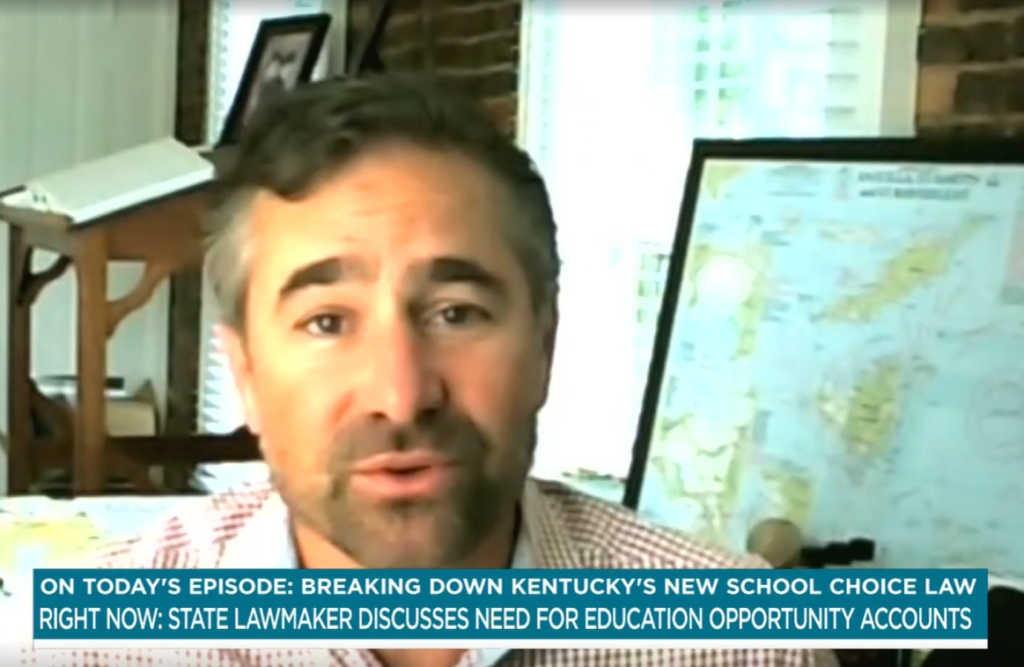 Earlier this year, Kentucky State Rep. Chad McCoy carried a landmark education choice bill creating a new tax credit funded program to passage and then participated in an override of a gubernatorial veto. The education choice win for McCoy’s state came at the end of a multi-year political struggle to create the Education Opportunity Scholarship program.
The legislation, HB 563, created a $25 million tax credit scholarship fund giving eligible families the ability to pay for private school tuition, tutoring and other educational expenses. The bill also gave families the option to chooses a different public school district.
Now, the new education bill is facing a court challenge from the Council for Better Education. The case is due back in court for a motions hearing in the coming weeks.
McCoy discussed the legal challenges of this legislation in an In Focus Kentucky segment. Here is an excerpt of his remarks:
Unfortunately, we've hit a point in our state's history where almost every law that we pass, especially when it's a law that has the opportunity to change the status quo, every one of them seems to end up in court … and it's kind of interesting, because you know, people want change.
Kentucky ranks, pick the number, pick the category, we're always at the bottom of every category. And yet we continue to only want to do what we've been doing, and that, you know, that's the definition of insanity … We've got to attempt to make the changes I think our constituents want.
This is something that when you talk to parents across the state, it doesn't matter if they've got an R or D behind their name, parents support school choice, and we've just got to keep pushing it, and the courts will do what the courts are going to do.
You can watch the full interview here.
You can watch a podcast of Step Up For Students president Doug Tuthill’s interview with McCoy here.
 Editor’s note: This commentary from Mike McShane, director of national research at EdChoice and a redefinED guest blogger, appeared today on forbes.com.
It is difficult to understate just how huge a year school choice has had in state legislatures across the nation.
When I last wrote about it, in late May, 13 states had created five new private school choice programs and expanded 13 existing ones. Those numbers are now up to 18 states creating seven new programs and expanding 21 existing ones. While we have seen years before with large numbers of new programs enacted, we have not seen the depth, breadth, size, and scope of new programs and program expansions that we have seen in 2021.
Several newly passed laws illustrate this point.
In Pennsylvania, legislators approved the largest expansion of the state’s Educational Improvement Tax Credit Program in its 20-year history. An additional $40 million in spending will allow for approximately 13,000 more students to participate in the program.
According to our ABCs of School Choice, approximately 46,000 low- and middle-income students currently participate in the program, receiving scholarships averaging $1,990 from one of 258 scholarship organizations across the state. This new infusion of funding will help scholarship granting organization fund more students, increase the value of scholarships, or some combination of both.
In Ohio, legislators approved multiple school choice program expansions in the state’s budget. The statewide EdChoice scholarship (no relation to my employer) and Cleveland-specific scholarship program saw their value increase to $5,500 per student in grades K-8 and $7,500 per student in high school.
Increases were also made to the state’s income-based scholarship program and to two voucher programs for students with special needs. The legislature also made some administrative tweaks to the programs to make it easier for students to be eligible and removed caps and other hurdles to program participation.
But they weren’t done there.
To read more, click here.
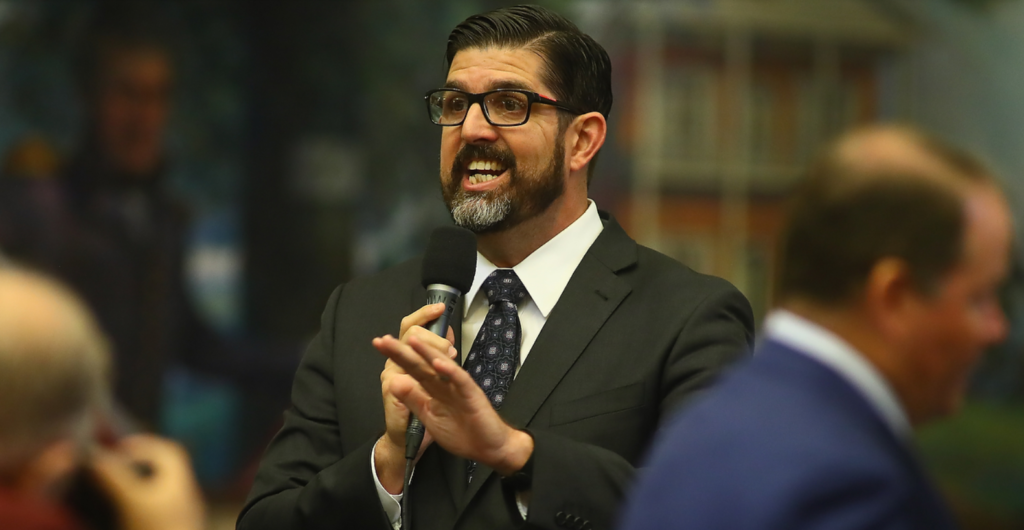 Editor’s note: In his closing argument for a landmark bill that would expand education choice options for Florida families, Diaz, R-Hialeah, said he believes all his colleagues want the state to have the best possible education system; they just hold different views on how to achieve that goal. He then made the case for House Bill 7045, which would expand options for about 61,000 more students. The bill passed on a 25-14 vote and is headed to Gov. Ron DeSantis for his signature. It would take effect July 1.
Thank you, Mr. President. And when we talk about these school choice issues, I think everyone in the room has the best intent. Every senator wants to have a better education system for our state, for every child. But the question we have here is a philosophical choice: Do we trust our families to make the right decisions for their students; do we trust our parents to be able to make the right decisions for our students?
COVID has exposed this even further because parents have seen the education of their children go on, sometimes on their dining room table, and we ask the question once again. We should be in the business of funding students, not institutions.
Having said that, the incredible work of our budget chair and our education budget chair has increased the amount of money that we’re putting in for teacher salaries by $50 million to a total of $550 million, which is not affected at all by this bill, nor is it a drain. None of these monies will be used for this. We also have an increase through our per student funding. And additionally, we have decided that we are going to give our teachers, all our teachers, our public schoolteachers, a thousand dollars bonus this year.
So, when it comes to the issue of funding - Senator (Dennis) Baxley mentioned it – it is the largest piece; public education is the largest piece of our general revenue budget. If you take out federal funds that make health care the largest piece, we fund education at the largest clip in the budget from our general revenue funds.
This bill doesn’t change that. All it does is invest more in the choices that parents can make for their child. And especially when you talk about students with unique abilities. This provides a stable growth pattern for those students that are currently in the Gardiner Scholarship, and it also protects the exact amounts that they are receiving today. Every single student with a Gardiner Scholarship is protected. Every single student with a McKay Scholarship is protected.
What it does do in the change is increase the amount of dollars that we provide for those students who have the most severe disabilities. The highest categories are increased by $4,127 per year and $4,850 per year, respectively.
And while with change there is concern, I can tell you I have looked at these changes. And in my professional opinion, with having dealt with this, this is something that is a change that in the long run will continue to provide stability for these students and continue to provide these parents with the choices and flexibility they need to provide the best education for these children.
So, when we have these debates on the floor, understanding that everyone comes from a good place, this is a choice. This is a choice we’re making. Do we believe in our families? Do we believe in our parents making the best decisions for our children?
So, I ask you to support that choice today on this bill.
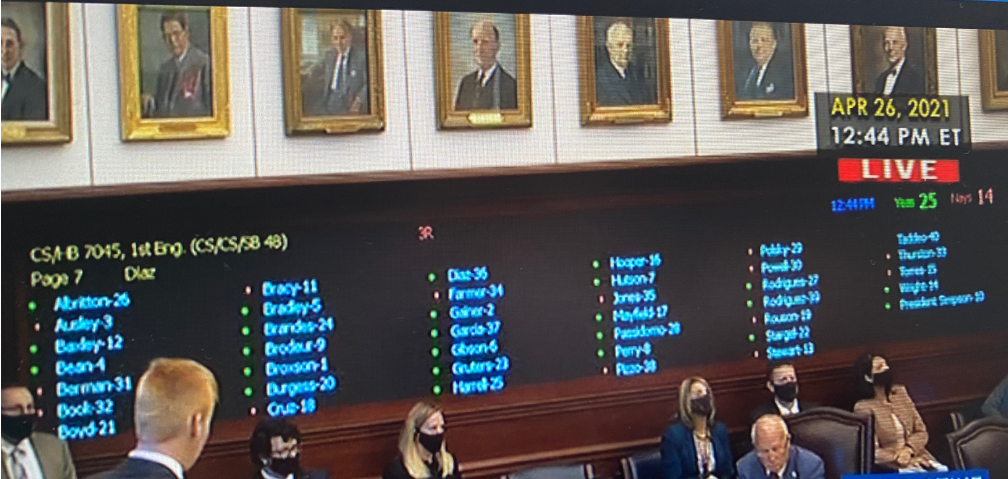
Florida state senators voted 25 to 14 today to approve an education bill that would align and streamline the state’s K-12 scholarship programs. The bill, which won final passage in the House last week, now heads to Gov. Ron DeSantis for his signature.
“I’m pleased to see the Senate stand with Florida parents who overwhelmingly support expanding eligibility for these popular school choice programs,” said Senate President Wilton Simpson, R-Trilby. “We know that parents are their children’s first and best educators, a fact that has certainly been highlighted over the last year.”
Simpson underscored his belief in the importance of making school choice an option for every family.
“This important legislation further streamlines our existing school choice scholarships and expands eligibility for lower income families, families of students with unique abilities, adopted children, and children whose parents serve in our military,” he said.
Sen. Manny Diaz Jr., R-Hialeah, who sponsored the Senate version of the bill, last week agreed to substitute that version with HB 7045, which would merge the state’s two scholarship programs for students with unique abilities, McKay and Gardiner, and combine them with the Family Empowerment Scholarship program approved in 2019. (Editor’s note: Families who want to learn more about how to apply for school choice scholarships can learn more here.)
One category of the Family Empowerment Scholarship would serve students with unique abilities and special needs while the other would continue to serve lower-income families.
“When we talk about these school choice issues, I think everyone in the room has the best intent,” Diaz said in his closing arguments for HB 7045. “But the question we have here is a philosophical choice. Do we trust our families to make the right decision for their students? Do we trust our parents to make the right decisions for our students?”
Diaz added that the coronavirus pandemic afforded parents a closer look at how their children were being taught, and as a result, many parents are demanding more opportunities for customization. The bill, he said, would allow that.
“We should be in the business of funding students, not institutions,” he said.
Diaz pointed out in response to opponents’ arguments against the bill that the state still supports district schools and has set aside $550 million for them in this year’s budget, along with $1,000 bonuses for teachers using federal COVID relief funds. He pointed out that the bill doesn’t take away any of that.
“All it does is invest more in the choices that parents can make for their child,” he said.
Diaz added that the bill ensures that all families currently receiving scholarships for students with unique abilities and special needs would receive the same amount of money or more and that the bill ensures long-term stability for these programs.
The bill would leave intact the Florida Tax Credit Scholarship program, which is funded by corporate tax donations, and the Hope Scholarship program for students who have experienced bullying at their district schools. The bill would simplify eligibility requirements by aligning qualifying income levels of the Florida Tax Credit Scholarship with the Family Empowerment Scholarship. Each program currently has different income requirements.
The bill also would provide one-stop shopping for families by placing management of the Family Empowerment program under nonprofit scholarship organizations, which include Step Up For Students, host of this blog.
Under the bill, families currently receiving flexible spending dollars under the Gardiner program would continue to receive their scholarships as education savings accounts; McKay’s traditional scholarships would be converted to education savings accounts starting in the 2022-23 school year. Families currently participating in each program would receive whichever dollar amounts were higher, whether that was in current law or in HB 7045.
HB 7045 also would make it easier for lower-income families to qualify for their category of the Family Empowerment Scholarship program by eliminating a requirement that students attend a district school the previous year to qualify for the scholarship. That requirement resulted in some families whose incomes took a hit due to a tragedy or during the pandemic from being turned down for scholarships that would have helped them keep their children in their private schools.
The bill also would make more families eligible by raising household income limits to 375% of the federal poverty level for both the FTC and FES. That would allow a family of four whose income was just under $100,000 to qualify. However, the bill gives priority to families earning 185% of the federal poverty level, which totals slightly more than $49,000 for a family of four.
In defending the bill from opponents who argue that choice programs drain money from public schools, Sen. Dennis Baxley, R-Lady Lake, expressed concern that long-disproved myths continue to be circulated even though there is no evidence choice has harmed district schools.
“It’s amazing how some stories still prevail even though we have 20 years of demonstrated change,” he said. “This is not the evil war. This is in fact the war to save our children’s future.”
Sen. Joe Gruters, R-Sarasota, praised Diaz for championing education choice.
“I think you’re leading the way for the whole country,” he said.
Gruters said HB 7045 should not be the end of the road for choice.
“It’s my hope we continue to expand these scholarships so we have universal school choice,” he said. “Every parent should have the right and the choice to send their children to whatever school they see fit.”

