I received some interesting responses to last week’s post where I showed some math on how few votes it could have swung control of the Arizona State Senate in the 2024 elections and noted that one of the Arizona political parties having proposed eliminating five popular choice programs may have helped Republicans expand their previous narrow majority. One response focused on a relative who voted for Kamala Harris for president but only voted for state legislative Republicans because her grandchildren participate in the Empowerment Scholarship Program. I had not even considered grandparents and relatives (other than parents) of students participating in choice programs, but they are indeed out there and are registered to vote.
Another response noted that the potential coalition against private choice was much larger than that in favor of private choice in Arizona, given that far more students attend school districts than participate in choice programs. The latter part of this is of course true, but I noted that both absolute and per pupil spending in Arizona school districts stands at or close to all-time highs, making it a fairly latent constituency. Notwithstanding a whole lot of windy rhetoric, no one is proposing to eliminate district schools in Arizona (or anywhere else).
Supporters of private choice programs, on the other hand, have watched as Gov. Katie Hobbs proposed eliminating the programs that they rely upon, making them more of an active constituency. I had a couple of readers inquire as to why I did not include charter school students and families. To my knowledge no one has proposed eliminating Arizona charter schools, so I view them as a mostly latent constituency, at least until someone is reckless enough to threaten their existence.
I put together the chart below based on a few different sources of information. Some numbers are from 2025; the tax credit numbers are from the state’s 2023 report. The tax credit donor numbers only count donations, rather than the number of members of the families who made the donation. There is certainly some double counting going on with the original and switcher credits, as many people claim both. The parent figure is an estimate that assumes 1.5 parents per ESA student in 2025 and does not consider the possibility of other relatives. The below list is by no means exhaustive, or even close to it. Also included are the number of swing votes each losing candidate would have needed to win in the swing Arizona Senate races.
Here goes:
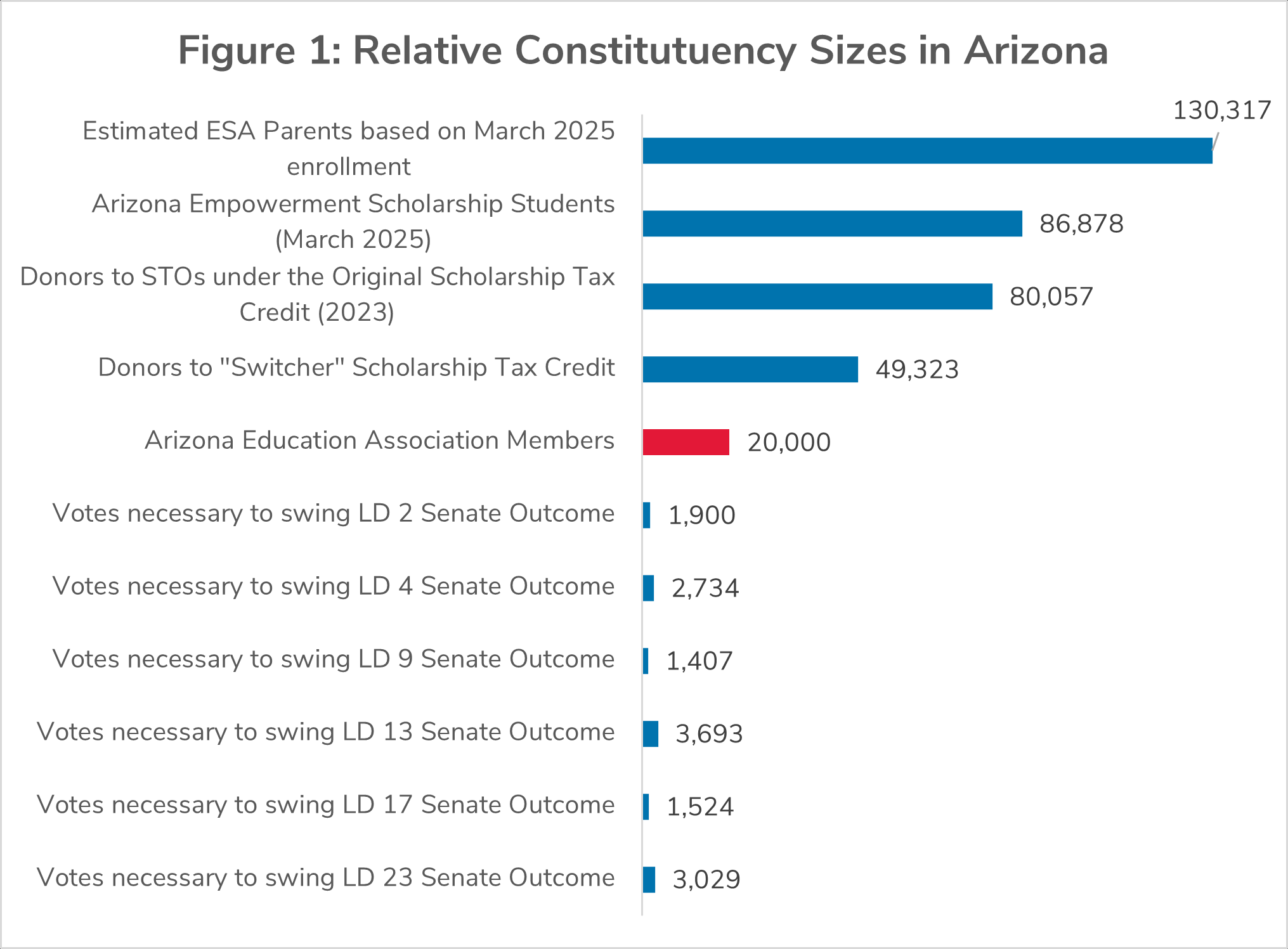
By November 2026, these numbers are going to look even less forgiving than they do now. There are a whole lot of registered Democrats in those larger numbers. It might not be a great idea to give them an incentive to split their tickets to vote in their kids’ interests in legislative races.
By the way, did I mention that the margin of victory in Arizona’s 2022 governor’s race was 17,117 votes and, in the attorney general race, the margin was 280 votes?
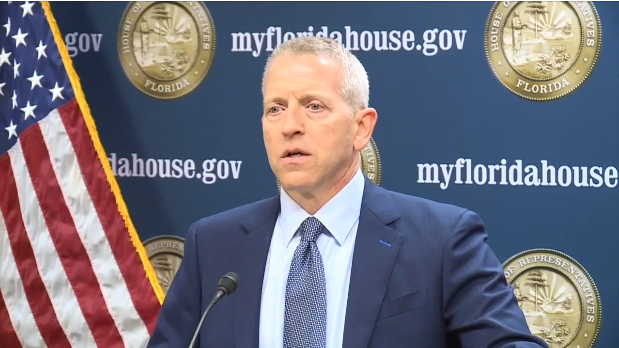
Florida House Speaker Rep. Paul Renner on Thursday announced a plan for universal school choice that if approved would make all students eligible to receive state funds for private school tuition regardless of income or ability. Expansion of education choice in the Sunshine State is a high priority of Gov. Ron DeSantis.
Editor’s note: This article appeared Monday on the74million.org.
Capitalizing on parents' frustration with public schools during the pandemic, Republican governors across the country are putting education savings accounts at the center of their legislative agendas.
Some hope to significantly broaden the concept of ESAs, which allow families to tap state education funding to pay for private school tuition, tutoring and other education-related expenses.
In a “Condition of the State” address earlier this month, Iowa Gov. Kim Reynolds said the state should spend the same amount on students, whether they attend public schools or not.
“We have to set aside this us-versus-them mentality,” she said. “If you want to pretend that this is a war between two different school systems, then you’re not focused on our children.”
Reynolds is one of more than half a dozen GOP governors who seek to join the eight states that currently have ESAs. They say parents across the political spectrum want more control over their children’s education, and blame districts and teacher unions for extended school closures. But critics say the programs undermine funding for the traditional schools attended by the vast majority of students.
“There is a push among some Republican governors to make this a priority,” said Jessica Levin, director of Public Funds for Public Schools, a campaign of the left-leaning New Jersey-based Education Law Center. “But when they are proposed, there is a broad spectrum of groups that come out against them — pastors, rural legislators, parents.”
Governors proposing the programs draw inspiration from the recent expansion of Arizona’s empowerment scholarship and Florida’s long history of taxpayer-funded private school choice.
To continue reading, click here.
 Editor’s note: This commentary from Jonathan Butcher, Will Skillman Fellow in Education at The Heritage Foundation and a reimaginED guest blogger, and David P. Hardy, Distinguished Senior Fellow at the Commonwealth Foundation, appeared Nov. 4 on the Commonwealth Foundation’s website.
Pennsylvania’s leading gubernatorial candidates both support Lifeline Scholarships, a proposal to give students in underperforming schools around $7,000 in education funding. This is good news for Pittsburgh students, especially for those trapped in schools that aren’t meeting their needs.
Pennsylvanians are desperate for fresh leadership that will finally prioritize students above special interests. Bought off by government unions, current politicians want to force families to send their students to their zip-code-assigned public school—all while they benefit from the best private education that money can buy.
Take top Washington politicians like President Biden, Vice President Kamala Harris, and House Speaker Nancy Pelosi, who trumpet praises for public schools but send their own children to private institutions. Pennsylvania Gov. Tom Wolf chose to attend an elite, private boarding school in the 1960s but actively opposes scholarship programs that give other students a similar choice.
If politicians exercise educational choice for their children, they should support giving their constituents access to the same opportunities. Without it, students are confined within a broken system that assigns poor children to the state’s worst public schools.
Pittsburgh’s Woodland Hills School District, for example, was originally formed in the 1980s as part of a desegregation effort but has failed to provide true opportunity and equality to its students.
Despite increases in funding, Woodland Hills struggles with failing academic performance. While per-student funding has increased over 50 % in the past 10 years, the latest standardized test scores show dismal results. Of eighth graders in the district, 95 % are not proficient in math and 73 % are not proficient in English.
Woodland Hills is just one of many neighboring districts that are struggling. Allegheny County is home to over 40 schools that rank in the bottom 15 % of public schools in the state. Close to 80 % of students in underperforming schools are minority and economically disadvantaged, effectively trapped in their assigned public schools.
Government unions routinely argue that underperforming public schools just need more taxpayer funding, but these calls distract from fundamental, structural flaws in the system. What’s more, Pennsylvania has already tried statewide funding increases and has little to show for it.
Since 2013, total taxpayer spending on Pennsylvania public schools has skyrocketed 32 % to over $33 billion. In addition to their ever-growing budget, state public schools received over $6 billion in federal taxpayer money during the COVID-19 pandemic. Far from being underfunded, Pennsylvania public schools spend over $4,000 more per child than the national average.
What are the results of all this spending? Recently released scores from the Nation’s Report Card (or NAEP) show a 12-%age point decline in Pennsylvania eighth-grade math scores between 2019 and 2022.
While money can protect bureaucrats and pad special interests, it cannot buy parent satisfaction or student achievement. A Gallup Poll from September finds that nearly 25 % of Americans are “completely dissatisfied” with public education. The level of overall satisfaction is at its lowest point in 20 years.
In Pennsylvania, specifically, parents appear to be demonstrating dissatisfaction by choosing schools outside the assigned system. Public school enrollment has dropped by almost 7 % since 2000. In some districts like Woodland High, enrollment declines in the last decade are at nearly 20 %.
Meanwhile, polling shows an overwhelming majority of Pennsylvanians support giving families more educational freedom.
If lawmakers want to help every child, then they should give all families the chance to choose how and where their children will learn. Earlier this year, the Pennsylvania House approved Lifeline Scholarships, which would give families in underperforming schools funding to purchase textbooks, hire a personal tutor, pay private school tuition, and more.
Right next door in West Virginia, families already have these options. Pittsburgh families should too.
Lifeline Scholarships isn’t about partisan politics, it’s about giving every child a better future. While it’s good news that both gubernatorial candidates are signaling support, voters should hold every candidate accountable for where they stand on educational opportunity.
Merely increasing funding for a broken system isn’t fair for students that are stuck in it. Pennsylvania’s leaders—especially those who benefit from educational opportunity in their private life—should empower all students with the freedom to choose.

