 This commentary from redefinED guest blogger Jonathan Butcher, senior policy analyst at the Heritage Foundation’s Center for Education Policy, and center director Lindsey Burke, first appeared on Tribune News Service.
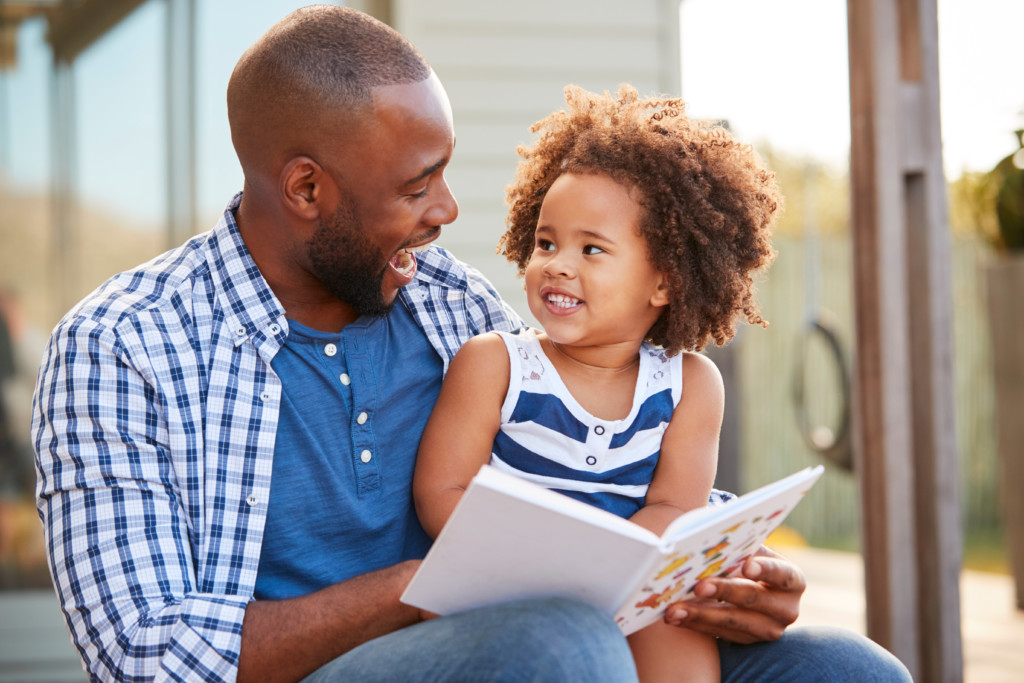
When it comes to her daughter Emerson’s education, Sarrin Warfield says, she’s “in it to win it.”
When Emerson’s assigned school in South Carolina announced plans for virtual learning this fall, Sarrin says she asked herself, “What if we just made this in my backyard and made a school?” After talking with friends who have children the same age as Emerson, Sarrin said, “Let’s do it. Instead of it being a crazy idea, let’s own this process and be really intentional about doing this and make it happen.”
Sarrin is one of the thousands of parents around the country who formed learning pods when assigned schools closed. By meeting in small groups with friends’ and neighbors’ children, these pod families could try to keep at least one of part of their child’s life from being upended because of COVID-19.
The time-honored practice of school assignment did little to help the Warfields — or thousands of other students around the U.S. during the COVID spring … and then COVID summer and fall. In the beginning of the 2020-2021 school year, officials in some of the largest districts in the country reported significant enrollment changes from the previous school year, especially among younger students.
Officials in Mesa, Arizona, reported a 17% decrease in kindergarten enrollment after the first two weeks. In Los Angeles, Superintendent Austin Beutner reported a 3.4% decrease in enrollment, but said another 4% of students couldn’t be found, making the change closer to 7%. Figures are similar in Broward County, Florida, and Houston. In large school districts, these percentages amount to over 10,000 children per district.
Some of these changes can be attributed to learning pods. But officials in large cities and even those representing entire states simply reported having no contact with many students.
Under normal circumstances, if thousands of children who were once in school suddenly were nowhere to be found, this would be an issue of national concern. Hearings would be held, and officials would demand to know what is happening with schools around the country. Loud calls for change would be heard.
But life during the pandemic is anything but normal.
Likewise, if more students around the country were failing — say, twice the figure from last year — this would also be worrisome, right? From Los Angeles to Houston to Chicago to Fairfax, Virginia, school officials and researchers are now reporting that the proportion of students earning D’s and F’s in the first semester has increased, doubling in some cases, in comparison to the last school year.
Yet across the U.S., many school districts, especially those in large metro areas, remain closed to in-person learning for some if not all grades and may not reopen at the start of 2021.
According to the Pew Research Center, 72% of parents in lower-income brackets report being “very” or “somewhat” concerned this fall that their children are “falling behind in school as a result of the disruptions caused by the pandemic.” With thousands of students not in class, even virtually, and falling grades among those who are attending, who can blame them?
For taxpayers and policymakers looking for lessons in the pandemic, the utter failure of school assignment systems to provide quality-learning options to all students, especially the most vulnerable, is clear.
The quality and consistency of the education a child received during the pandemic has been dependent on the attendance boundary in which that child’s family lives. At the same time, so many of the issues plaguing education during the pandemic — and for that matter, the entire century leading up to the pandemic — are rooted in policies that fund school systems, rather than individual students.
Allowing dollars to follow children directly to any public or private school of choice is a critical emergency policy reform that states should pursue. Such a policy change is overdue.
Since it’s anyone’s guess how soon life will get back to normal, we can’t wait any longer for the system to fix itself.
 Editor’s note: During the holiday season, redefinED is reprising the "best of the best" from our 2020 archives. This post originally published June 9.
 The debate surrounding Black Lives Matter versus All Lives Matter has been at the forefront of our national conscience for more than a decade. Those who lament support for the former, who say we shouldn’t disregard the latter, miss the point.
The harsh reality is that all lives do matter, but those with privilege must recognize that black lives are negatively impacted at a disproportionate rate.
This is true of many aspects of black lives – housing, employment, wealth, healthcare and most important, education.
Over the past week, outrage and civil unrest followed the video of George Floyd yelling, “Please, I can’t breathe,” while a white police officer pressed his knee on Floyd’s neck for more than 8 minutes, ultimately leading to Floyd’s death. This video shines a light on the experiences of millions of black Americans who have witnessed and experienced systemic oppression and racism for decades.
The video is forcing our country to recognize that injustice is prevalent in our country with black people typically bearing the brunt of it.
As a black man, and father of two black boys, I deal with these consequences and challenges every day. Whether it is the fear of lights and sirens blaring behind our car or my boys being mistreated and miseducated in school, the mental anguish is a daily struggle.
My 10-year old, while watching these events unfold before our eyes, asked, “Daddy, if black people are killed on the street, does that mean there won’t be as many in school?”
He’s 10 years old.
Peaceful protests have attempted to address injustice, and now we are witnessing the overflow of emotion.
Onlookers are dismayed by constant media coverage of burning and looting cities while ignoring another kind of looting.
The looting of the potential and potency of black students by a system that has failed them for decades.
Opponents of education choice: Your suppression of parental choice contributes to the oppression of students, especially those who are black and low income.
Those who value black lives must hold local leaders, board members and legislators accountable for lack of realistic solutions for inequity in education.
Approximately one in three black students are reading proficiently in Florida. Where is the protest against that?
Don’t rage against the immediate, unnecessary execution and/or incarceration of an unarmed black man while ignoring the pillar that empowers us as a society – education.
Don’t ignore innocent black and low-income children who, when given equitable options, have exceeded expectations and excelled.
The white moderate approach to education, racism and oppression of underserved populations, particularly blacks, reflects a satisfaction with the status quo. Dr. Martin Luther King Jr once said that the white moderate is more “devoted to order than to justice.”
If you are silent about one area of injustice, you are complicit in all of it.
I have protested, fought, and advocated for the rights of all students, but in education, just like in society, black students are disproportionately suffering. If we do not wake up to that larger context, we are doomed to continue this trend.
The murder of another unarmed black man is unnerving, vile, and inhumane. The lack of attention to educational equity is equally appalling.
You cannot depict this on a video or Facebook Live post, but if you are not at the forefront of this movement then you are an accessory to a crime that will continue long after these protests are over: educational inequity.
The revolution has begun – which side are you on?
 Editor’s note: During the holiday season, redefinED is reprising the "best of the best" from our 2020 archives. This post originally published July 20.
Come gather 'round people
Wherever you roam
And admit that the waters
Around you have grown
And accept it that soon
You'll be drenched to the bone
If your time to you
Is worth savin'
Then you better start swimmin'
Or you'll sink like a stone
For the times they are a-changin'
-- Bob Dylan
We at redefinED and others have been writing for years about the rise of the micro-school movement. Five years ago, an article in Wired magazine, titled The Techies Who Are Hacking Education by Homeschooling Their Kids, discussed the rise of homeschooling in Silicon Valley, quoting Jens Peter de Pedro, an app designer from Brooklyn:
“There is a way of thinking within the tech and startup community where you look at the world and go, ‘Is the way we do things now really the best way to do it?’ If you look at schools with this mentality, really the only possible conclusion is ‘Heck, I could do this better myself out of my garage!’”
Matt Kramer, CEO of the Wildflower Foundation, which supports a network of micro-schools, told Education Next in 2017:
“We’ve seen a 30-year decline in teacher satisfaction to an epically low level. Micro-schools offer a creative new way of thinking about teachers acting like social entrepreneurs.”
You didn’t need to be a soothsayer to see this was going to get much bigger.
“It wouldn’t surprise me if, 5 to 10 years from now, everyone looks at this and thinks, ‘That grew a whole lot faster than I thought it could,’” observed Andy Calkins, deputy director of the Next Generation Learning Challenges, in the same article. “There is a slice of the market that is not being served by public education. They’re saying, ‘The public schools don’t work, [and] I can’t get into the charter schools.’”
Simply visiting a few of these schools is enough to convince you that they would grow. They’re fun, but their approach to the education equity issue is just as obvious.
Step Up For Students’ director for policy and public affairs Ron Matus gave us multiple examples of how Florida micro-schools are leveraging scholarship programs to allow disadvantaged students to access teacher-led micro-schools (see here and here). These education innovators have created a path for the micro-school movement to proceed in an inclusive and diverse fashion.
And then the pandemic struck, slamming the pedal to the metal.
The Washington Post reported last week in an article titled, For parents who can afford it, a solution for fall: Bring the teachers to them:
Fed up with remote education, parents who can pay have a new plan for fall: import teachers to their homes. This goes beyond tutoring. In some cases, families are teaming up to form “pandemic pods,” where clusters of students receive professional instruction for several hours each day. It’s a 2020 version of the one-room schoolhouse, privately funded. Weeks before the new school year will start, the trend is a stark sign of how the pandemic will continue to drive inequity in the nation’s education system. But the parents planning or considering this say it’s an extreme answer to an extreme situation.
And this weekend, education writer JoAnne Jacobs shared a post from a Berkeley, California, mom that read in part:
If you are not a parent/in a mom’s group, you may not be aware that a kind of historic thing is going on right now. This week, there has been a tipping point in Bay Area families looking to form homeschooling pods. Or maybe 'boiling point' might be a better term.
Sound niche? It's actually insanely involved and completely transformational on a lot of levels. Essentially, within the span of the last 48 hrs. or so, thousands of parents (far and away mostly moms because that's how these things work) are scrambling through an absolute explosion of Facebook groups, matchups, spreadsheets, etc. to scramble to form homeschooling pods.
These are clusters of 3-6 families with similar aged (and sometimes same-school) children co-quarantined with each other, who hire one tutor for in-person support for their kids. Sometimes the tutor in question is full time and sometimes part time/outdoor classes, depending on the age of kids and individual circumstances … Suddenly teachers who are able to co-quarantine with a pod are in incredible demand.
This is maybe the fastest and most intense PURELY GRASSROOTS economic hard pivot I've seen, including the rise of the masking industry a few months ago. Startups have nothing compared to thousands of moms on Facebook trying to arrange for their kids' education in a crisis with zero school district support.
I swear that in a decade they are going to study this because I have never seen an industry crop up and adapt so fast. Trends that would typically take months or years to form are developing on the literal scale of hours.
The writer goes on to acknowledge the equity elephant in the room: Only families with means are going to participate in this trend, absent programs to assist disadvantaged students:
The race and class considerations are COMPLETELY BONKERS. In fact, yesterday everything was about people organizing groups and finding matches; today the social justice discussion is already tearing these groups apart. For one thing, we're looking at a breathtakingly fast acceleration toward a circumstance where educational access and stratification is many times more polarized even than it already is.
Distance learning is hell on all children. Suddenly high-income families are going to all supplement it with quarantine pods and private tutoring, and low-income families will be stuck with no assistance for 8 yos who are supposed to be on zoom for 5 hrs. a day. This is on top of already not having a way to work with children stuck at home, and being more exposed with "essential" jobs.
For another, the most obvious solution to this, i.e. individual family clusters scholarshipping disadvantaged kids into their pods, doesn't even work at scale because there is a high correlation between kids who can't afford tutors and kids in families where strict distancing rules just aren't an option. None of us have any idea where this is going to go. All possible actual solutions require government-level intervention beyond what school districts can do, and that's clearly not going to happen. I don't even have a kid the right age, but I'm volunteering in some places around this and the situation is just ... a really major story.
A major story indeed.
What can be done? Oklahoma Gov. Kevin Stitt included scholarships in the use of federal emergency aid. More governors should follow suit. Moreover, states need to allow K-12 funding to follow children now more than ever.
In the meantime, you better start swimmin’ or you’ll sink like a stone. The age of K-12 self-reliance is here. Forced by harsh circumstances, it has arrived while our ability to include equity remains tragically limited.
 “I’m Sally Common. My spouse, Bill, and I began married life in a cozy apartment on the east side of Chicapoulus. When the kids came along, we counted our beans and headed north to suburban Refugia. Its worked out fine. We feel more at home here in our not-so-fancy-but-okay house. The neighbors are cool and seem to care about basic things. The teenagers have fun without hurting anybody, even as they wait for the present school mess to get straightened out.
We’ve helped organize a first grade “pod” for little Louie. Of course, it’s all temporary; the public school here was, and will be, fine again. We hear a lot of stuff about school choice, but we’ve already made ours. Of course, we’re Democrats and support the public schools for everybody, and especially the poor.”
Sally and Bill are Democrats, just like me, and that explains their rejecting school choice for the common folk. Really? You say we are the party of the poor; hence, we hold that they must go to public school. Is this a sequitur? Is there something peculiar here?
I suppose it all depends. Maybe the children of struggling parents are better off if we just keep mom and dad completely out of the process. Is that our idea? Is the decision about young Mary Lou more wisely left in the hands of professional state officials instead of her indigent parents?
That could be plausible to some minds if every child and parent were to be examined by experts to determine whether the decision could safely be left in their hands. It would be plausible but hideous. Happily, that system is too expensive to become real.
Instead, the child – stranger to this new world – will show up at her anointed school, say a fretful farewell to her parents, then experience … whatever. This fateful decision about a vulnerable child will have been made by whom? Nobody.
I suppose one could say this child’s fate was already determined by those 19th century designers of this seizure of the child by a force majeure. They lived in fear of those immigrant families, mostly poor, with their un-American ideas of religion and the good life.
These elites decided that unless you can afford to buy your child’s way out, here is where he or she goes to school. Period!
Of course, we can hardly blame the origin and staying power of these inner-city “public” schools on us Democrats alone. A variety of changing political and social realities were to inspire our nation’s invitation to the comfortable parent to separate their child from the struggling mob. I suppose it was inevitable that the teacher union brass eventually would lend its hand to this educational conscription of our poor, and with it, their physical and political separation from the middle class.
Is there hope that my political party will ever begin to represent and honor the poor family by subsidizing its choice of school? The current educational turmoil could imaginably work to deliver the lower-income parent. How will we Democrats react a decade hence when the Supreme Court decides that the “Blaine” amendments in the constitutions of half our states violate the first and fourteenth amendments?
Such a decision will empower and invite state legislators to subsidize the choice of private schools by lower-income parents. We can guess the reaction of the union bosses. But just how will my political party respond?
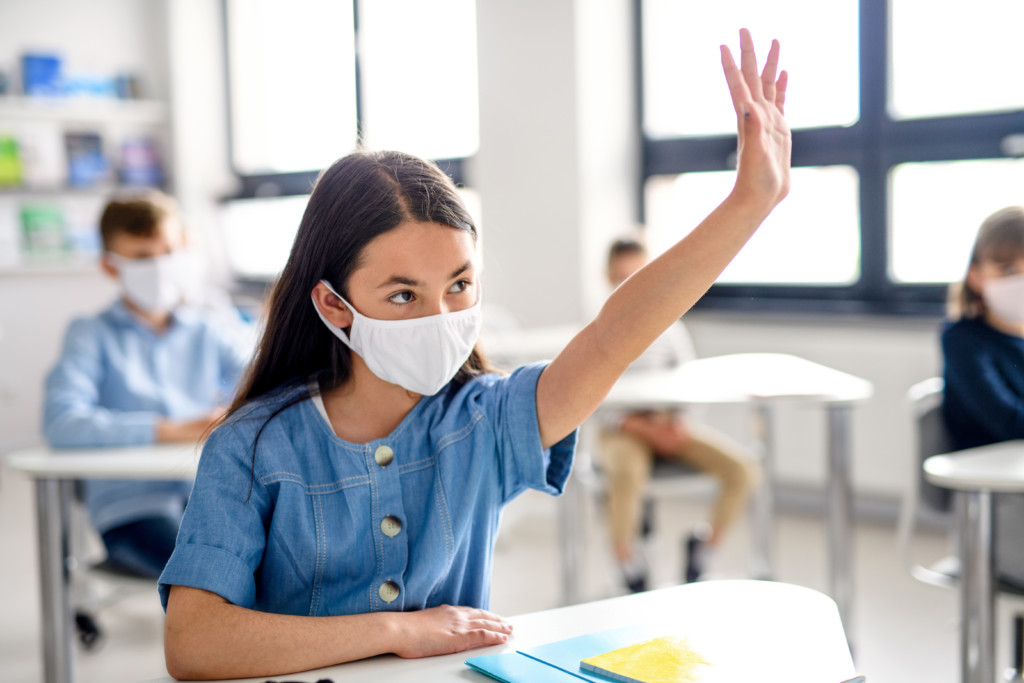 Editor’s note: There’s no one-size-fits-all answer to educating students in person during a pandemic. But schools and districts across the country have found things that work for them and that may be options for other places as they navigate the months before widespread vaccination. This article originally appeared Dec. 2 on politico.com.
There’s no blueprint for how or whether to open schools during a pandemic, leaving districts across the country to draw up their own.
What has emerged is a patchwork of strategies that reveals lessons about what works — and what doesn’t. Or what has worked at least sometimes. Big districts with deep pockets point to regular COVID-19 testing for teachers and students as the only option. Other districts are giving families — and teachers — a choice in the matter, leaving it up to individuals if they want to reenter classrooms. Some schools are prioritizing ventilation, contact tracing and access to computers at home.
Districts across the U.S. seem to agree that the most at-risk students should have access to in-person learning first and foremost, and that a hybrid attempt, allowing at least some in-person teaching, is better than a rush back to the real thing or nothing at all.
Education equity concerns are starting to edge out virus concerns, and states are weighing the risks and rewards of reopening schools. Coming off of little national guidance other than President Donald Trump’s imperative to open schools, the pressure is on President-elect Joe Biden to deliver his campaign promise of more emergency funding for schools and “clear, consistent, effective” national guidelines.
Until then, here’s what schools can learn from districts that have forged ahead on their own.
Continue reading here.
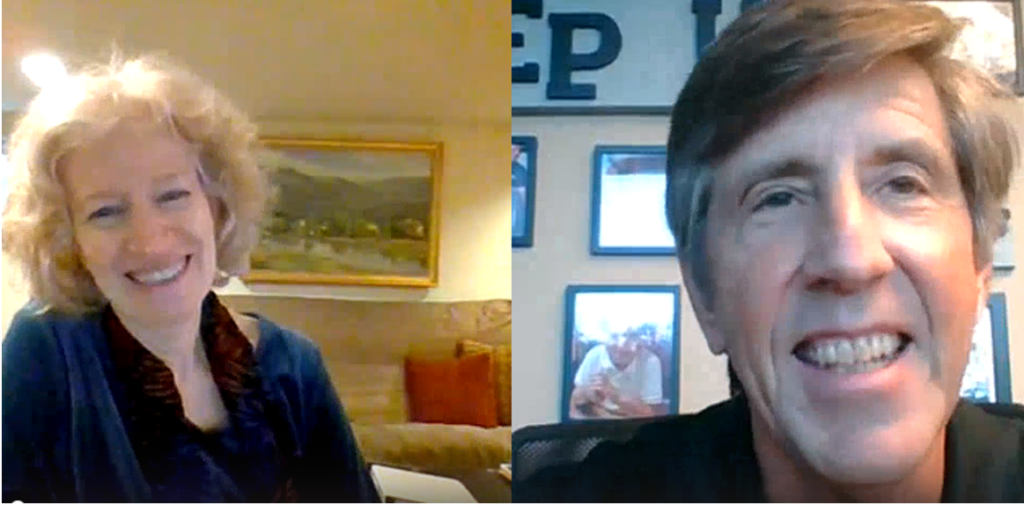 On this episode, Tuthill talks with writer, lawyer and legal historian Wexler, author of The Knowledge Gap: The Hidden Cause of America’s Broken Education System – and How to Fix It. Wexler argues in her book, published in 2019, that the modern “standard” approach to teaching only further increases inequities for students who do not begin their lives with education advantages at home.
The two discuss how schools should operate differently and focus on coherent curriculum that extends through grade levels. Wexler believes all individuals use their “background” knowledge subconsciously to make sense of the world around them, and that many students, through no fault of their own, enter school without that knowledge and continue to fall behind.
"Teachers have told me over and over again that it is the ‘low achievers’ who flourish the most under the content-focused, knowledge-building approach. They are the ones who make the most insightful contributions to class discussion ... What's really striking is the equity (the approach creates).”
EPISODE DETAILS:
· What Wexler’s book has to say about what’s “broken” in the education system
· The theory that skill development driving test scores has the opposite effect
· How Wexler views modern writing instruction and how she thinks it should change
· Wexler’s concern about going too far toward individualized or customized learning
 Hayley Lewis, a former public school teacher, wrote an important piece called, “Why I quit teaching in the public school system (it wasn’t just COVID).”
Here is an excerpt:
The American public-school system is beyond repair. I honestly don’t know where you even begin attempting to fix a system that’s so systematically flawed. Policies are made by those who haven’t been in a classroom in years, if at all, and show the extreme disconnect between the theoretical and the everyday reality that is the life of a teacher and their students.
The chances of having a high-quality curriculum are next to nothing, and if you’re lucky enough to have something that’s worthwhile, there are so many other hoops to jump through and issues that arise, it makes it virtually impossible to teach effectively and to truly prioritize the learning of children.
The quality of public education, like anything, varies widely. Many of the most dedicated and successful, and yes, even the most innovative educators I have had the pleasure of meeting, work in the district system. Like anything with widely varying quality the well-to-do tend to get the better part of it, and the poor the worst. That’s why it is vital to address equity concerns in the design of choice programs.
The “better part of” something, however, doesn’t ensure that it is actually high quality. You should read Lewis’ entire piece, but in essence, she describes a work environment in which high-quality instruction happens in only limited spurts and even then, despite the system rather than because of it.
Large numbers of students in classrooms make it nearly impossible to provide differentiated instruction — the quantity of children is just too high to get to in a day. Teaching five subjects to 30 different children, all with varying levels and learning styles is nearly impossible in a perfect world scenario.
But throw in classroom management, heightened behavior issues, standardized assessments and other requirements that have no immediate impact on real learning, and the chance of truly meeting the unique needs of a diverse group of students is next to nothing.
What to do about this? How about starting over, as BBI International, a micro-school in Pompano Beach, Florida, did. You can read the details here.
The BBI International micro school is another example of what's possible with the expansion of private school choice.
Teaching five subjects to 30 different children, all with varying levels and learning styles, as Lewis described it, may be a task enhanced by technology, while the application of knowledge occurs in small in-person learning communities. Large elements of a high-quality curriculum can be delivered live by a single digital faculty, while in-person instructors lead a related set of student projects – science experiments, theatrical productions, student debates and much more.
Rather than remaining an airy dream, innovative educators currently are educating students in this fashion, and the demand is growing.
If you want a spot in the legacy system Lewis describes, it will always be available to you. It takes a system of millions to hold teachers like Hayley Lewis back. The funding for that system is guaranteed in state constitutions. It’s a system well designed to maximize adult employment, including lots of people who make it next to impossible for dedicated people like Lewis to do their jobs.
The system is, alas, poorly designed to deliver education to children. Having experienced the inability to serve from within dysfunction, Lewis concludes:
I’m not sure where this new path will take me, but I know that I have a duty to make this world a better place, and that was not happening where I was before. It’s my deepest hope that I can pave a new way and be an example to future educators, showing them that it’s ultimately worth the sacrifice to give children the quality education and love they all deserve.
The kids still need you, Ms. Lewis, and a system worthier of your dedication is being constructed. I hope you’ll be among those to mold the future to decide the shape of things to come.
 Editor’s note: This commentary from Chris Stewart, executive officer of Brightbeam and redefinED guest blogger, published earlier this week on Education Post.
School choice strawmen are a formidable army that thinking people have yet to defeat.
Nevertheless, we must keep trying.
As a reader who casually consumes education debate in mass media, I understand if you see school choice as a stealth scheme, devised by racist wealthy people to destroy wonderfully performing public schools that produce annual bumper crops of democratic fruit in the form of well-adjusted citizens.
Our teachers work so hard, and our schools get so little funding. Fix those two things, and there is no need for choice. Or, so we’re told.
Add to the mix a towering voice like the American Federation of Teachers’ Randi Weingarten, who tells you that charter schools—which are one primary form of school choice—are the “polite cousin of segregation,” what else would you believe?
On that point, I’d ask you to consider the fact that Weingarten started two New York charter schools herself, which, perhaps it logically follows, makes her the gentle aunt of segregation. If nothing else, it makes her a good symbol for the duplicitous nature of education politics and debate.
The truth is that school choice theory predates the convenient points in time that its critics use to bludgeon it. Long before the racist “segregation academies” school choice opponents rightfully say were erected in the south to publicly fund white private havens from desegregation, there were full-blown choice programs that provided vouchers for families to use at public or private schools. The oldest of these programs dates back to 1869 in Vermont.
And, to broaden the scope, we should call in Ashley Berner’s excellent research that explains school choice as a global norm in advanced countries. In fact, the United States is an educational outlier for not publicly supporting private education.
In a report she wrote for the Manhattan Institute (“The Case for Educational Pluralism in the U.S.”) she says:
A majority of the world’s democracies support school systems in which the state funds and regulates but does not necessarily operate, a mosaic of schools. The Netherlands, for example, supports 36 different types of schools—including Catholic, Muslim, and Montessori—on an equal footing. The U.K., Belgium, Sweden, and Hong Kong help students of all income levels attend philosophically and pedagogically diverse schools. So do most Canadian provinces. Funded schools in these pluralist systems are also subject to robust regulations and, in some cases, to a common academic curriculum. Educational pluralism does not guarantee high academic performance and strong civic behaviors, but when this system is well-executed, it makes such outcomes more likely. Importantly, educationally plural countries also provide for what the U.S. calls “district schools”; a third of Dutch students attend them. The difference is that, in educationally plural systems, many types of schools are considered to be part of the public education system.
Realizing that most of the world disagrees with us on how much opportunity governments should afford citizens when it comes to learning environments for children, we have to question the politically stubborn antipathy for private schooling and the prevailing parochialism of one-size-fits-some government schools.
Some traditional schools do amazing things for their students while others fail spectacularly to provide even a basic level of education. The same can be said for all other forms of schooling. A great option for one family may be an outstandingly bad one for another. From that view, choice is not about defining any school as good or bad as much as defining it a school as good or bad for a specific child.
I write about choice frequently because, having been a parent for three decades, I know kids have different needs. My little mathematician may need a different school than my baby artist or my special needs student. Sending them through one all-purpose schoolhouse door may not only be suboptimal, but it might also be inhumane knowing what I know about their needs.
Does it help to tell families like mine that we should concern ourselves more with the impact our school choices have on the system than how the system impacts our children?
Further, what good is an education system that prioritizes its welfare over the welfare of the vulnerable populations it supposes itself to serve?
I don’t ask these questions to be a heretic to America’s public education precious little temples as much as to be a realistic and ruthless guardian of my children’s’ intellectual development. Still, I know my voice alone isn’t enough to conquer the tower of oppositional rhetoric generated by public employees or their unions. Especially when they count ideologically intoxicated journalists, servile politicians, overly-lettered academics, and posh parents who benefit from the existing system that privileges some families to the detriment of other families as their adherents.
So, to rescue school choice and its history from the dull thinkers so dominant in our country’s facile discussion about education, it’s essential to consistently broaden the conversation with the voices of thoughtful people of note from past and present.
To that end, I raise a quote from famed sociologist James S. Coleman. In a 1977 U.S. News & World Report article, he prescribed school choice to remedy deteriorating conditions in public schools.
He said:
There are three key problems [that] face the schools right now :
One is the dissatisfaction of parents and students—because of the feeling that the schools are not working well. Secondly, there is the extreme loss of the schools’ authority, particularly with regard to maintaining discipline. Third is the reduced levels of academic achievement at schools everywhere—in small towns; big cities and suburbs.
If there were one change that I would make to resolve these problems, it would be to introduce vouchers, or entitlements, for parents to use in educating their children.
Under that system, each family would be given a voucher that would permit it to send children to any school—public or private—in any school district regardless of where the family lived. The value of the entitlement would be roughly equivalent to the per-pupil expenditure in the public school.
The school that received the voucher would then cash it for operating funds. It would work very much like food stamps, except it would benefit all persons instead of just low-income persons, and people wouldn’t have to pay for it as they do in differing degrees for food stamps.
The advantages of such a plan?
To begin with, it would allow more authority for teachers and principals because the students would not be compelled to go to a particular school, but rather to one of their choice. This allows the school to demand more of those who choose wide range of schools, including those that have very different educational philosophies and curricula.
Furthermore, competition between schools—particularly public and private—would be raised because there would truly be a mixed economy in education, with State-run and privately run institutions serving as models for each other.
In addition, I believe a voucher system would help resolve the problems of segregation and white flight. It’s not going to wholly solve those problems, but it will help prevent segregation which currently occurs on the basis of residence. It would especially aid lower-class and Black families because it is they who are most restricted in their schooling on the basis of their residence. It would also reduce the fears of parents—Black and white—whose children are, under some current desegregation plans, transferred to schools, not of their choice far than their homes.
Finally, it can restore a sense of control over their children’s education on the part of parents who feel they have been pre-empted by professional educators, administrators, and organizations.
Agree or disagree with this analysis of family-based school choice; you would be wrong to argue that it is the ignorant pulp of an ill-willed plutocrat. That type of demagogic shorthand is a go-to weapon for school choice opponents. It is also a dishonest one. I prefer fair people to debate urgent and critical issues like educational inequality or poor educational outcomes more productively.
While not a cure-all to educational failure, research shows promising signs that school choice stokes improvements beyond test scores: it improves political and economic freedom; increases graduation rates; and even reduces crime and unplanned pregnancies.
Those favorable results, while not an answer to all the critics, add context to school choice. Properly understood through its actual proposals and its documented history, choice has always been rooted in improvement, parental power, opportunity, hope and social fairness. It is more characterized by its earliest start in Vermont’s tuitioning program, and in its best modern example, in Milwaukee where Black leaders and families fought for and won America’s first modern choice program.
Let's put the strawmen in the barn and have a worthy debate.
 “Liberty means responsibility.”
George Bernard Shaw, Man and Superman
The school choice movement continues to plead its case by focusing on “results.” That is, the experts compare the test scores of low-income students whose parents have transferred them to a “charter” school against those of age-mates who remain in the public school to which they were assigned according to their residence.
This fixation on numbers is understandable; the media need to keep the tale as simple as possible, and scores do exactly that.
Up to now, the outcomes so measured favor the performance of charters to a fair degree; in the world of numbers, choice appears to work. Of course, in the hands of anti-choice professionals, these reports can be and are portrayed as the effect of greater sophistication of those parents who made the choice of charters and of their children who have already profited by living with them in such a home.
In any case, the public who consume such conflicting news can, and too often do, conclude that choice would be okay – but it’s no big deal.
But it is. The comparison of scores is, of course, relevant to the wisdom of subsidizing choice for the poor. If, instead of this positive picture, there were a gulf in favor of those students whose families who decided their child should stay put, we might worry about aiding parents to make the escape.
But, in fact, choice of charters and private schools seems not merely to do no harm, but rather to raise scores and make subsidized choice possible. Society can now turn to address the more profound social problems it has created by its disabling of the parent.
The core argument for empowering the poor lies not in statistics but rather in the centrality of parental responsibility in creating and maintaining a stable home and, in so doing, increases our hope for the good society.
Here is a reality not so easily tested; there is no standard mathematics to report the spirit and functioning of parents and its link to the maturing of the heart and mind of their child. There is only our human experience of families.
I fear that, in the eyes of the child, by deposing the parent we have rendered fathers and mothers figures of impotence. They may ask their child at dinner how the school is shaping up, but, when given a negative response, they are helpless to aid their own.
And to the child, the overall message is clear: For 180 days of the year, the raising of a family is out of the parents’ jurisdiction. They may be loving people, but they remain powerless subjects of the public school. The design and pursuit of the good life are in government hands.
One must ask: Just what is the point of this peculiar subordination of fellow citizens according to their bank account? And just what is its effect upon the child’s respect for the very idea of family, and upon the parents’ respect for themselves?
And finally, what will be the contribution of each to the civil order?
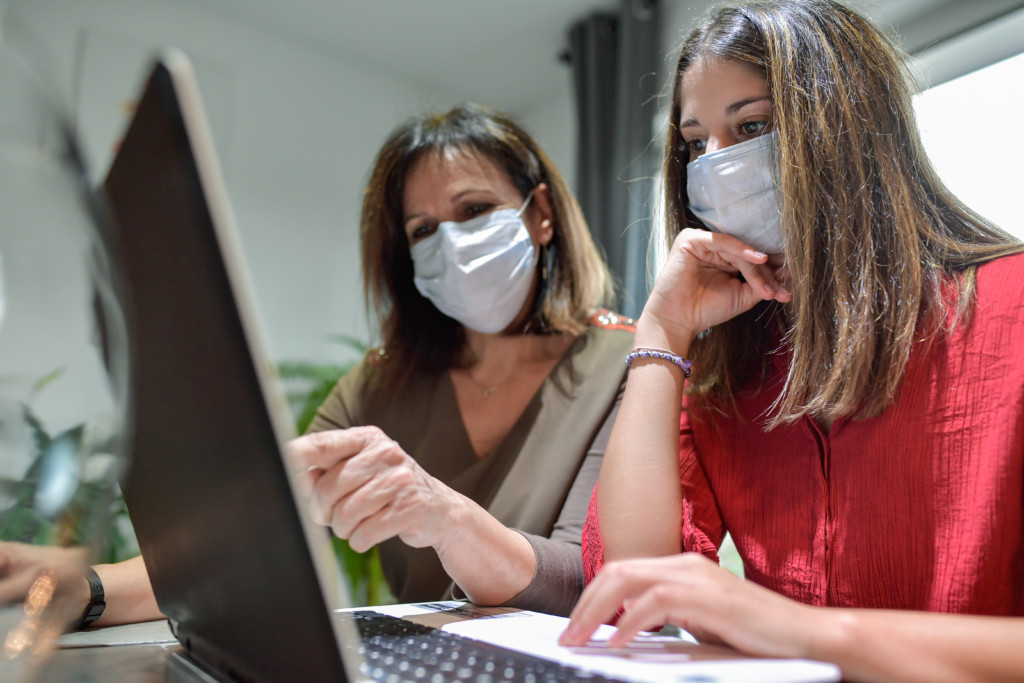 Were we still school-parenting, I’m confident that Marylyn and I would be “podding” our five kids – some here at home, the others in age-appropriate pods around the neighborhood.
Berkeley, at least in its overeducated neighborhoods, is fertile ground for the fashion. Of course, down the slope near the bay, there live parents who are not so ready to deliver the good of schooling at home; of that, more in a moment.
First: Podding has proved popular among us well-off parents, and Berkeley is no peculiar island of this phenomenon. Across the country, parents and kids alike enjoy this very social but controlled environment for the delivery of knowledge to their young. Whether the basic goods of the mind are effectively transmitted remains to be seen; I assume that we will soon and for years to come be buried in reports on the blogs from the statisticians.
There are plenty of homeschoolers whose work appears to have paid off for the child, but the present absence of trustworthy statistics with which to gauge the worth of these accounts has made most of the optimistic reports of today vulnerable. And, even going toward fears that the commonly valued information will never come easily.
In any case, given their apparent popularity, pods could occasion a substantial and permanent departure of middle-class families from the traditional modes of schooling. The obvious civic problem that this creates is that the skills necessary to the creation and operation of a pod are not universal. The unreadiness of many lower-income parents to assemble an efficient learning club is plain fact.
But so what?
These people will be no worse off than now. They are today systematically drafted for the local last-resort public school, and so shall they remain when the podding begins among the better-off.
Paradoxically, a principal effect of the odd exodus will be felt by those low-income families that are scattered within comfortable suburban districts but unable to move to a pod along with their neighbors. The whole of it betrays the essentially private character of the existing system for those who can pay. The teachers union will retain its essential monopoly of the poor.
It is, I hope, quite possible that this plain and simple confirmation of America’s essential serfdom of the poor family in order to maintain the comfort of their schoolhouse warders will stir some among us at last to cry foul. No doubt there will be a division among these critics. Some will arise from the never-silent stockpile of envy, to demand the subordination of all parents and children to the state in the name of “equality” – no pods allowed!
But there will be others who will invoke the flag of equality in quite a different way. Instead of forcing all of us back into the old system by eliminating pods for the rich, they will insist that the non-rich be empowered, with vouchers or other devices, to choose a non-public school that waits to prove its special teaching genius.
The wisdom of such liberation has been attested by a host of reports from neutral-minded social scientists, at least in regard to its effect upon test scores.
Are we ready to trust the poor with that constitutional liberty we so value for ourselves? The advent of a true system of choice for all will not come without a period of confusion.
The more adventurous states among the 50 will accept the challenge and discover for all of us the pitfalls that await – and how to avoid them. Others will learn and follow. No doubt the occasional self-appointed “spokesperson” for the poor will do his best to turn the project to his self-interest.
In the end, given the opportunity, the poor will have to liberate themselves; but this will first require their deliverance from the peculiar shackles so long reserved for them. And that awaits the collaboration of us comfortable folk.
Are we ready?

