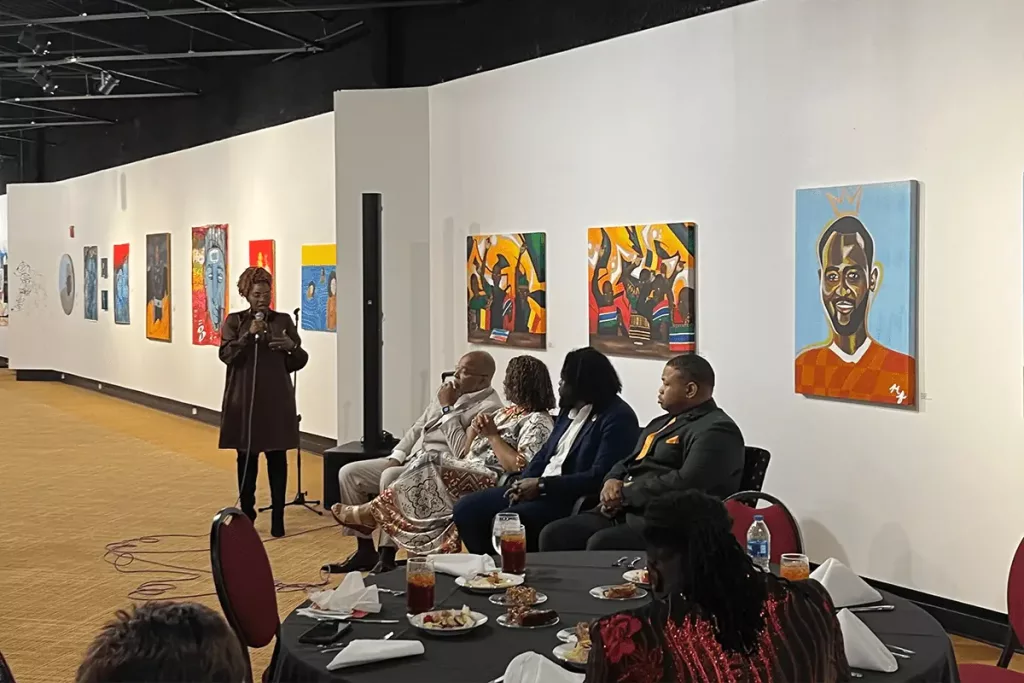
A three-day exhibit hosted by Black Minds Matter details the history of African American people's pursuit of education freedom from the Antebellum Period though today with many options for education choice.
Black Minds Matter recently hosted a pop-up exhibit to showcase the history of African Americans’ pursuit of education freedom, including showcasing Black school founders who are creating learning institutions with help from Florida education choice scholarships.
The three day pop up exhibit, titled Self-Determined: The Secret History of Education Freedom, hosted by Black Minds Matter at the Ritz Art and Theatre Museum, included founders of Black schools from the Black Minds Matter. director of Black-owned schools.
The exhibit was meant to showcase Black education beginning in the Antebellum Period and continued through Reconstruction, the Civil Rights Era, to present day, with education choice options ranging from district, charter, homeschools, magnet, virtual and private schools.
Some Black school founders spotlighted during the exhibit included Cameron Frazier, Dwayne Raiford Bishop, and Lady McLaughlin. Their website has a directory of almost 400 black school founders.
Black Minds Matter was founded in 2020 by Denisha Allen, who benefited from the Florida Tax Credit Scholarship program. Allen went on to work for the U.S. Department of Education under Secretary Betsy DeVos and now serves as a senior fellow at the American Federation for Children.
For more information about the exhibit or the directory, visit Black Minds Matter.
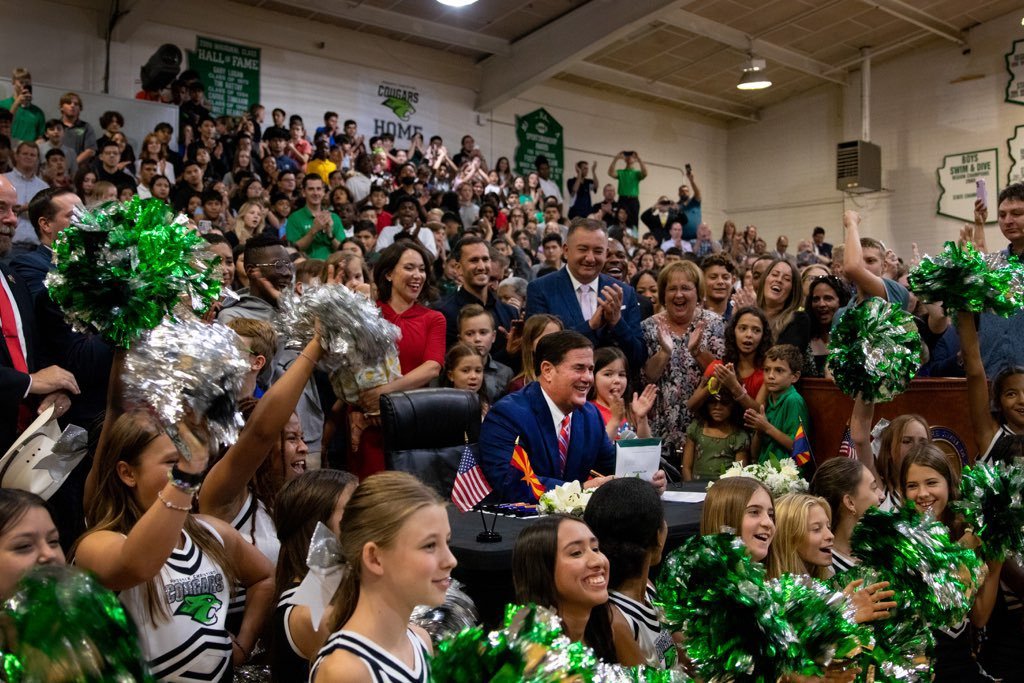
Arizona Gov. Doug Ducey joins students and families to celebrate historic legislation establishing education savings accounts for all students in the state. Photo courtesy of the Governor's Office
Editor's note: The following is a news release from the Arizona Governor's Office
Arizona Gov. Doug Ducey on Tuesday joined families, educators and community leaders to celebrate Arizona’s successful effort to ensure every Arizona student can attend any school of their choosing.
“Arizona is now the gold standard for educational freedom in America,” Ducey said in a news release. “Our kids will no longer be stuck in under-performing schools. We’re unlocking their educational potential and advancing a bold new era of learning opportunities. Parents and teachers know there is no one-size-fits-all model to education. Kids and families should be able to access the school or learning program that best fits their unique needs — regardless of income or where they live. In Arizona, we’re making sure they have that choice.”
The governor spoke today at Phoenix Christian Preparatory School alongside parents and their kids who have benefitted from Arizona’s Empowerment Scholarship Accounts (ESA), as he signed a bill that opens the scholarship program to every K-12 student in Arizona.
The legislation, sponsored by Rep. Ben Toma, has been lauded as the most expansive school choice initiative in the nation.
“I was proud to continue the Arizona tradition of leading on school choice and bring educational freedom to more than 1.1 million students,” said Toma, the House majority leader. “By opening Empowerment Scholarship Accounts to every K-12 student, we will improve outcomes and make choice a reality for all students. This session, we stood together to get this done for Arizona students and parents. Governor Ducey has been an invaluable partner in transforming school choice in our state, leading the way in unlocking the schoolhouse door.”
With ESAs open to all students, Arizona solidified its position as the gold standard for educational freedom. In a story published today, Chris Rufo, senior fellow at the Manhattan Institute, said “universal school choice has long been the Holy Grail for conservative education reformers. Governor Ducey has achieved it.”
The ceremony at Phoenix Christian was highlighted by elementary schoolers singing a welcome song and stories from Arizona families of how school choice has unlocked their children’s full potential.
One of those parents is Jenny Clark, who, after her own children’s positive experience with ESAs, has helped other parents take the opportunity the program presents.
“Arizona’s Empowerment Scholarship Account program is truly life-changing for so many of our state’s children,” Clark said. “My five children have benefitted from ESAs and I can’t help but think how many kids don’t get the help they need. Now, they will. Every child in Arizona will have the same opportunities and ability to get the education tailored to their needs. Governor Ducey has led on this issue, expanding school choice to every family.”
Parent Annie Meade has seen firsthand how Arizona’s education options can impact a child’s education. Her four children have had a combination of homeschool, microschool and public education. Universal ESAs stand to bring new opportunities to her kids, who are now all eligible. Meade spoke about her enthusiasm for the education savings accounts at the ceremony today.
“Kids deserve to be in the education environment in which they can thrive, but so many families have been limited by their income, or zip code,” said Meade. “The Empowerment Scholarship Account program was something that I learned about from other friends who had qualified, but unfortunately, our family never had access to the scholarship, until now. The passage and signing of H.B. 2853 means that now every Arizona family will have the freedom, the choice, and the opportunity to choose an ESA for their child’s education…Thank you again, Rep. Ben Toma, and Governor Doug Ducey, for making this scholarship a reality for families like mine.”
The students at Phoenix Christian are no strangers to the benefits of education savings accounts. Jeff Blake, the school’s superintendent, spoke about the resources and one-on-one learning students receive at his school.
“At Phoenix Christian Preparatory, we are proud to have 31 students on Empowerment Scholarship Accounts,” Blake said. “This funding has helped our school serve many students in need and bring them an education that best suits them. With universal school choice, we’ll be able to serve more students with an exceptional education. We’re grateful for the foresight and leadership of Governor Ducey and the Arizona Legislature for prioritizing every K-12 student.”
Drew Anderson, senior pastor of First Watch Ministries and Legacy Christian Center in South Phoenix has worked with kids in his South Phoenix community to achieve academic success.
“Education is the great equalizer in America,” he said. “If we are able to give our lower-income families and minorities with better education, we’re unlocking the doors to success for so many who are often left behind. As a pastor I’ve seen too many of our black and brown children struggling, just looking for some guidance on homework. I’m grateful to Governor Ducey and the Legislature for saving our kids.”
Arizona families who participate in ESAs would receive more than $6,500 per year per child for private school, homeschooling, microschools, tutoring, or any other kinds of educational service that helps meet the needs of their students outside the traditional public school system.
Janelle Wood, founder of the Black Mothers Forum, spoke about the partnership she formed with Governor Ducey starting in 2020 to “fight to make sure our black children have an opportunity to live and breathe in a safe and supportive community whether that be a learning community, in their living community or in their homes.”
Wood continued, “As a concerned black mother, I want to make sure that we are heard loud and clear from this day forth. We matter, our children matter and we’re not going anywhere. We’re going to keep speaking to each system that holds our families back and our children back.”
Arizona’s universal education savings accounts now serve as the model for the rest of the nation to follow. Education choice advocate Corey DeAngelis, a senior fellow at the American Federation for Children, called the monumental legislation “the biggest school choice victory, not just in Arizona, but in U.S. history.”
Of the unprecedented school choice initiative, DeAngelis said, “This is how you truly empower parents and truly secure parental rights in education. I want to thank Governor Ducey for empowering every single family in the state of Arizona. This is a national model.”
He then led the crowd of students, parents and community members in a chant: “Arizona will now fund students not systems.”
Two important legislators in funding students were Senate President Karen Fann and House Speaker Rusty Bowers.
“Every parent wants nothing more than to see their child succeed,” Fann said. “This session, we committed to expanding educational opportunity. Working with Governor Ducey and the Arizona House, we delivered. Each and every Arizona student has access to an education environment that will suit their needs. The Empowerment Scholarship Account will transform education in our state and bring unlocked potential to our kids.”
“In Arizona, we fund students, not systems,” Bowers said. “One size does not fit all when it comes to education. Universal Empowerment Scholarship Accounts will ensure the money follows the children as they are enabled to attend the school environment that works best for them. The Arizona House of Representatives has worked collaboratively with Governor Ducey for years to expand school choice for every student. Today, we celebrate the empowerment of 1.1 million students and their parents to choose the learning environment they need.”
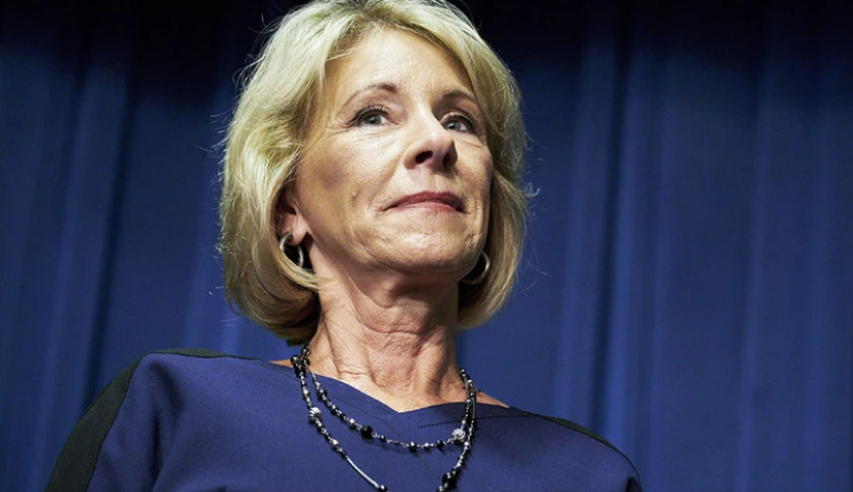
Former U.S. Education Secretary Betsy DeVos has written a new book about the importance of education choice.
Editor’s note: Former U.S. Secretary of Education and longtime education choice champion Betsy DeVos is promoting her new book, “Hostages No More: The Fight for Education Freedom and the Future of the American Child,” which is set to be released on June 21. DeVos recently sat down with her former education department colleague, Denisha Allen. A former state scholarship student, Allen now serves as the director of public relations and content marketing at the American Federation for Children, a national organization that DeVos helped found and chaired before becoming education secretary in 2017. DeVos recalls how she first became interested in the idea of education choice as a young mother of a kindergartener. She also discusses how advocates have approached the issue over the years, how she worked promote education freedom while serving as education secretary, and how the pandemic pushed it to the forefront of parents’ concerns. She also talks about what she hopes readers will learn from the book. Here are some excerpts from the interview.
How DeVos became involved in the education choice movement: My oldest son, Rick, who is now 40 years old, was starting kindergarten. My husband, Dick, and I knew we were going to be able to send our children to whatever school we felt was best for them. So, we were shopping around visiting schools and discovered this amazing little Christian school serving the kids of the neighborhood around there. They had to raise 90 percent of their operating funds every year. Everyone who attended paid what they could. So, I started getting involved in that school, and the more I was there, the more I realized that there were multiple families who would have loved to have their kids in a school like that. So, I started, as we all did…we started trying to make the case to appeal to people through logic or through the lawyerly approaches or the legal side of the case as the reasons for granting education freedom and school choice and quickly realized it was going to take a lot of political muscle as well. And so, those things have developed over the last 30-plus years. But it was solely with a commitment to bringing policy into being in as many states as possible to allow families the kind of freedom they need to find the right fit for their children.
How the pandemic allowed education choice to take center stage: I think the last two years have really laid bare many of the challenges that many of us, if not all of us, have seen during the last number of years in a way people never anticipated. Whether it was lockdowns, mandates, curriculum issues, lack of rigor or a lack of actually learning anything, any number of issues have really brought the whole possibility of education freedom to a whole new level.
Why a book and why now? I didn’t set out to write a book and probably wouldn’t have if not for what unfolded the last couple of years. But again, I think it has really brought attention to the whole issue of education in a way that we couldn’t have anticipated. As you know, all of our focus while we were (in the Department of Education) has been on doing the right thing for students, and all activities were centered around highlighting different schools or different approaches that were bringing unique opportunities to students. The whole notion of rethinking education and the old institutional notion of one-size-fits-all approach, a lot of that work really helped lay the ground in many ways for the discussion we’re having today about bringing broader education freedom to those across the country. So, the book is my way to talk about how we fix education in America, and it brings into it the stories of lives that have been changed and kids who are on a totally different path because of these opportunities, and I hope it helps correct some of the mischaracterizations of my time in Washington and all of us who are involved in offering these types of opportunities through policy to kids in all states.
What is DeVos's main message to readers? I hope that (readers) will take away the notion that education freedom is something we have got to move toward for every student in this country. By education freedom, I should probably give my definition of what that means. I used to talk about school choice, and school choice was and still is a good description of what we’re talking about, but I don’t think it’s broad enough. When we think of school choice, we think of buildings, and I don’t think we have to think of only buildings. We need to think creatively about how kids can experience learning in their K-12 years in ways that we haven’t begun to dream of. And frankly, lots of people have been exploring that during the last two years with all of this COVID reality. So, you have families that have been banding together to in small homeschool consortiums have may become a micro-school. You have individuals who are customizing their education…education freedom, I think provides a new moniker or banner of what school, of what education, could be. I hope people will take away tools they can use to advance this in their own communities and their own state and on behalf of their own children, and I hope it will really encourage policy change to empower families to do just that.

