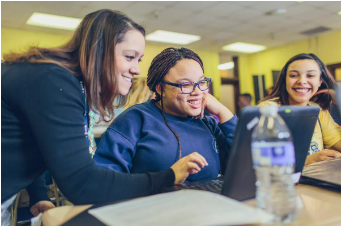
Victory College Prep, a charter school that opened in Indianapolis in 2005, received a seven-year charter renewal from the Mayor’s Office of Education Innovation in 2018. The Urban League of Indianapolis has recognized Victory College Prep as a School of Excellence.
Editor’s note: This article appeared last week on in.chalkbeat.org.
Republican lawmakers are advancing major changes to the state’s school funding system to benefit charter schools and districts with relatively low property tax values.
The proposed Republican House budget, along with a newly amended GOP Senate bill, would rework Indiana’s property tax system to pump more funding into charters and level what lawmakers say is an unfair playing field for charters and traditional public schools. Lawmakers also might create a dedicated funding stream for charters’ capital expenses that would replace the so-called “$1 law.”
But the proposals have been sharply criticized by Democrats and traditional public school leaders, who argued that the changes would come at the expense of thousands of students in traditional public schools.
The bills channel issues at the heart of a recent dispute over tax revenue in Indianapolis Public Schools. The district withdrew its plan to ask voters for new property taxes on the May ballot, amid criticism from charter school supporters that the draft ballot measure did not provide charters enough money. If the proposals become law, they could change the long-term balance of fiscal power within the state’s public education system.
Together, House Bill 1001 and Senate Bill 391 would do the following to boost funding for charters and school districts with low property values:
To continue reading, click here.
 By a vote of 26-12, the Florida Senate passed House Bill 1. This is a fantastic achievement and a capstone achievement to a great many people both inside and outside the Florida Legislature.
The signature of Gov. Ron DeSantis will dispel any confusion whatsoever regarding which year stands as the most productive in the history of the choice movement. It’s not yet April, and 2023 already has earned the crown.
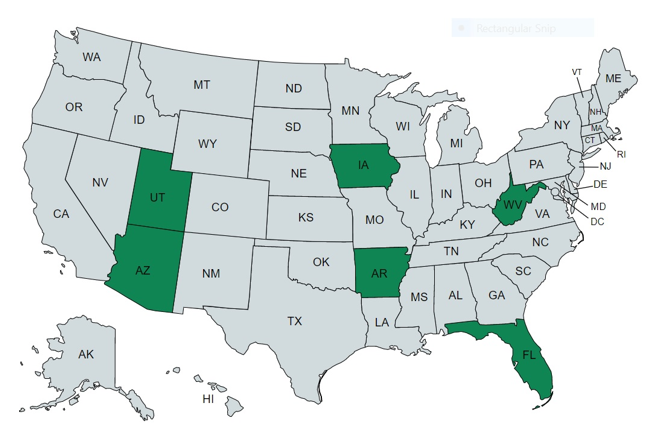
The addition of Florida will almost double the total number of students eligible to participate in a broadly available education savings account program. The total eligibility pool will move over 6 million students and constitute just over 12% of students nationwide.
To paraphrase Curly from the movie City Slickers: “The 2023 legislative session ain’t over yet.”

As things stand, Florida and West Virginia are holding down the East Coast, Iowa and Arkansas in the geographic center of the country, and Arizona and Utah out west. A number of far-reaching choice bills have votes pending in multiple states.
Giddy up!
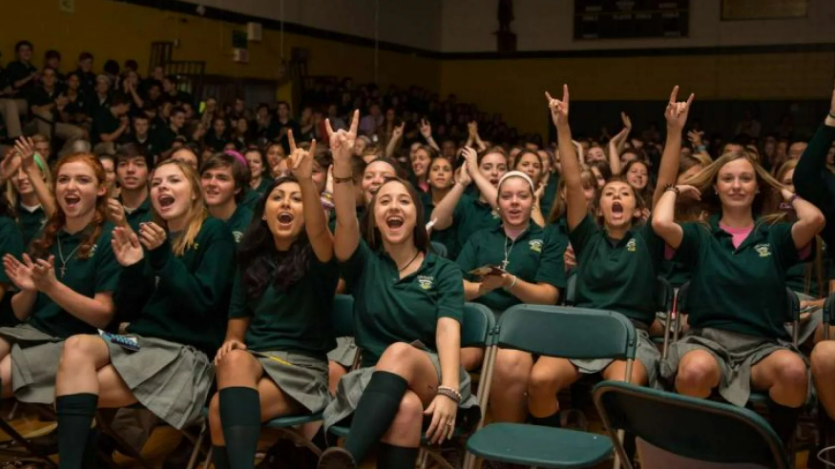
Landsdale High School in Landsdale, Pennsylvania, one of 1,814 private schools in the state serving more than 260,000 students, offers 44 honors and 36 college preparatory courses to encourage critical thinking and problem-solving skills.
Editor’s note: This commentary appeared Monday on inquirer.com.
After a more than eight-year slog, the Pennsylvania Commonwealth Court affirmed what the Pennsylvania Constitution has said all along: Kids deserve their education to be about a “meaningful opportunity,” not a flawed and antiquated system.
The ruling is a victory, especially for school-choice advocates, many of whom are parents of color, looking to help their children get out of failing district schools. When Commonwealth Court Judge Renée Cohn Jubelirer issued her ruling last week, she gave our most vulnerable children a path forward. The only way to ensure adequate and equitable funding to schools is to have education funding follow the child, not the school district.
The Pennsylvania education system is flawed — that much we can all agree on. The 2014 lawsuit alleged that the state’s system of determining school funding deprives students in poorer districts of opportunities and resources. The court agreed.
In doing so, the court made a critical point that deserves praise; it stopped short of massive judicial overreach and instead rightly highlighted what the state constitution has stated since 1873 — that the power to fix this problem rests with the legislature.
And in directing the people’s elected representatives to fix the problem, Judge Jubelirer took a bold stance, writing: “The options for reform are virtually limitless. The only requirement, that imposed by the Constitution, is that every student receives a meaningful opportunity to succeed academically, socially, and civically.”
The Pennsylvania Constitution calls for an “efficient system of public education.” Nothing is more efficient than the free market, and that’s what we would be creating in Pennsylvania if we follow the judge’s ruling.
If our state really wants to empower communities of color, then it should give money directly to parents and caregivers. By putting money directly into the hands of families — rather than into government schools run by bureaucrats, where funding tends to benefit administrators rather than students — parents have more options and children have more opportunities.
To continue reading, click here.
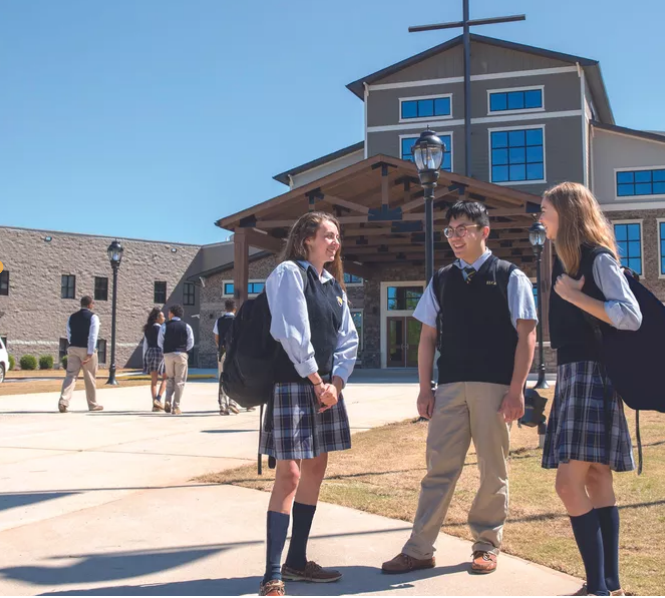
Eagle’s Landing Christian Academy in McDonough, Georgia, one of 824 private schools in the state serving nearly 153,000 students, boasts rigorous academics with every discipline taught with a biblical worldview.
Editor’s note: This article appeared last week on thecentersquare.com.
Georgia lawmakers are almost certain to discuss school funding and even school choice legislation during this year’s legislative session.
"I think we’re going to have a very robust discussion when it comes to school funding, when it comes to vouchers and other issues that come before us," House Speaker Jon Burns, R-Newington, said during a press conference this week.
"I believe we have ... a very diverse state when it comes to education funding, whether you’re from rural Georgia, or whether you’re from urban Georgia, and how funding impacts us all and comes into this equation."
During last year’s session, the Georgia Senate scuttled Senate Bill 601, the Georgia Educational Freedom Act.
The measure would have created state-funded Promise Scholarships of up to $6,000 a year. Families of K-12 students in Georgia could have used the money for private school tuition and other education expenses, such as tutoring and homeschool curriculum.
"Parents are demanding more options in education, spurred on by the seismic changes we’ve seen in K-12 schools during the pandemic," Buzz Brockway, executive vice president of public policy for the Georgia Center for Opportunity, said in a statement in response to Gov. Brian Kemp declaring Jan. 22-28 as National School Choice Week.
To continue reading, click here.
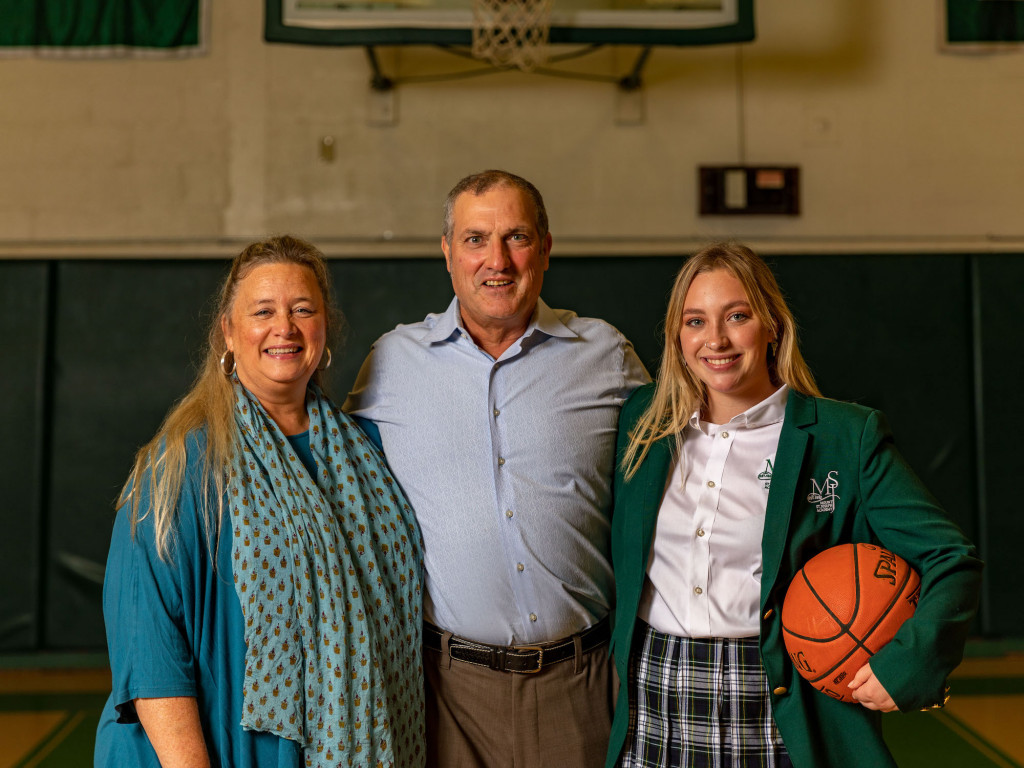
The Gallos were one of several Vermont families who sued the state over its policy banning religious private schools from participating in town tuitioning programs offered in areas without public high schools. Photo courtesy of the Institute for Justice
Vermont residents who live in towns too small to operate district high schools may now use public funds to send their children to faith-based private schools.
The Education Agency of Vermont recently told school administrators that they must comply with a 2022 U.S. Supreme Court decision that struck down a Maine law banning religious schools from participating in town tuitioning programs.
“Requests for tuition payments for resident students to approved independent religious schools or religious independent schools that meet educational quality standards must be treated the same as requests for tuition payments to secular approved independent schools or secular independent schools that meet educational quality standards,” the agency’s Sept. 13 letter said. A list of approved independent schools on the website showed 15 religious schools.
Rural and sparsely populated, Vermont and Maine have programs that offer scholarships to families in areas that don’t operate public high schools so they can send their kids to public or private schools elsewhere.
However, both states prohibited the money from being spent on religious schools, so parents who wanted a faith-based education for their kids were forced to pay out of pocket.
In 2018, a group of parents challenged the Maine program.
Several Vermont parents also filed similar lawsuits. In June 2021, the U.S. Court of Appeals for the Second Circuit struck down the prohibition against religious schools in the case A.H. v. French, brought by four Catholic high school students, their parents, and the Diocese of Burlington.
However, the Maine lawsuit, Carson v. Makin, was the one that made it to the U.S. Supreme Court and settled the issue nationally.
In that case, the high court ruled that education choice programs could not exclude schools based on religious instruction or activities, calling it “discrimination against religion.” A landmark U.S. Supreme Court ruling in 2020, Espinoza v. Montana Department of Revenue, struck down bans on education choice scholarships based on a school’s religious status but stopped short of addressing the issue of religious use.
The Supreme Court ruling in the Maine case reverberated across Vermont, and was cited as the reason for the policy change there.
The decision also drew praise from the American Federation for Children, a national education choice advocacy group.
“Every family deserves the right to choose the best K-12 education for their children, and we are encouraged to see the Vermont Agency of Education stipulate that families in tuitioning programs can choose religious schools,” said Shaka Mitchell, the federation’s director of state strategy and advocacy. “After a hard-fought battle in Maine, the Supreme Court has resoundingly confirmed this right, and we are thrilled that Vermont families will be able to access a fuller range of options as well. We hope other states will join Vermont and follow the ruling of the Supreme Court by ensuring all students can learn in the educational setting that best meets their needs.”
Maine Attorney General Aaron Frey responded to the Carson v. Makin ruling with a statement that schools must comply with the Maine Human Rights Act to receive funds. That law bans discrimination based on race, gender, sexual orientation, ethnicity, or disability, which contradicts some schools’ religious beliefs. As a result, the two schools that were part of that case have refused to participate in the tuitioning program.
However, Cheverus High School, a Jesuit college preparatory school in Portland, this week became Maine’s first religious school approved for funding. Though a Catholic school, Cheverus is not governed by the Diocese of Portland.
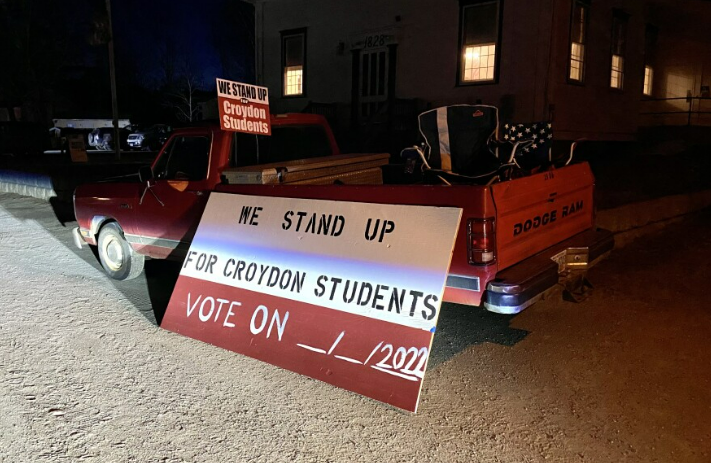
While some Croydon, New Hampshire, residents are wary of what education funding cuts could mean for local students, others see the budget as a blueprint for how to radically reshape public education in the state – and beyond.
Editor’s note: This commentary from Jim Peschke, a former member of the Croydon, New Hampshire, school board, appeared Wednesday on concordmonitor.com.
Every year, small towns across New Hampshire grapple with ways to keep their budgets in check. This usually entails minor adjustments and revisions that tighten up spending, but don’t dramatically alter the character of town or school operations.
This spring, residents of the town of Croydon adopted a novel approach, setting the school budget based on a simple per-pupil formula multiplied by a total student population. The final number, $800,000, came in at less than half of the board’s original $1.7 million-plus figure. This budget was disruptive, as it was meant to be.
As one of 20 vilified residents who voted in favor of the budget overhaul, I’ve heard many concerns about this approach, from the reasonable “can we deliver on this small budget?” to the absurd “the kids will end up in prison because they didn’t get enough art class.”
Among the cacophony of hyperbolic scenarios, one comment sounds quite reasonable: “This budget amendment seems abrupt and severe. Why was it necessary to cut the budget this way?”
It’s a good question, and it deserves a good answer.
To continue reading, click here.
 A new study from a personal finance website based in Washington, D.C., has ranked Florida fifth in the nation in terms of equitability of district education funding based on two metrics: average household income and expenditures for public elementary and secondary schools per pupil.
In a review of 12,927 school districts, WalletHub named Iowa the state with the most equitable school districts. Other states in the top 10 were North Carolina, Arkansas, Indiana, West Virginia, Mississippi, Minnesota, South Dakota and Kansas.
States in the bottom five were Illinois, Montana, California and Idaho, with New York in last place.
While Florida earned high marks overall, scores for individual school districts within the state varied. Duval County came out on top based on a $9,116 per-pupil expenditure. Monroe County scored the lowest, based on a $13,904 per-pupil expenditure.
Serving as a departure for the study was its authors’ contention that states that provide equitable funding to all school districts can help prevent poor students from having lower graduation rates, lower rates of pursuing higher education and smaller future income than their wealthy peers.
"If we make sure that every school district has equitable funding, students in less affluent communities will have a level playing field with students in wealthy districts. As a result, their graduation rates will increase, as will their likelihood to pursue higher education and earn larger incomes," said WalletHub analyst Jill Gonzalez.
You can see national results here; you can see Florida results here.
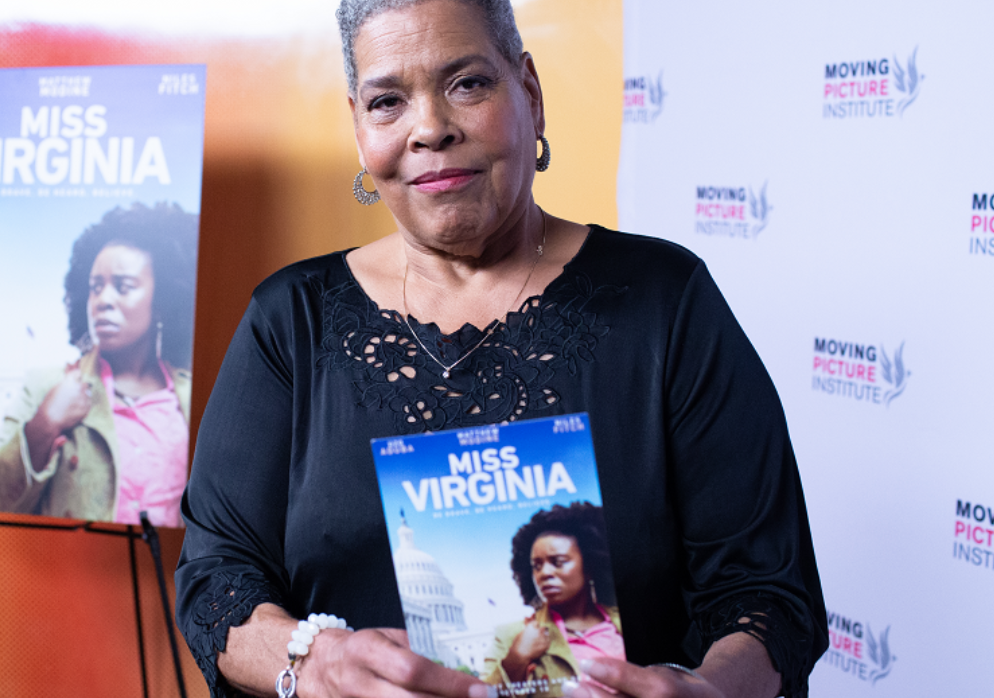
The 2019 film "Miss Virginia" was based on the life of Virginia Walden Ford, a leading advocate for parent empowerment who has fought for decades to create new educational opportunities for children and families.
In the 2019 feature film “Miss Virginia,” a working mother in the nation’s capital struggles to help her teenage son escape a violent public school and leads a grassroots movement to rally parents to
demand new school choice options for their children. A turning point in the story occurs when Miss Virginia learns that D.C. public schools were spending more per child than the cost of tuition at her son’s private school.
“When parents learn what their public schools are spending on their child’s education, they begin to ask questions,” explains parent activist Virginia Walden Ford, whose real-life story inspired the film. “They think about how those dollars might be put to better use. They start wanting more school choice options.”
Thanks to Project Nickel, a new search engine created by Lincoln Studio in partnership with EdChoice, parents in most states can now learn exactly what their local public school spends on their child’s
education.
Armed with this information (particularly after many public schools have been closed for long periods during the pandemic), parents across the United States may demand the power to use their child’s share of school funding to obtain a high-quality education.
Project Nickel is made possible by the 2015 Every Student Succeeds Act, bipartisan legislation updating the Elementary and Secondary Education Act. ESSA requires that states report per-student spending by public schools to the federal government. The Department of Education recently has begun aggregating and publishing this data.
To make this information more accessible to the public, Lincoln Studio partnered with EdChoice to develop a website. Project Nickel is a first-of-its-kind search engine of U.S. public school per-student spending data required to be reported to the U.S. Department of Education under a bipartisan 2015 law. Parents and anyone interested in what a public school spends per child can quickly get an answer by simply entering the school’s name.
As of May 2021, Project Nickel presents data from each of the 37 states that have complied with federal law and reported spending data to the Department of Education, which has published the data. The remaining states and territories have not yet complied with the 2015 law to report information to the Department.
The search engine currently includes data from nearly 50,000 public schools across the United States and will be adding more schools as the Department publishes more data.
New transparency about what public schools are spending has the potential to change how the public thinks about public education funding and the value students are receiving.
Many Americans underestimate what public schools spend. Fifth-three percent of Americans think public school funding is too low in their state, according to a 2020 EdChoice survey. But most people
don’t understand what public schools actually spend.
The survey found that the median estimate was $5,000 per child. But that’s well below the lowest state’s average per-pupil expenditure. The National Center for Education Statistics reports that the average per-pupil spending at public schools in 2017-18 was $13,800. This means that the average child who entered first grade in 2017 will likely have more than $160,000 spent on her education through high school.
Current per-pupil spending levels are likely to balloon in the coming years. Since the beginning of the pandemic, Congress has provided $190 billion in emergency funding for K-12 public education. According to Department of Education data, $63.3 billion of the $65.5 billion in federal funding awarded in 2020 remained available as of the end of February.
That means just 8% has been spent. Overall, state departments of education have an extra $120 billion in new federal emergency education funding still available.
Virginia Walden Ford thinks this new transparency about school spending will be valuable for parents.
“I am so excited about Project Nickel and its potential to reach parents and give them additional information as they make decisions for their children’s education. The question of education spending ALWAYS comes up, especially after parents see the film,” Walden Ford explained.
A growing number of states across the country are enacting policies like education savings accounts to give parents direct control of education funding. Greater public awareness about what public schools are spending per child will start new conversations about whether students are receiving a high-quality education from that investment, particularly after prolonged closures in many districts during the pandemic.
“Project Nickel’s search engine can help parents and everyone concerned about the quality of public education understand exactly what public schools are spending,” reasoned Virginia Walden Ford. “That’s a key step in building greater support for expanding parental choice in education and promoting equal opportunity.”
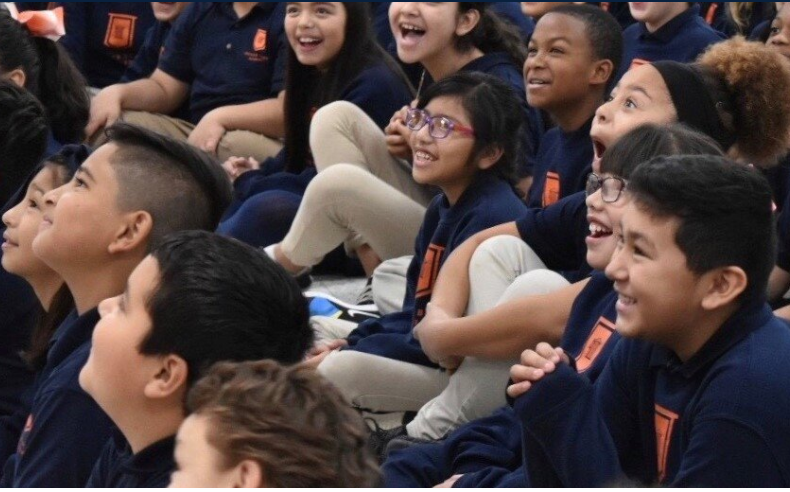
College Bound Academy, an Oklahoma charter school, prepares students in grades K-4 to graduate from college and access the career of their choice.
Editor’s note: This commentary is an exclusive to redefinED from Sean-Michael Pigeon, a student majoring in political science at Yale University. He works as a journalism mentor at a magnet school in New Haven, Conn. His writing has appeared in USA Today, the Washington Examiner and the Washington Times.
K-12 schooling is one of many things that has been dramatically impacted by the COVID-19 pandemic. Many traditional public schools across the country opted to teach virtually and some are still grappling with how to reopen. Many parents have turned to charter schools for more flexibility during this time of uncertainty.
Oklahoma families are among them. However, despite the fact that charter schools have provided a service equal to traditional public schools, public school officials are trying to strip them of equal funding.
For years, Oklahoma charter schools have been denied access to funding from property taxes, which puts them at a significant financial disadvantage. Epic Charter Schools, a self-paced, individualized program accredited by the state of Oklahoma, has been fighting for equal funding within the state board of appeals.
A 4-3 decision by the Oklahoma State Board of Education ended a lawsuit after four years of litigation, finally allowing public charters access to the same funding public schools have.
Oklahoma parents should welcome more competition and more choices for them to take control over their child’s education. In one decision, Oklahoma rejected the onerous one-size-fits-all policy for charter schools which, to this point, has been called “a damn mess.”
A bill introduced in the Oklahoma Legislature seeks to overturn this decision. The bill would restrict property taxes to only public schools while tying charter school funding to medical marijuana funds. Furthermore, in response to the Oklahoma State Board of Education’s decision, the Oklahoma City Public School Board of Education is taking legal action against the state.
In other words, Oklahoma’s public school apparatus wants to provide unequal funding to public charter schools, despite equal work.
Not only is this proposed policy unequitable in theory; it will harm students in practice. Property taxes have been used historically to fund schools because they are stable sources of income, and because they help tie a community around the local school. Revoking charter school’s access to stable sources of taxpayer money will limit the options for parents by treating charter schools like second-class educators.
But charter schools are not second-class educational institutions. In fact, they have responded admirably to the difficulties of remote learning. Oklahoma should follow South Carolina, which is increasing its contributions to well-run charter schools.
Others, like Travis Hutson of Florida’s seventh district, have introduced legislation which would help solidify charter school funding. His bill adds language ensuring that charter schools sponsored by a public university will be compensated “as if they are in a basic program or a special program in the school district.” Furthermore, the bill stipulates that this compensation must be appropriated from state funds.
Oklahoma lawmakers should look to the work being done in South Carolina and Florida as an exemplar for their own situation. Across the country, parents are rejecting the public school system and its administrative rigidity. This is a good, healthy, process that helps to cater to the unique needs of students.
The government should not play favorites, especially when it comes to children’s education. Upholding charter schools’ access to funding will help state leaders better serve the 105,000 school-aged children in Oklahoma. Rather than penalizing parents who opt for a more flexible teaching experience, they should uphold the legitimacy of their local schools.
Charter schools provide an equal education to public schools; they should be given equal resources.
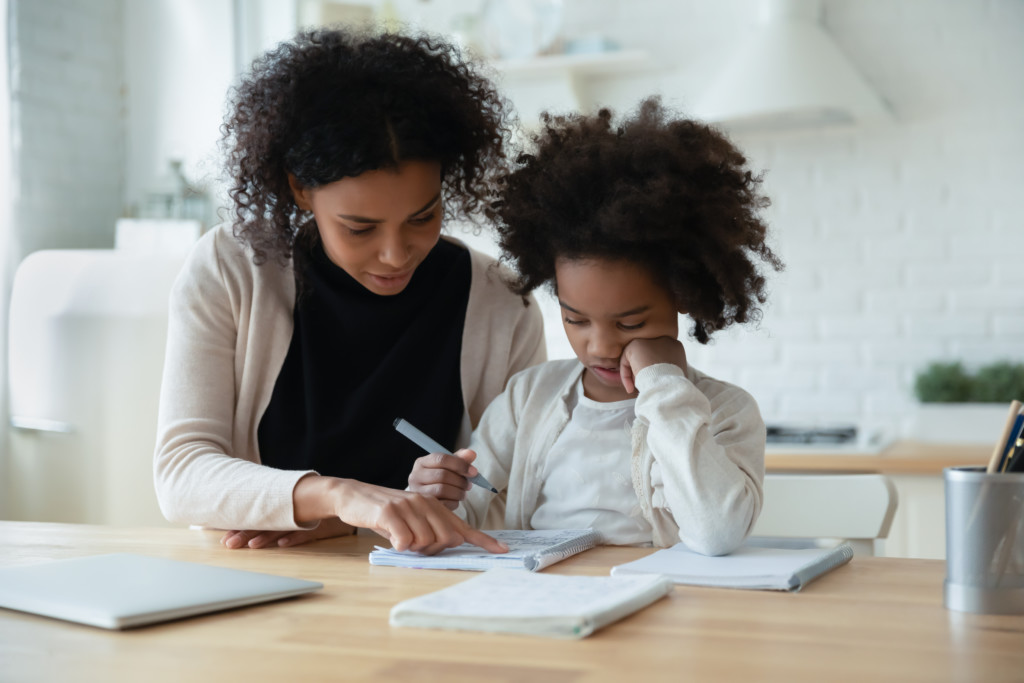 For those of us not living in Florida, the story we keep hearing is that y’all have kept your schools open full time while the rest of the country has shuttered theirs. That would appear to make the Sunshine State less fertile ground for hybrid homeschooling, as there appears to be a strong appetite for sending children to school five days a week.
Since many of you might not have experienced it, schedules have been altered in schools across the country to have students in class part time and at home part time to comply with social distancing guidelines. The practice has gotten mixed reviews.
That makes it a precarious time for the launch of my new book, Hybrid Homeschooling: A Guide to the Future of Education. If we just had our big experiment in hybrid homeschooling, and that experiment failed, maybe I should have written about something else!
To cut to the chase, I don’t think that is true.
First off, our polling has shown that parents are still super interested in hybrid homeschooling models, and are interested in the idea of flexible schedules going forward. But, more than that, the schools that I profiled in the book (that were traditional public schools, public charter schools, and private schools) were hybrid homeschooling before the pandemic started—social distancing had nothing to do with it.
Real hybrid homeschooling is not done on the fly or grafted onto schools that were built to operate differently. Good hybrid homeschooling programs need to be built from the ground up and designed from the start to foster the kinds of pedagogical practices that can make the most of part-time in-person schooling.
Hybrid homeschooling has a lot going for it. In interviews with families and educators, participants spoke of tight-knit communities, supportive learning environments, and a rhythm that better matches the needs of children. Families are more in control, and educators are real partners in helping children learn and grow. There is less pressure from day to day, as no one person or institution is solely responsible for what a child learns. The adults lean on each other.
But even if I am wrong, and five-day-per-week education will be the dominant form of education in Florida, that doesn’t mean that Florida educators can’t learn lessons from hybrid homeschools.
Any and every school in America should ask itself tough questions about how it uses the limited time that it has with students. Is it really making the most of every week, day, and hour? Is the school wasting time or energy with pointless busywork or administrivia? Are disruptions interrupting learning?
But more than examining what goes on in school, educators need to ask if their schools are in sync with the rhythms of family life and the needs of the young people who attend them. Are students, for example, pursuing a schedule that causes them to fill their afterschool time with extracurricular activities and then homework that prevents them from being able to spend quality time with their families?
And on the topic of homework, are schools assigning useful homework that is helping students better master subject matter, or are students limping through it after a long day, getting it done, but not improving in any way their knowledge or skills as a result?
Schools also need to think about how they work (or don’t work) with parents.
Many hybrid homeschools are tight-knit communities that foster real cooperation between parents and teachers. Sure, it takes some relationship management, and some grace and charity from both sides, but when lines of communication are open and there is a high level of trust between parents and teachers, amazing things can happen.
Students can be enmeshed in a coherent educational environment that bridges home and school, where educators reinforce what parents are doing and parents reinforce what educators are doing. While it takes work, such environments are amazing places in which to teach, as teachers know that parents have their back, and vice versa.
I am bullish on hybrid homeschooling. After listen to those who do it, it is hard not to be. But, even if hybrid homeschooling isn’t for you, it might be worth taking a page or two out of their book to make traditional schools happier and healthier places.

